Best for
Enter Fort Saint-Jean by the footbridge from Le Panier, then cross to the Mucem’s modern galleries after a walk through the fort’s gardens.
Please choose a hotel or destination from the list.
We couldn’t open your search results. Please try again.
Your private search
Finding exceptional stays
Best for
Enter Fort Saint-Jean by the footbridge from Le Panier, then cross to the Mucem’s modern galleries after a walk through the fort’s gardens.
What makes it special
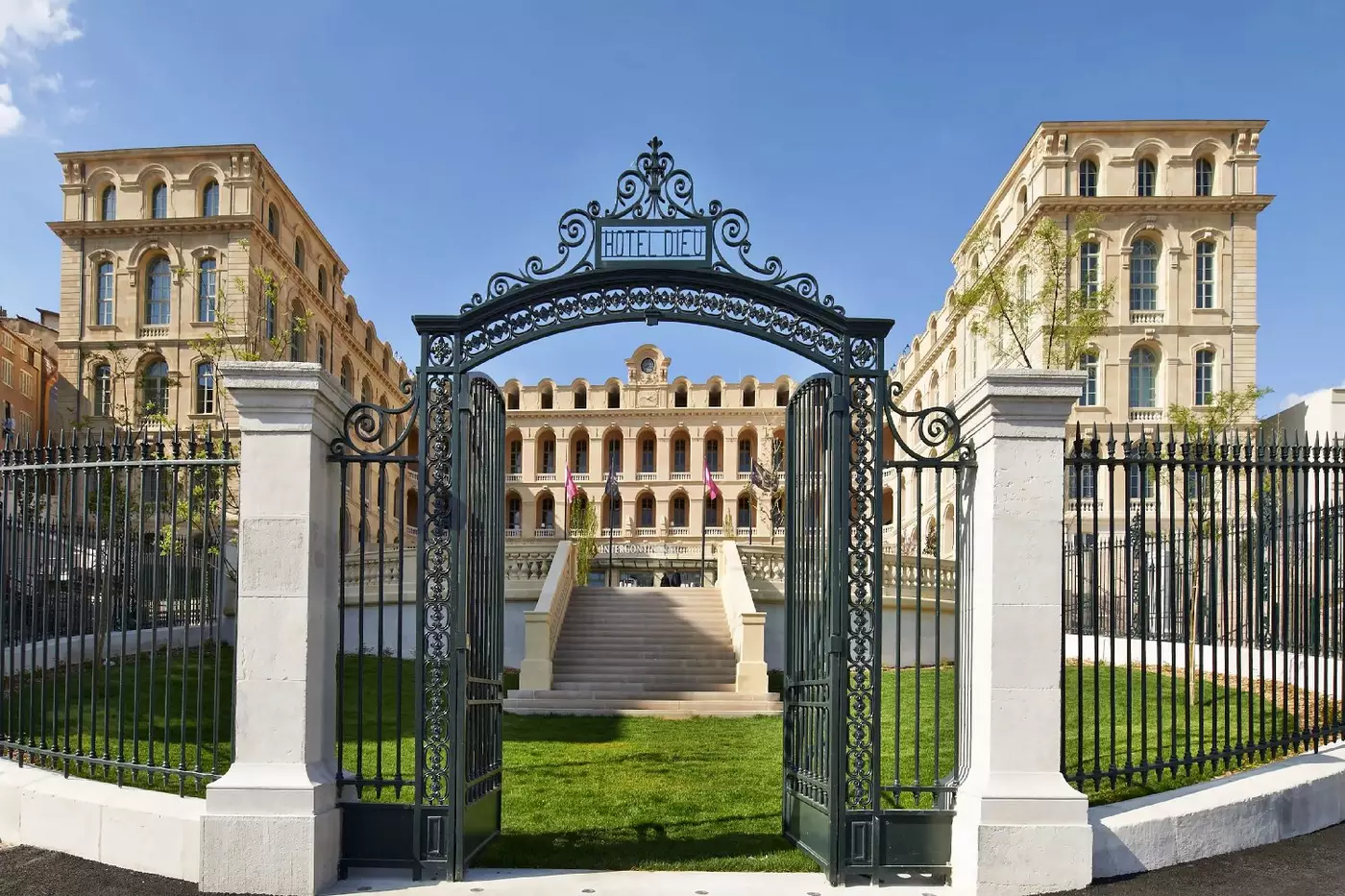
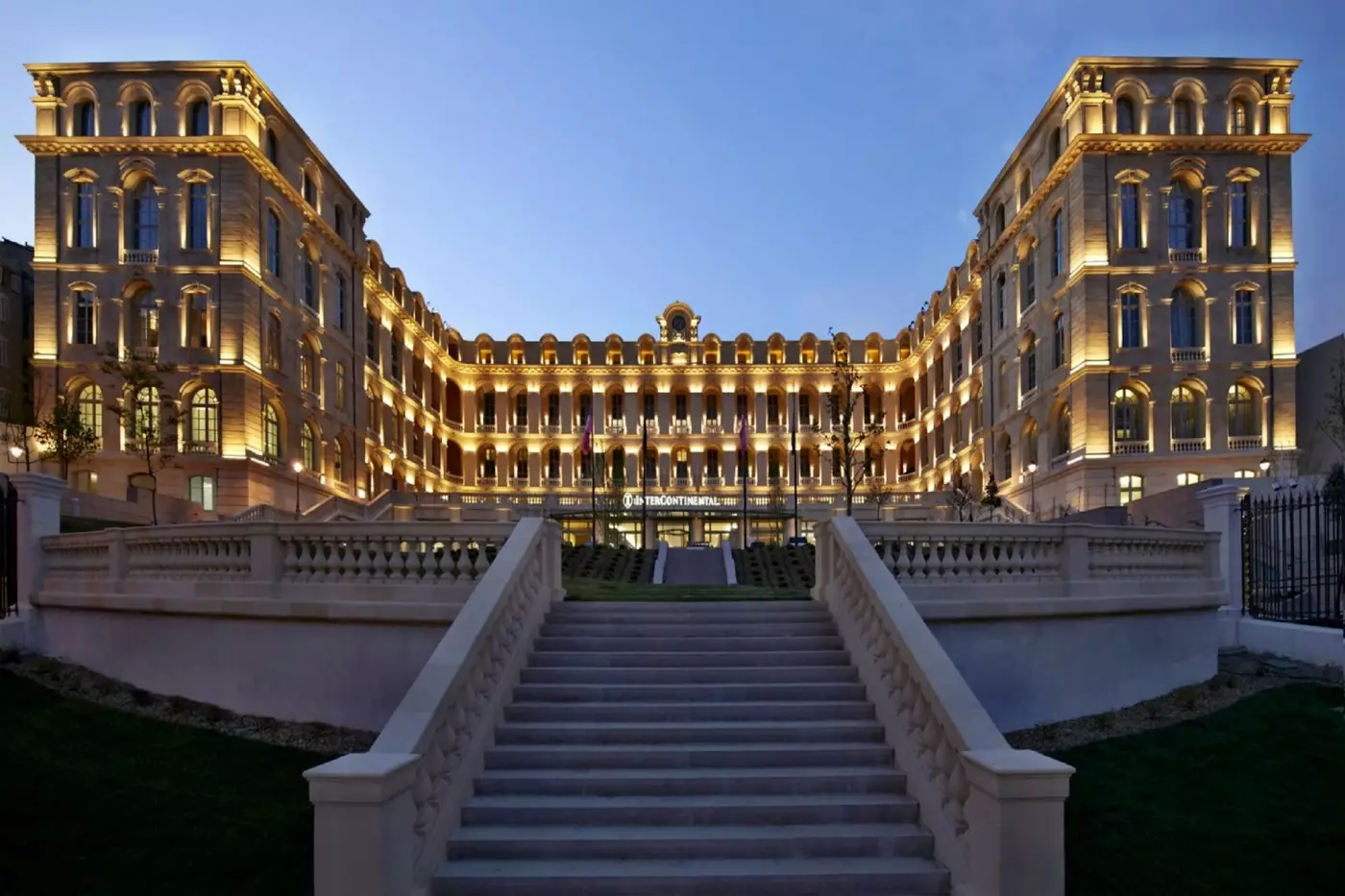
Napoleon III inaugurated the rebuilt Hôtel-Dieu hospital in 1866, and the hotel preserves its listed facade and two staircases with wrought-iron railings.
Room to consider
Choose a Prestige Suite for the generous proportions and high ceilings at the ends of the former Hôtel-Dieu’s historic hospital wings.
Insider tip
Stop in the ground-floor Cultural Space to see a Roman mosaic from beneath the old chapel, where the site’s history predates the hospital.
Free membership gives you access to preferred rates, exclusive benefits and current promotions for your stay.
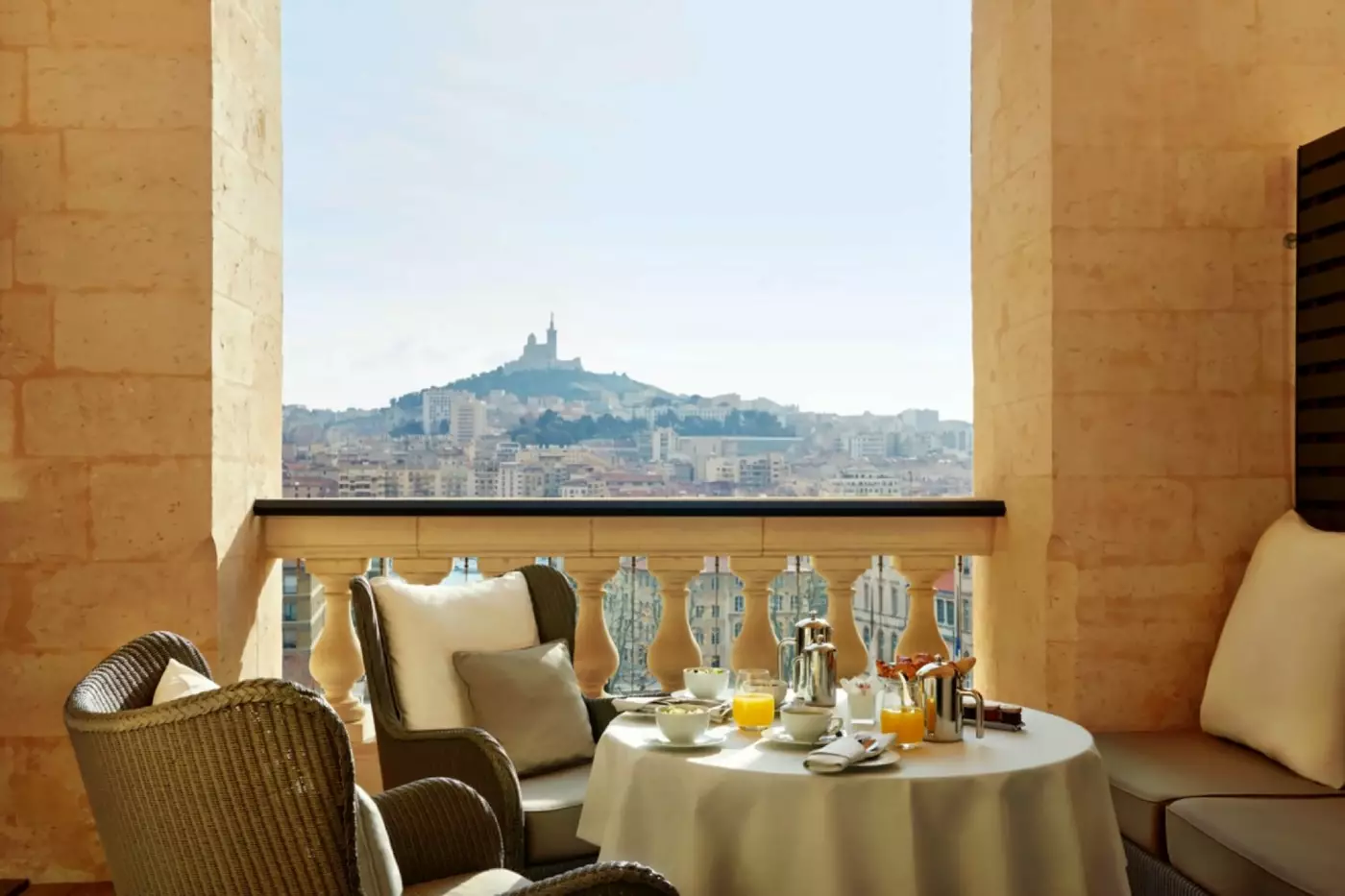
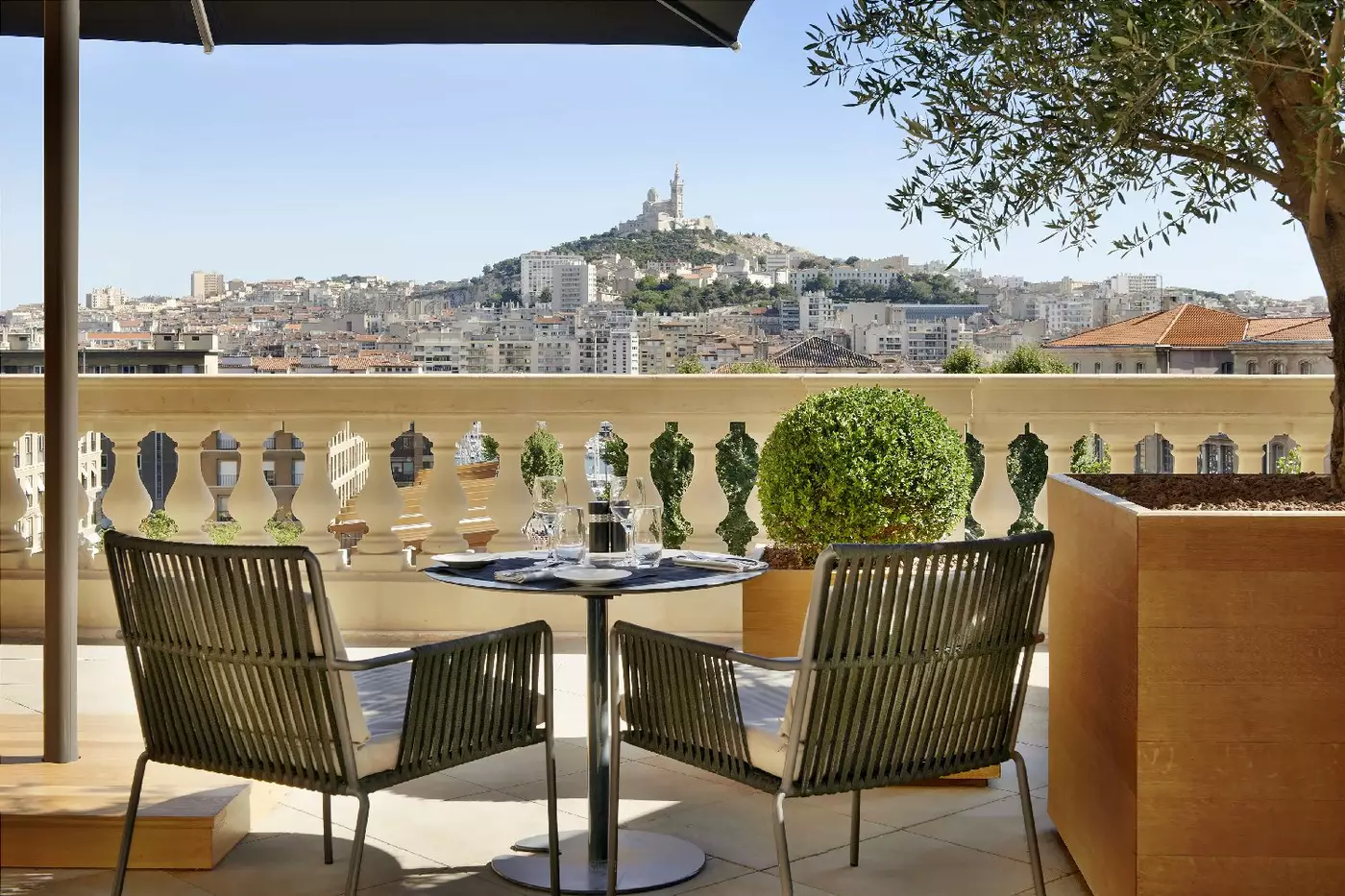
From the terraces of InterContinental Marseille - Hotel Dieu, the Vieux-Port lies below and Notre-Dame de la Garde rises across the city. The address makes Marseille easy to explore on foot, but the building gives guests a reason to stay in as well. Its former hospital halls lead to rooms by Jean-Philippe Nuel, a Mediterranean brasserie, the Capian bar and an indoor pool. This is a historic city hotel, not a beach retreat.
 194
 Charming
 Fitness
 Pool
 Spa
 Sauna
 Wellness
 Culture
 Wheelchair Accessible
 Gourmet Restaurant
 Connecting Rooms
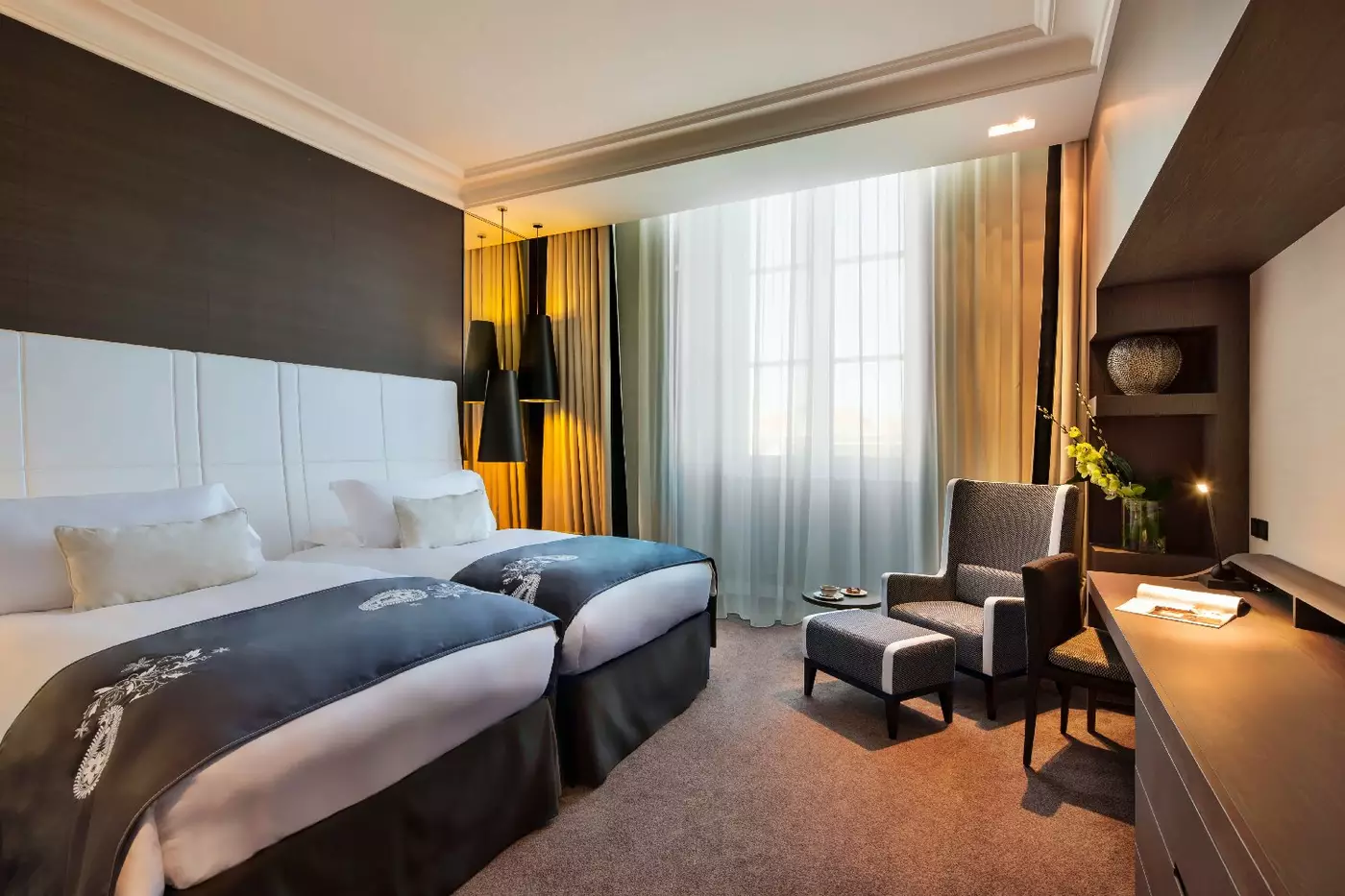
A cushioned armchair and footstool make a comfortable corner beside the window. A white leather headboard stands against the dark wall, while coral cushions and a throw warm the gray carpet. Built-in shelves and a wooden desk keep the furnishings neat. Lamps beside the pillows provide light for reading.
The outlook varies between the historic Panier quarter and the French-style gardens. Jean-Philippe Nuel uses Marseille's stone colors in his design. Soft tones and simple furniture lines carry the theme through the room. The bathroom has a bathtub, separate shower and broad mirror above the vanity. Double glazing and long curtains add useful touches to the quiet design.

A cushioned armchair and footstool make a comfortable corner beside the window. A white leather headboard stands against the dark wall, while coral cushions and...
The built-in living wall draws the sofa, lighting and storage into one clear arrangement. Dark wood gives this part of the room depth, while armchairs and a small table provide a place to sit away from the pillows. Coral accents stand out against pale fabrics, while ceiling coving echoes the older building around the modern furniture.
Rooms face either the Panier quarter or the French-style gardens. A desk with a chair offers space for writing, and long curtains cover the glazing in the evening. The bathroom includes a bathtub and a separate shower. Stone surrounds the basin, with a lit mirror above the counter. The colors remain soft, allowing the darker cabinetry to stand out.

The built-in living wall draws the sofa, lighting and storage into one clear arrangement. Dark wood gives this part of the room depth, while armchairs...
Armchairs and a low round table form a sitting corner beside the window. A broad desk runs along the opposite wall, with a chair and shelves built into the darker cabinetry. Pale fabrics and gray carpet balance the wood. Coral throws and cushions add a warm accent around the pillows.
The layout leaves clear routes between the sitting corner, bathroom and entrance. Long curtains frame the windows, with ceiling coving adding a classic touch above the modern furniture. The stone-toned bathroom provides a bathtub, shower and vanity. A baby cot can be requested for younger guests. A bottle warmer, changing mat or baby bath is also available on request.

Armchairs and a low round table form a sitting corner beside the window. A broad desk runs along the opposite wall, with a chair and...
White leather behind the pillows adds texture to the bedroom. Hand-embroidered Provencal throws bring color to the soft gray tones. An armchair and a small round table stand beside the window, with dark wood cabinets built into the wall. The desk sits beneath open shelving, with bedside lamps and hanging shades lighting the room.
Ceiling coving adds a traditional detail above the contemporary furniture. In the bathroom, an oversized tub and a separate shower provide two ways to unwind. The stone finishes continue the room's mineral palette, keeping the colors restrained. A broad mirror hangs above the vanity. Space under the counter holds folded towels and personal items.

White leather behind the pillows adds texture to the bedroom. Hand-embroidered Provencal throws bring color to the soft gray tones. An armchair and a small...
In some rooms, shutters link the bedroom and bathroom. They can open the bathing area towards the bed.
Wood flooring runs through the bedroom towards the doors, with a sofa and armchair grouped around a small table. Coral cushions and a woven throw add color against the white leather headboard and darker cabinetry. The desk and storage form one piece of built-in furniture, with hanging shades lighting the pillows.
Ceiling coving and an embroidered bed throw bring a touch of Provence to the simple modern setting. A bathtub sits in the stone-toned bathroom, with a basin on a dark counter and a lit mirror above it. The separate shower offers a quicker option after time in the city. Tall curtains soften the glazing without changing the room's simple lines.

Wood flooring runs through the bedroom towards the doors, with a sofa and armchair grouped around a small table. Coral cushions and a woven throw...
Upholstered armchairs and a small table give the sitting area a place for a morning drink or an evening read. A white leather headboard contrasts with the darker wood around the bedroom, while coral cushions and a matching throw add warmth. Long curtains frame the windows, and ceiling coving brings a traditional note to the clean lines of the furnishings.
The bathroom has an oversized bathtub and a separate shower. Dark stone around the vanity gives it a more intimate feel, with a lit mirror above the basin. The bath stands on curved feet, adding a touch of old Provence to the otherwise simple, mineral palette. A desk provides a surface for writing or keeping plans close at hand.

Upholstered armchairs and a small table give the sitting area a place for a morning drink or an evening read. A white leather headboard contrasts...
Soft gray tones and a mineral palette give the family suite a restrained, welcoming feel. The sitting area provides a place for reading or conversation, with furnishings that keep the layout open around the sleeping space. Large windows bring light into the room, and full-length curtains soften the edges of the glazing.
The design combines simple furniture lines with the warmer tones of the historic building. A desk gives you a surface for writing or spreading out plans for the day. The bathroom includes a bathtub and a shower, with stone finishes carrying the same quiet palette through the space. A baby cot is available on request.

Soft gray tones and a mineral palette give the family suite a restrained, welcoming feel. The sitting area provides a place for reading or conversation,...
White leather and dark wood frame the sleeping area, with coral cushions bringing a warm accent. The sitting corner has soft seating and a small table. A desk and chair provide a separate surface for writing. Tall curtains hang beside the doors, and ceiling moldings bring a classic touch to the modern furniture.
The bathroom brings together a bathtub and a walk-in shower. Its dark counter supports a basin beneath a lit mirror, with lighter stone on the floor. Wood flooring continues the bedroom's simple palette, while soft light balances the dark cabinets. The room is non-smoking and has double glazing.

White leather and dark wood frame the sleeping area, with coral cushions bringing a warm accent. The sitting corner has soft seating and a small...
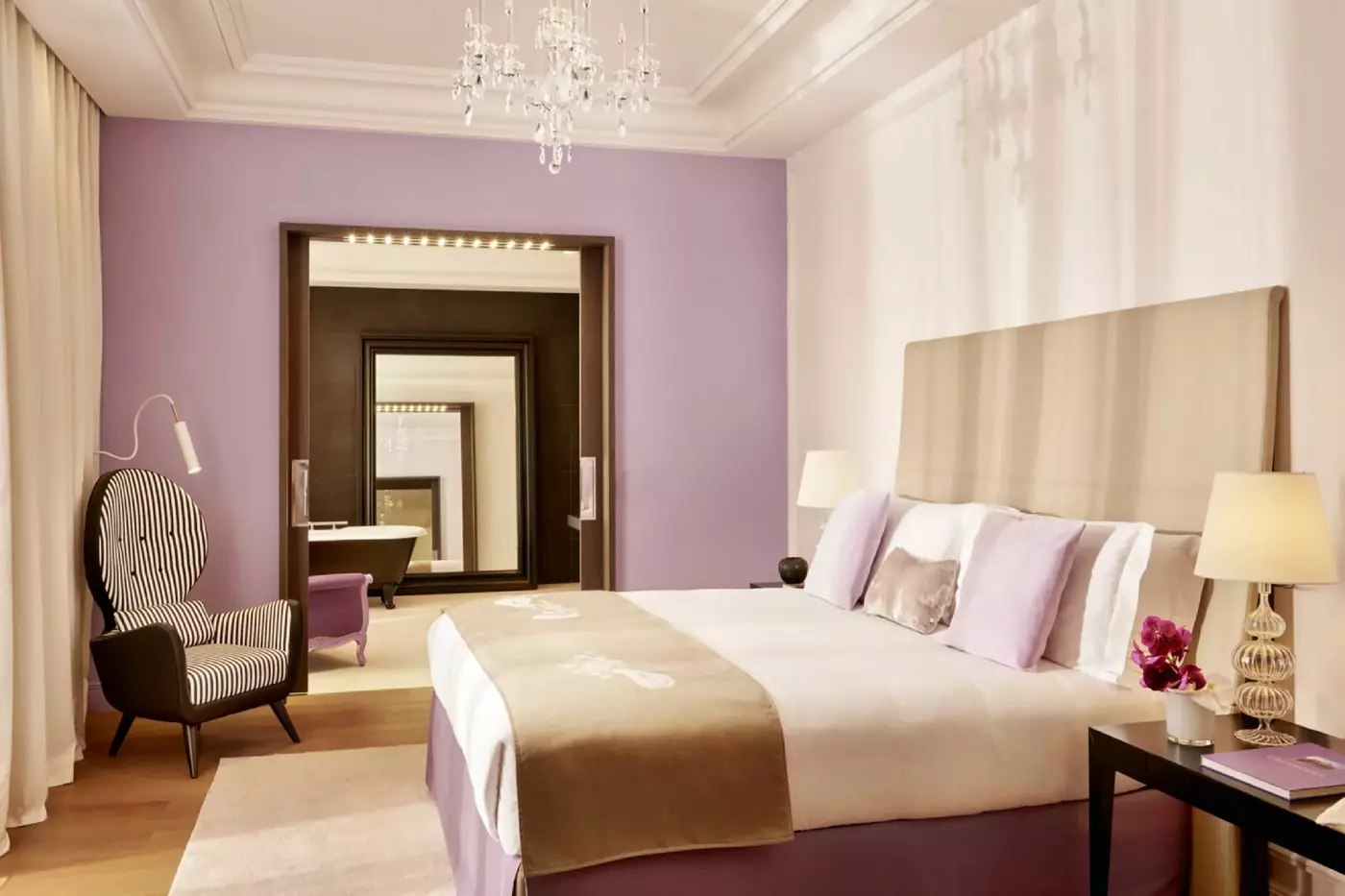
Some suites have a separate lounge. Others have an open-plan living area within the main room.
Warm stone colors and gray fabrics soften the dark wood panels, with artwork picked out by subtle lighting. An armchair, desk and chair make up the sitting area, while a curved rug brings a softer surface underfoot. Tall curtains frame the doors, and ceiling moldings add a quiet reminder of the historic building around the contemporary interior.
The bathroom pairs a bathtub with a separate glass shower. A lit mirror runs above the basin, and dark stone tiles contrast with the lighter floor. Outside, a lounger and a small table furnish the wooden deck. The doors bring the two settings close together, making it easy to move between a book indoors and a moment in the fresh air.

Warm stone colors and gray fabrics soften the dark wood panels, with artwork picked out by subtle lighting. An armchair, desk and chair make up...
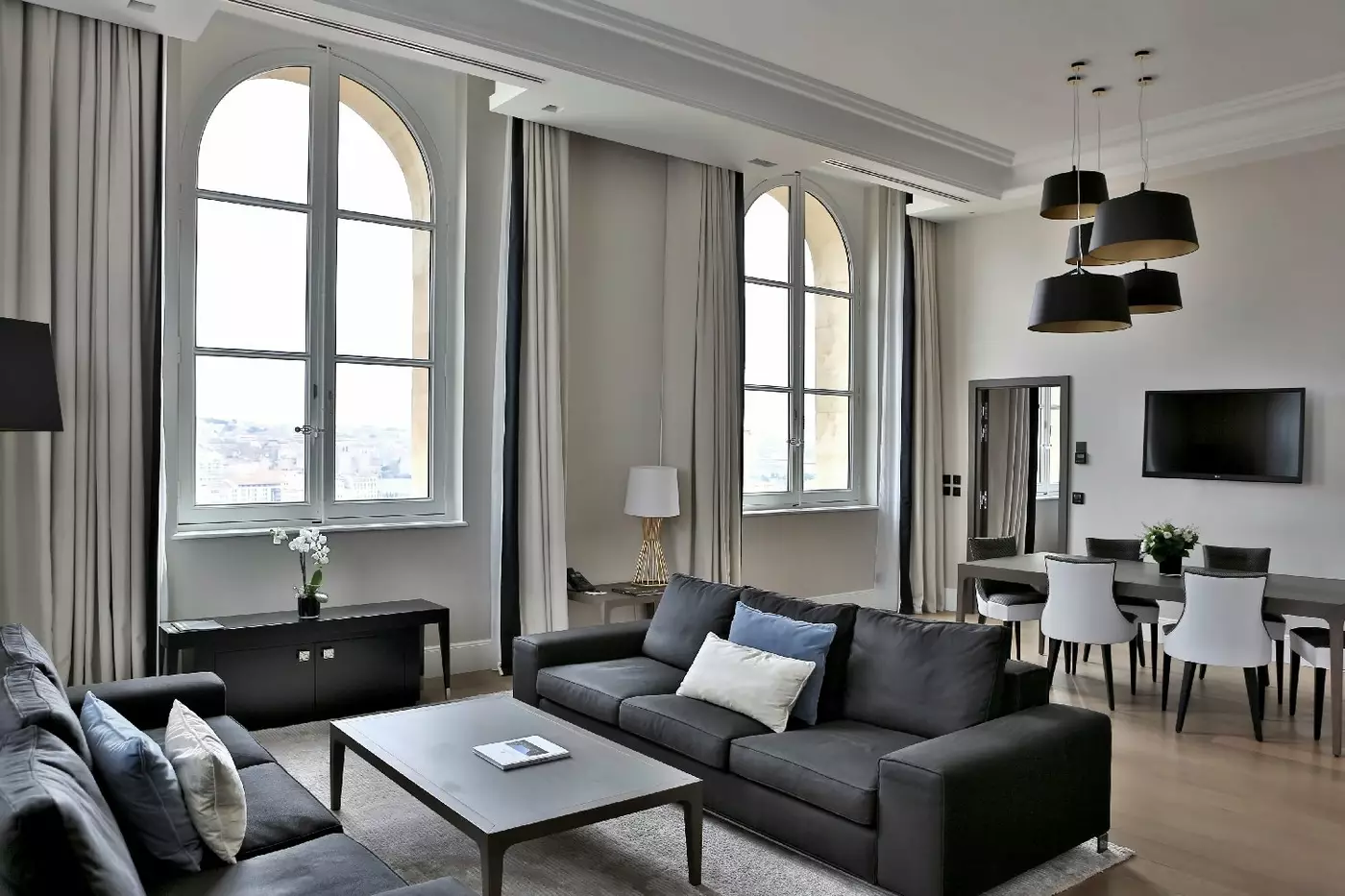
High ceilings and tall windows give the lounge a generous sense of scale. Sofas sit around a low table, with dark paneling and warm pendant lighting setting off the soft gray and ivory fabrics. A dining table has its own area, with doors leading through to the bedroom. Here, a white leather headboard and coral textiles bring a softer note.
The walk-in closet keeps clothing apart from the main rooms. In the bathroom, a clawfoot bathtub stands beside the window, with two basins along a dark counter and a broad mirror above them. Stone finishes and a separate shower complete the space. The suite sits in a wing of the former Hôtel-Dieu, with classic ceiling details above the modern furniture.

High ceilings and tall windows give the lounge a generous sense of scale. Sofas sit around a low table, with dark paneling and warm pendant...
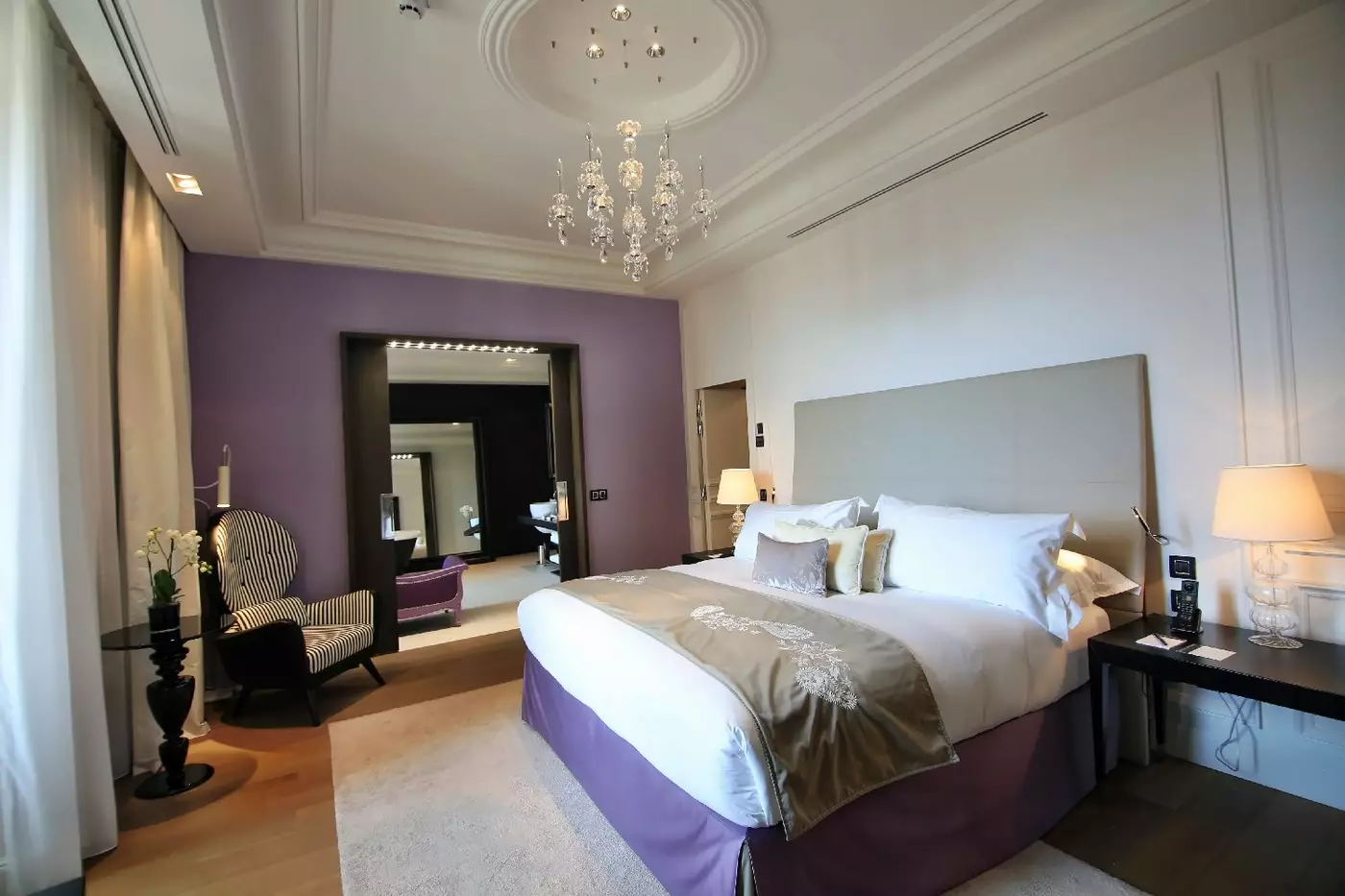
Lavender and deep purple upholstery set the salon apart, with rounded sofas arranged around low tables. Crystal chandeliers hang beneath ornate ceiling details. Large works of art chosen by Jean-Philippe Nuel bring color to the walls. Wood flooring runs between the reception spaces, and broad doorways link one room to the next.
A dining table has its own setting, while a separate office provides a long desk and chair for work. Pale lavender tones continue into the bedroom, with a walk-in closet for clothes and luggage. In the bathroom, two basins line a dark counter beside a clawfoot bathtub and a walk-in shower.
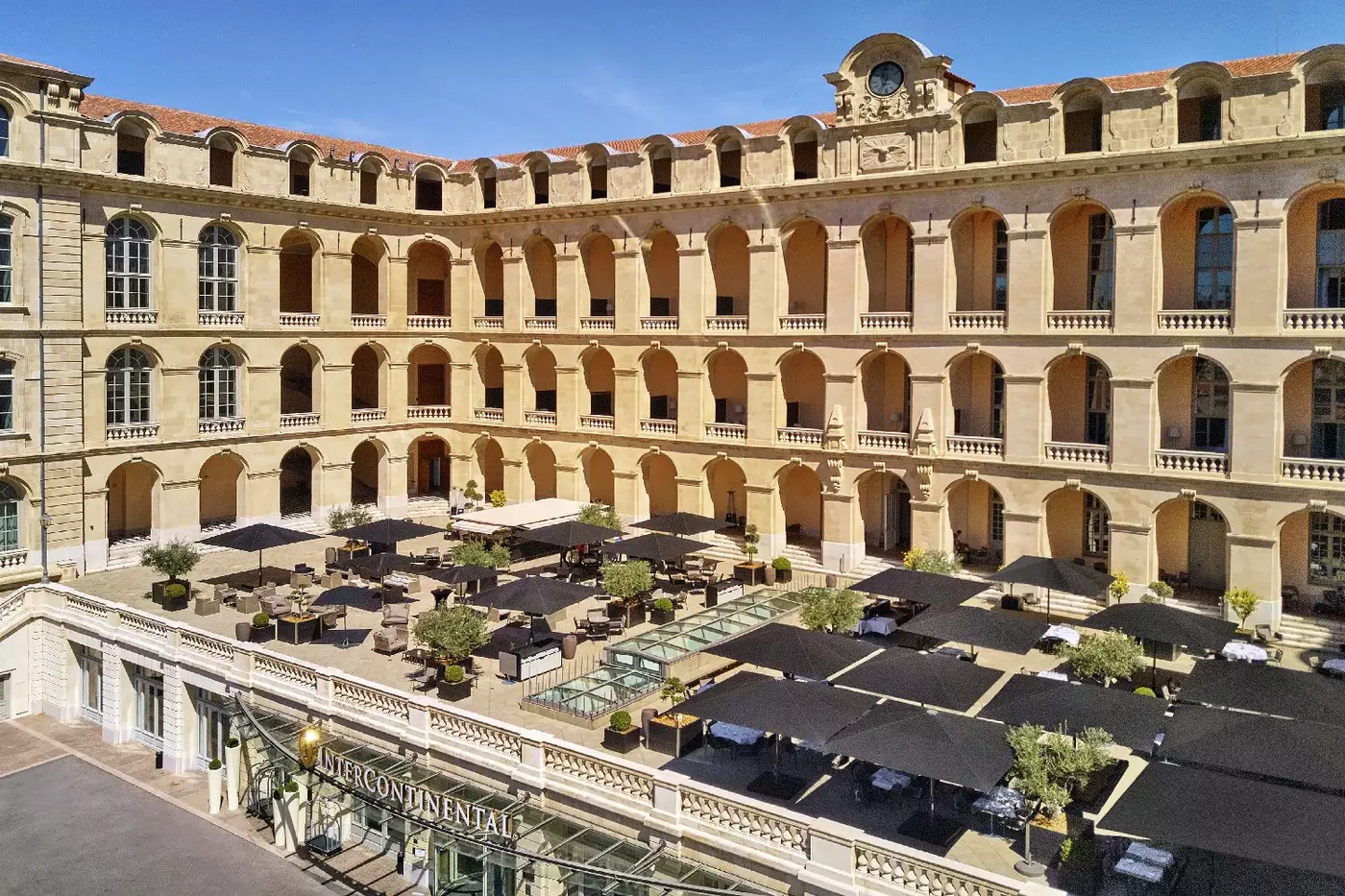
The outdoor area runs beneath the building's arches, with lounge seating sheltered by the stone colonnade. Inside, tall windows and long curtains frame the reception rooms. Formal ceiling details sit above the modern furniture, giving each space its own mix of old and new.

Lavender and deep purple upholstery set the salon apart, with rounded sofas arranged around low tables. Crystal chandeliers hang beneath ornate ceiling details. Large works...
The hotel stands above the north side of the Vieux-Port, with Le Panier immediately behind it. Walk downhill for the quays and boat departures, or take the smaller streets uphill through Marseille's oldest district. The elevation matters: from the hotel terraces, the working harbour and the basilica form a view that changes throughout the day.
For a first visit, the location is practical as well as striking. The waterfront leads toward Fort Saint-Jean and Mucem, while the lanes around the hotel invite slower exploration. Marseille is a busy port city with hills and traffic, so guests who want its streets and museums close at hand will find more here than those seeking quiet seclusion.
The Hôtel-Dieu began in 1593 when two medieval hospitals joined. Its eighteenth-century expansion gave Marseille the monumental staircases and long galleries still visible today; Napoleon III inaugurated the new building in 1866. The hospital later became a hotel, opening under the InterContinental name in 2013. These dates explain why the architecture feels integral to the stay rather than applied as decoration.
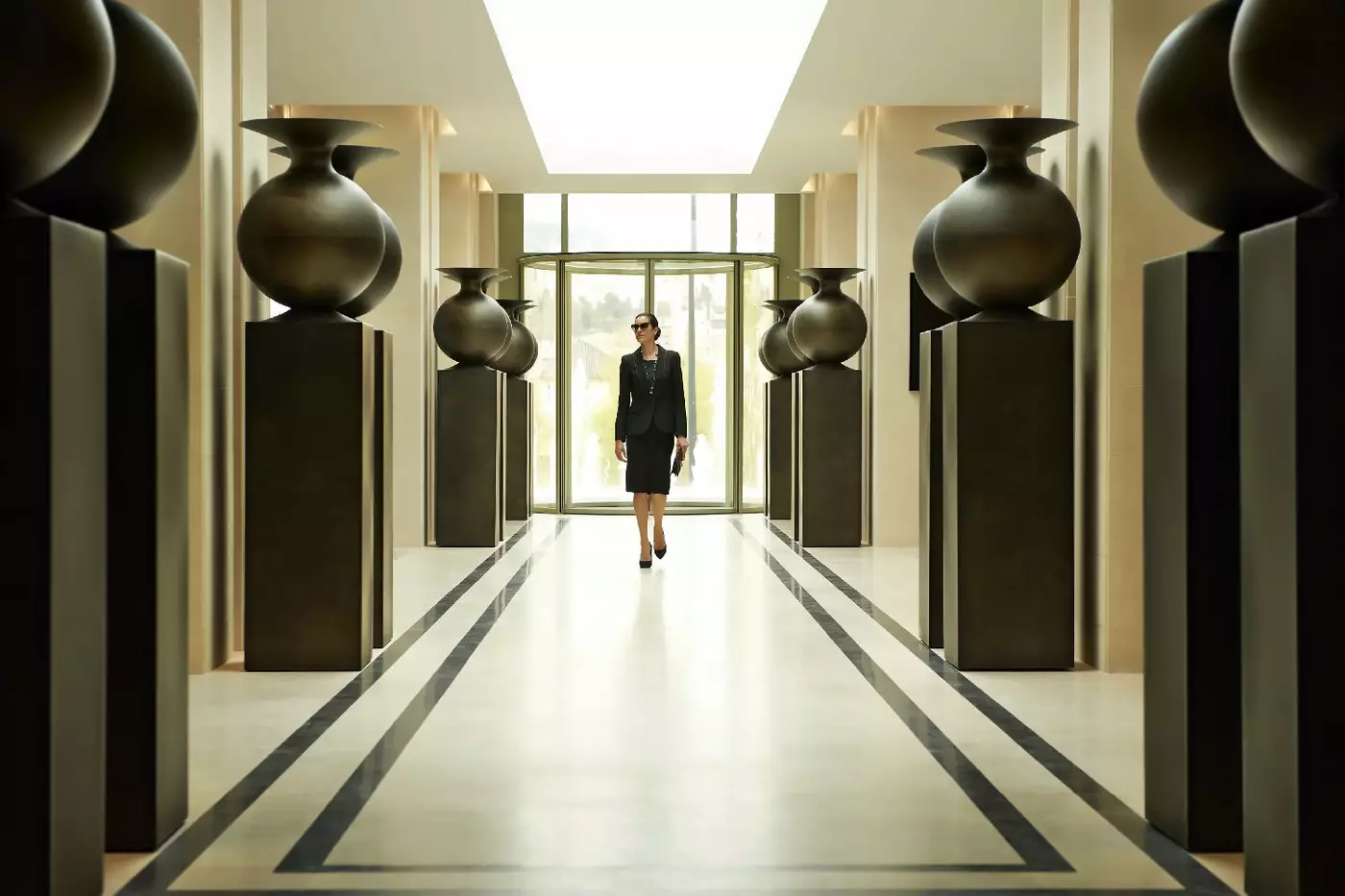
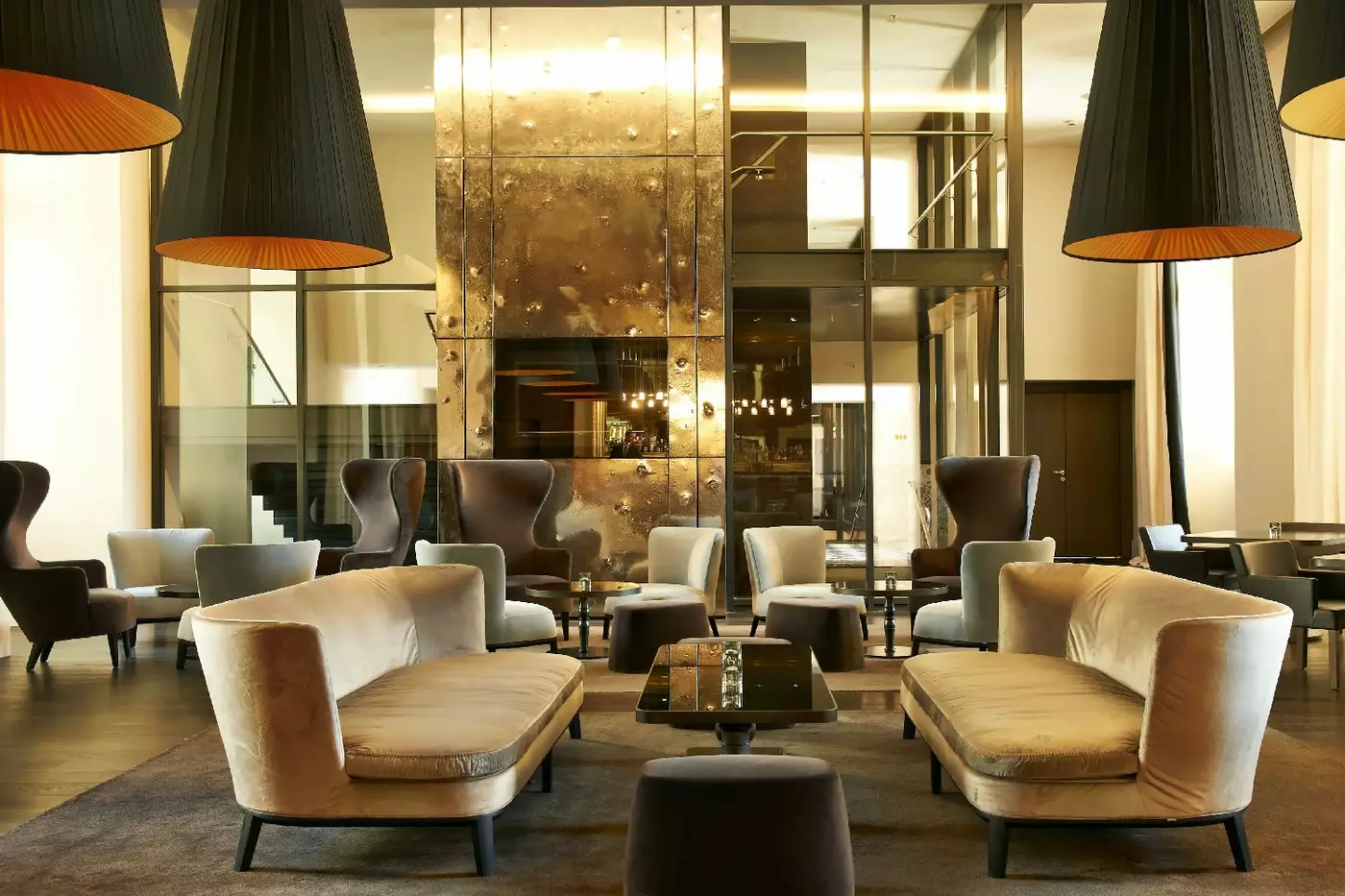
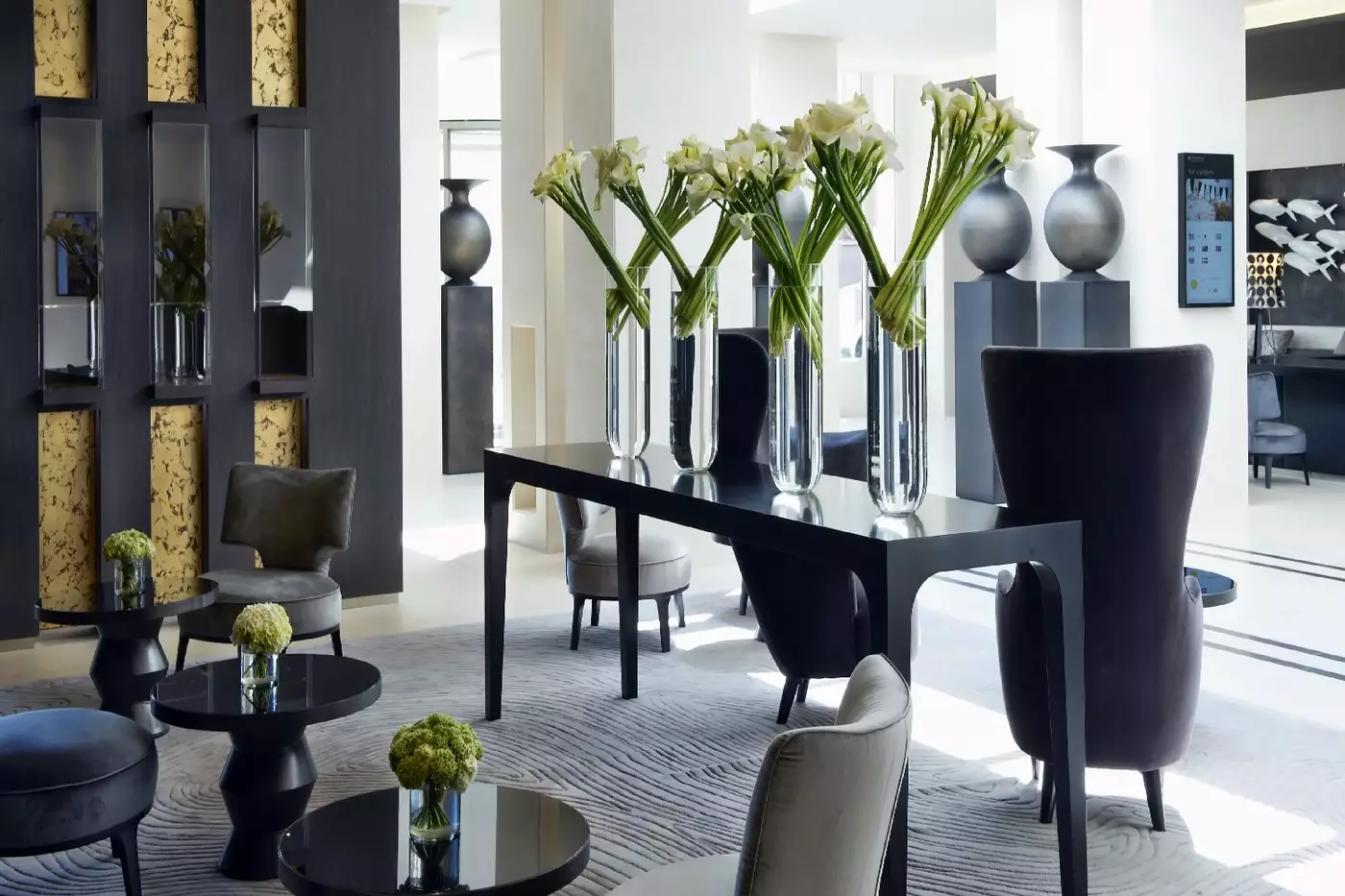
The old stone exterior has a formal presence, but the interiors are not a period recreation. Jean-Philippe Nuel designed the rooms with a contemporary hand, allowing the historic fabric to remain legible in the shared spaces. Guests interested in architecture should spend time on the staircases and terraces, not only pass through them on the way to a room.
The hotel lists 179 rooms and 15 suites. Of the rooms, 72 look toward the Vieux-Port and 33 have a private terrace. Those distinctions are worth checking at booking: a port view or terrace makes the setting part of each morning and evening, while a Panier-facing room can suit travelers who expect to spend most of their time out in the city.
Classic and Premium rooms offer different bed and outlook options, and the Premium Sofa Bed category adds flexibility for a family stay. The suites range from Junior categories to larger Prestige suites and a Presidential Suite. Rather than treating every upgrade as interchangeable, choose according to the space, view and outdoor access that matter for this particular visit.
The contrast between contemporary rooms and the former hospital is one of the hotel's quieter strengths. You can spend the day in Marseille's dense streets, then return to an orderly room above the harbour. Families should confirm the exact sleeping arrangement and any connecting-room request with the booked category; the broad room count does not make every layout equivalent.
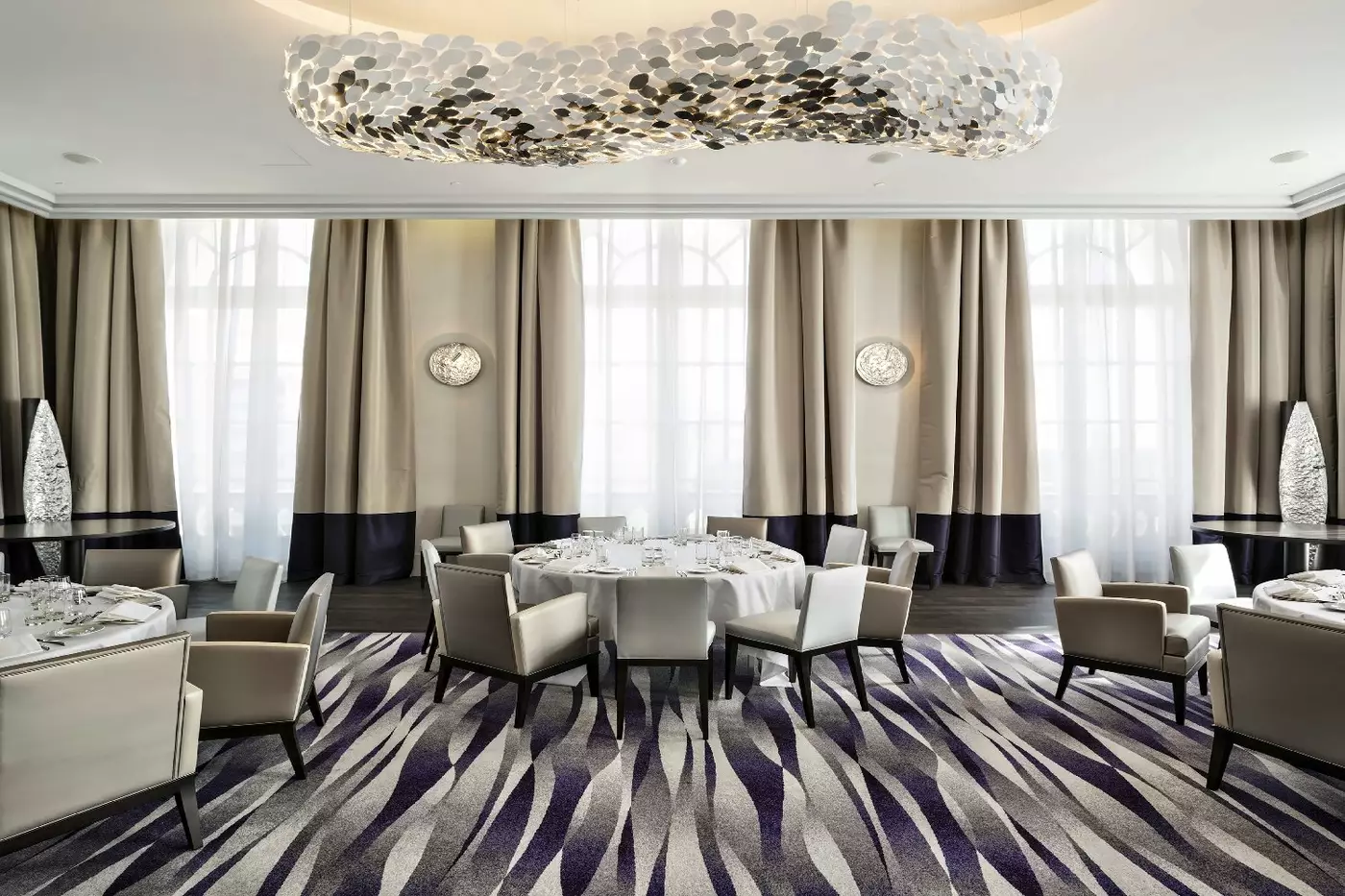
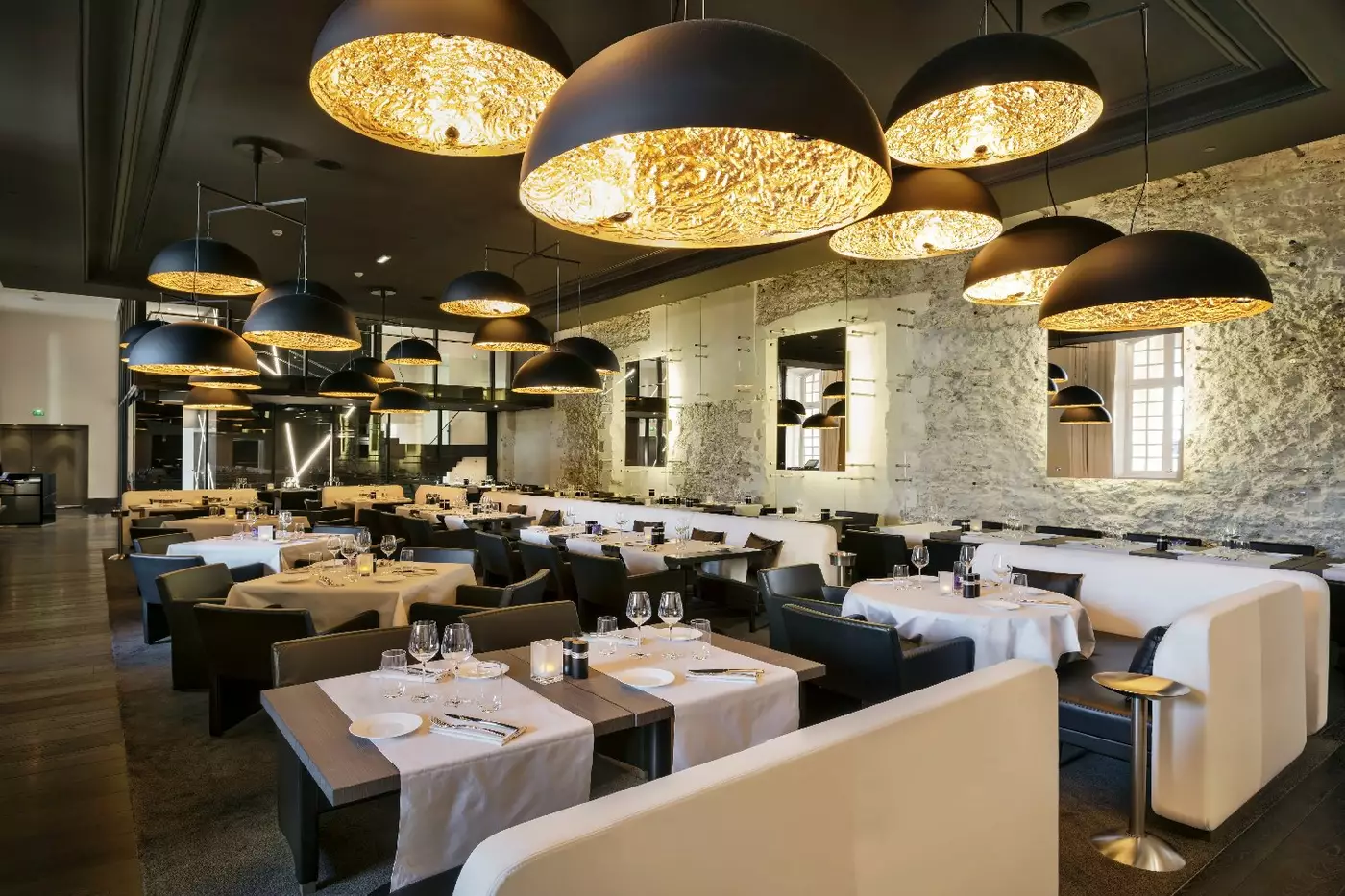
Les Fenêtres is the hotel's brasserie, serving Mediterranean-influenced cooking in a contemporary dining room. In suitable weather, its terrace opens the meal to views of the port and Notre-Dame de la Garde. It is a useful option after a full day outside: dinner can still feel connected to Marseille without another journey across the city.
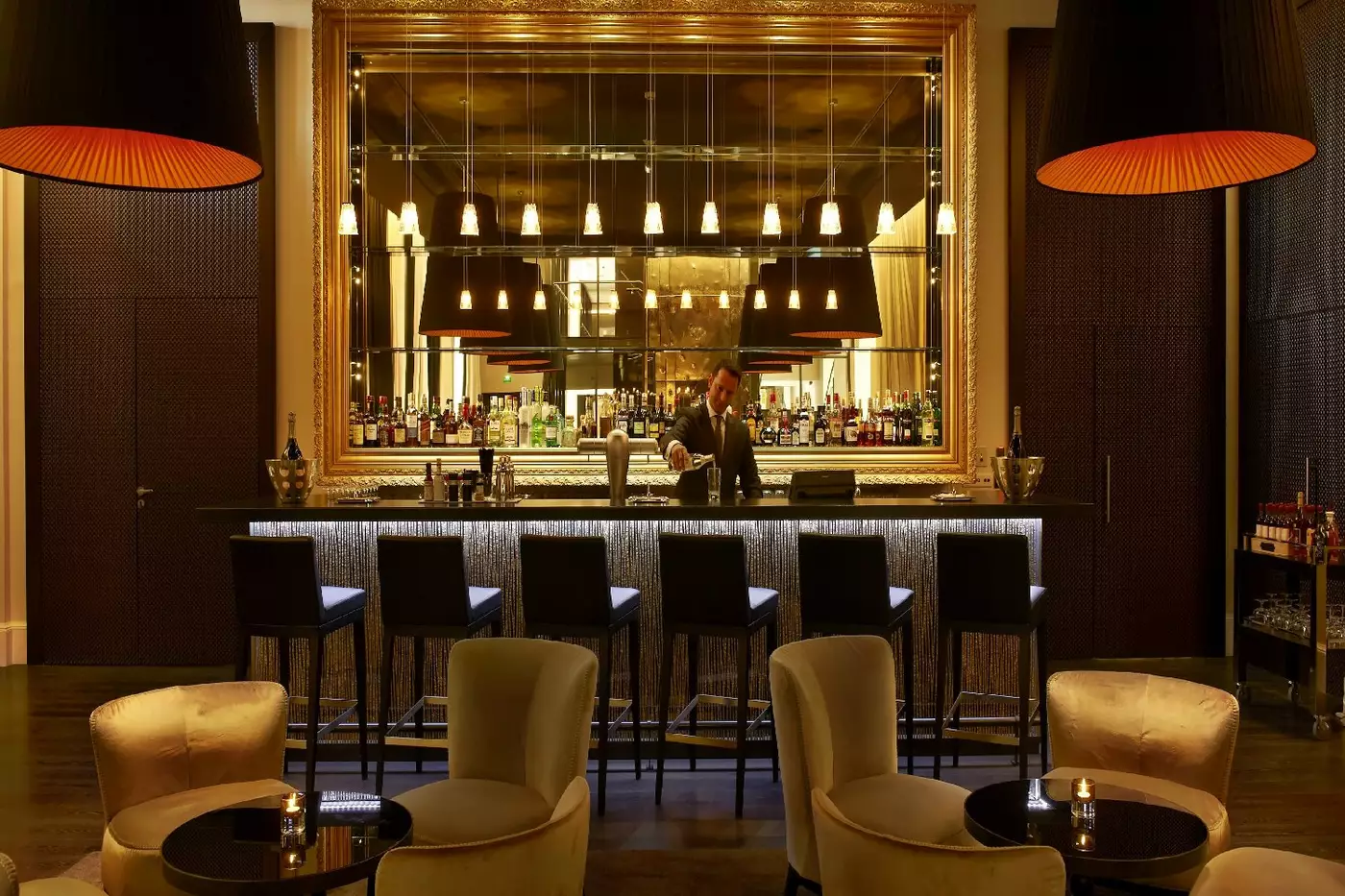
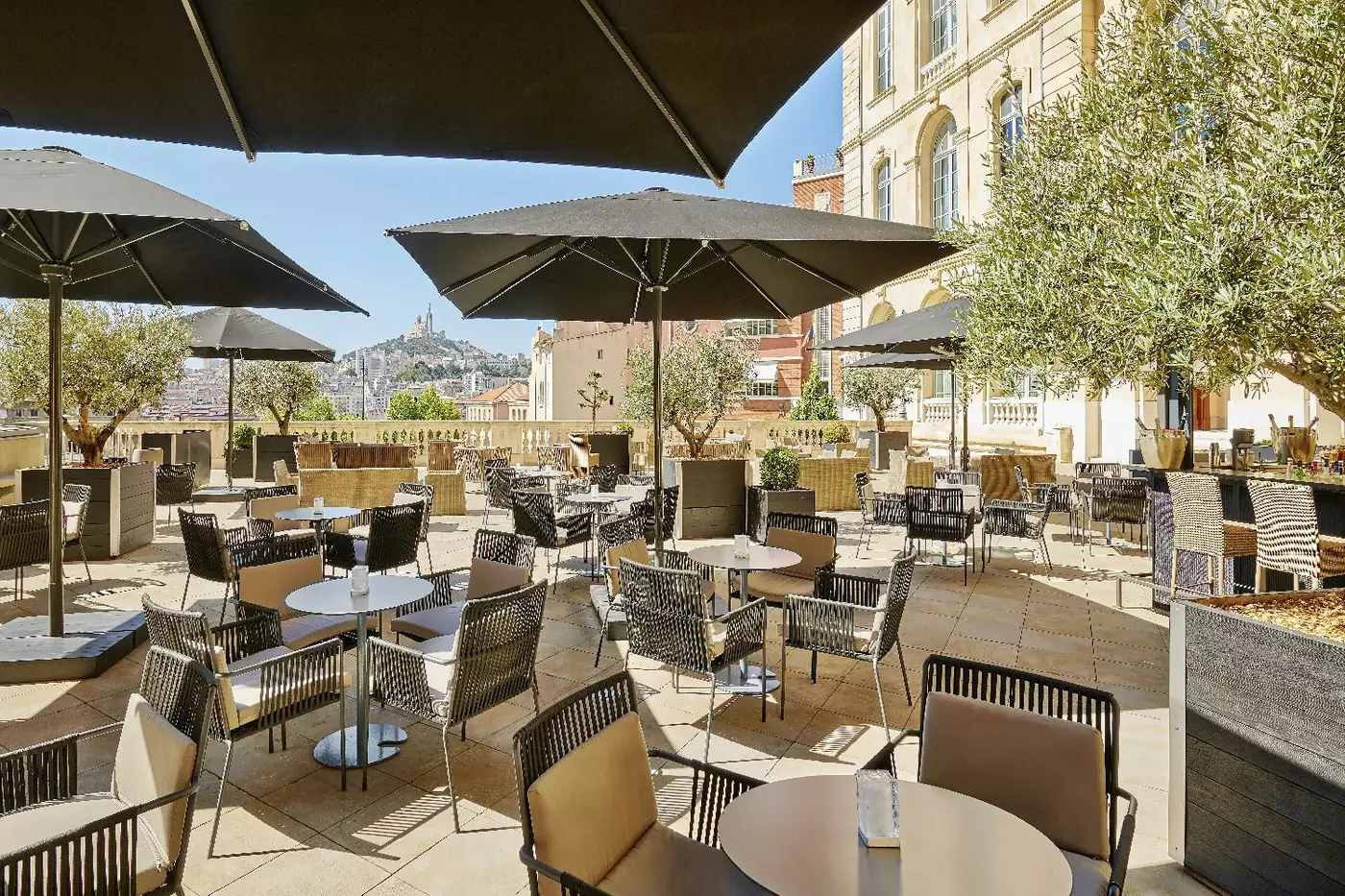
The Capian bar has its own indoor room and a terrace used in the warmer season. Its name comes from the projecting prow of the traditional pointu fishing boats. A drink here is less about a generic hotel-bar ritual than about pausing above the harbour, with the city's movement still visible below.
Both venues welcome a different pace of stay. Les Fenêtres can anchor a meal; the Capian works for a shorter stop before or after exploring. Terrace service depends on the season and weather, so the indoor spaces remain the dependable choice when planning a particular evening.
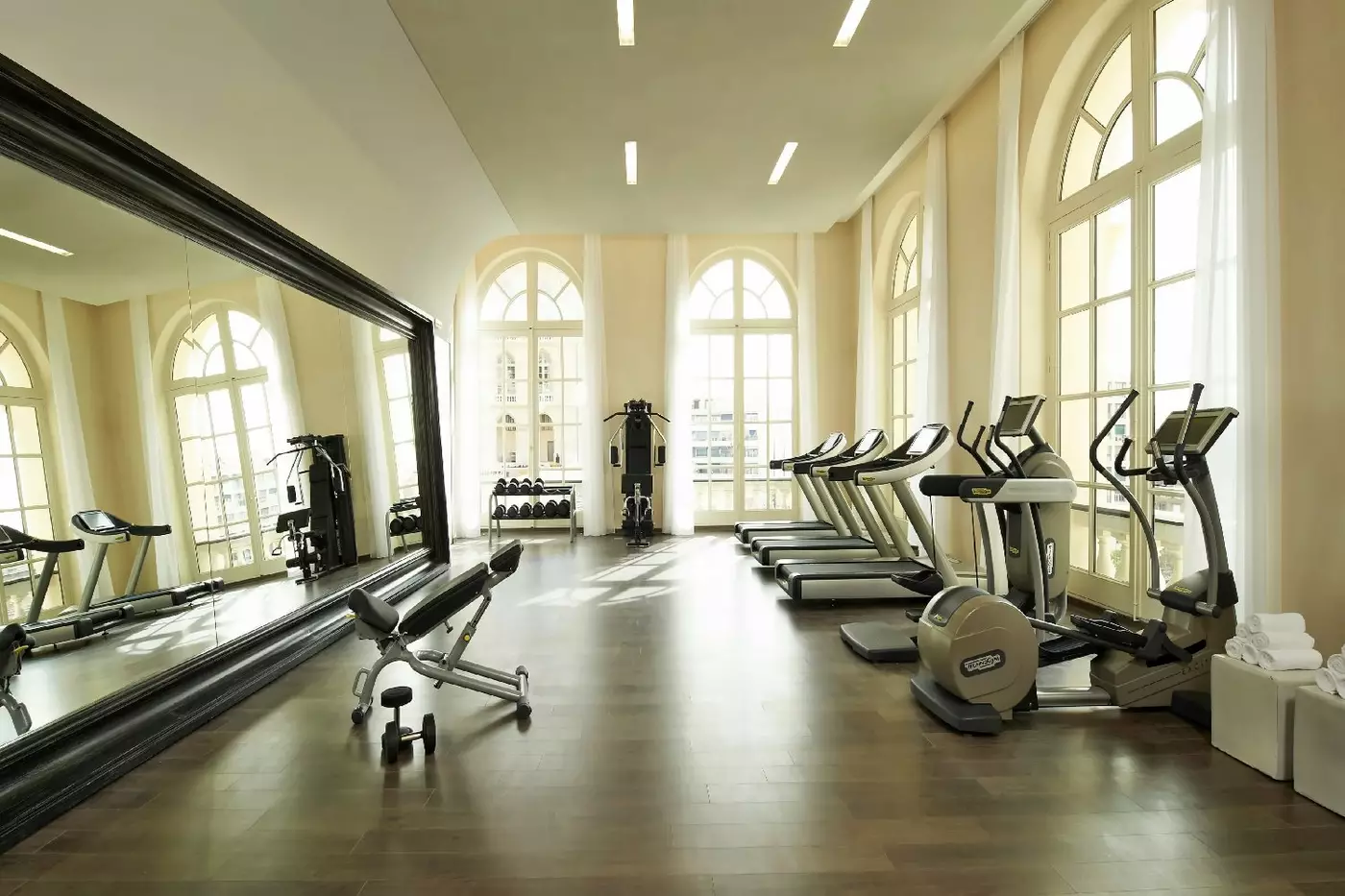
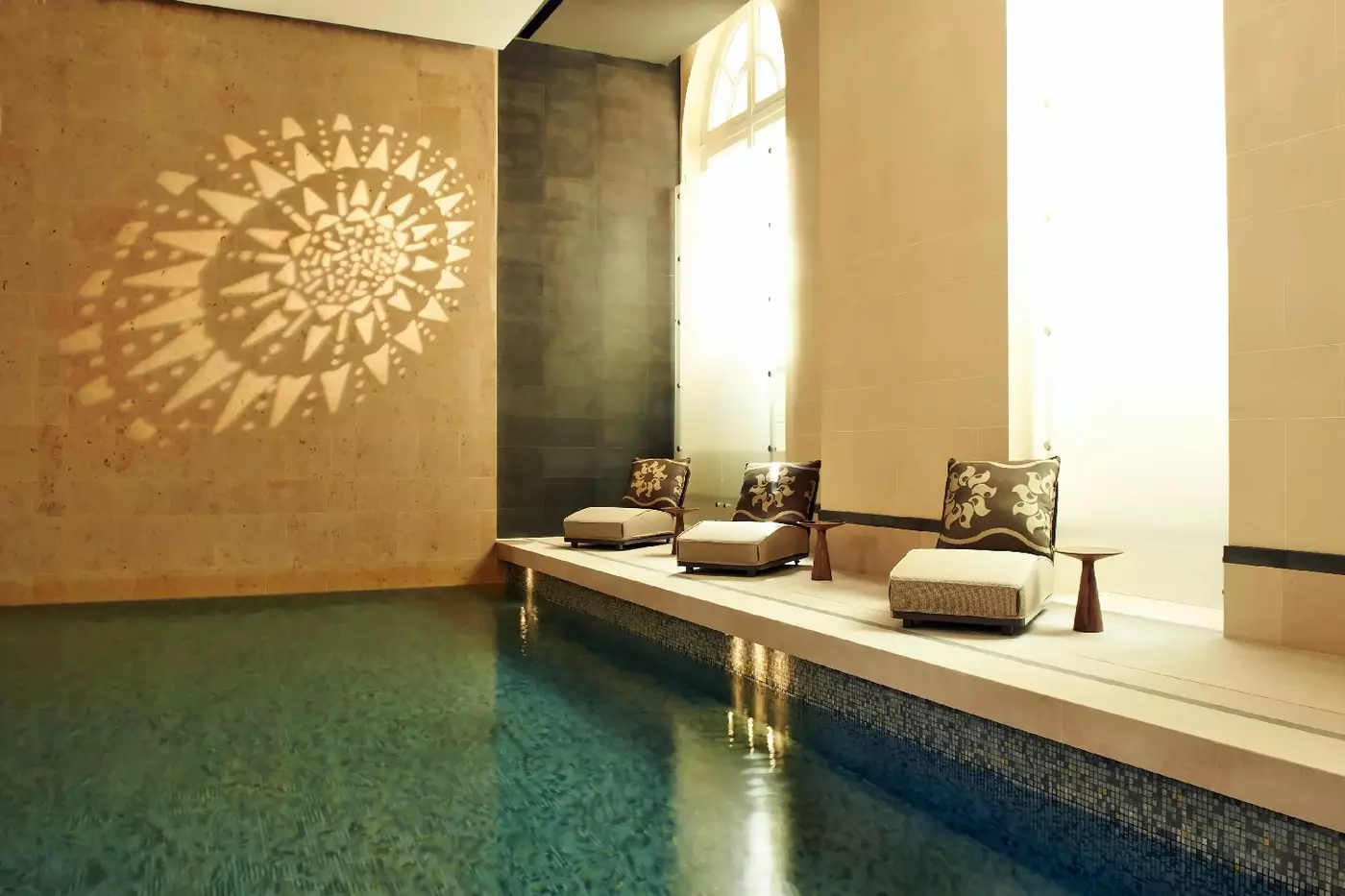
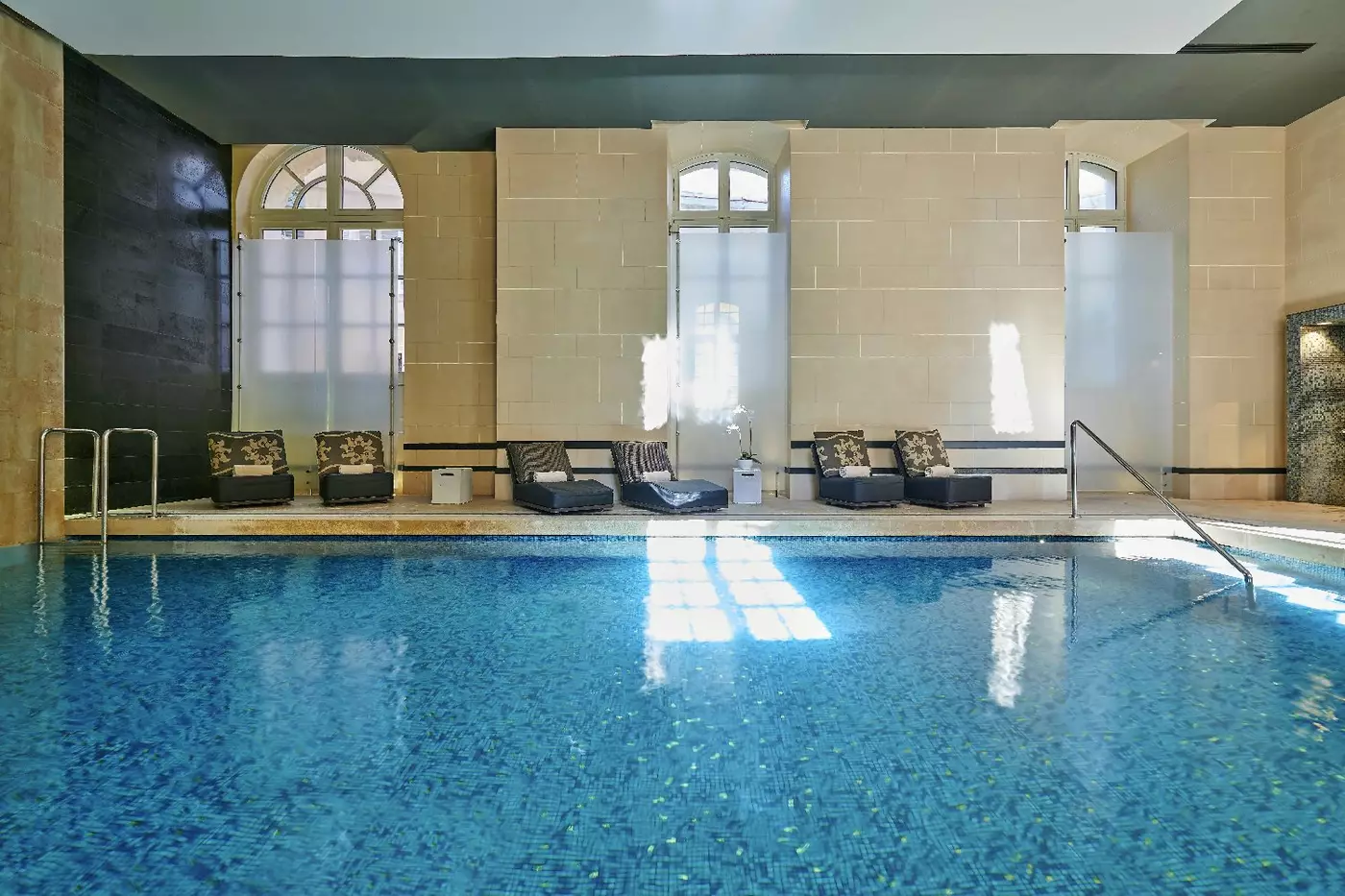
Spa by Clarins & myBlend sits within the hotel and includes treatment rooms, saunas, hammams, experience showers and a fitness area. Its design takes cues from Provençal fountains and washhouses. The indoor pool provides a welcome shift in tempo after the port, markets or a day of meetings, without turning the property into a resort.
The pool is reserved for hotel guests, while the spa also accepts outside visitors by appointment. Access to the pool and aquatic facilities is arranged in one-hour slots, with a capacity limit. Guests who want a swim or treatment at a particular time should reserve it rather than assume they can walk in whenever they return to the hotel.
This is a useful feature in every season. The hotel can support an active city itinerary without requiring every hour to be spent outdoors. A short swim before dinner may be more valuable here than an elaborate wellness schedule, especially for travelers balancing Marseille sightseeing with work or family plans.
The Hôtel-Dieu also has a substantial events role. Its conference centre covers 1,230 square metres, with flexible rooms, foyers and terraces. The Salle des Honneurs can be divided for different gatherings, while smaller meeting spaces support more focused sessions. The architecture gives these events a Marseille setting rather than a neutral conference-hotel backdrop.
That scale is worth knowing even on a leisure stay. The hotel can host groups and receptions as well as individual guests, so its public rooms may feel lively. For an event planner, the combination of bedrooms, meeting space and a central address is practical; for a couple seeking absolute privacy, a smaller property may be a better fit.
InterContinental Marseille - Hotel Dieu suits travelers who want a full-service base above the Old Port and value the building's history as much as its view. It works especially well when the itinerary includes Le Panier, the waterfront museums, boat journeys and time to return for dinner or the spa. The strongest room choice depends on how much the harbour outlook matters to the stay.
It is less suited to guests whose priority is sand outside the door or the hush of a small country retreat. Marseille's energy is close, and the hotel is a prominent landmark rather than a hidden address. For those who want to engage with the city, that is the point: the former Hôtel-Dieu puts its streets, water and history within easy reach.
At Les Fenêtres, the Retour du Marché lunch menu changes with the day’s market produce, bringing seasonal Provençal ingredients into the brasserie.
The Clarins en Provence treatment pairs a hammam session and herbal scrub with a massage using lavender pouches, a nod to the region.
Le Capian takes its name from the prow of traditional fishing boats and serves cocktails on a terrace overlooking Marseille’s Old Port.
1 Place Daviel, 13002 Marseille, France
Playing this video may share data with YouTube. Please see our Privacy Policy.
Yes. InterContinental Marseille - Hotel Dieu is worth it for travelers who want a historic five-star stay above the Vieux-Port. It is strongest for couples, food lovers, city breaks, business stays, spa time, and guests who want Marseille views.
InterContinental Marseille - Hotel Dieu is in the Panier district, above the Old Port of Marseille. The location works well for Vieux-Port, Le Panier, Mucem, La Vieille Charite, boats, restaurants, and city walks.
InterContinental Marseille - Hotel Dieu has 179 rooms and 15 suites in a restored historic building. Some rooms and suites look toward the Old Port, Notre-Dame de la Garde, terraces, gardens, or Marseille rooftops.
Rooms and suites are designed by Jean-Philippe Nuel, with calm tones, large bathrooms, and contemporary comfort. Travelers should choose harbor-view or terrace categories if the view is central to the stay.
Yes. The hotel occupies the former Hotel-Dieu, an important Marseille hospital site with deep local history. The grand staircases, terraces, stone facade, and Old Port setting make the building a major part of the experience.
More amenities
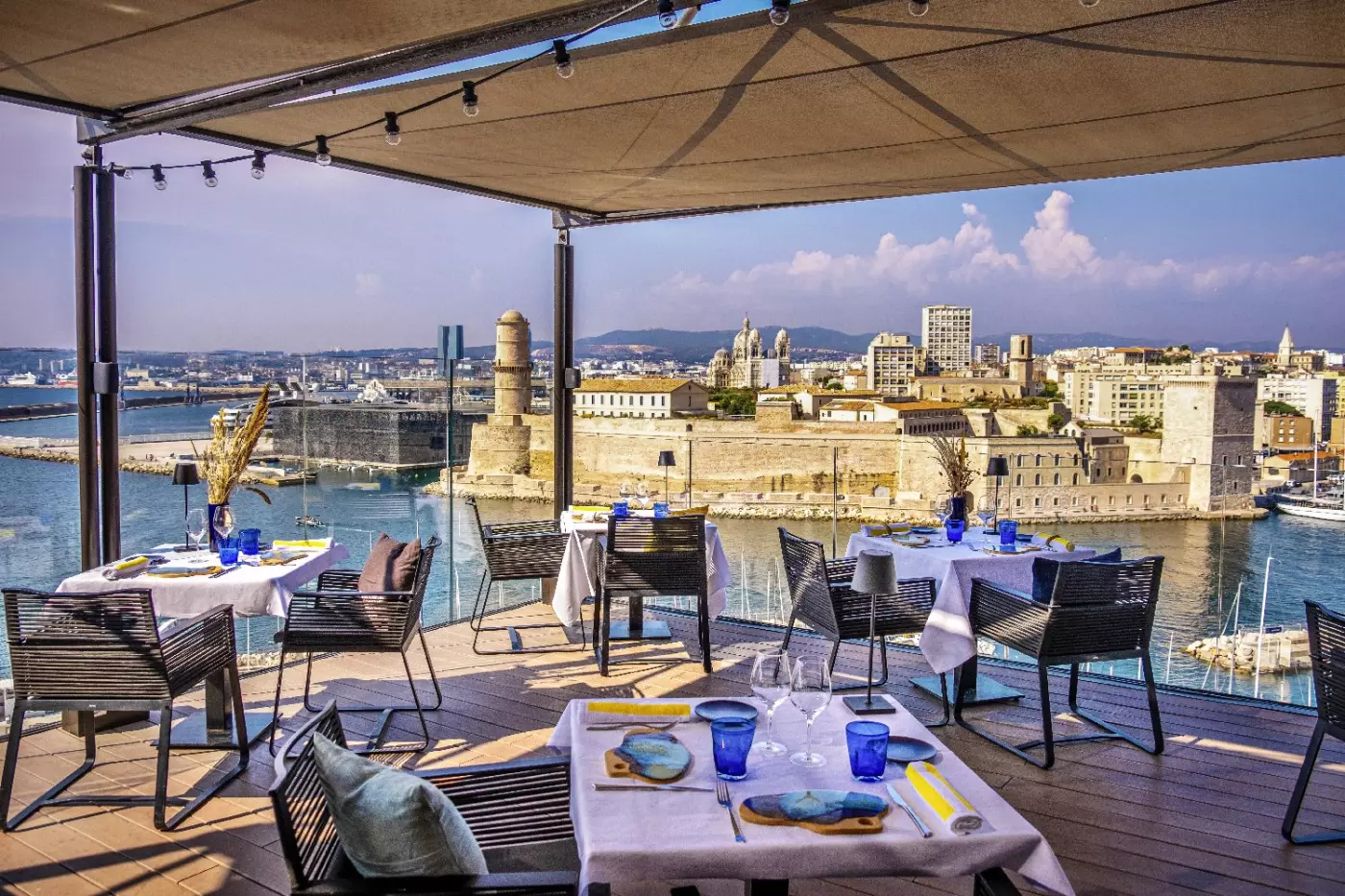
Sofitel Marseille Vieux Port sits above the entrance to the Old Port, where the harbor opens toward the Mediterranean. The el...
More amenities
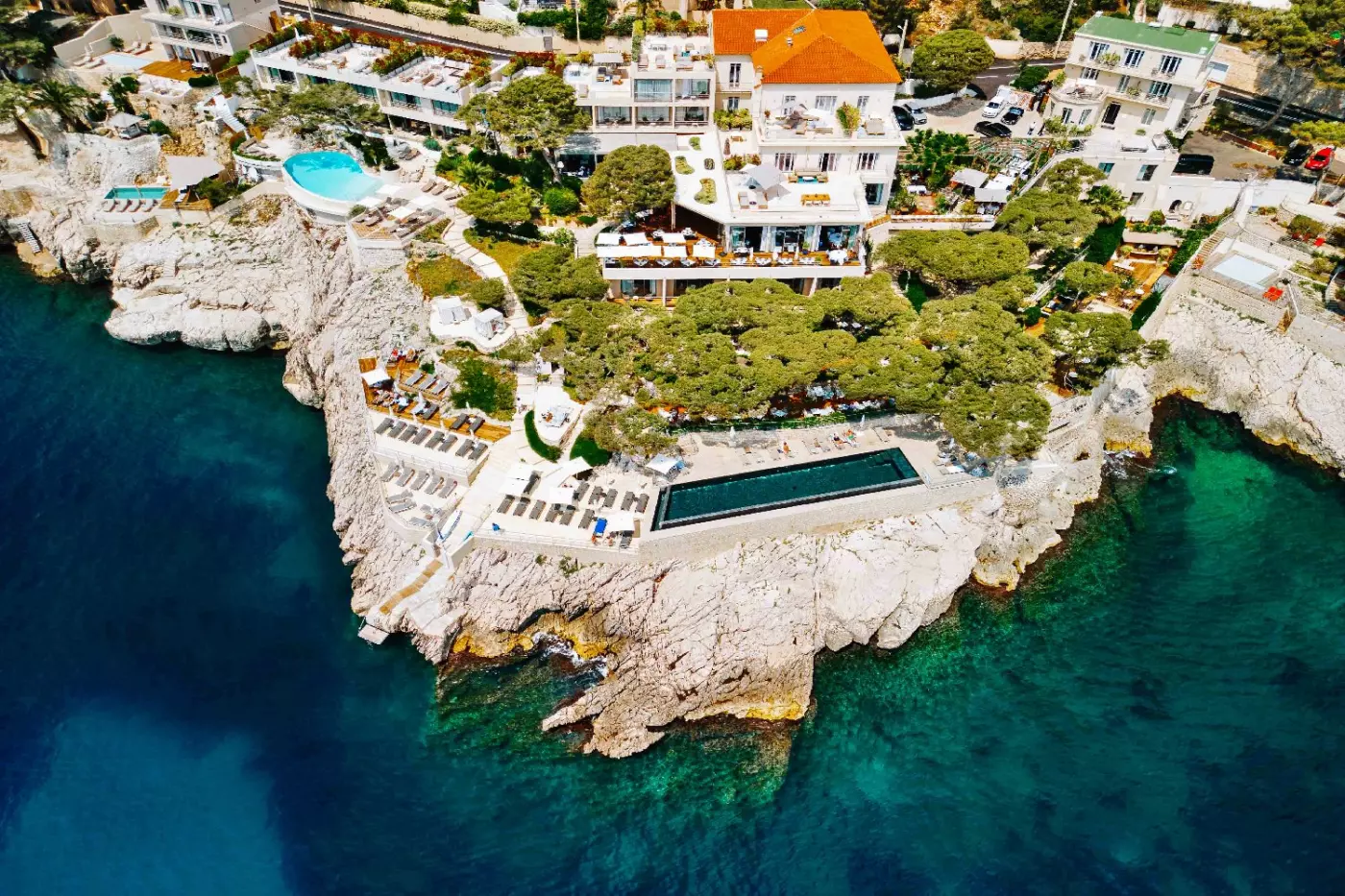
Hotel Les Roches Blanches is the Cassis address for travelers who want the Mediterranean at eye level. The hotel sits at 9 av...
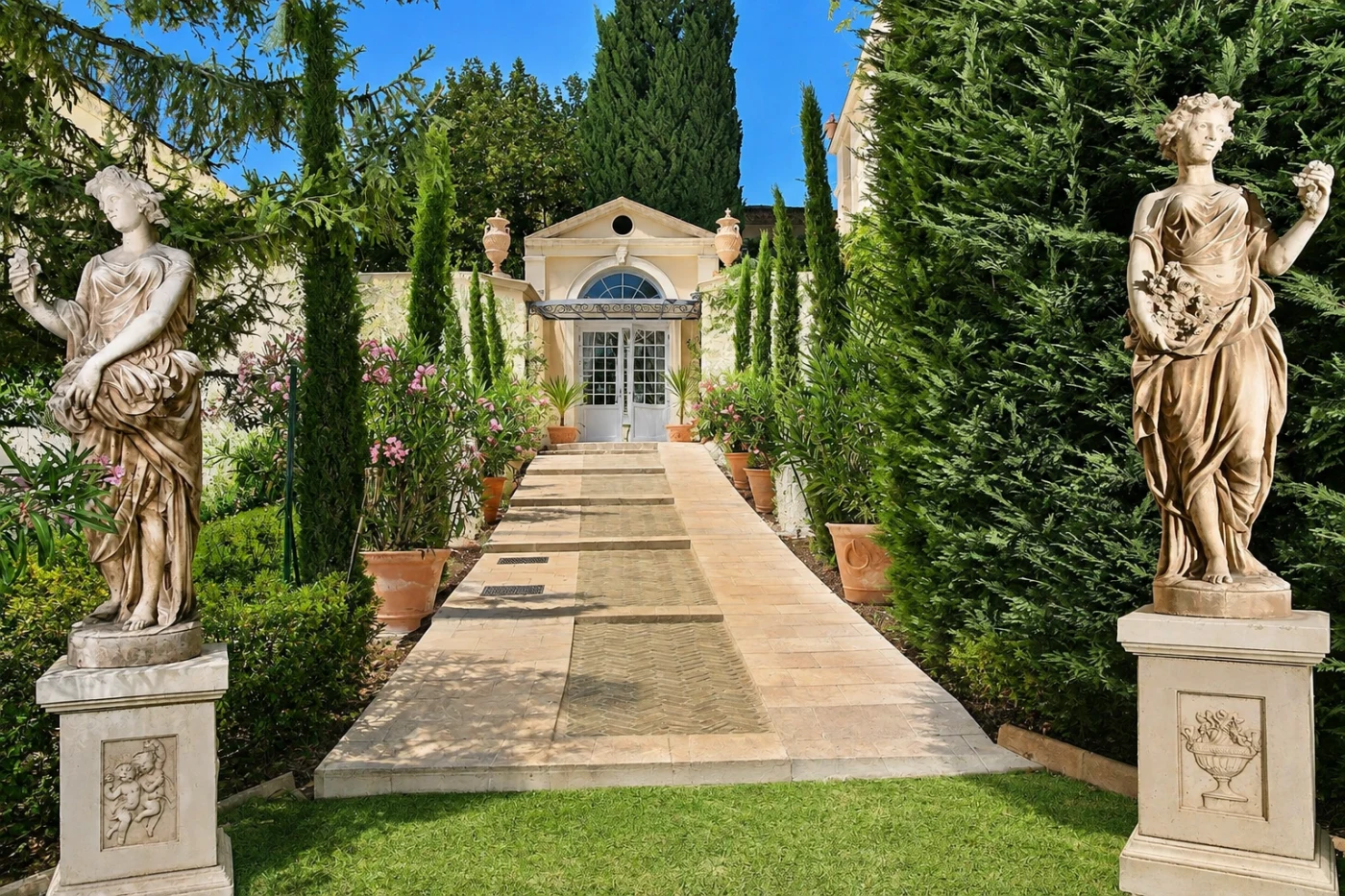
Villa Gallici occupies an 18th-century house at 18 Avenue de la Violette in Aix-en-Provence, France. The historic center is a...