



Royal Champagne Hotel & Spa
Prices From 1’134 USD
+3
More amenities
- Sauna
- Wellness
- Romantic
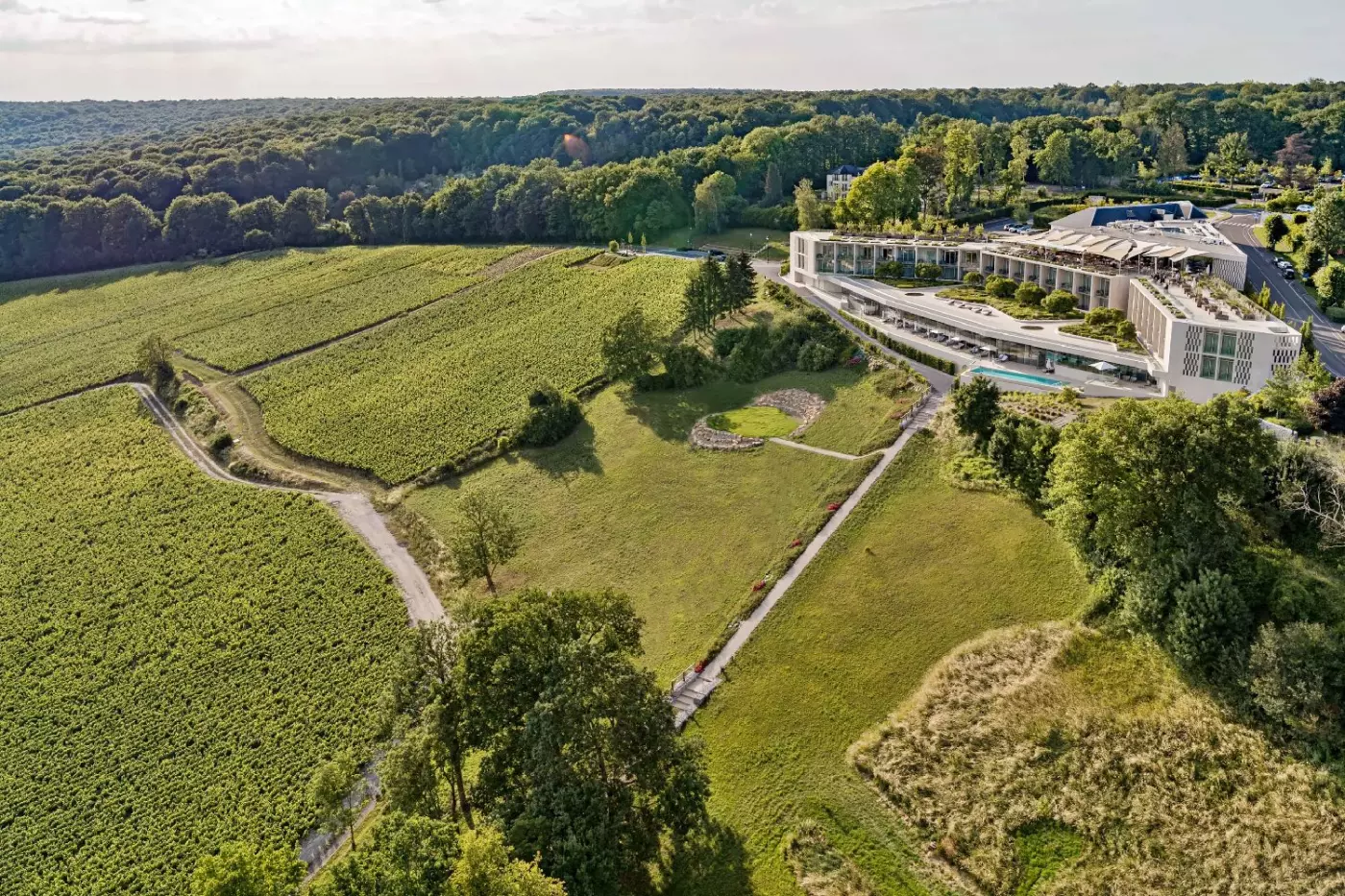
Royal Champagne Hotel & Spa is not a city hotel with a vineyard view added as decoration. It is a Champagne retreat built aro...
Please choose a hotel or destination from the list.
We couldn’t open your search results. Please try again.
Your private search
Finding exceptional stays
Champillon’s setting brings forest and vineyard into the same village landscape. Royal Champagne Hotel & Spa provides the accommodation reference, with the Marne Valley forming the wider scene. The village’s own buildings, fountain and named viewpoints add subjects beyond the familiar Champagne houses.
Prices From 1’134 USD
More amenities
Royal Champagne Hotel & Spa is not a city hotel with a vineyard view added as decoration. It is a Champagne retreat built aro...
Champillon backs onto forest and overlooks the vineyard landscape. The wooded edge and the cultivated slopes create different patterns within the view: a denser backdrop beside the repeated lines of vines. For a landscape-led stay, notice that relationship rather than reducing the setting to one general image of wine country.
Bellevue, also called Balcon sur les Vignes, is a named viewpoint in Champillon. It gives the vineyard landscape a local reference outside the hotel description. Consider it as a subject for looking at the village’s surroundings, without assuming that every place or room supplies an identical panorama.
Saint-Barnabé church dates from the seventeenth century, while La Moutonne fountain supplies a smaller village landmark. These references give Champillon a built identity as well as a vineyard setting. A visitor interested in settlement can consider how a larger religious building and a modest civic feature contribute to the village, rather than looking only beyond it towards the valley.
The France hotel guide supplies the national journey context.
No. Champillon provides a hillside village setting, while the avenue is in Epernay. Choose the base according to whether the retreat outlook or the town setting matters most to the daily plan.
Its museum connects Champagne wine with regional archaeology. It introduces a different cultural subject rather than repeating the experience of visiting another house solely for a glass.
It adds a village perspective and historical connection with Dom Pierre Perignon at Saint-Sindulphe church. Choose it for that distinct context rather than treating it as an interchangeable stop with Epernay.
The inscription brings together the historic vineyards of Hautvillers, Aÿ and Mareuil-sur-Aÿ; Saint-Nicaise Hill in Reims; and Avenue de Champagne with Fort Chabrol in Epernay. These places represent different stages of the wine economy: grape-growing hillsides, production and underground cellars, then the houses that traded and distributed Champagne. It is a regional cultural landscape, with specific component sites.
Pressoria explains how Champagne grows and is made, through sensory displays about chalk, climate, the vine’s life cycle, harvesting and effervescence. Its educational garden brings the appellation’s grape varieties into view as living plants. This suits an interest in the land and winegrower’s craft, with the exhibition connecting what happens in the vineyard to the bubbles in the glass.