



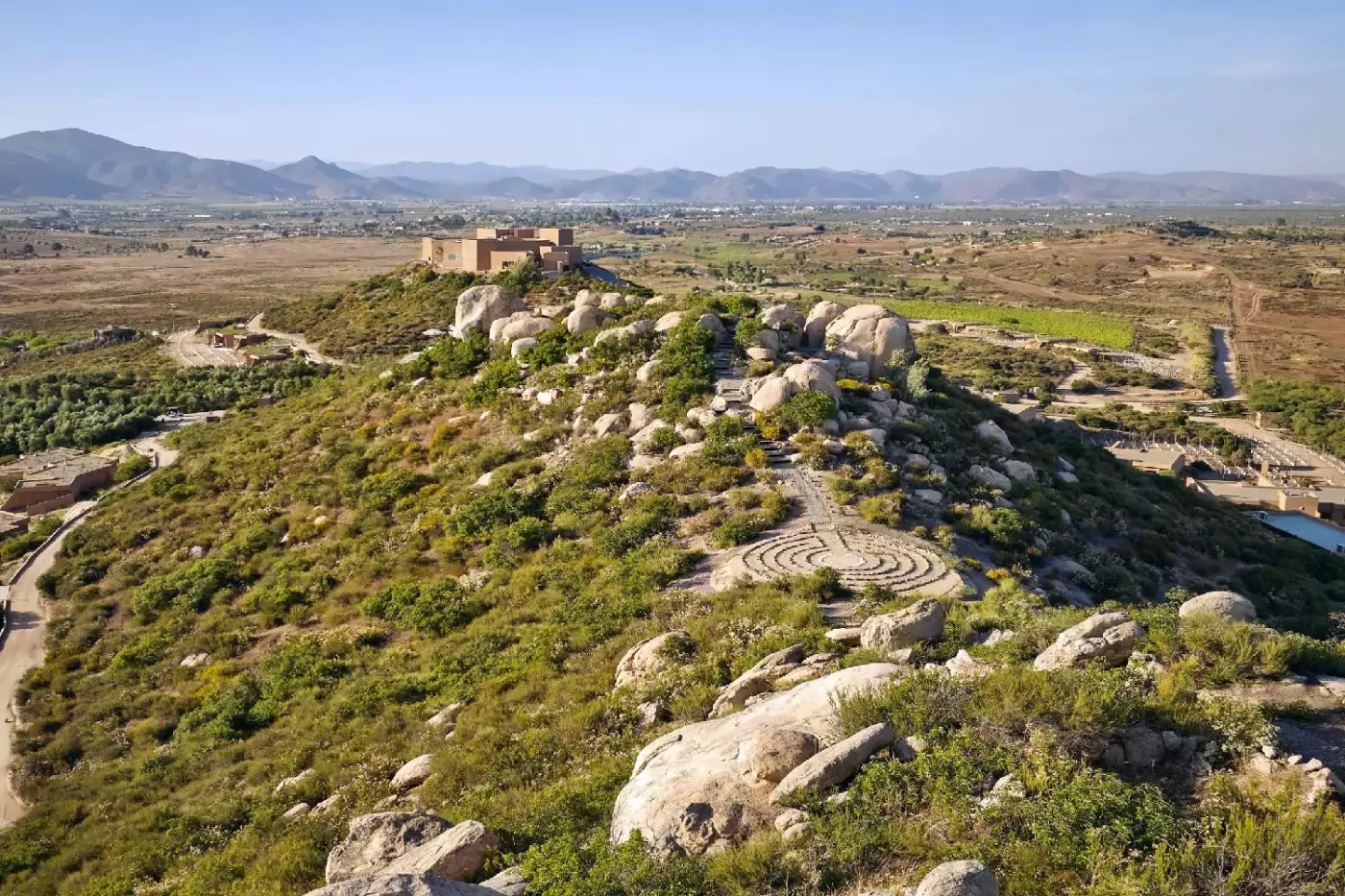
Banyan Tree Veya Valle de Guadalupe
Prices From 510 USD
+3
More amenities
- Sauna
- Wellness
- Romantic
Banyan Tree Veya Valle de Guadalupe is a 30-villa wellbeing resort in Baja California's wine country, near Ensenada. It is th...
Please choose a hotel or destination from the list.
We couldn’t open your search results. Please try again.
Your private search
Finding exceptional stays
Ensenada brings together a Pacific port, Baja California’s food culture and inland wine country. Banyan Tree Veya Valle de Guadalupe places the stay among the valley’s hills. Ensenada’s urban streets and Pacific shore are separate outings from this inland base.
Prices From 510 USD
More amenities
Banyan Tree Veya Valle de Guadalupe is a 30-villa wellbeing resort in Baja California's wine country, near Ensenada. It is th...
Reserved for You
Banyan Tree Veya Valle de Guadalupe provides a hillside wine-country base for an Ensenada journey. Choose it for the relationship with the valley and the time you want to spend in that setting. The accommodation and the places you visit should each contribute something to the stay.
A wine-country base allows the countryside to shape the day. Give a tasting or a long lunch room in the schedule, then return without feeling obliged to add several more stops. The pleasure lies partly in leaving time to absorb the setting instead of counting how many wineries you can fit into an afternoon.
The Riviera in Ensenada began as the Hotel y Casino Playa de Ensenada in 1930. Its architecture is known as Spanish Colonial or Colonial California, with rustic cement finishes and tile-clad details. Those materials give a city visit a specific visual focus alongside the region's food and wine interests.
Look at the details as part of an earlier idea of a holiday building. The finish of a wall and the treatment of a decorative surface can tell a different story from a distant photograph. For someone interested in architecture, the Riviera offers a defined reason to spend time in the city.
The former hotel became the Centro Social, Cívico y Cultural Riviera in 1978. That change brings the building's leisure history into contact with a civic purpose. Its story concerns both the visitors it was built for and the city that gave it another role.
Keeping those phases distinct adds depth to an architectural interest. Choose it when the reuse of buildings appeals to you, rather than treating historic character as only an attractive backdrop to lunch.
Caracol Museo de Ciencias in central Ensenada has a permanent Earth gallery on the geological origins and ecology of Baja California. Its landscapes range from desert to the forested Sierra de San Pedro Mártir, with endemic species such as the boojum tree and peninsular pronghorn. Water connects the natural landscape with human settlement: scarcity, supply, wastewater treatment and desalination are part of the museum's scientific narrative.
Our Mexico destination guide places this Baja chapter within a wider journey. Give another base a clear purpose, keeping Ensenada's wine country, urban buildings and Pacific setting distinct within the route.
La Bufadora is a natural marine blowhole south of Ensenada. It adds a coastal nature outing to a regional itinerary; the experience is about the meeting of sea and rock, not a beach facility attached to a wine-country hotel.
It brings wine history and regional context into the journey. That is a different purpose from visiting a producer, and can help travelers understand the wider valley instead of seeing each winery as an isolated stop.
Plaza Santo Tomás combines food, wine and cultural interests in an urban pedestrian setting. It offers a useful focus for time in Ensenada when you want a city experience alongside the rural valley.
No. Ojos Negros is a separate valley east of Ensenada, associated with wine and cheesemaking. Include it because those interests add something to your route, rather than assuming it is part of the same local circuit.
No. A private pool can be part of a comfortable inland retreat, but it does not change the hotel’s geography. If time beside the Pacific is central to your trip, give that experience its own place in the itinerary.