



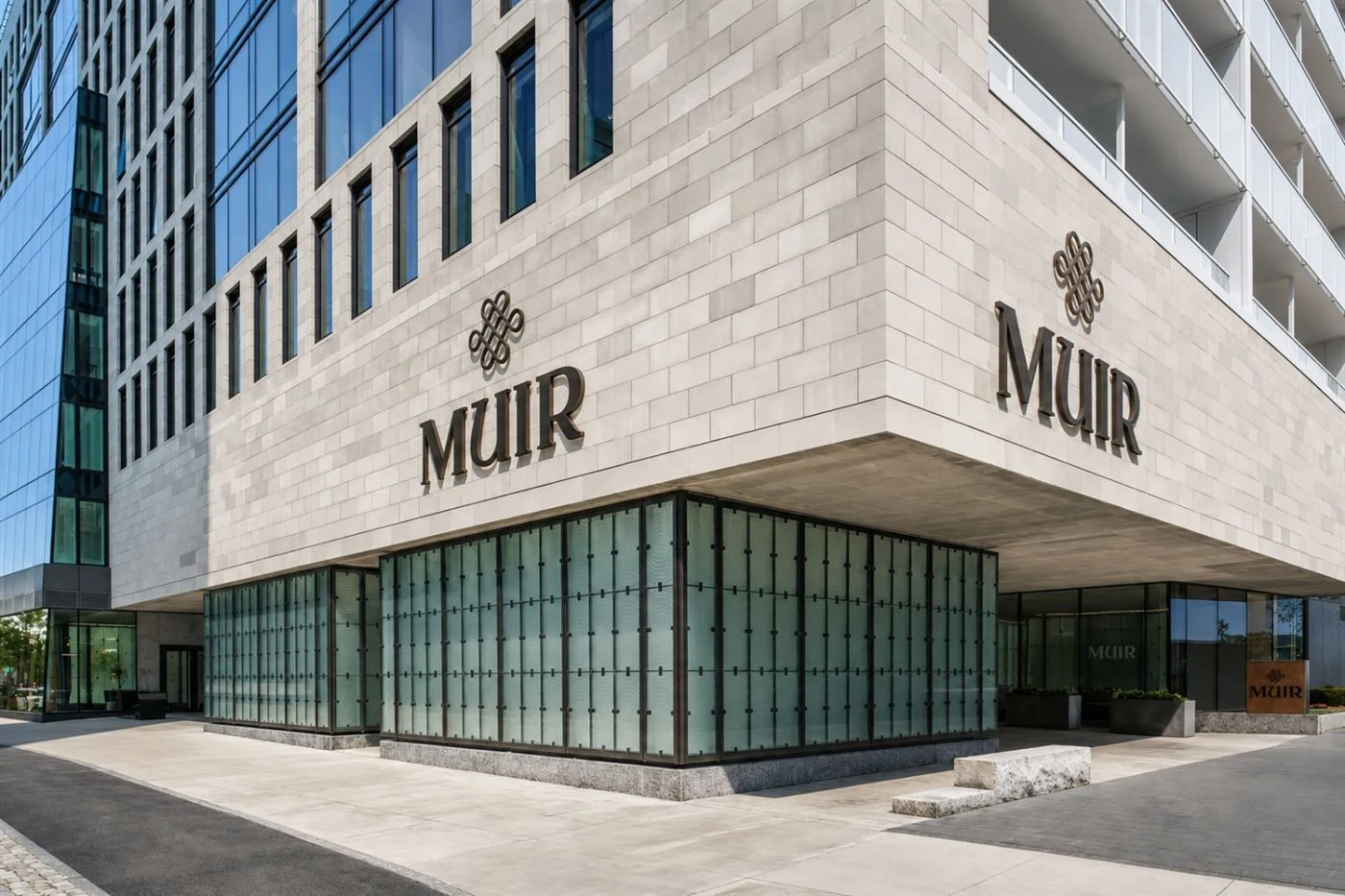
Muir Hotel Halifax
Prices From 487 USD
+2
More amenities
- Wellness
- City Vibe
Muir occupies a conspicuous corner of the Halifax waterfront, where Queen's Marque meets the harbor rather than merely lookin...
Please choose a hotel or destination from the list.
We couldn’t open your search results. Please try again.
Your private search
Finding exceptional stays
Halifax combines a working harbor with a city whose public buildings tell a civic story. Alongside the waterfront's food, shops and public art, Province House offers an interest in classical architecture and the changing uses of a historical government building.
Prices From 487 USD
More amenities
Muir occupies a conspicuous corner of the Halifax waterfront, where Queen's Marque meets the harbor rather than merely lookin...
Muir Hotel stands in Queen’s Marque, among restaurants, shops, public art and outdoor spaces beside the harbor. The working port provides a further reference for understanding how the city relates to the water.
Province House, on Hollis Street, was built between 1811 and 1819 as Nova Scotia's seat of government. Its three-storey sandstone form and symmetrical composition give a civic architectural interest specific features to examine.
The projecting central pediment and large Ionic columns make the arrangement of the facade part of that subject. Look at how the central and side sections establish proportion and order. This is a different visual interest from the movement of a working harbor or the public art of the waterfront.
The original Supreme Court chambers were remodelled as the Legislative Library in 1861–1862. That change connects the building with more than one public function, giving its history a subject beyond the date of construction. An interest in architecture can follow both the building's form and the ways its rooms were adapted.
Our Canada destination guide provides the wider country context for a Halifax stay.
The Canadian Museum of Immigration explores the human stories behind arrival in Canada. It gives a waterfront stay a national and personal historical subject, different from a general walk beside the harbor.
The fort occupies Citadel Hill above the city. Its military-history setting offers another perspective on Halifax, separate from the commercial and maritime life encountered along the water.
It is the Maritime Museum of the Atlantic’s Canadian scientific ship. The vessel adds a tangible working object to the wider story of the region’s relationship with the sea, beyond looking at boats moving in the harbor.
The Maritime Museum of the Atlantic interprets the 1917 harbor explosion. That subject helps place the waterfront in a deeper historical context, including events that profoundly affected the city and its people.
The Maritime Museum of the Atlantic holds Titanic-related material and interprets the tragedy. Choose that part of the collection if maritime history interests you, while allowing the visit to extend beyond the best-known disaster.