

Best for
Temple-focused travelers can base themselves on this Higashiyama hilltop beside Kiyomizu-dera, returning to a smaller retreat after exploring Kyoto's eastern historic neighborhoods.
Please choose a hotel or destination from the list.
We couldn’t open your search results. Please try again.
Your private search
Finding exceptional stays
Best for
Temple-focused travelers can base themselves on this Higashiyama hilltop beside Kiyomizu-dera, returning to a smaller retreat after exploring Kyoto's eastern historic neighborhoods.
What makes it special
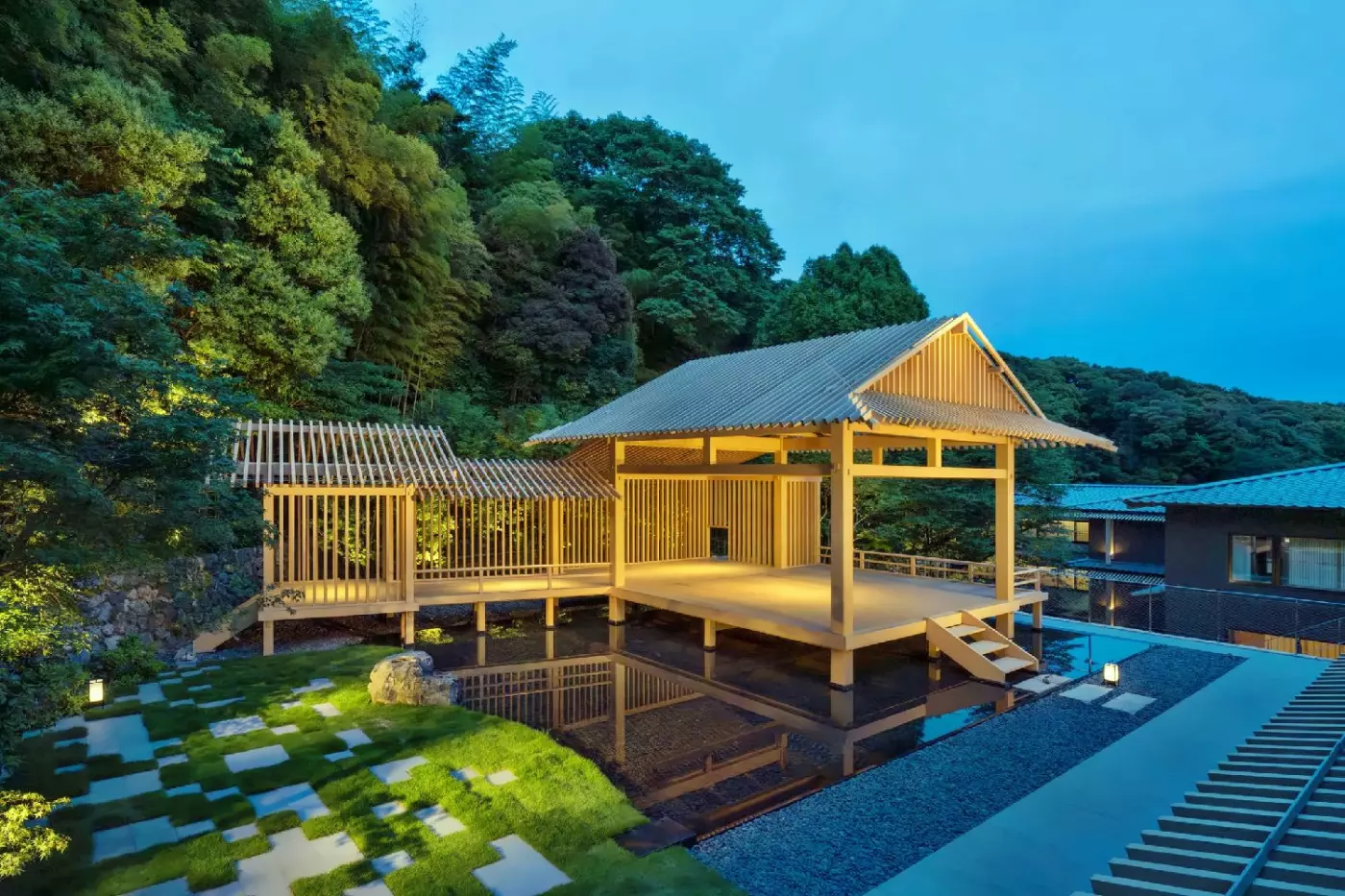
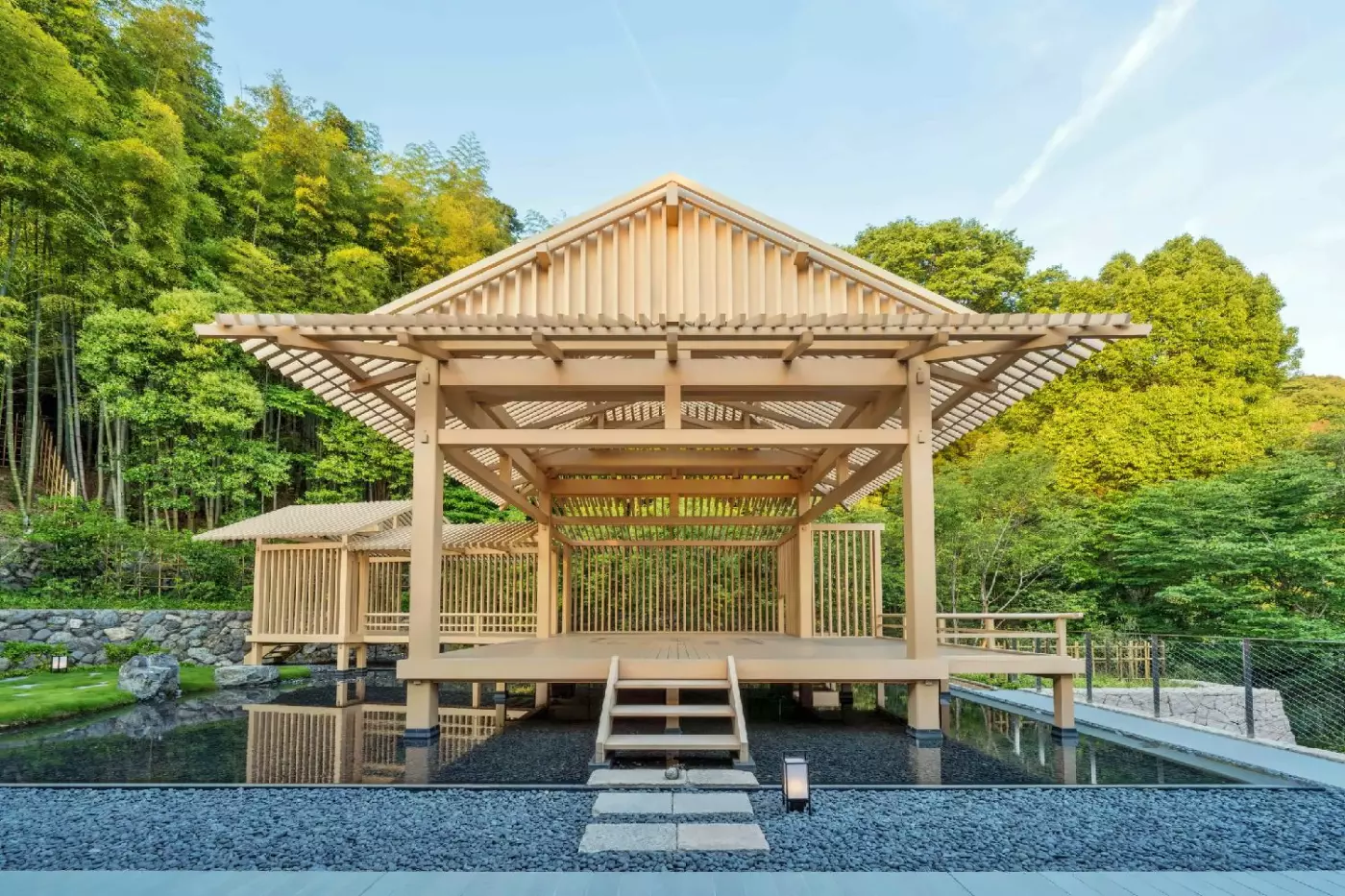
Kengo Kuma's Bamboo Pavilion gives the grounds an architectural focal point and a Noh stage, bringing Japanese performance traditions into the hotel setting.
Room to consider
Request a room with a private natural onsen if bathing in seclusion matters, and distinguish that feature from a standard wooden soaking tub.
Insider tip
Plan a taxi for the final journey from Kyoto Station to the hilltop hotel, especially with luggage, instead of assuming a station-side arrival.
Free membership gives you access to preferred rates, exclusive benefits and current promotions for your stay.
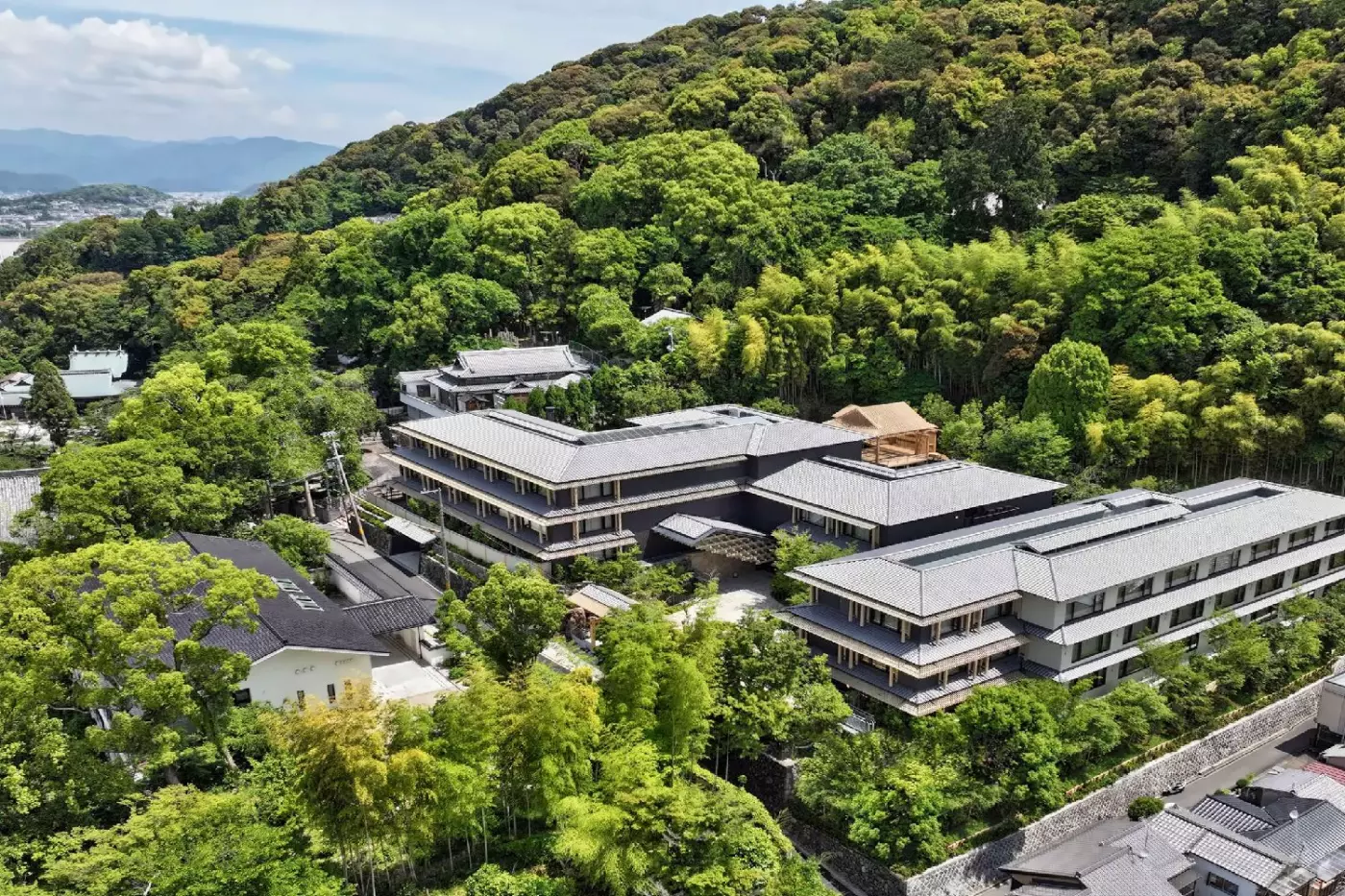
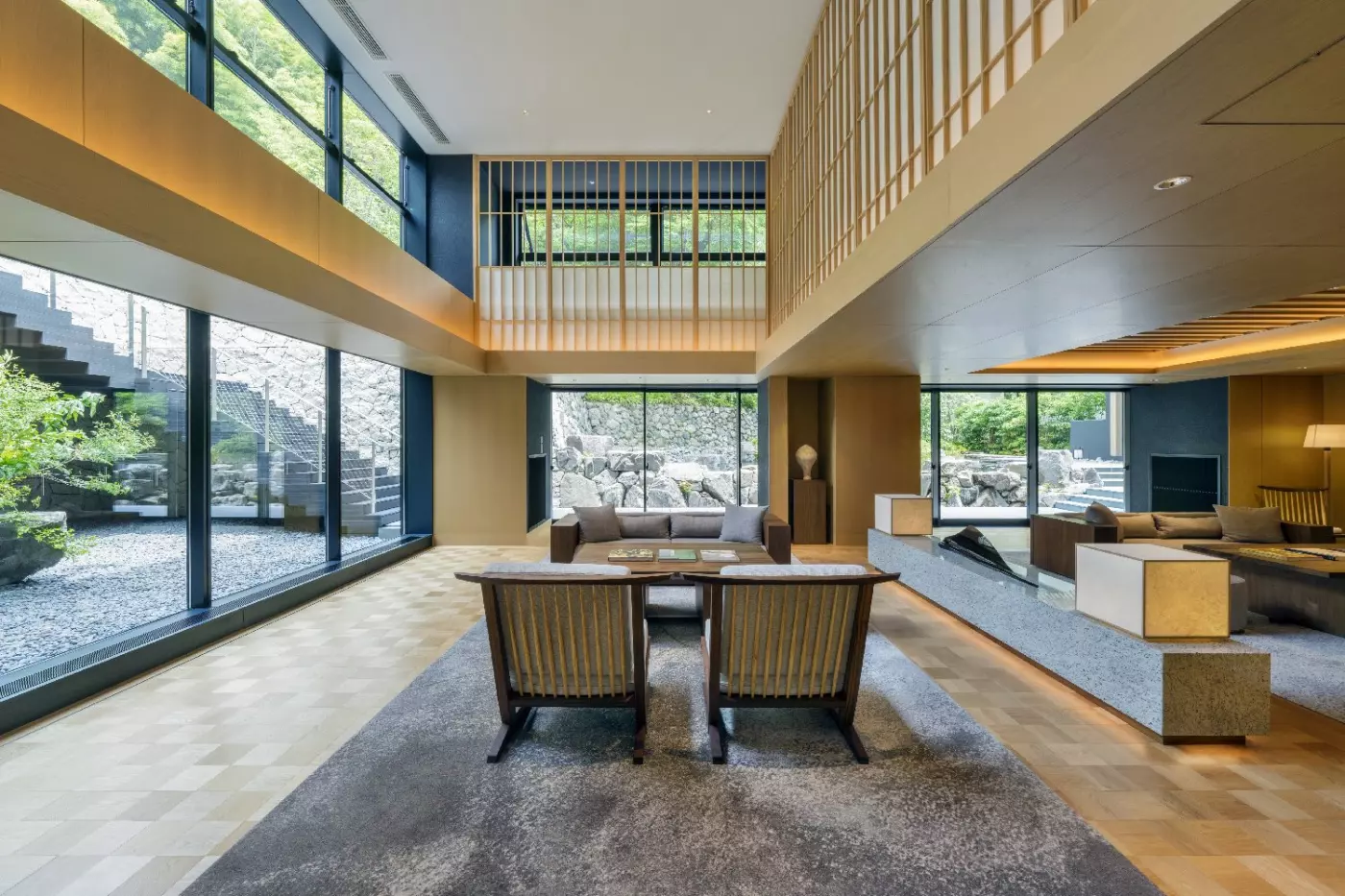
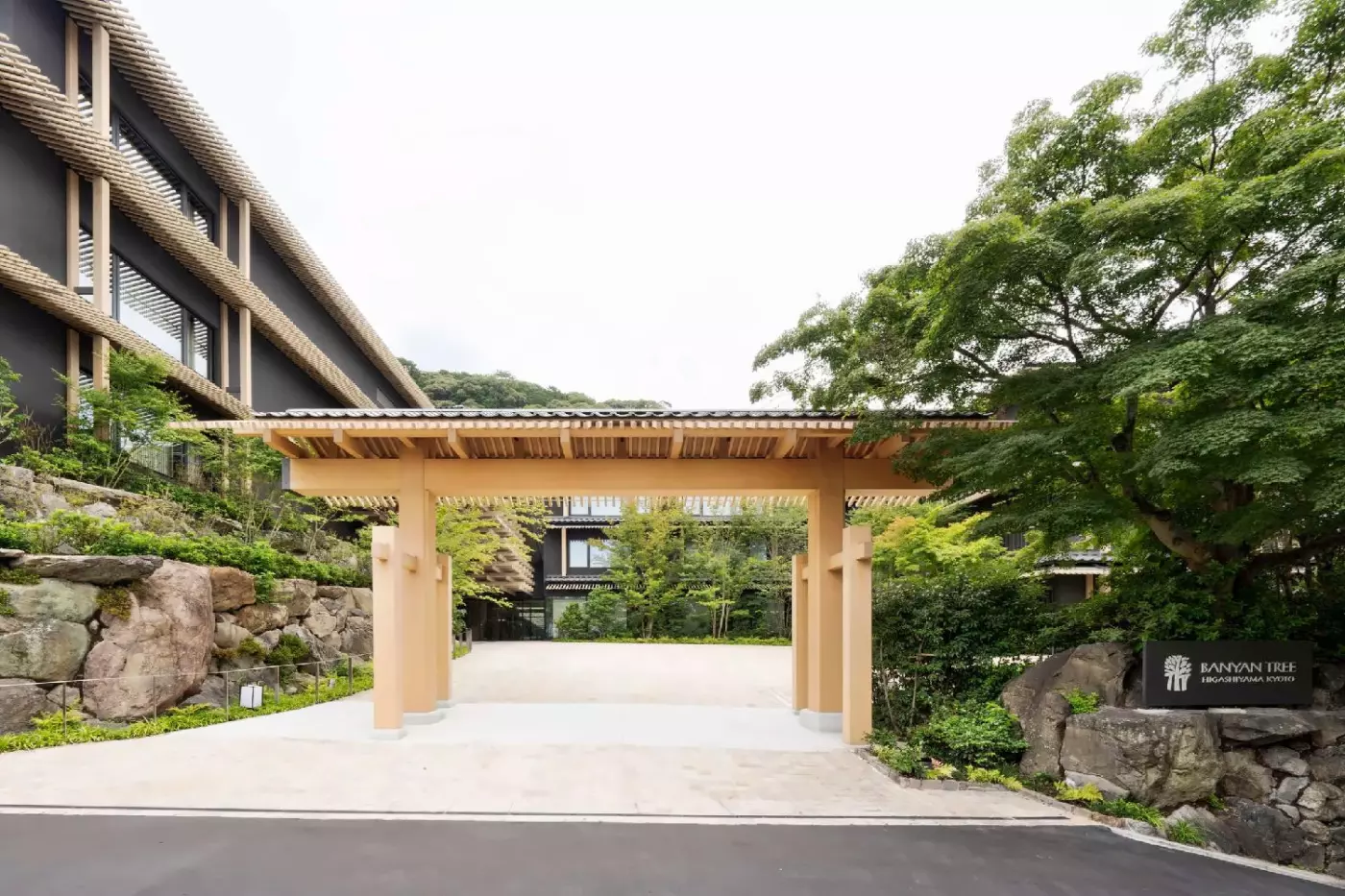
Banyan Tree Higashiyama Kyoto is an intimate hillside retreat in Kyoto's Higashiyama district. Bamboo and gardens surround the hotel near Kiyomizu-dera Temple, with city views from selected rooms. Its 52-room scale leaves space for a more deliberate stay: temple walks, Japanese dining, and natural hot spring bathing can each have their place in the day.
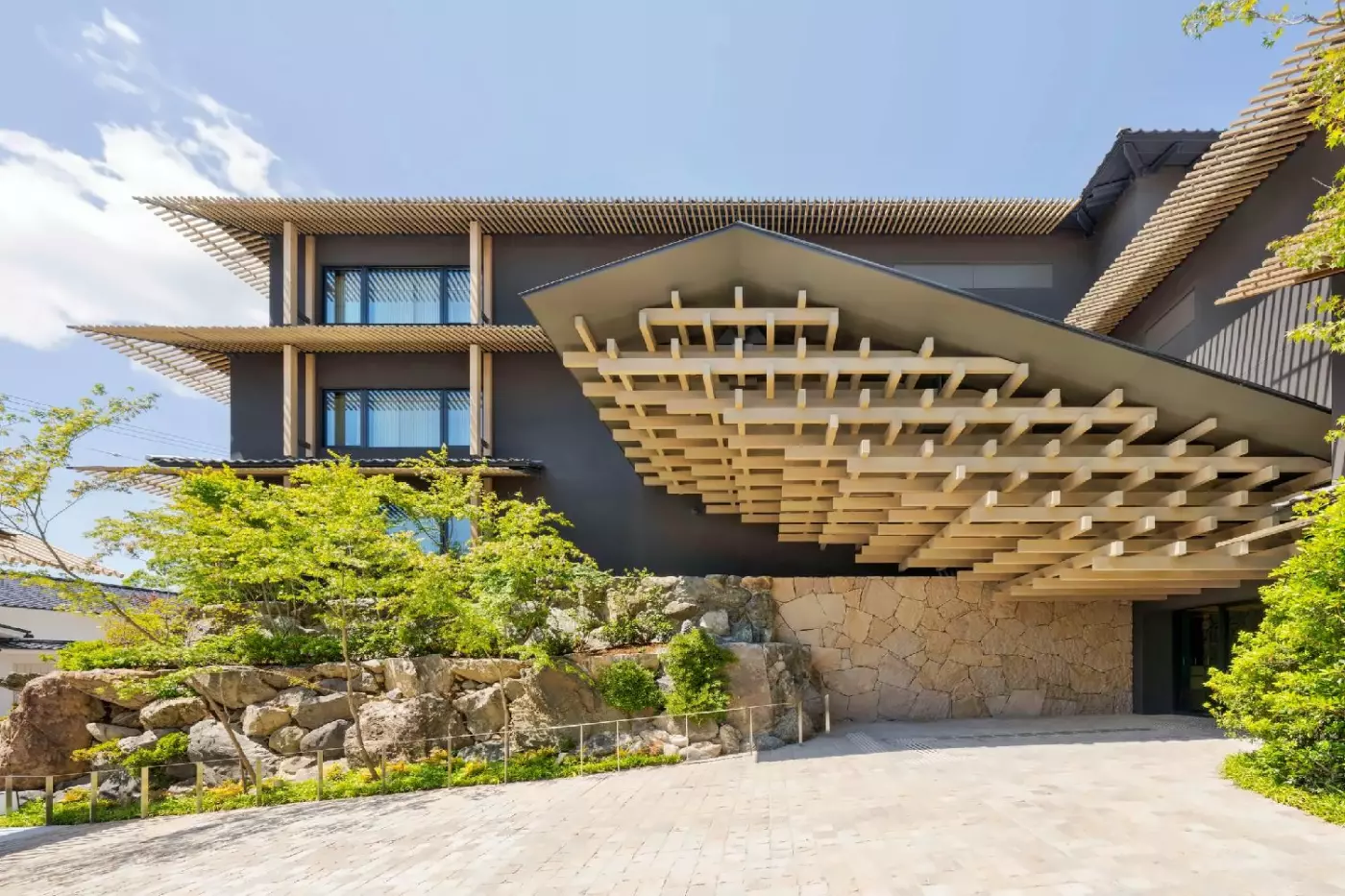
The distinction is in the bathing. Alongside shared indoor and open-air onsen baths, selected rooms have private natural hot springs, while the spa offers its own private bathing experiences. The Bamboo Pavilion, a Noh theater stage designed by Kengo Kuma, brings another dimension to the grounds. Culture here has a physical presence, visible in the architecture as well as the surrounding neighborhood.
 52
52
 Relaxed
 Fitness
 Spa
Spa
 Wellness
 Culture
 Wheelchair Accessible
 Connecting Rooms
Rooms in this category face either the garden or the street; the outlook depends on the room assigned.
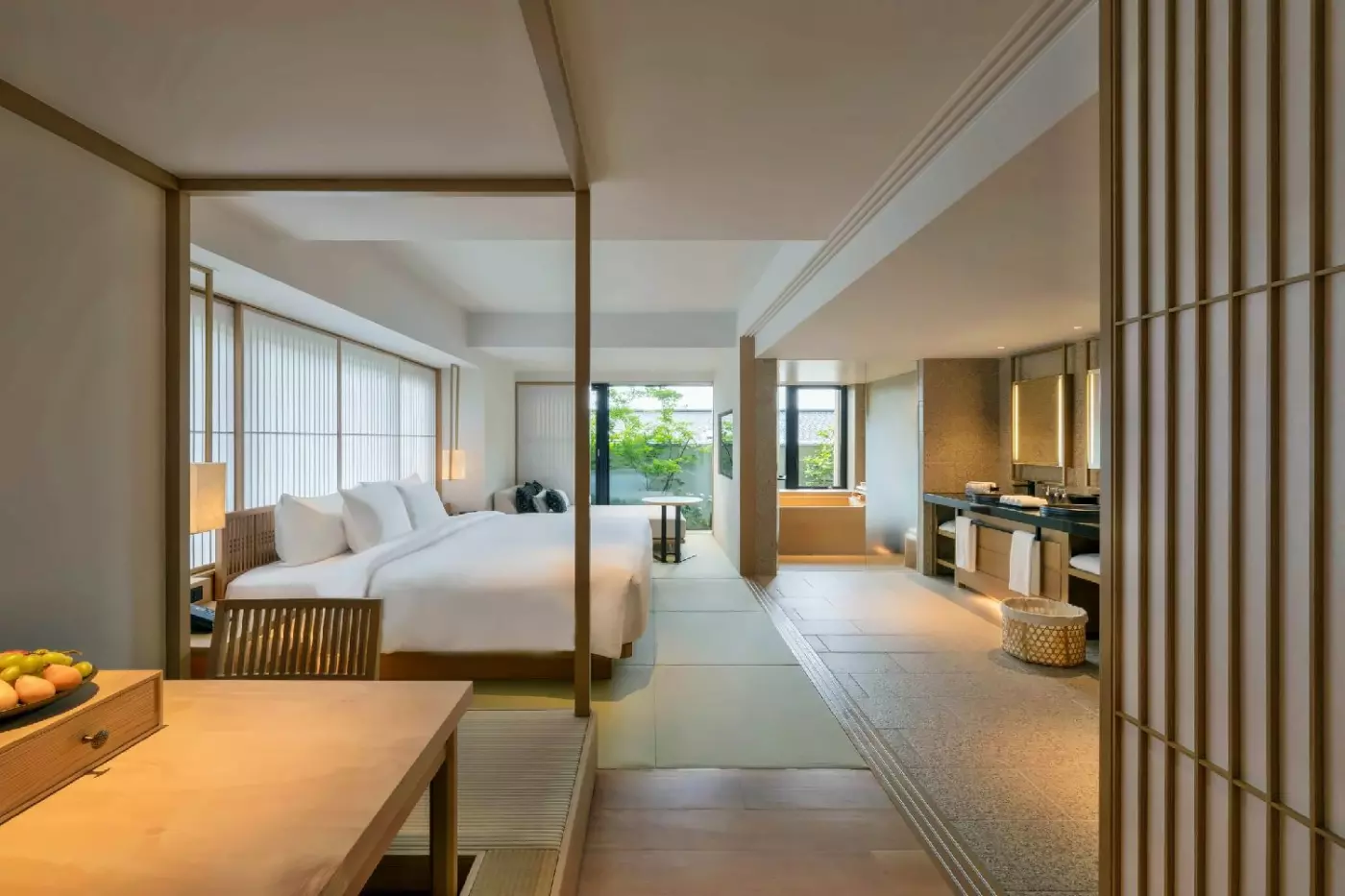
Tatami flooring and natural wood give the room a distinctly Japanese feel, with a sofa in the sitting area. Gold-foiled detailing above the headboard adds a richer texture to the simple interior. The beds have pure cotton linen, and an extra bed for a child or adult can be requested.
A deep wooden bathtub and a separate walk-in shower share the bathroom. There is a coffee machine and a choice of tea in the room, along with a minibar and complimentary mineral water. Shoji shutters frame the windows, continuing the traditional detailing beside the modern furnishings.

Tatami flooring and natural wood give the room a distinctly Japanese feel, with a sofa in the sitting area. Gold-foiled detailing above the headboard adds...
Large windows bring views of Kyoto or the garden into a room with tatami flooring and natural wood finishes. The decor blends Japanese details with Western furnishings, from shoji shutters to gold-foiled wallpaper above the headboard. A sofa forms part of the sitting area, while pure cotton linen dresses the beds.
Coffee and tea facilities are provided, with complimentary mineral water and a minibar for drinks. An extra bed can be arranged on request for a child or adult. In the bathroom, a deep wooden soaking tub sits alongside a separate walk-in shower.

Large windows bring views of Kyoto or the garden into a room with tatami flooring and natural wood finishes. The decor blends Japanese details with...
Yoga mats and exercise bands are supplied in the room, alongside a sofa and a sitting area overlooking the city. Japanese details meet modern furnishings, with tatami flooring and natural wood in the interior. A wooden soaking tub and a separate walk-in shower offer two ways to bathe.
A nutrition platter is provided each afternoon, and this category includes a 30% reduction on spa treatments. These benefits cannot be combined with other promotional packages. The room also has a coffee machine, selected teas and a minibar. Above the bed, gold-foiled wallpaper forms part of the design by Yukio Hashimoto.

Yoga mats and exercise bands are supplied in the room, alongside a sofa and a sitting area overlooking the city. Japanese details meet modern furnishings,...
These rooms are on the second floor. They look onto a Japanese courtyard garden.
Shoji shutters frame the windows in a sitting area with a sofa and tatami flooring. Natural wood details continue through the room, with gold-foiled wallpaper above the headboard and pure cotton linen on the beds. A coffee machine and tea facilities are close at hand for a drink in the room.
The bathroom has a wooden soaking tub and a separate walk-in shower. A minibar is provided, along with complimentary mineral water. The decor combines these Japanese materials with modern furnishings. An extra bed can be requested for a child or adult, in addition to the room's main beds.

Shoji shutters frame the windows in a sitting area with a sofa and tatami flooring. Natural wood details continue through the room, with gold-foiled wallpaper...
A sofa sits in the lounge area, with views of the garden through windows fitted with shoji shutters. Tatami mats cover the floor, and the beds have pure cotton linen. An extra bed can be requested for a child or adult, while a coffee machine and tea facilities are provided in the room.
There is a wooden soaking tub and a separate walk-in shower in the bathroom. A minibar keeps drinks close at hand, and mineral water is supplied at no charge. Natural wood finishes run through the interior, with gold-foiled wallpaper on the wall above the headboard.

A sofa sits in the lounge area, with views of the garden through windows fitted with shoji shutters. Tatami mats cover the floor, and the...
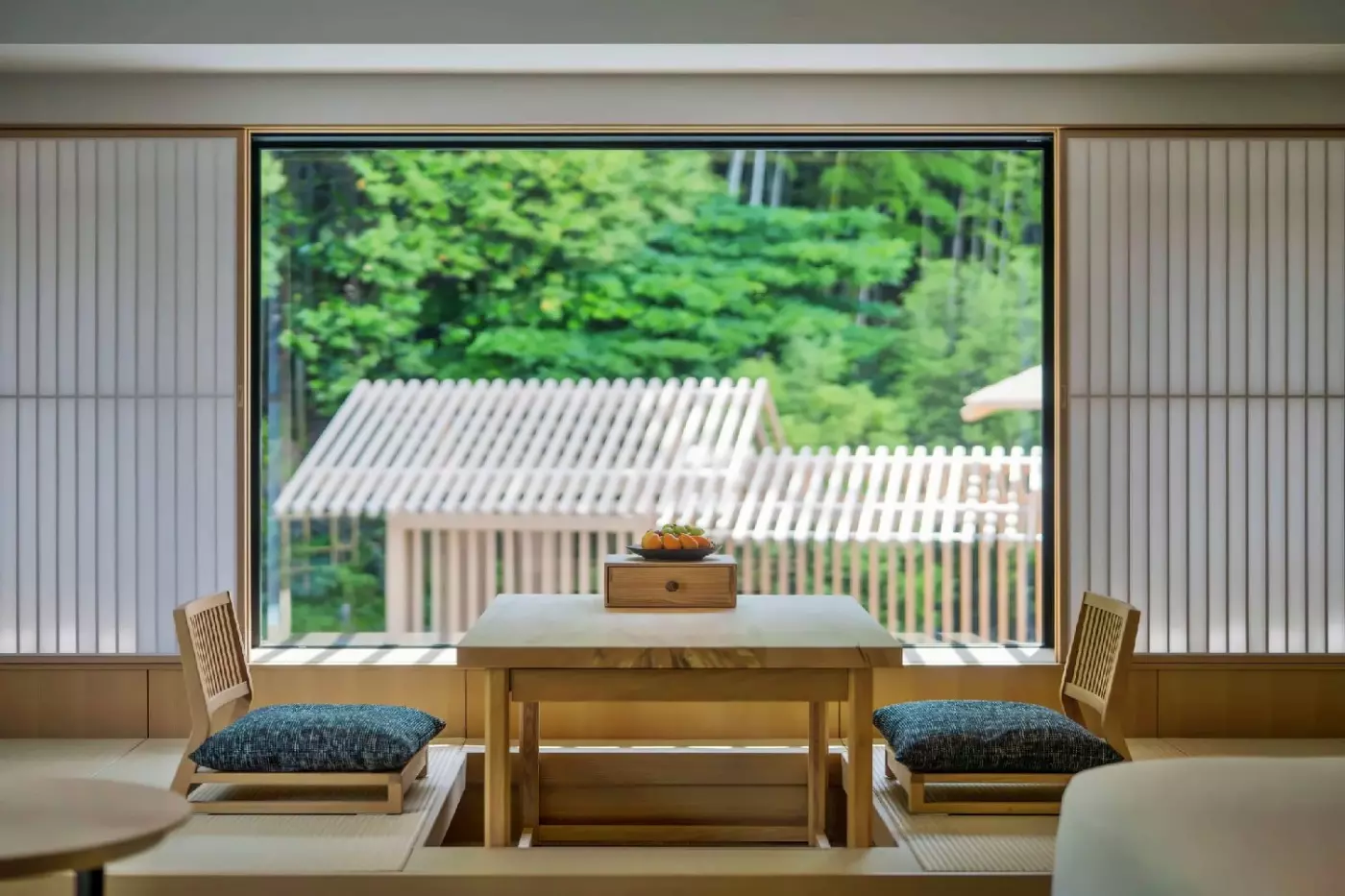
Views from the sitting area take in the garden and the hotel's Noh stage. A sofa sits on the tatami floor, and shoji shutters frame the windows. The bed has pure cotton linen, with gold-foiled wallpaper above the headboard and natural wood used throughout the room.
Coffee and a selection of teas can be made in the room. A minibar is also provided, along with mineral water at no charge. You can request an extra bed for a child or adult. The bathroom has a deep wooden soaking tub as well as a separate walk-in shower.

Views from the sitting area take in the garden and the hotel's Noh stage. A sofa sits on the tatami floor, and shoji shutters frame...
The hotel sits on a hill near Kiyomizu-dera, one of Kyoto's major landmarks. Temple roofs, stone-paved streets, gardens, and wooded slopes shape this part of the city. The hotel places Kiyomizu-dera around 800 meters away, making it a natural starting point for exploring eastern Kyoto. The setting changes with spring blossom and autumn foliage, but its appeal is not confined to those seasons.
Kodaiji Temple, Hokan-ji's pagoda, and Kenninji are among the nearby landmarks highlighted by the hotel. A morning devoted to this side of Kyoto makes more sense than crossing the city repeatedly between sights. Leave room to pause along the lanes, then return uphill for a bath or dinner. That connection between neighborhood and hotel is especially useful on a longer visit.
Walking is rewarding, but the terrain and temple crowds should be considered. Taxis are useful, particularly with luggage or after a long day out. Kyoto Station is a separate taxi journey rather than a station-side convenience. For travelers whose plans revolve around frequent rail excursions, that distinction matters; for those concentrating on Higashiyama, the hillside address gives the stay a clearer focus.
The rooms combine contemporary Japanese design with tatami flooring, sitting areas, and wooden soaking tubs. Separate walk-in showers keep the bathrooms practical, while sofas and coffee-making facilities make it easy to spend time in the room beyond sleeping. Garden and city views offer different experiences: greenery brings the grounds closer, while a wider outlook keeps Kyoto's streets and roofs in sight.
Serenity rooms offer king or twin beds and garden-oriented views, with the same emphasis on tatami, seating, and a wooden bathtub. Grand Serenity rooms add city-view possibilities alongside garden views. The choice is less about a dramatic change of style than the outlook and space you prefer. Both categories work well when your days are largely spent exploring and a comfortable return matters.
Wellbeing Sanctuary rooms have city-view windows, yoga mats, and exercise bands for a private practice. Their wooden tubs and separate showers follow the broader room design. These rooms suit guests who want a quiet exercise routine within their own space.
The Onsen Retreat rooms are on the second floor, beside courtyard gardens, and have private natural hot spring bathing. At 55 square meters, with king and twin variants, they make bathing part of the room itself. A sofa and sitting area leave somewhere to settle afterward. Grand Onsen Retreat rooms continue the private bathing experience in Japanese-Western interiors, with king or twin beds. The Banyan Onsen Retreat has a king bed and a larger living space of around 74 square meters. That extra room is useful for guests who intend to spend more of the stay on property, reading, resting, or allowing time between meals and excursions.
Guests should choose rooms based on view, bathing preference, and the pace of the trip. A city-view room can make sense for first-time visitors who want a visible link to Kyoto. A private onsen room is better for guests planning a slower stay. The wooden soaking tubs in other categories offer their own appeal, but natural hot spring bathing is the reason to select an Onsen Retreat.
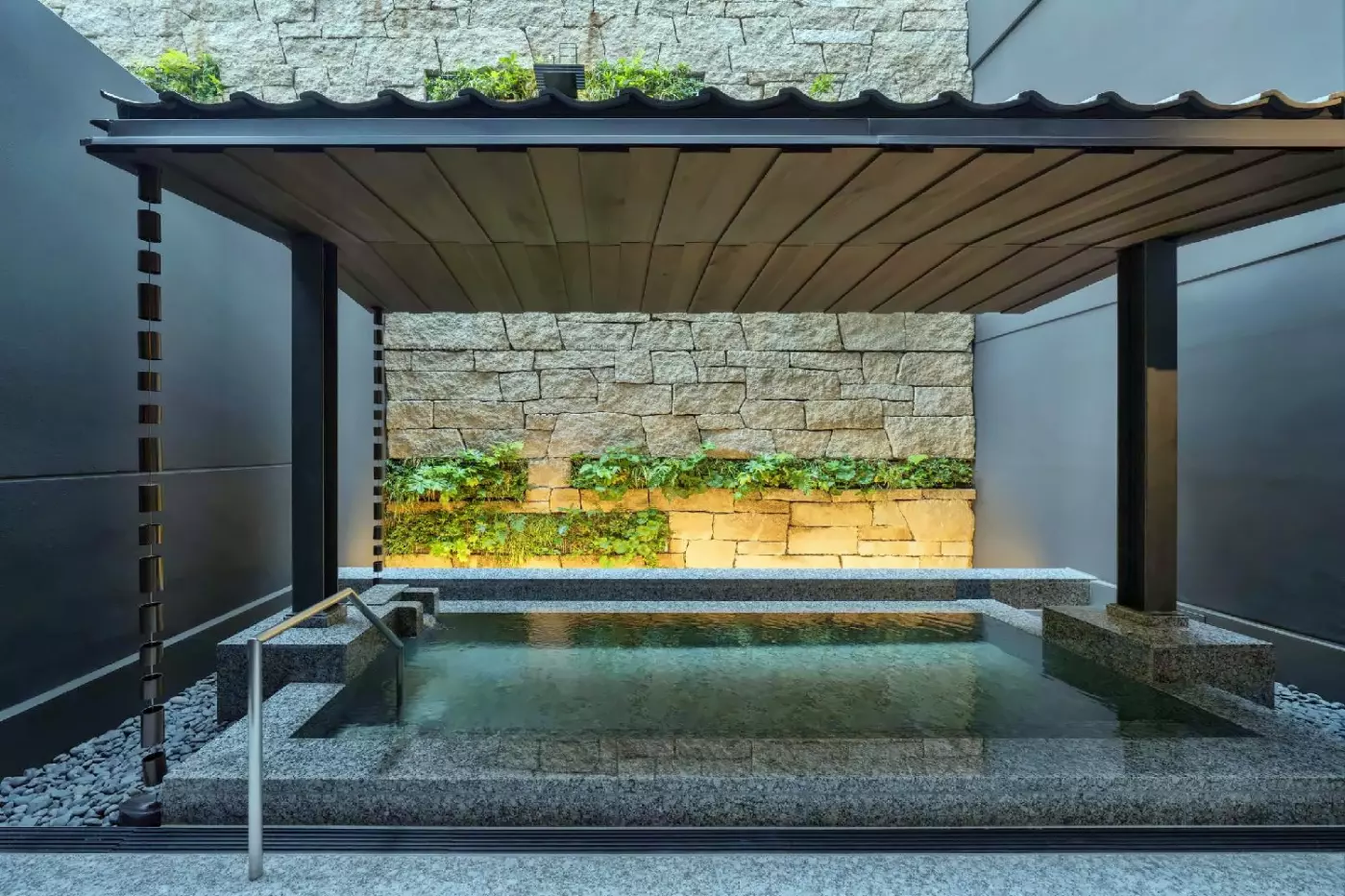
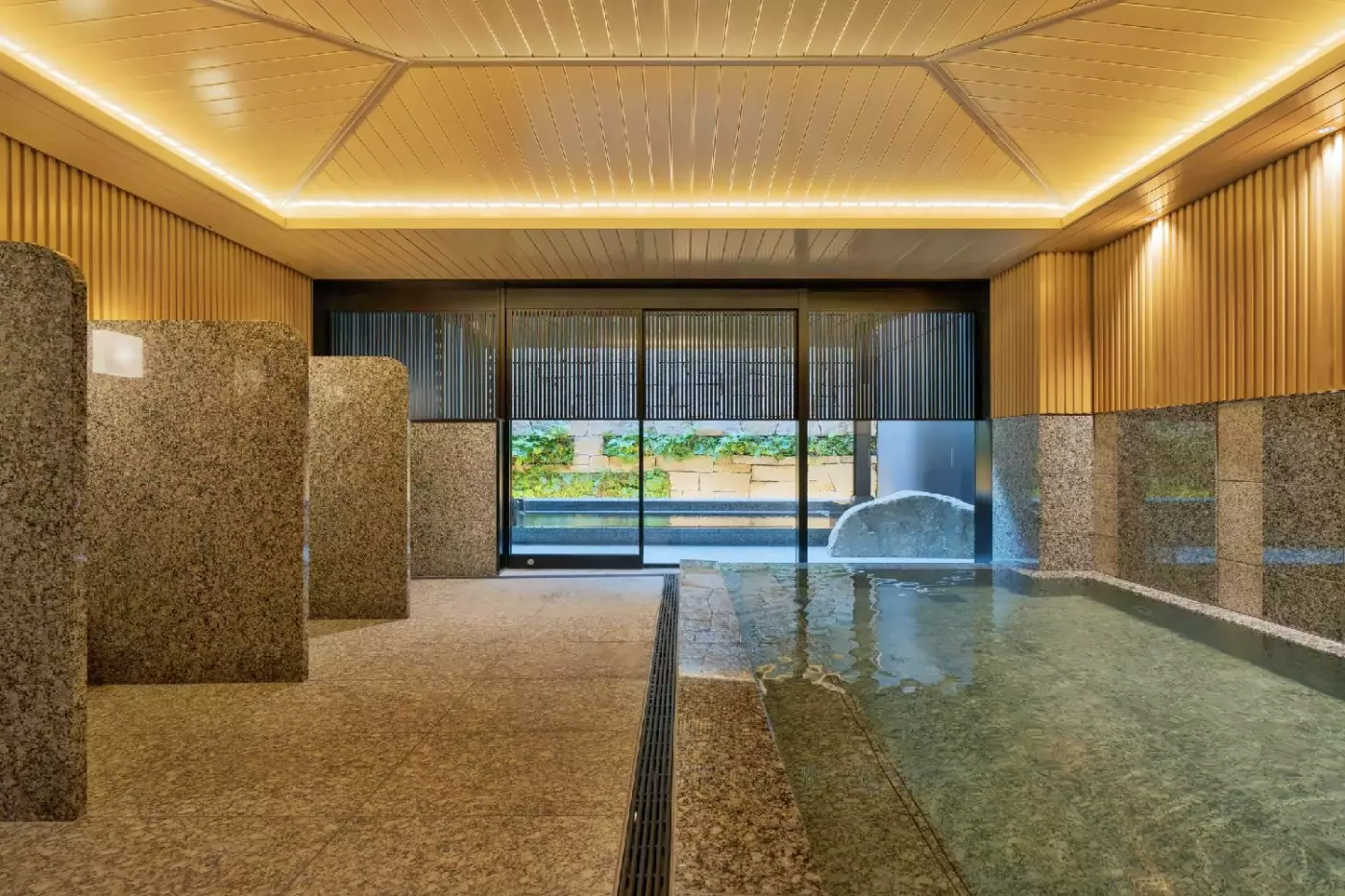
The spring is drawn from the hotel grounds and supplies the shared baths, selected rooms, and spa treatment suites. The shared onsen is gender-separated, with indoor and outdoor bathing. That gives guests in Serenity and Wellbeing categories a way to enjoy the hotel's natural spring without choosing a private onsen room. Bathing can be a regular part of the stay, rather than a separate excursion.
Banyan Tree Spa combines massage and body treatments with Japanese influences, and its Onsen Indulgence pairs a private soak with a full-body treatment. A spa appointment fits naturally after a day walking through Higashiyama. Advance booking is sensible for a preferred treatment time. There is also a fitness center for guests who want to keep their usual exercise routine alongside the slower pleasures of bathing.
The Bamboo Pavilion is one of the hotel's defining features. Kengo Kuma's stage stands against a bamboo backdrop, giving Noh performance a setting closely connected to the grounds. Even apart from a performance, the relationship between stage, garden, and architecture is worth attention. It gives the hotel a cultural focal point that is distinct from its rooms and spa.
The hotel's cultural offerings include Noh and geiko and maiko performances, with other activities drawing on Japanese music and garden-based wellbeing. These are reasons to ask about the program when planning a stay.
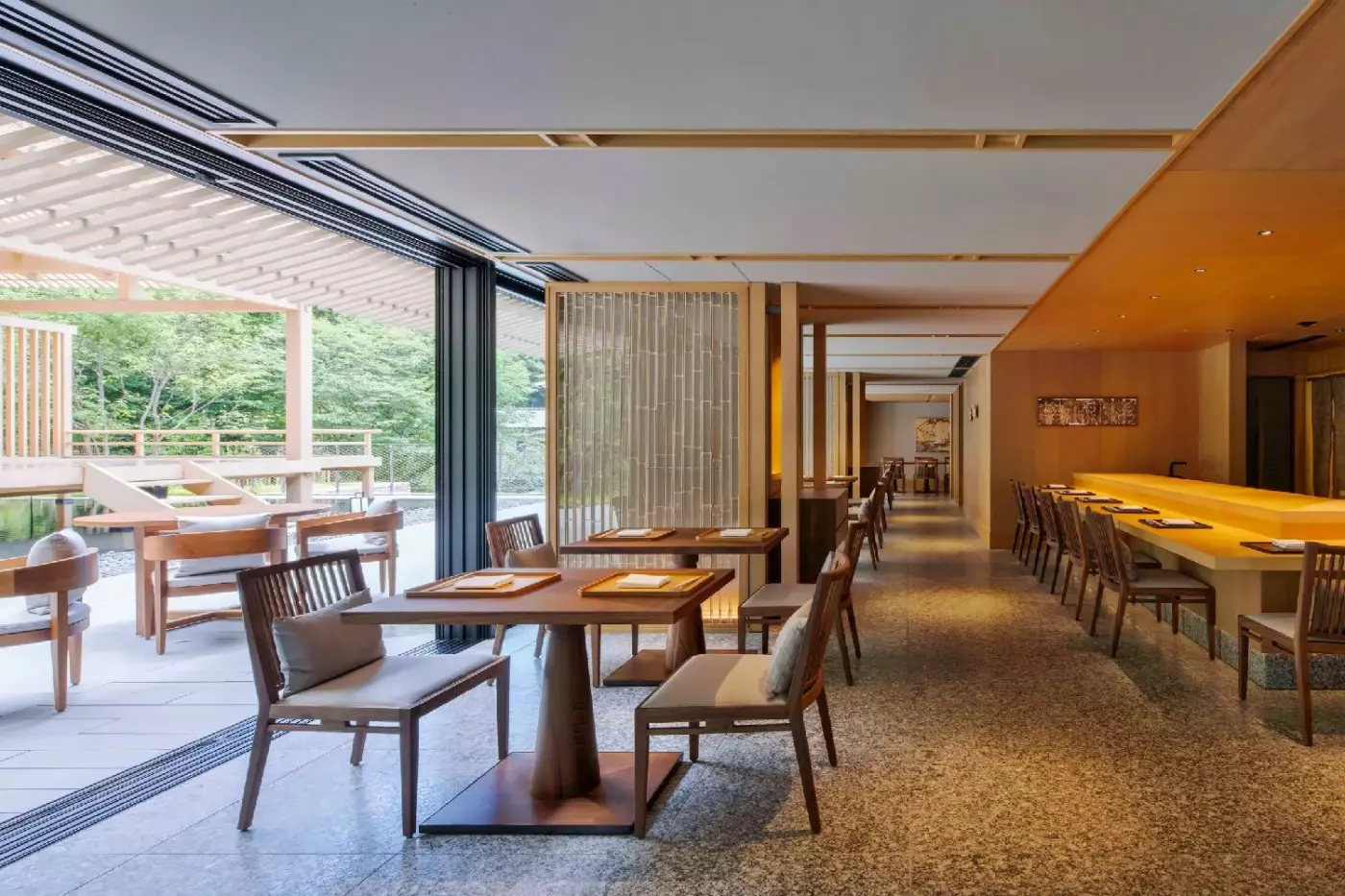
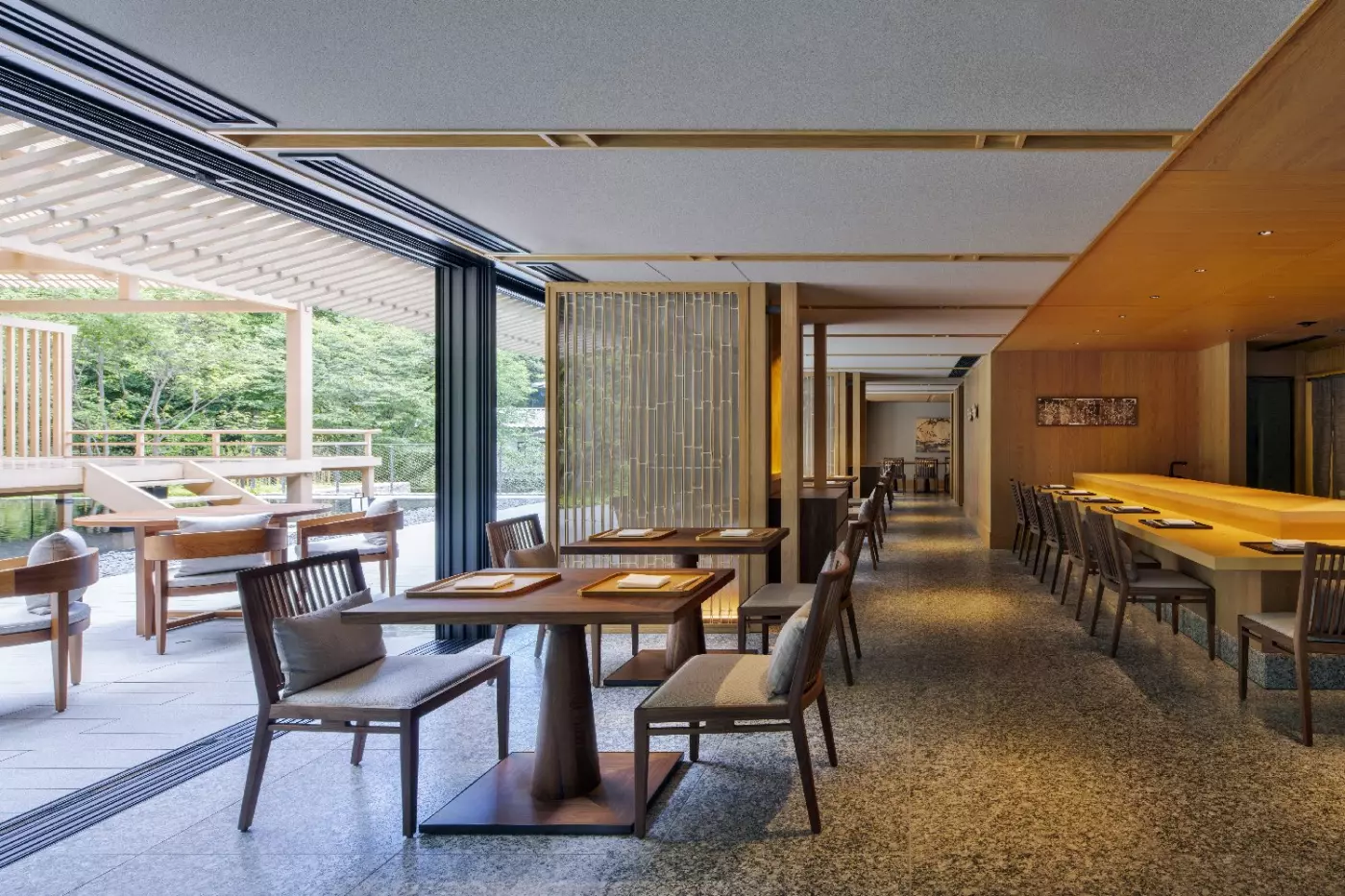
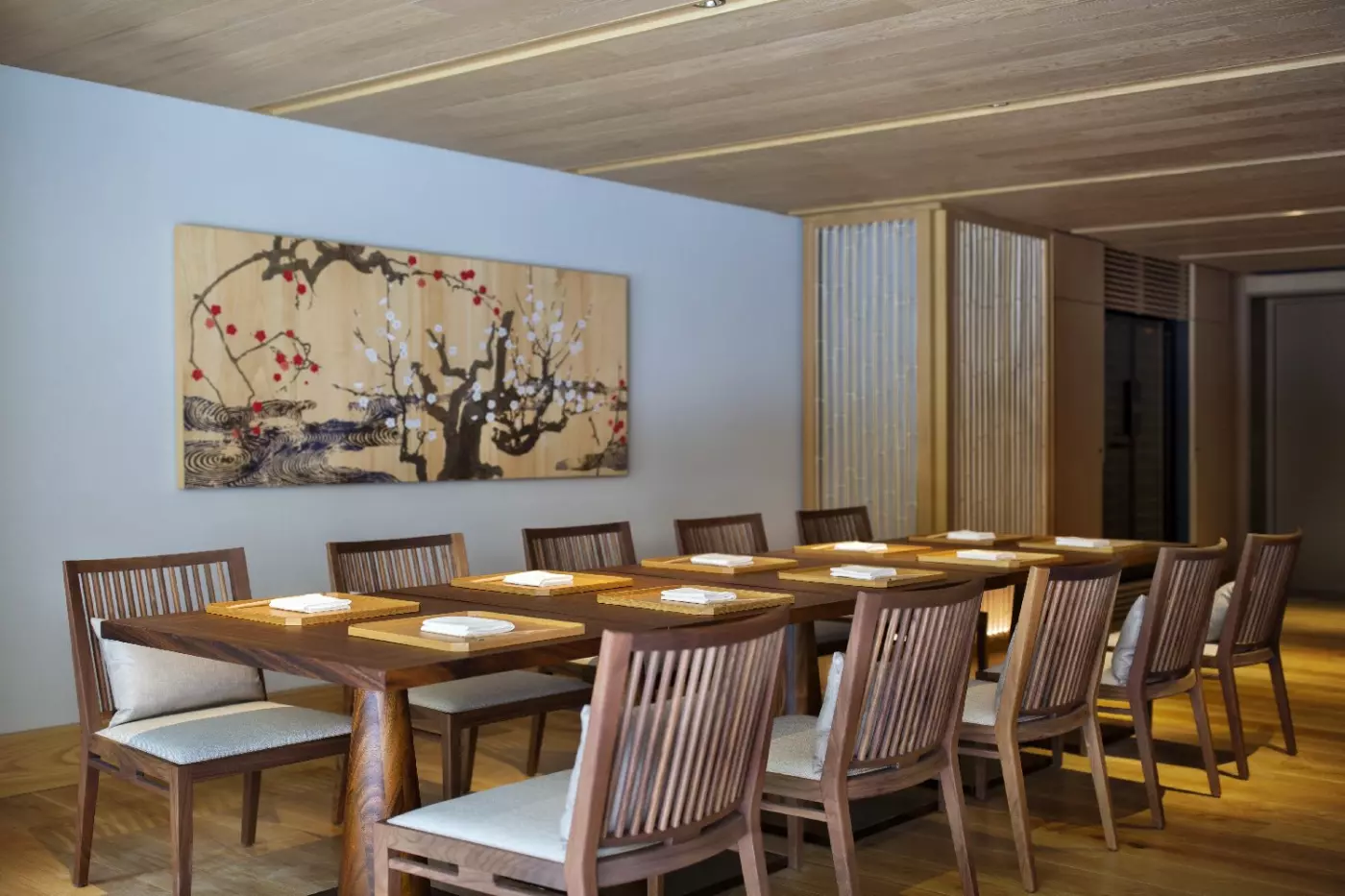
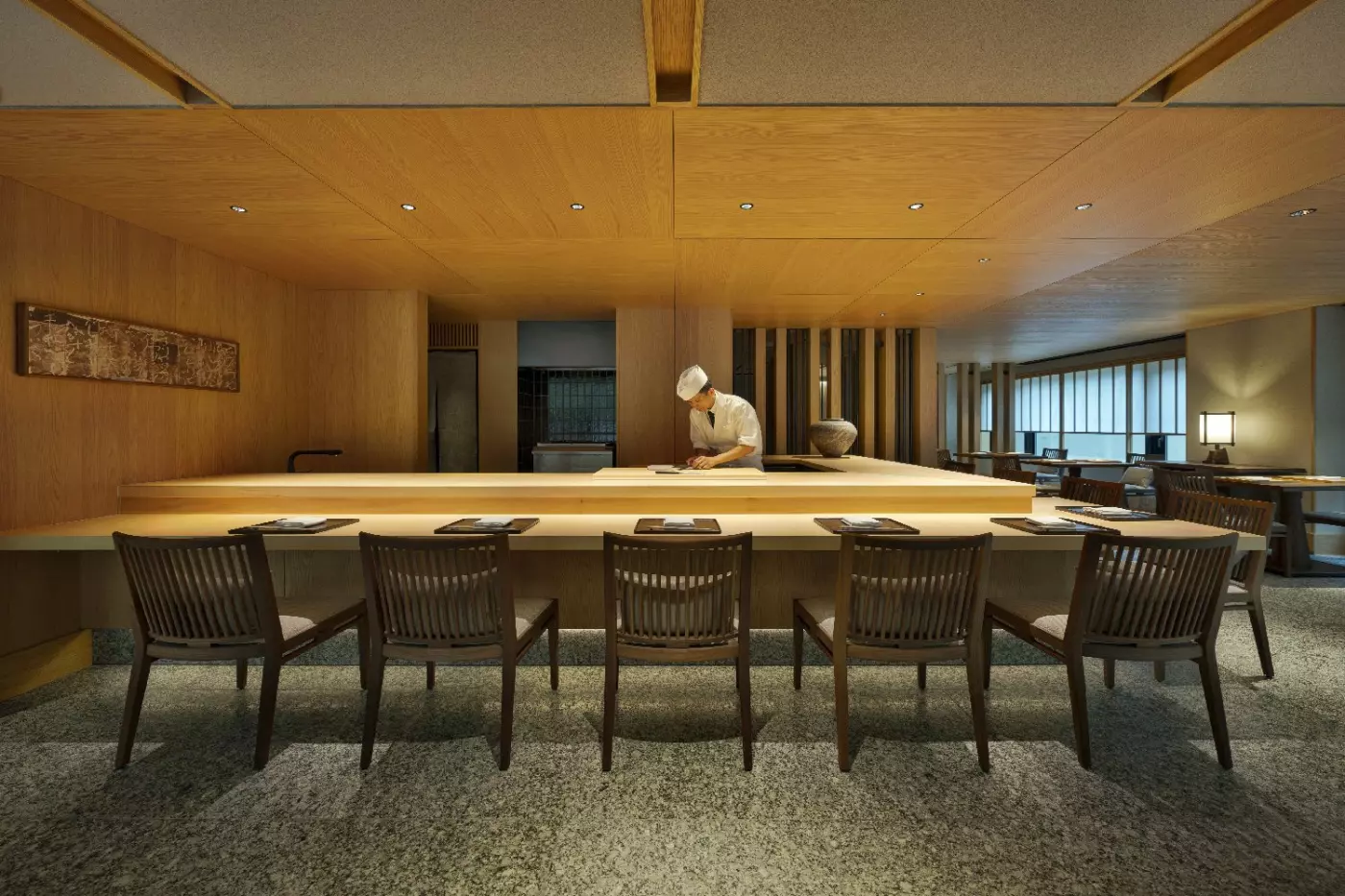
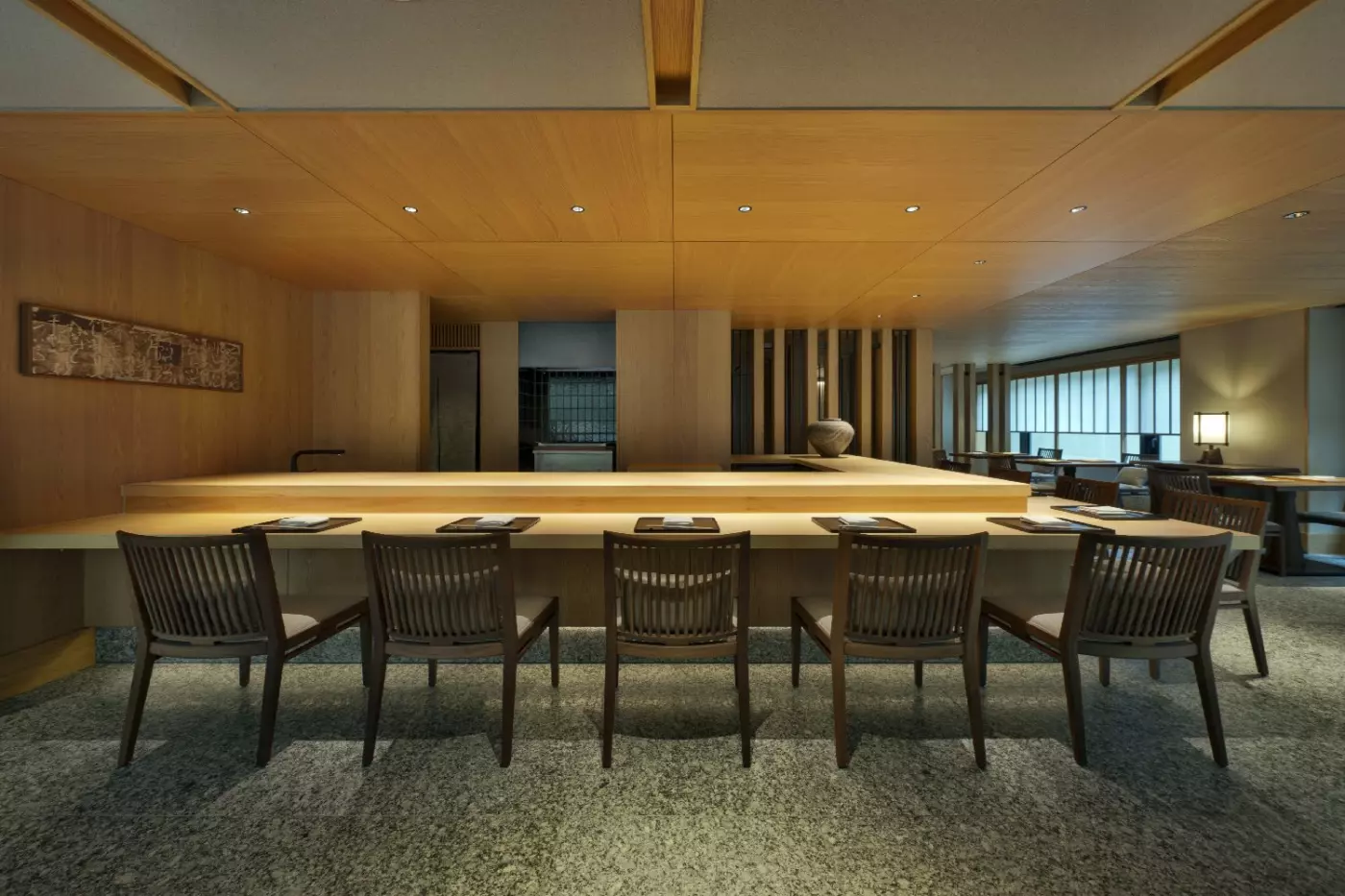
Ryozen is the hotel's Japanese restaurant, beside the Bamboo Pavilion. Seasonal, local ingredients guide its kaiseki courses, with counter dining adding a closer view of preparation. Breakfast and afternoon tea give the restaurant a role beyond dinner. For guests spending much of the day in the city, an evening here offers a meal connected to the setting without another journey across Kyoto.
Ryozen SEN Bettei is an intimate counter within the restaurant, linked to Nihonryori SEN. Its eight seats put the chef's work close to the diner, making it a different experience from a meal at a restaurant table. Reservations deserve attention when planning the trip, especially if this counter is a priority. Sharing dietary preferences ahead of a multi-course dinner also gives the kitchen time to respond.
Bar Ryozen offers Japanese sake, including selections from nearby Fushimi, alongside cocktails and light meals. It is a useful option for a less formal evening or a drink before dinner. A stay here works well when guests mix an in-house dinner with meals elsewhere in Higashiyama, Gion, or central Kyoto, keeping both the hotel's dining and the city's restaurants within reach.
Ryozen's kaiseki courses follow seasonal local ingredients, letting you explore Japanese dining through a sequence of dishes rather than a single main course.
Bar Ryozen includes sake from nearby Fushimi, giving your evening drink a regional connection and a way to explore Kyoto's rice-based brewing traditions.
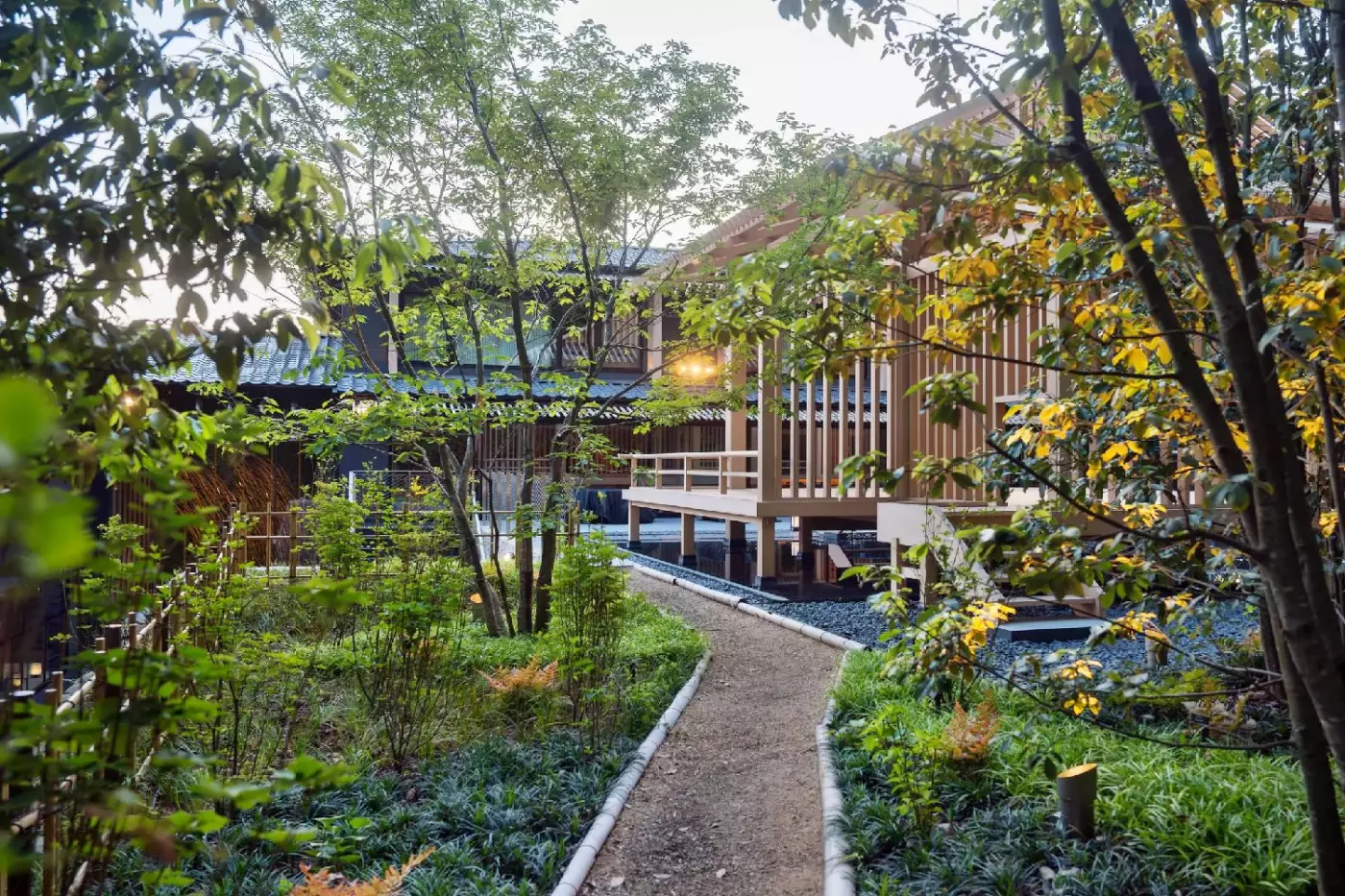
The bamboo garden offers a place to pause among tall groves, adding a quieter interval on property between temples, dining and city excursions.
7 Seikanji Ryozancho, Higashiyama Ward, Kyoto, 605-0861, Japan
Playing this video may share data with YouTube. Please see our Privacy Policy.
Yes. Banyan Tree Higashiyama Kyoto is a strong choice for travelers who want a quiet luxury stay in Kyoto's historic Higashiyama district, close to temples, gardens, and old streets. The hotel feels more intimate than a large city property. It is best for guests who want culture, calm design, wellness, Japanese dining, and easy access to eastern Kyoto.
Banyan Tree Higashiyama Kyoto is at 7 Seikanji Ryozan-cho in Higashiyama Ward. It sits in one of Kyoto's most historic areas, near temple paths and preserved streets. The location is especially useful for Kiyomizu-dera, Kodaiji Temple, Hokan-ji Pagoda, Kenninji Temple, Gion, and morning walks before the main sightseeing crowds arrive.
Banyan Tree Higashiyama Kyoto has 52 guest rooms. This small scale is important because the hotel is designed as a quiet retreat rather than a large urban resort. Rooms blend Japanese and Western comfort, with calm materials, deep bathing features, and views shaped by the hillside setting. Some categories add private natural onsen bathing.
Book a Serenity Room or Grand Serenity Room if you want a peaceful Kyoto base with generous space. Choose a Wellbeing Sanctuary Room if wellness is central to the stay. For the most distinctive experience, choose an Onsen Retreat, Grand Onsen Retreat, or Banyan Onsen Retreat. These categories are best when private bathing is a priority.
Yes. Banyan Tree Higashiyama Kyoto offers Onsen Retreat categories, including Banyan Onsen Retreat rooms with private natural hot spring bathing. These are among the most appealing room choices. Private onsen access is valuable after temple walks, cold weather sightseeing, or a long travel day. Book early because these rooms are limited and usually in high demand.
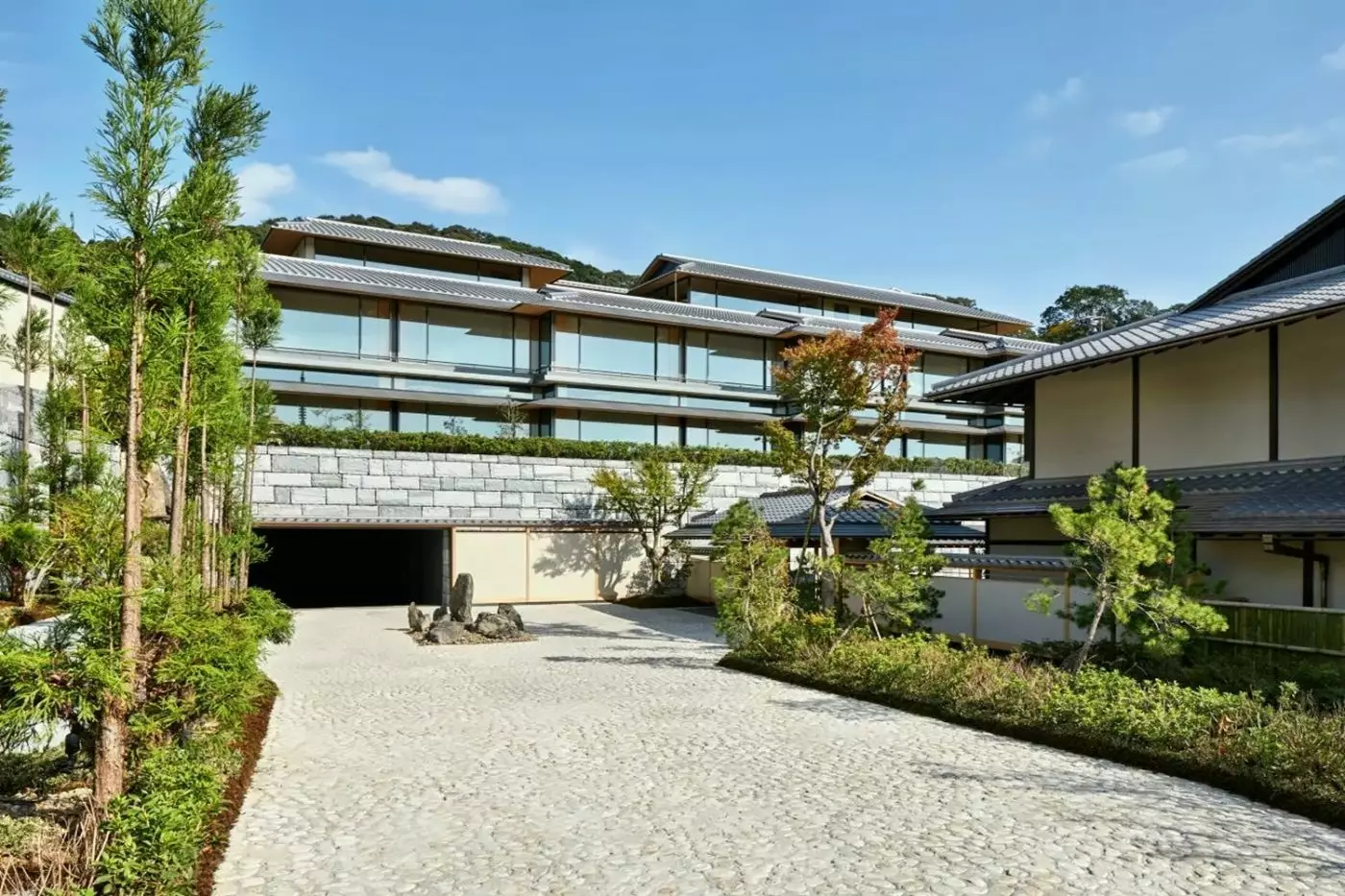
Park Hyatt Kyoto is an intimate luxury hotel in Higashiyama, set along the historic stone lanes of Ninenzaka with views towar...
More amenities
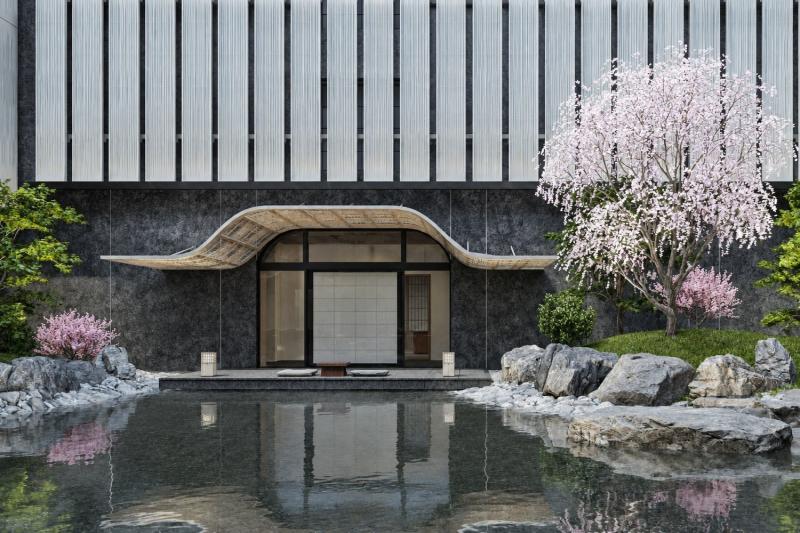
Capella Kyoto is a luxury hotel in Miyagawa-cho, one of Kyoto's five historic geiko districts. It opened on 22 March 2026 nea...
More amenities
An 800-year-old pond garden gives Four Seasons Hotel Kyoto an unusually intimate connection to the city's past. Shakusui-en l...