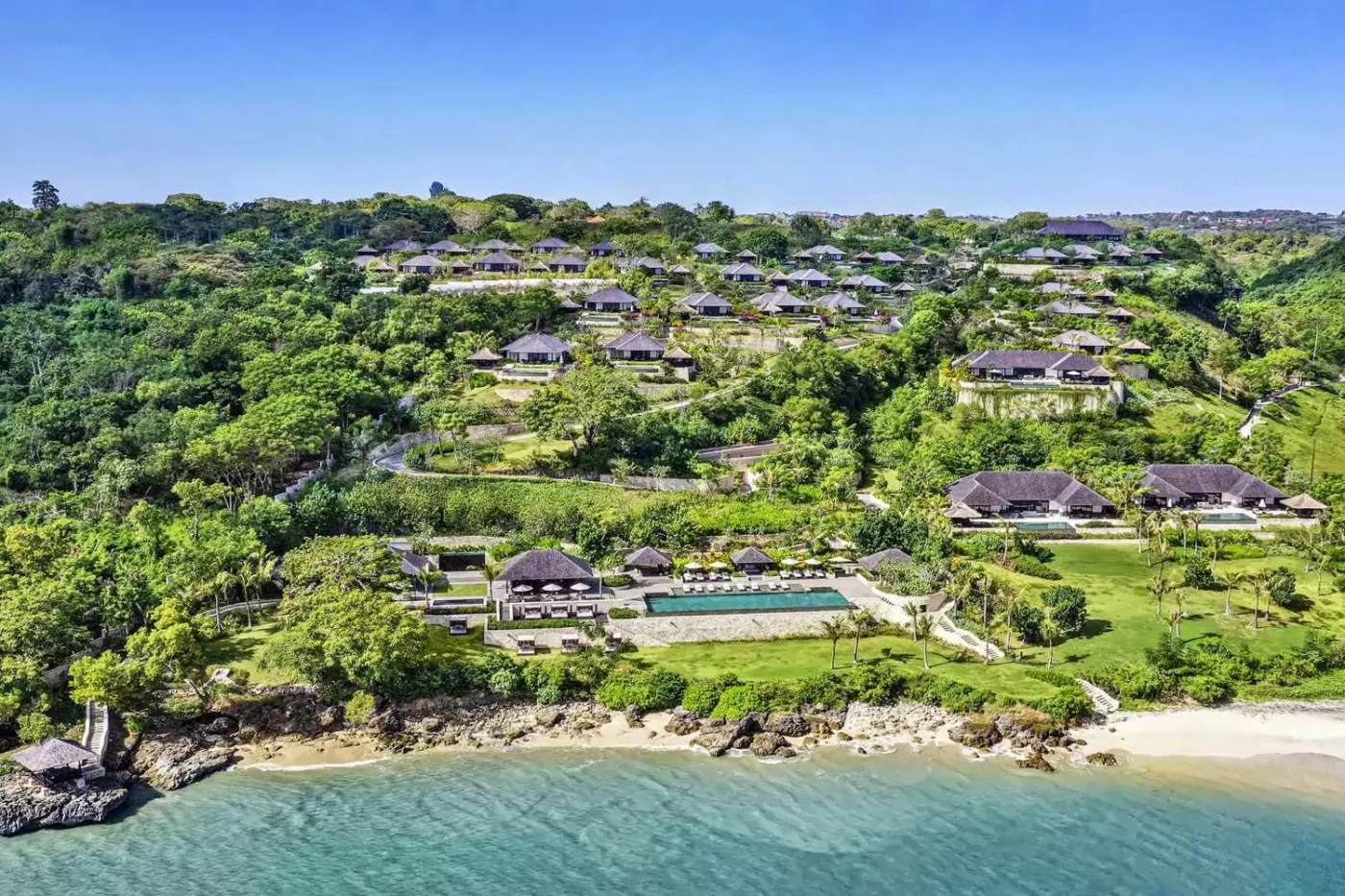
Sundara combines a beach club with a restaurant whose cooking takes its cue from Jimbaran's seafood barbecues. Wood, smoke and fire run through the menu, including dishes beyond seafood. The daytime selection is lighter, suited to lunch beside the pool, while dinner gives the barbecue theme fuller expression. Its indoor-outdoor layout steps toward the beach, keeping the sunset visible from the social spaces. Cocktails and daybeds are part of the scene, but the restaurant has enough of a culinary identity to merit an evening of its own.
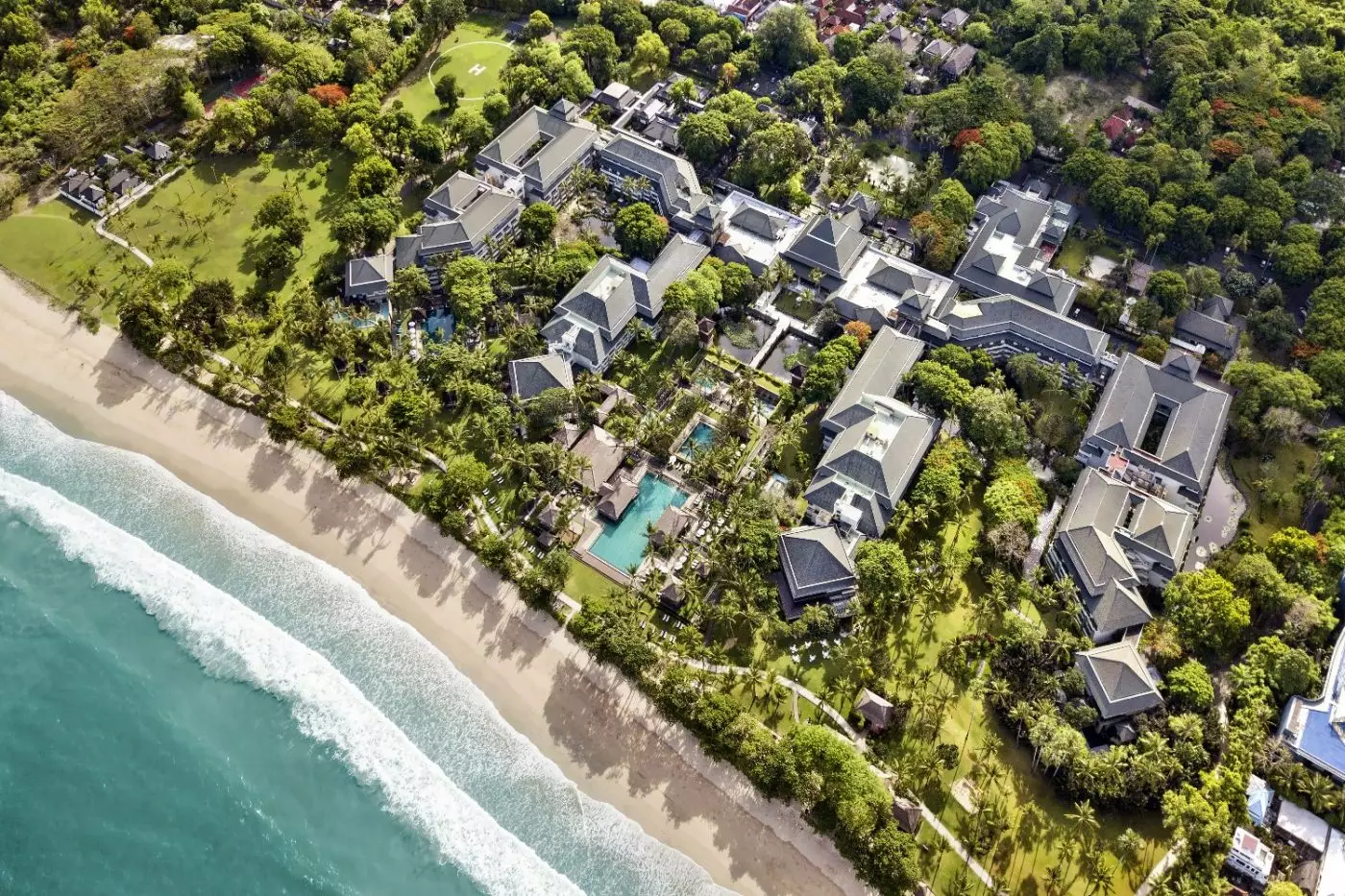
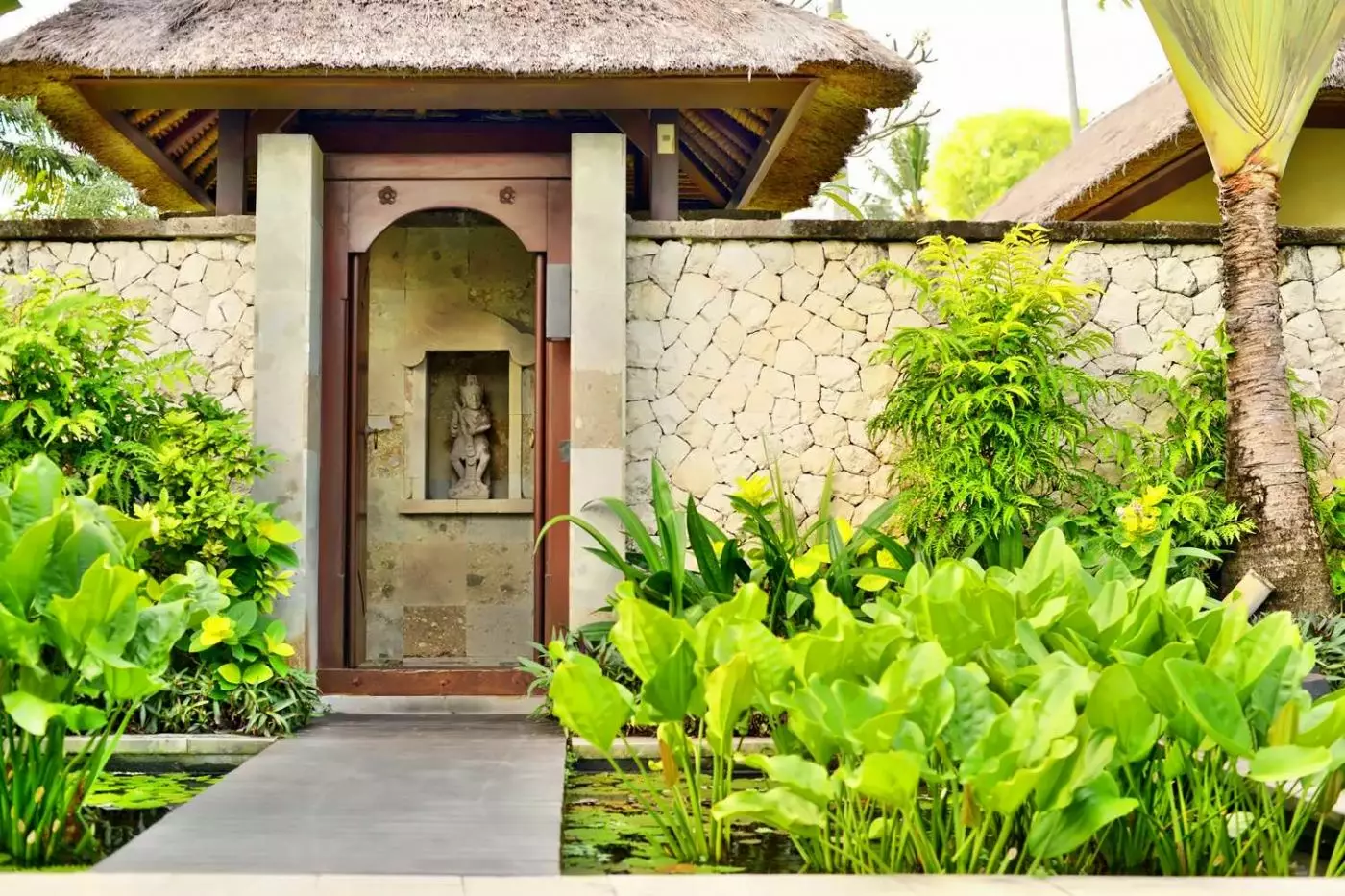
Taman Wantilan looks across the resort toward the bay. Breakfast is served here, and its open show kitchens put the chefs within view of the tables. The cooking spans Asian and Western cuisines, with dishes prepared to order. Alu is the casual poolside alternative, with bowls, street-food dishes and platters. In-villa dining also includes both Balinese and Western dishes, making a meal in the courtyard a straightforward option for families or an evening for two.
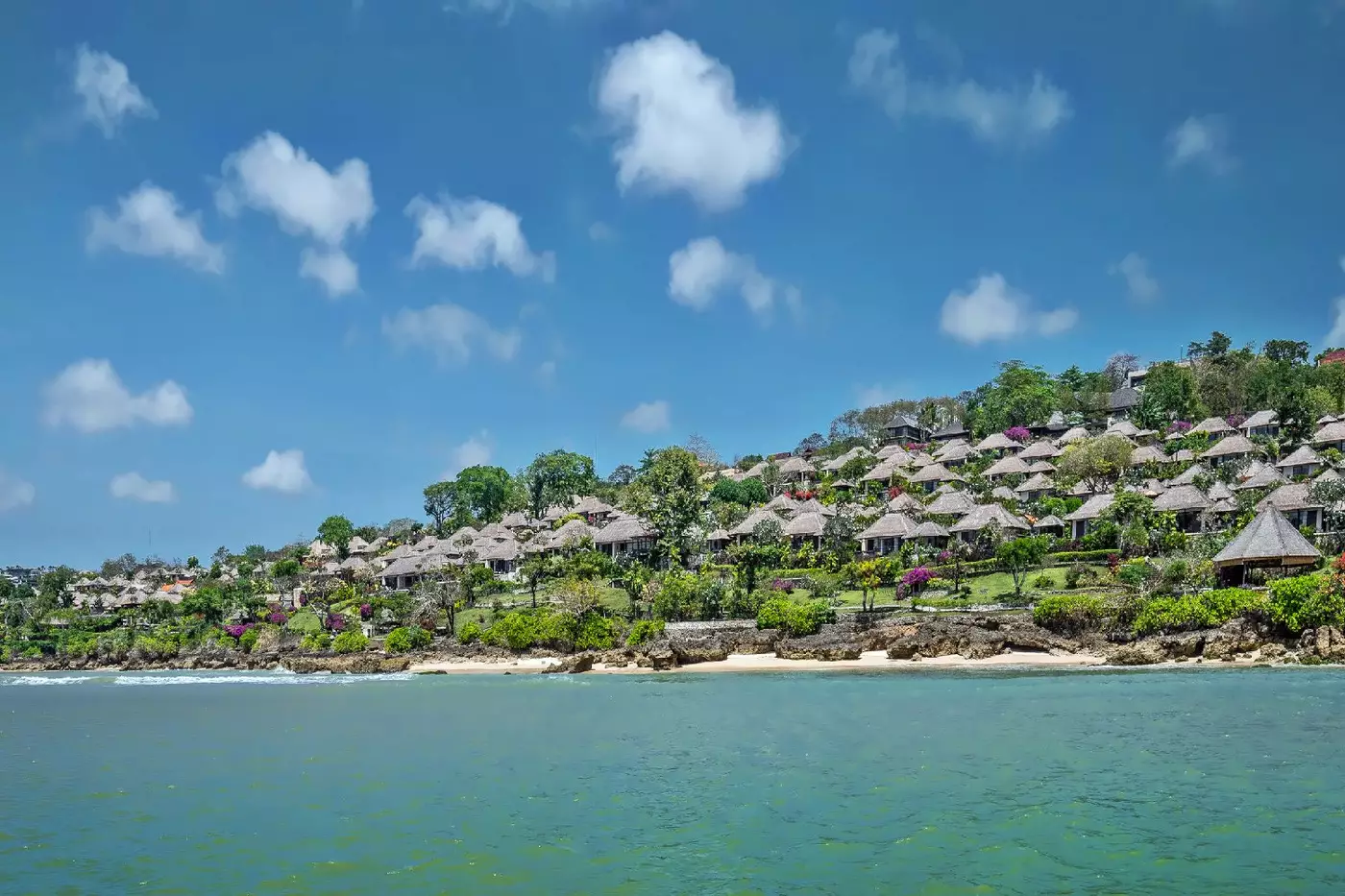
Jala has a more specifically Balinese focus. Its seafood-led dinner menu takes inspiration from the local fish markets, with preparations such as pepes-style fish and prawns cooked with Balinese spices. The setting lets guests watch the kitchen at work. Here, familiar ingredients appear in regional preparations, giving the restaurant a distinct place alongside Sundara's barbecue cooking and Taman Wantilan's wider range.
The Jala Cooking Academy occupies its own building, with an air-conditioned teaching kitchen. Hands-on classes explore Balinese and other Indonesian cuisines, including Javanese and Sumatran traditions. One experience, for guests aged 18 and older, begins in the herb and beehive garden and ends with a single-origin coffee tasting. A fish-market visit can also be arranged through the academy. These experiences bring attention to ingredients before they reach the plate, making the school a natural extension of Jimbaran's fishing-village setting.
TELU brings another part of Bali to the glass. Its name means three, referring to the harmony of nature, people and soul. Cocktails and mocktails draw on ingredients such as local arak, tropical fruit and herbs, with an adjoining herb garden used for cocktail workshops.