Best for
This sixth-district hotel suits travelers who want to explore on foot, with the Hungarian State Opera House and Andrássy Avenue within walking distance.
Please choose a hotel or destination from the list.
We couldn’t open your search results. Please try again.
Your private search
Finding exceptional stays
Best for
This sixth-district hotel suits travelers who want to explore on foot, with the Hungarian State Opera House and Andrássy Avenue within walking distance.
What makes it special
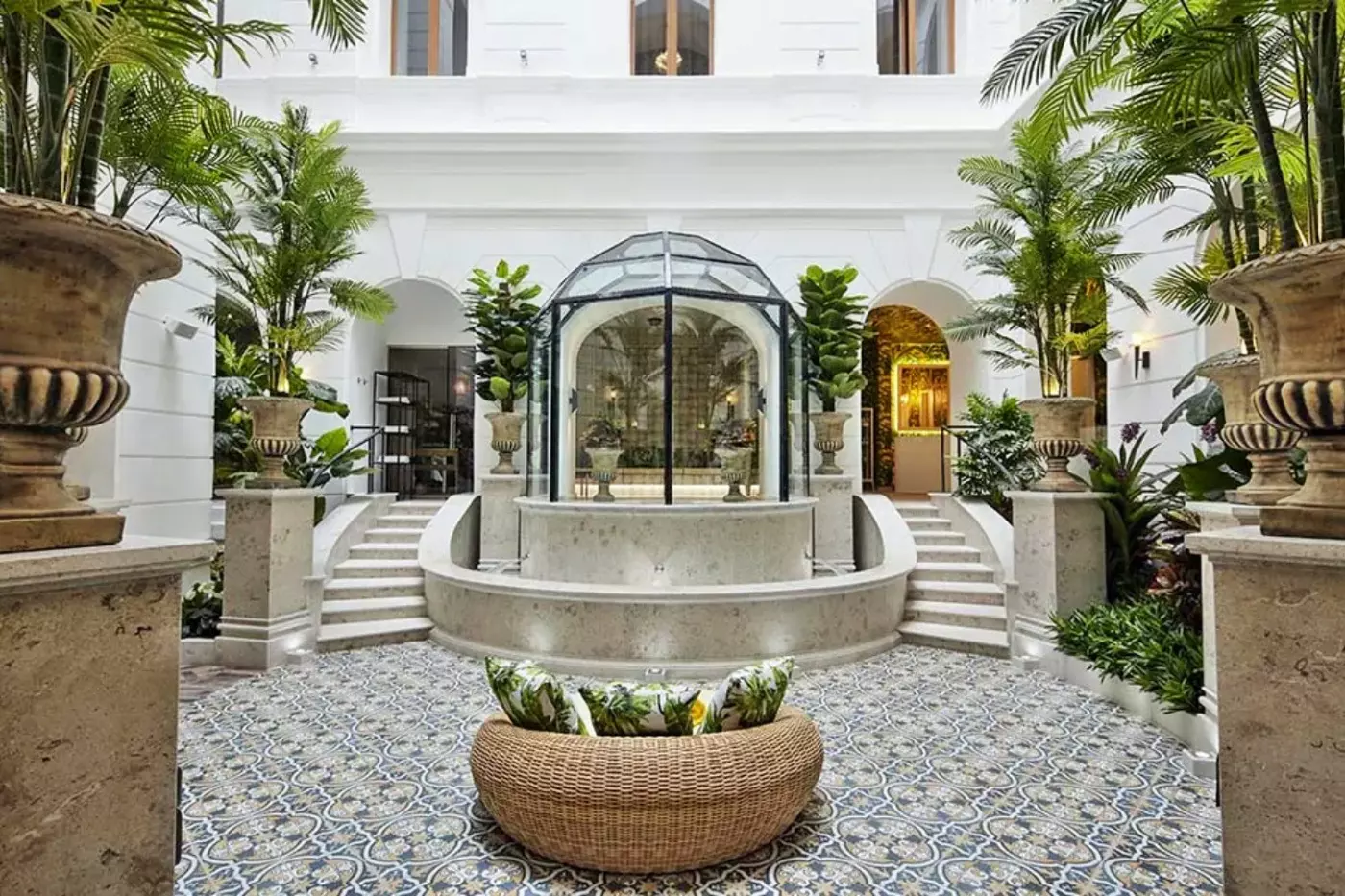
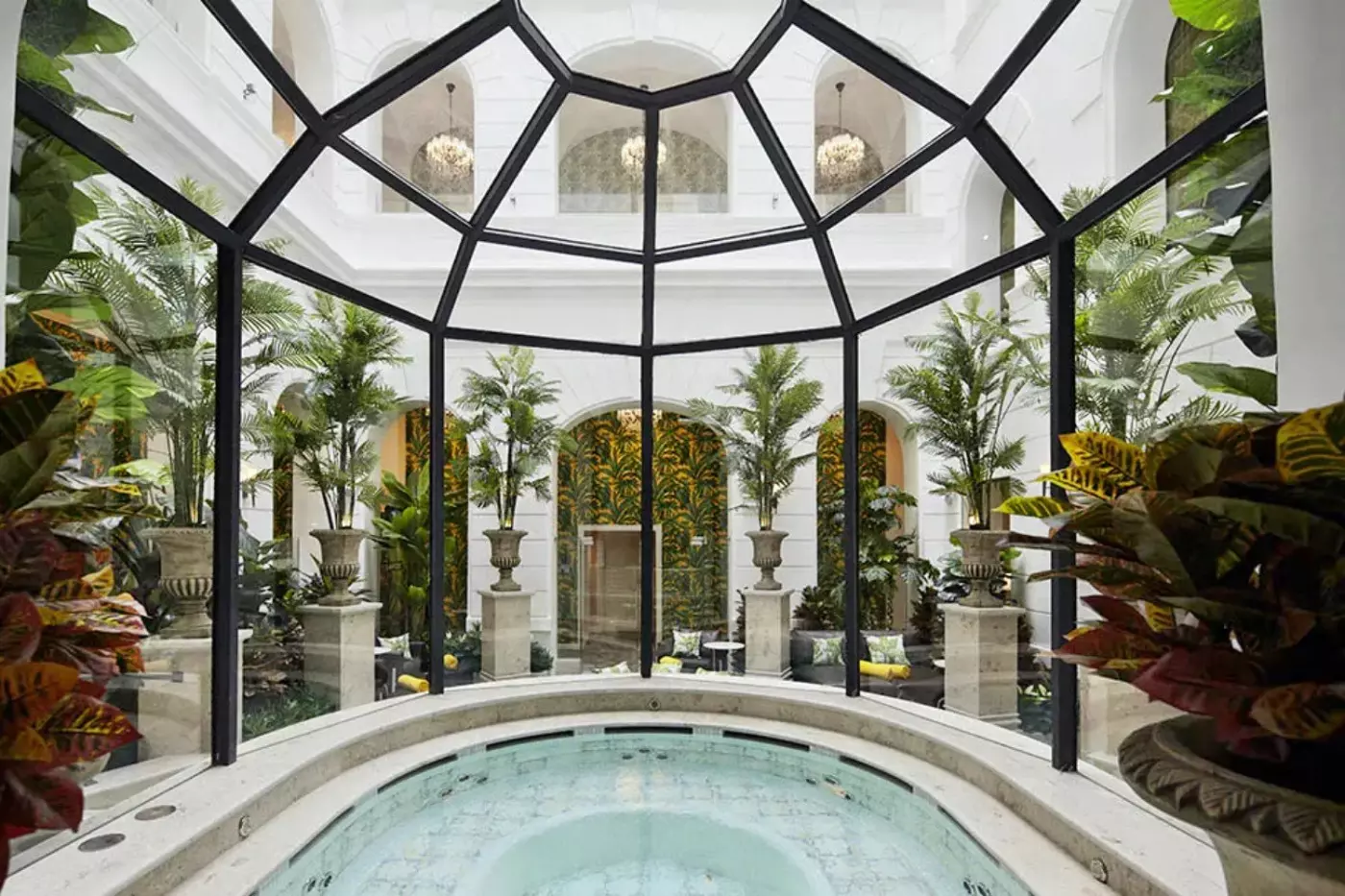
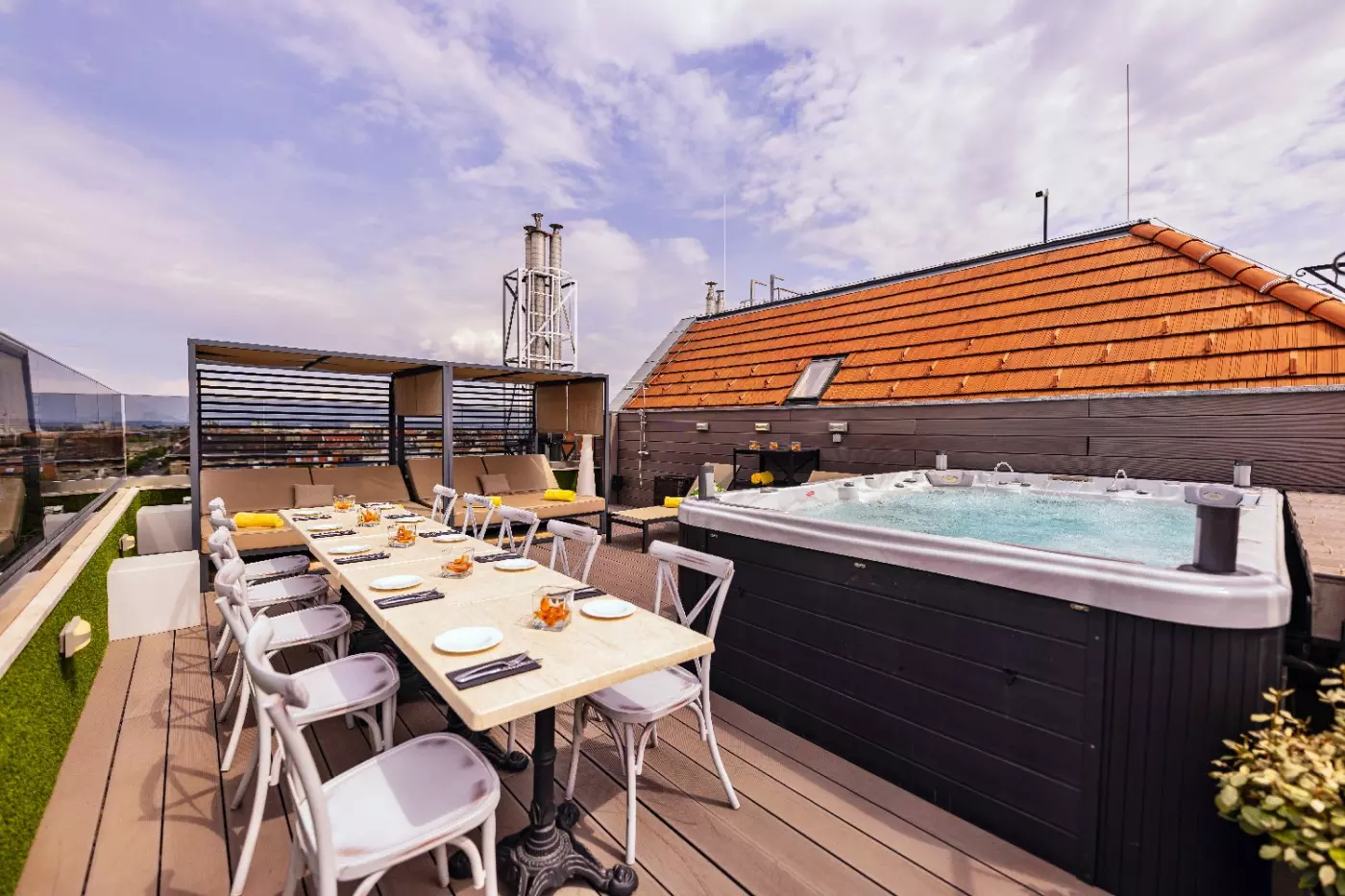
In the Secret Garden Day Spa, alternate the Finnish sauna and hot tub beneath the glass roof of the hotel’s planted courtyard.
Room to consider
Choose the two-story king room if you want to keep the sleeping area separate from where you spend time during the day.
Insider tip
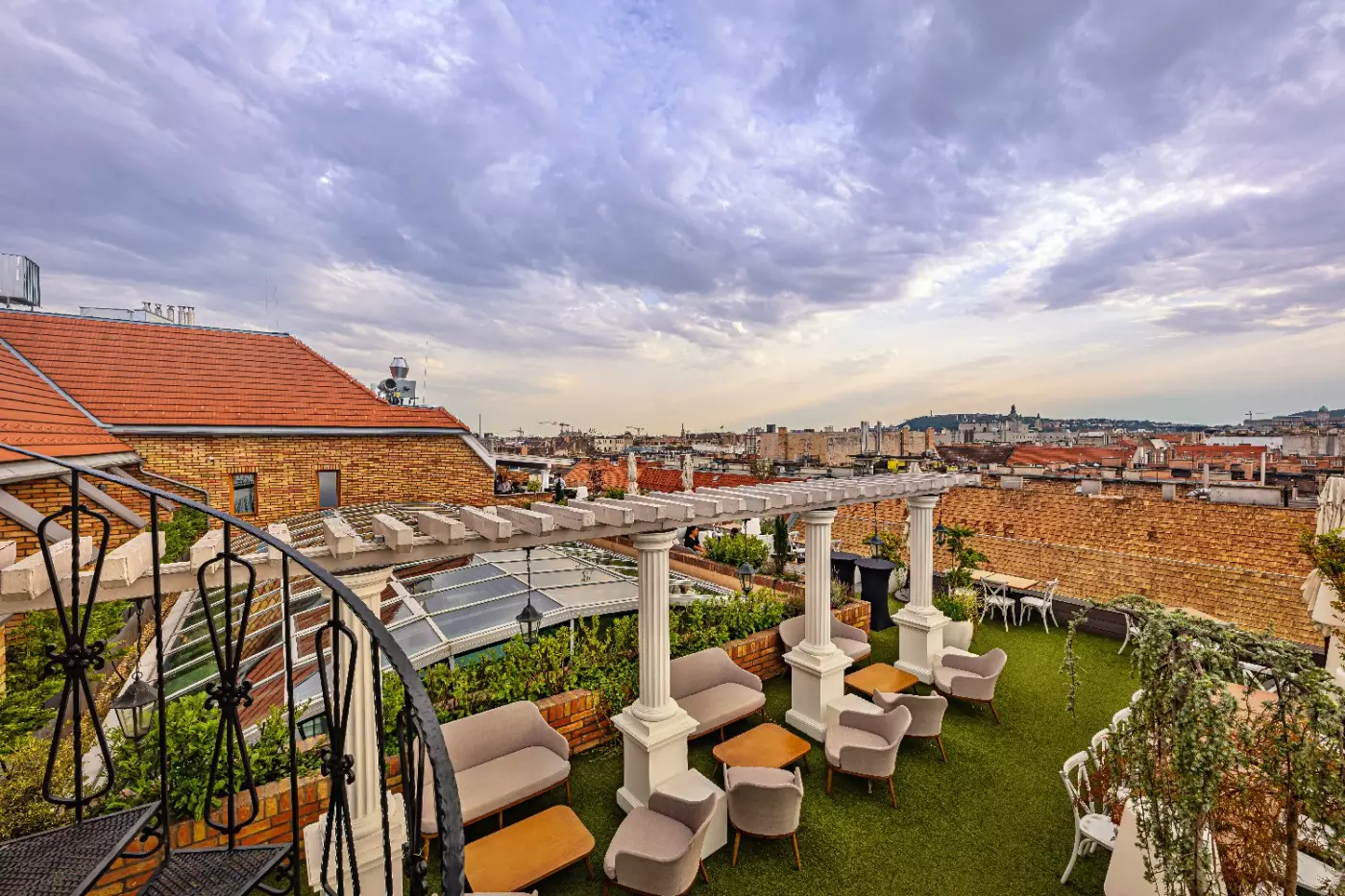
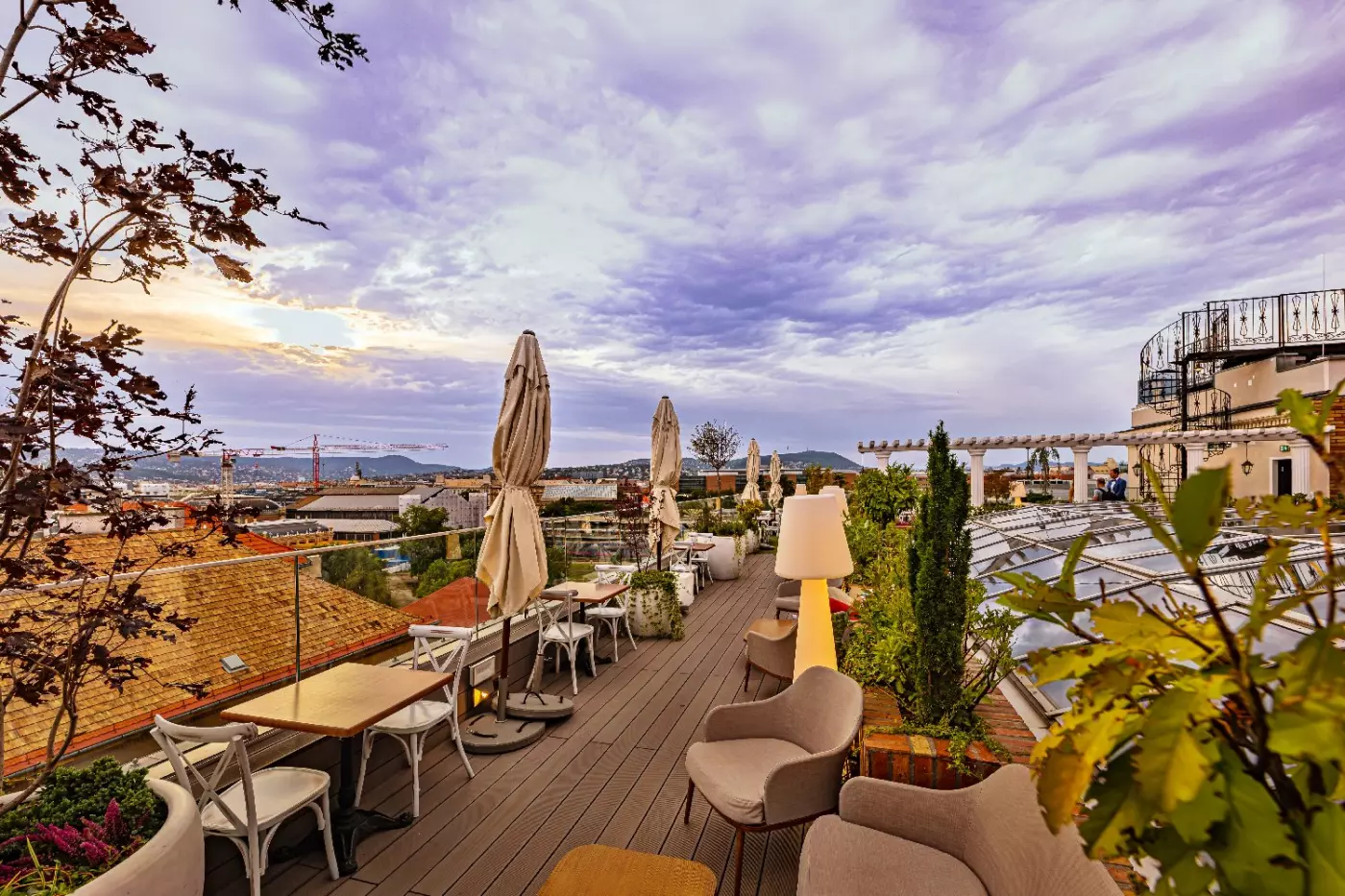
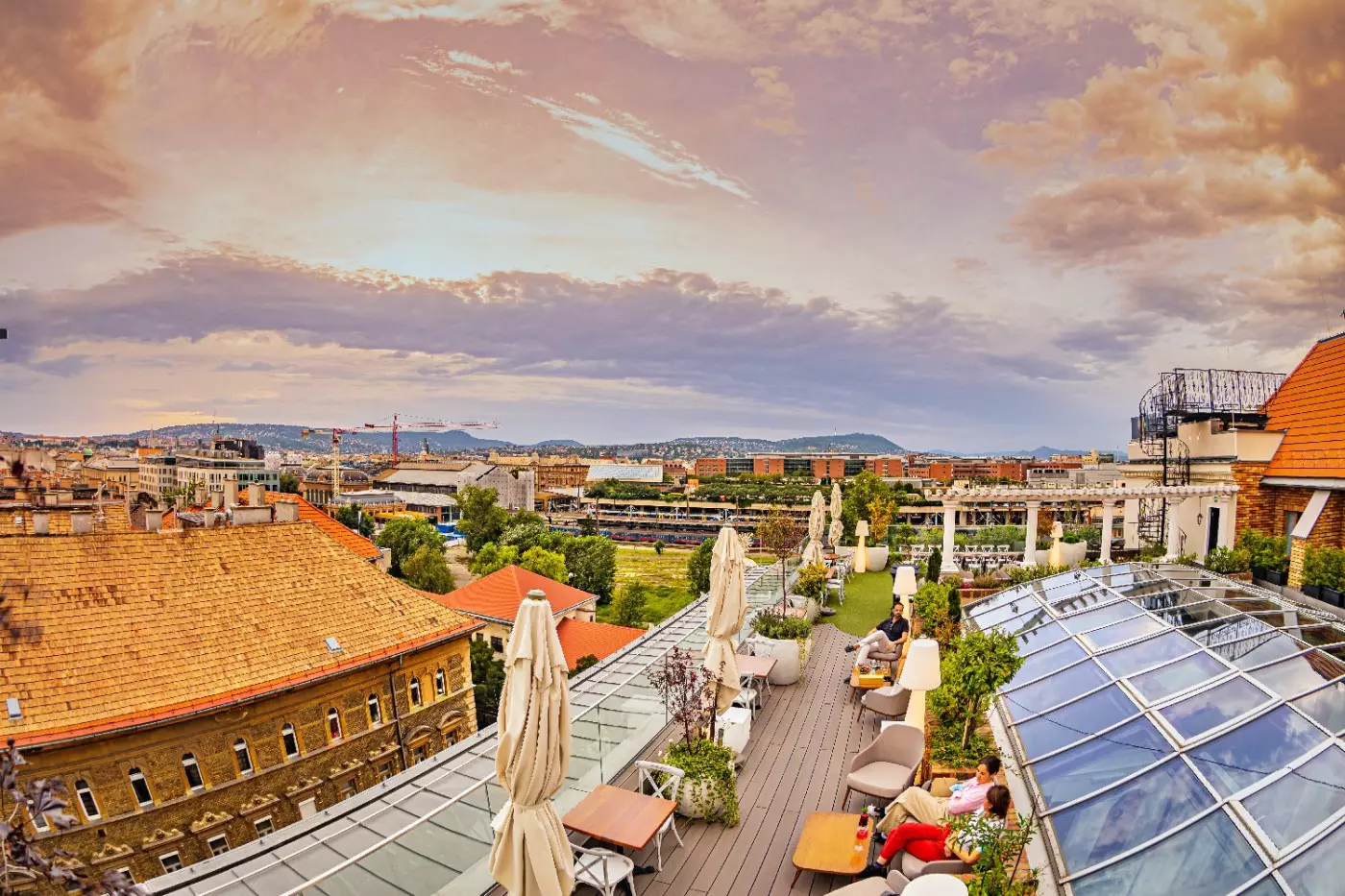
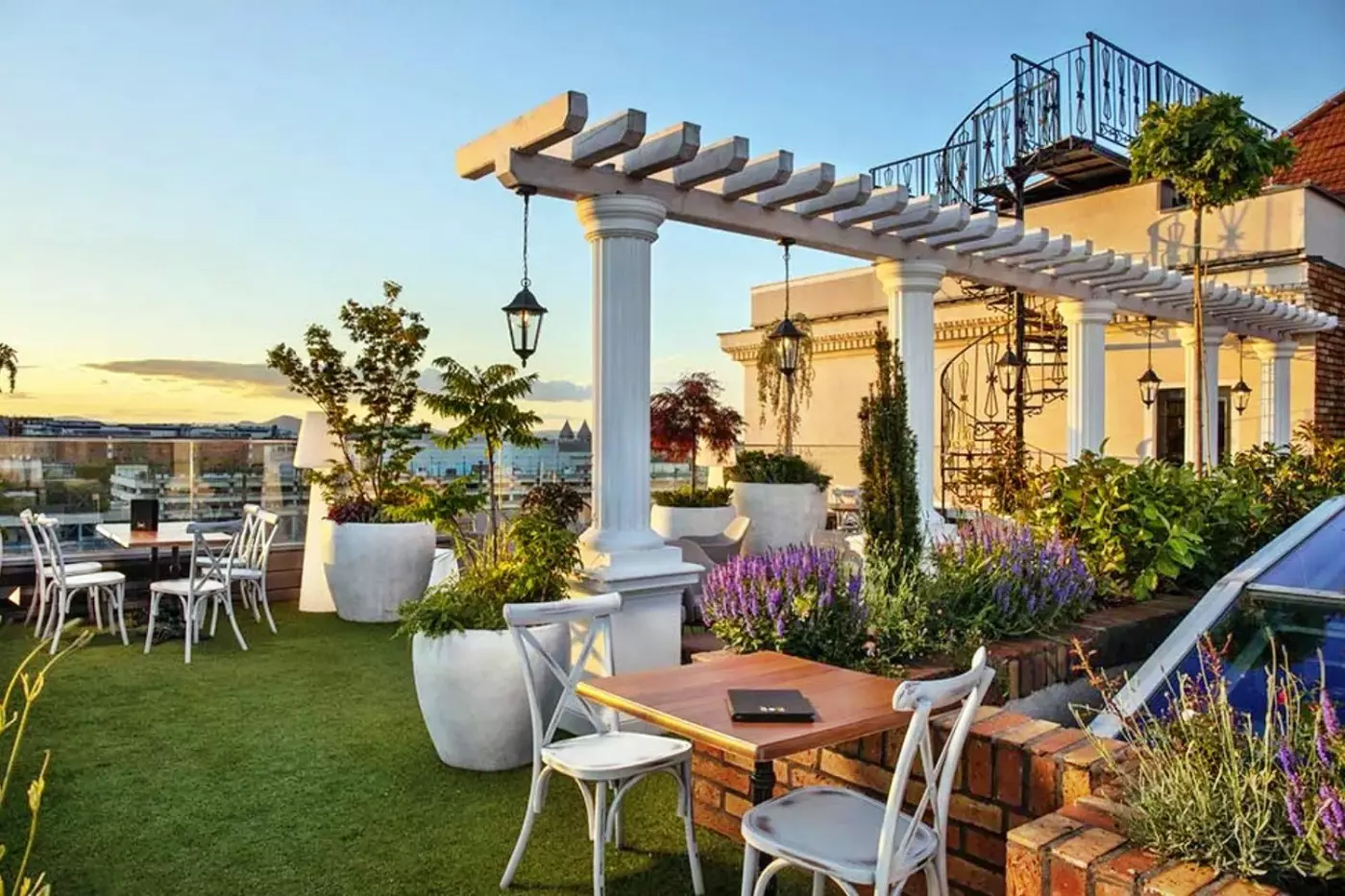
In warmer months, order a drink at the Sky Garden Rooftop Terrace for views of Buda Castle, Fisherman’s Bastion, and Gellért Hill.
Free membership gives you access to preferred rates, exclusive benefits and current promotions for your stay.
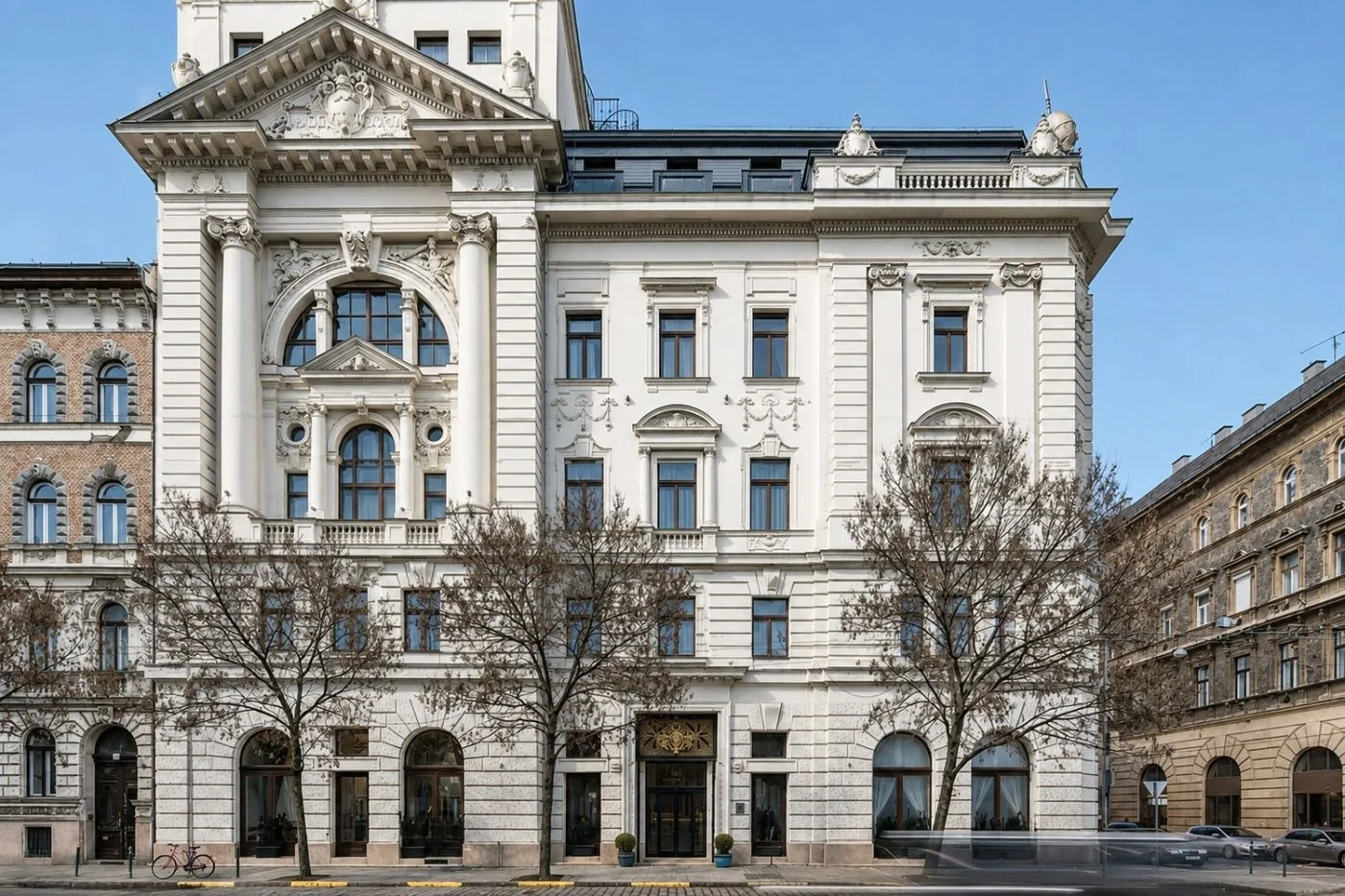
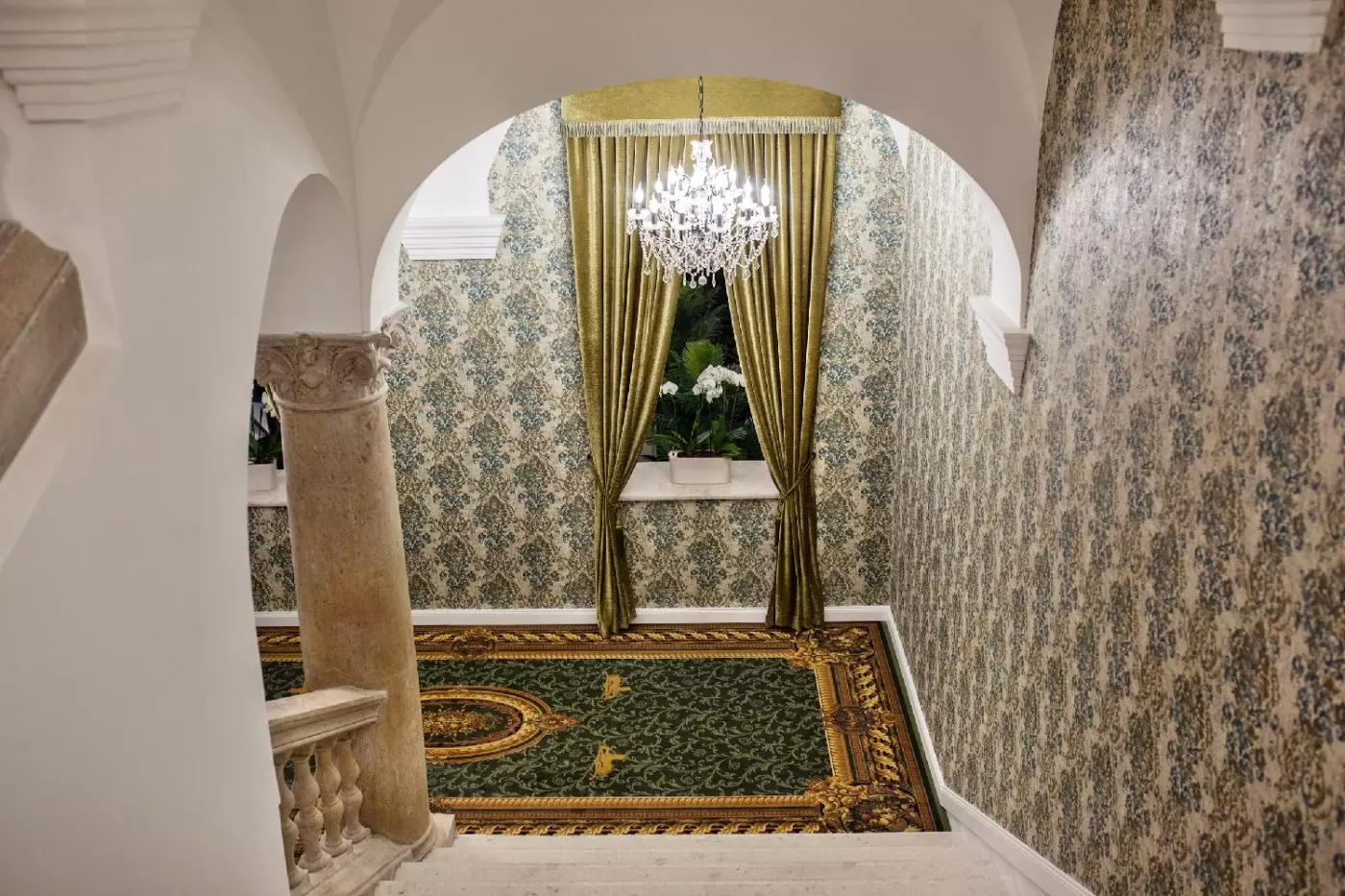
Mystery Hotel Budapest occupies a former Hungarian Freemasons' lodge in the capital's sixth district. The building dates to 1896, but its present life is a design-led city hotel rather than a preserved period interior. Behind the Podmaniczky Street facade, theatrical details appear in stages: a staircase lit like a ceremonial passage, an elevator screened by velvet curtains, and a monumental hall that has become the hotel's principal dining room. This is a Budapest address for travelers who enjoy architecture with a story and rooms with a distinct point of view. Nyugati Railway Station is nearby, while Andrassy Avenue and the wider Pest center are within reach on foot or by public transport.
 82
 Casual
 Fitness
 Spa
 Sauna
 Culture
 City Vibe
 Pet Friendly
The bedroom is upstairs; the shower bathroom is on the lower level.
French duplex styling gives this Ionic room its character. Carved windows look onto Vörösmarty Street, and a sofa forms part of the interior. The separate bathroom has a shower. These rooms sit on the ground floor near reception.
In one upper sleeping arrangement, a glass balustrade borders the raised platform. Sheer curtains cover an arched window, beside a wall with vertical stripes. A tall grey panelled headboard stands behind the bed, with grey upholstery below it. Blue and gold patterns run across the carpet.
A pale cabinet with carved trim and a dark top stands beside the sleeping area in this layout. Shaded, candle-shaped wall lights have small white covers. The light walls and grey textiles accompany the room’s French-inspired treatment, while the glazed balustrade leaves the edge of the sleeping platform open to view.

French duplex styling gives this Ionic room its character. Carved windows look onto Vörösmarty Street, and a sofa forms part of the interior. The separate...
King rooms come in Corinthian, Ionic and a smaller number of Doric designs. The two-double-bed option uses the Doric scheme. Each version has a shower bathroom, with decorative details that vary by the room assigned.
One King interior has an ornate gold-framed portrait behind the bed against pale patterned walls. Burgundy curtains frame a wood-panelled basin area. A vessel basin sits on its pale counter. A red upholstered wooden chair has a curved back with gilt edging, beside a polished round tabletop. Red and gold carpet covers the floor, with a black reading light mounted by the bed.
The other styles have their own decorative treatment. Ionic rooms use grey shades and floral motifs with large paintings behind the bed. Doric versions follow English Victorian design, combining green tones with natural materials and textiles.

King rooms come in Corinthian, Ionic and a smaller number of Doric designs. The two-double-bed option uses the Doric scheme. Each version has a shower...
King and Twin rooms sleep 2 guests. The Family layout sleeps 3.
King, Twin and Family versions each have a shower bathroom. Twin rooms are on the corners of the building. Corinthian, Ionic and Doric designs give the rooms different decorative treatments.
In one King arrangement, an exposed brick wall holds a small recessed window near the ceiling. A low green skirting board runs below the brickwork and its pale mortar. A large gold-framed portrait stands behind the bed. Floral curtains and matching cushions add muted green and pink tones.
An upholstered armchair sits beside a small round table in this layout. Diamond patterns cover the carpet, while white drapery frames another side of the sleeping area. The chair’s floral fabric matches the curtains and cushions. A plain grey upholstered bed base provides a different finish.

King, Twin and Family versions each have a shower bathroom. Twin rooms are on the corners of the building. Corinthian, Ionic and Doric designs give...
A freestanding bathtub sits within the suite, alongside a living area and a separate shower bathroom. The suite comes in Corinthian and Ionic styles. Most suites face the street.
In one furnished layout, a grey sofa and floral armchairs surround a small round wooden table. Grey curtains hang across a broad opening to the sleeping space. A large gold-framed painting stands behind the bed. Patterned carpet runs through the sitting and sleeping areas, with floral cushions continuing the room’s design.
Floral wallpaper borders a pale marble-lined bathing nook in this arrangement. A slim glass-topped table stands beside the bath. Its gold-coloured frame sits against the veined wall finish. A broad skylight opens above the interior. The plain pale ceiling meets a curved line at the top of the wall.

A freestanding bathtub sits within the suite, alongside a living area and a separate shower bathroom. The suite comes in Corinthian and Ionic styles. Most...
An extra bed is available on request.
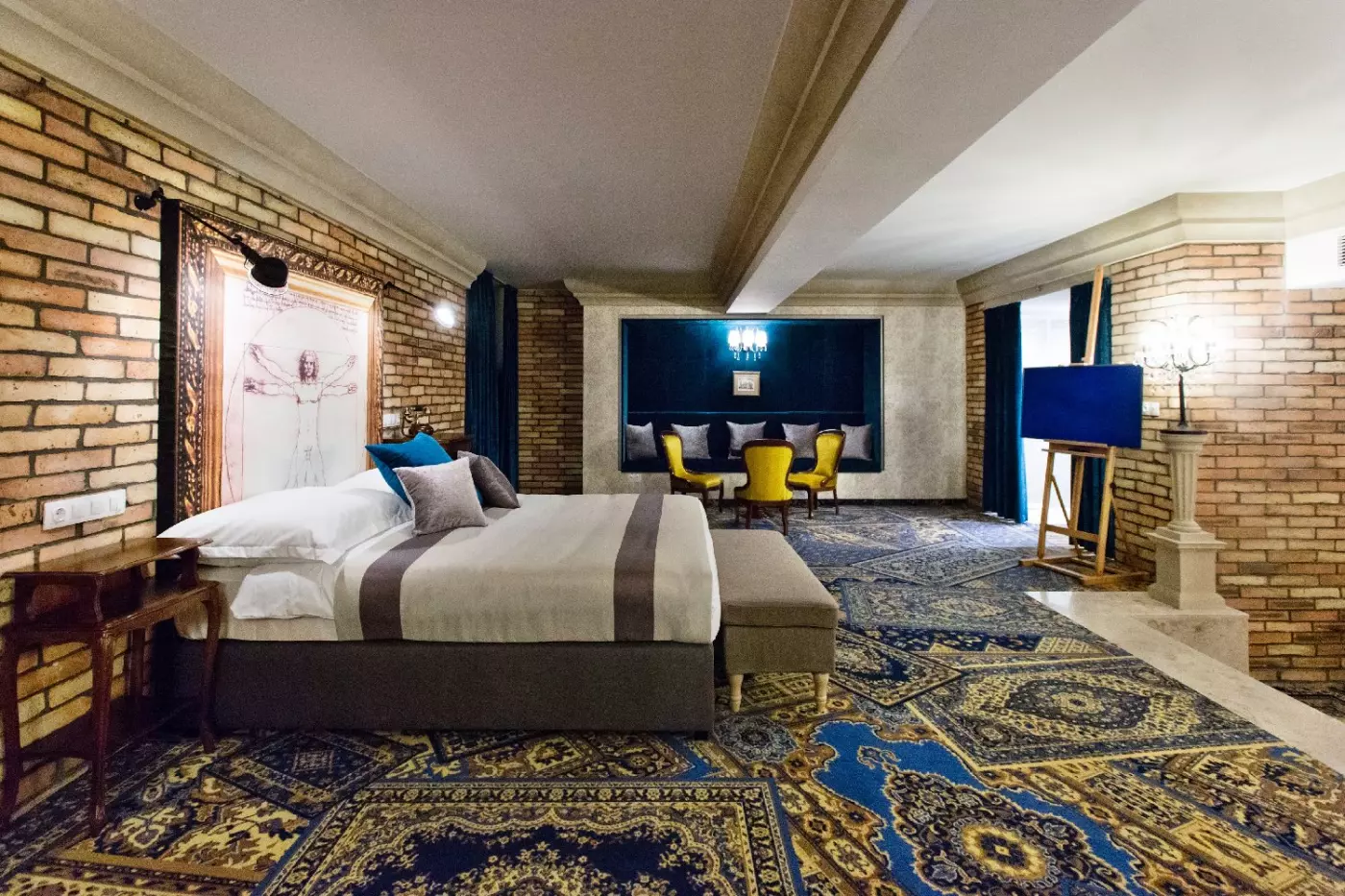
The Doric studio takes its cue from a painter’s workspace, with an open-plan interior and a freestanding bathtub in the room. A separate bathroom has light marble tiles, a shower and a toilet. The suite occupies the sixth floor.
In one interior arrangement, exposed brick piers divide the space beneath broad pale ceiling beams. Blue and gold rugs cover the floor, and framed artwork stands near the stair opening. A screen rests on a wooden easel, continuing the artist-studio treatment. Dark adjustable reading lamps extend towards the bed.
Teal curtains frame a recessed sitting nook in this scheme. A pale sofa lined with cushions and yellow armchairs face a small round table. A chandelier hangs above this seating area, where the deep blue backdrop contrasts with the light upholstery and yellow chair fabric.

The Doric studio takes its cue from a painter’s workspace, with an open-plan interior and a freestanding bathtub in the room. A separate bathroom has...
One- and two-bedroom layouts accommodate 3 or 4 guests, depending on the layout.
Corinthian details give the bedroom and separate salon a classic Baroque style. A freestanding soaking tub sits within the suite, alongside a separate shower bathroom. Windows face Podmaniczky Street from the fourth floor.
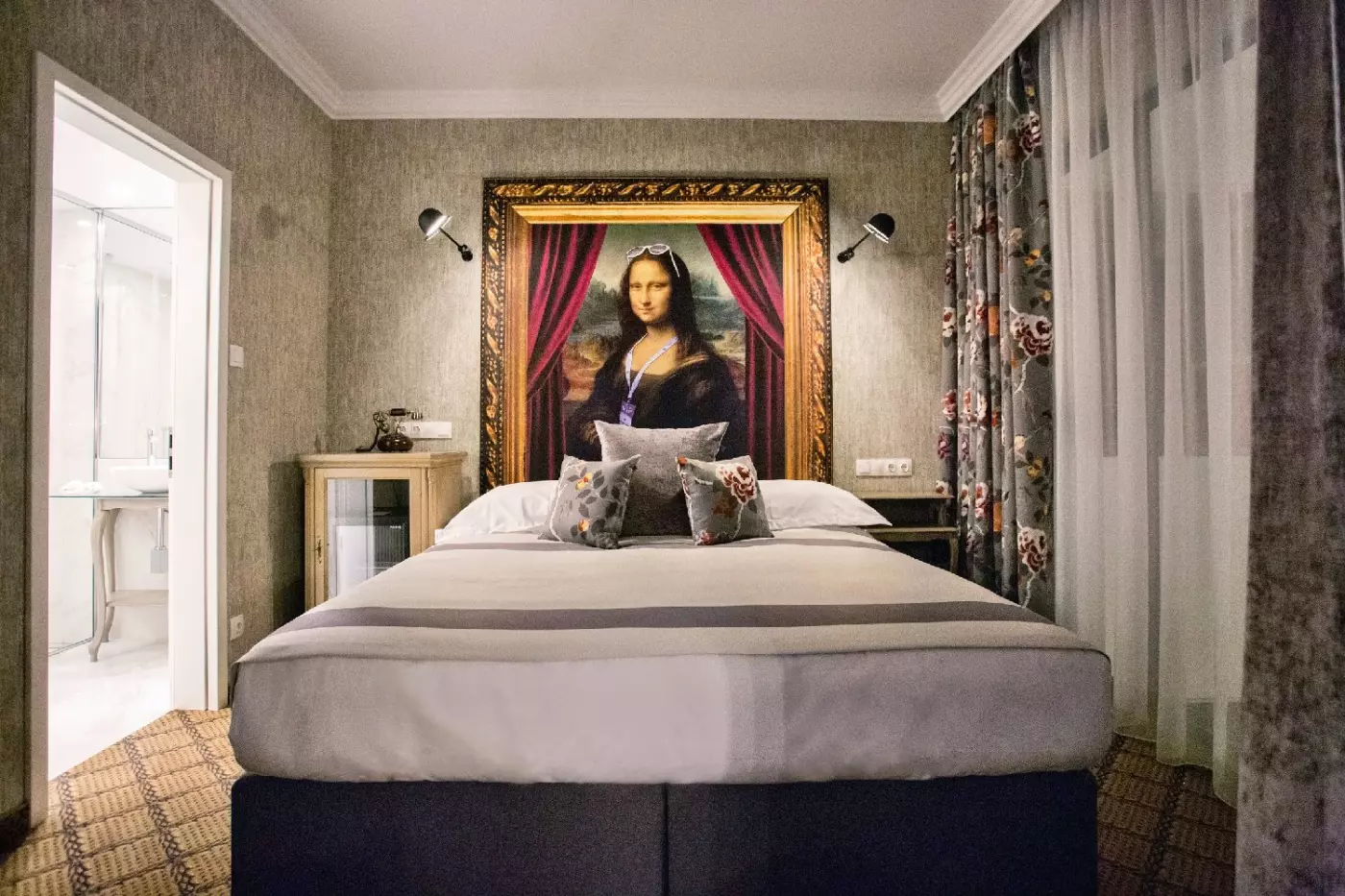
One bedroom arrangement has dark damask-patterned walls and broad teal curtains. Cushions in a similar shade lie against pale bed linen. A Mona Lisa-inspired image hangs behind the bed in an ornate gold frame. Dark reading lights extend from either side of the artwork, above blue and gold carpet.
In this layout, pale marble steps lead to the bathing-area opening beside a dark wooden cabinet. The patterned bedroom walls meet a plain light ceiling. Soft upholstery and crystal details follow the Corinthian scheme. This is the most ornate of the hotel’s Greek-inspired design styles.

Corinthian details give the bedroom and separate salon a classic Baroque style. A freestanding soaking tub sits within the suite, alongside a separate shower bathroom....
The building was created for the Symbolic Grand Lodge of Hungarian Freemasons. Its former temple, or workshop, occupied the fourth floor and is now the Great Hall. That history gives the hotel more substance than its name might suggest: the references to secrecy and symbolism are rooted in the structure itself. Interior designer Zoltan Varro has brought a more playful layer to the restoration, using optical illusions, rich fabrics and unexpected transitions between rooms. The result is neither a conventional palace hotel nor a minimalist conversion. It asks guests to notice the setting, from the scale of the public rooms to small visual cues along the corridors.
The atmosphere changes as you move through the building. The Great Hall has the formality of a ceremonial chamber, while the enclosed courtyard brings greenery and softer light into the center of the hotel. Higher up, Sky Garden Rooftop Terrace gives the property a different relationship with Budapest: its outlook takes in Nyugati's distinctive roofline and the landmarks on the Buda side of the city. These spaces make the hotel feel more layered than its street frontage first reveals. They also explain why a stay here is as much about spending time inside the building as using it as a base for sightseeing.
The hotel's 82 rooms and suites do not follow a single decorative template. Their design draws on the Doric, Ionic and Corinthian orders, translated into three contrasting moods. Doric rooms use greens, natural textures and Victorian references; Ionic rooms lean toward French mansard styling and floral details; Corinthian rooms are more ornate, with burgundy velvet and Baroque accents. Location within the building matters alongside the design: the hotel describes inner-courtyard outlooks for Doric rooms and city views for its Corinthian rooms. A preference for daylight, view or a quieter visual palette is worth considering when choosing a category.
For a straightforward city stay, Superior King and Superior Twin rooms provide different bed arrangements within the same compact scale. Deluxe King rooms add floor space, while Duplex King rooms place the sleeping area above the lower-level shower room. The split-level plan is distinctive, though anyone who prefers a bedroom and bathroom on one level should choose differently. The categories have practical differences beneath their styling, so the decision is not simply between more or less elaborate decor. Across the range, the hotel lists individual air-conditioning controls, coffee and tea facilities, and access to its wellness area and fitness center.
The suites introduce more room to settle in. Mystery Suites combine a sitting area and freestanding bathtub, with a sofa bed and space for up to three guests. The Atelier Studio is a larger, open-plan suite with an artistic character, while the Da Vinci Suite pairs a separate living room with one- or two-bedroom layouts. Those distinctions matter for a longer Budapest visit or a trip shared by family: an open studio will feel different from rooms that can be closed off from one another. The hotel lists cribs on request, but guests traveling with children should select by the stated occupancy and layout of the exact suite rather than assume every category works for a family.
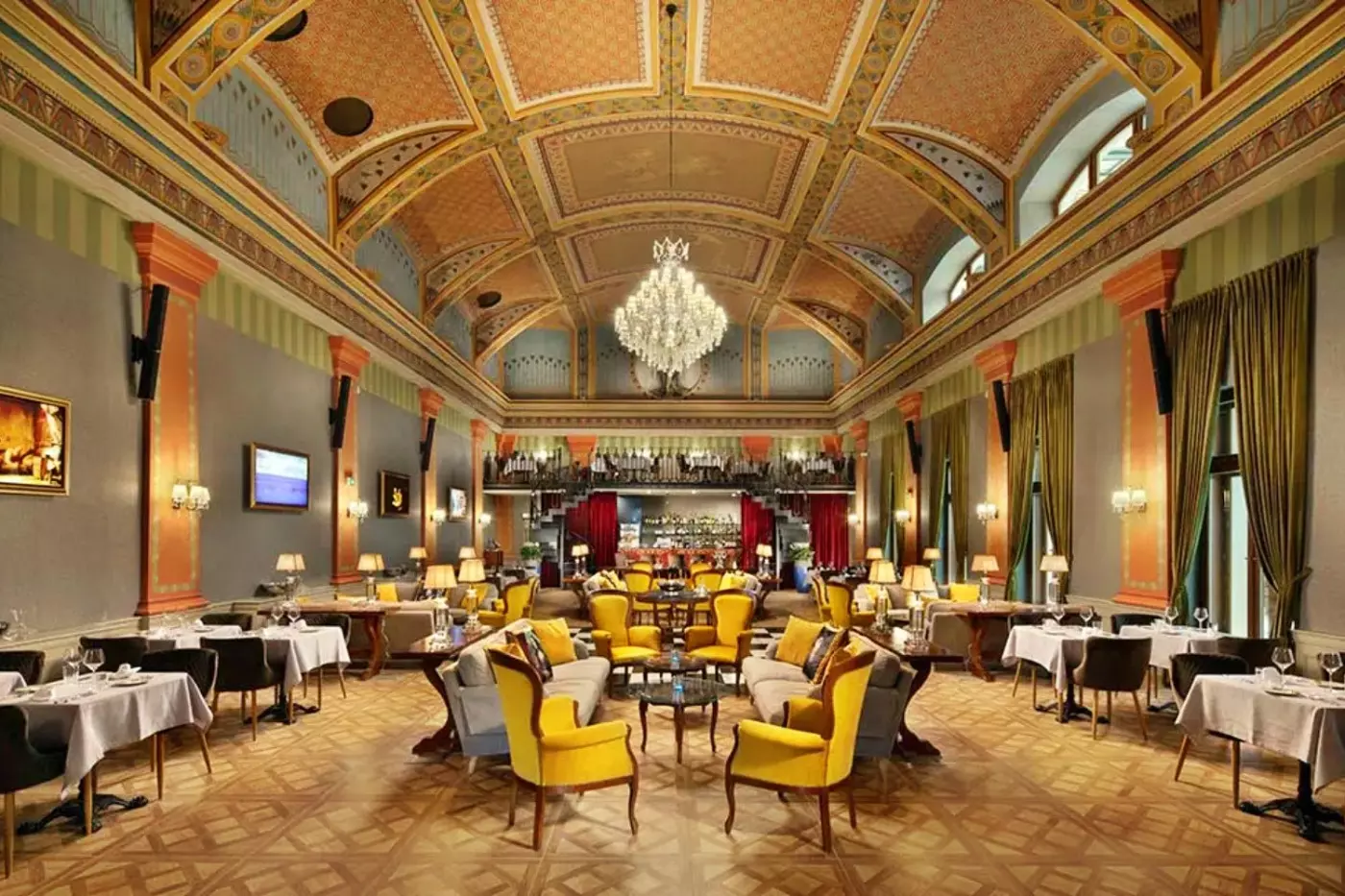
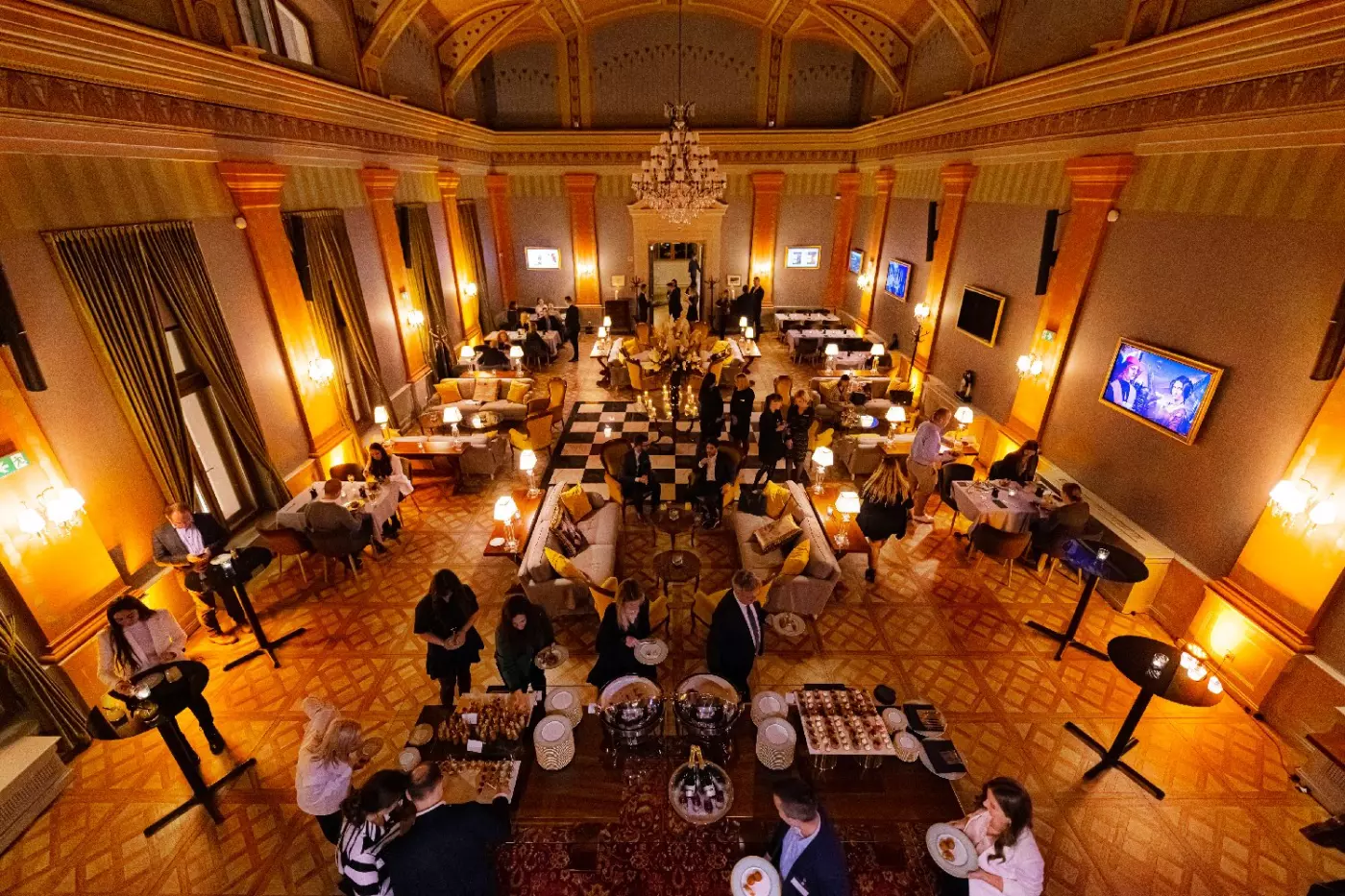
Breakfast in the Great Hall puts the building's most important historic room into daily use. Its generous height and decorative detail carry the sense of the former lodge, while the restaurant's contemporary setting keeps the experience firmly in the present. The hotel also describes international cuisine, drinks and brunch in this space. It is best understood as the hotel's signature indoor dining room, where the architecture is as memorable as the meal. For guests who enjoy lingering over the first meal of the day, the room itself is a reason to stay a little longer. The former ceremonial hall has kept its central place in the life of the building, even as its purpose has changed.
Sky Garden Rooftop Terrace is the hotel's open-air counterpart to the Great Hall. Its columns, lounge seating and elevated outlook give a sense of the city's geography, from the nearby station toward Buda Castle, Fisherman's Bastion and Gellert Hill. The hotel describes a rooftop bar and restaurant here, with service seasonal and subject to weather. Its appeal lies in the contrast: contemporary furniture against nineteenth-century architecture, and a broad view of Budapest after the close detail of the interiors. From this height, the distinctive roof of Nyugati feels close, while the hills across the river give the view its depth.
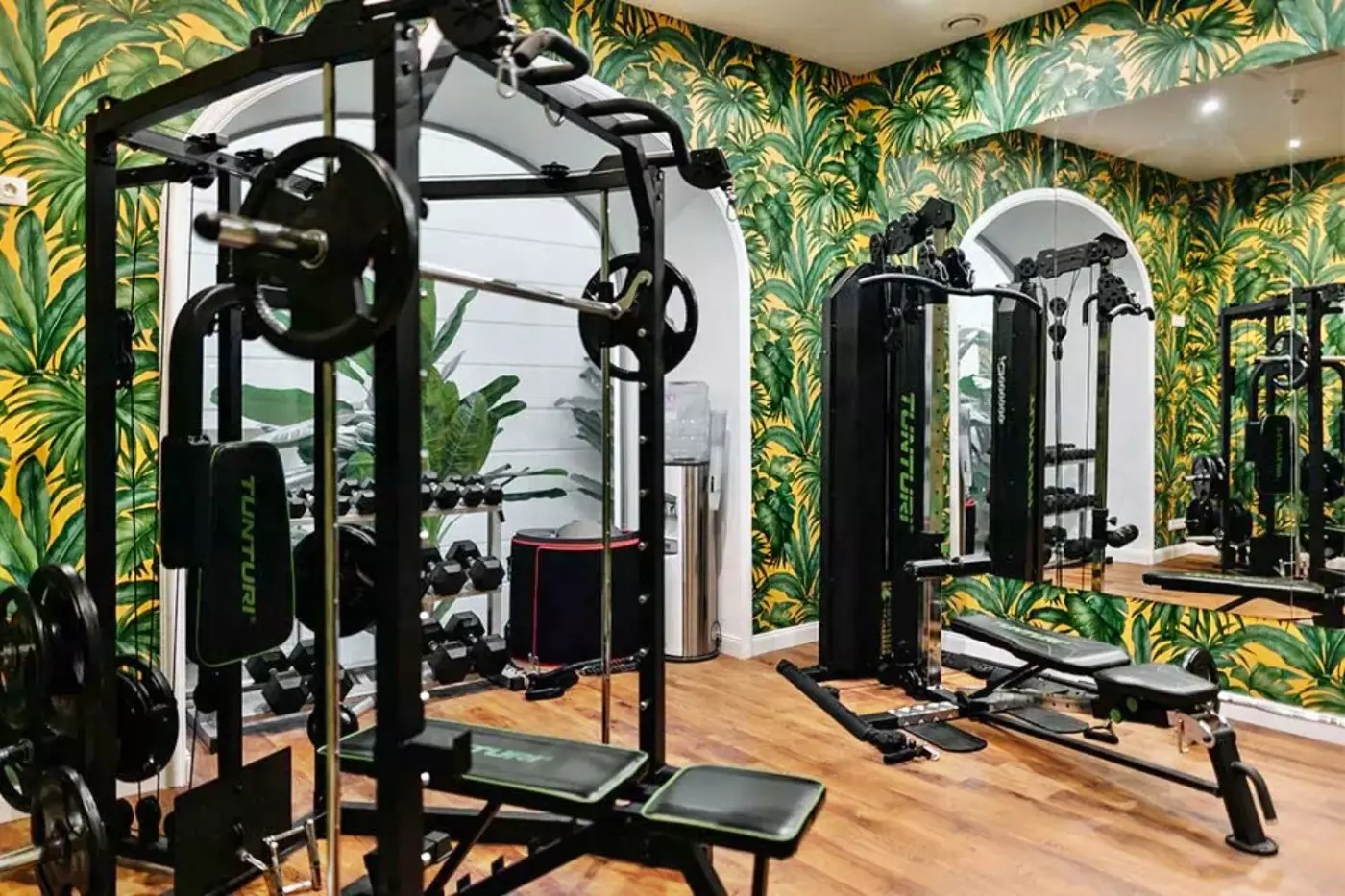
The Secret Garden Day Spa occupies the enclosed inner courtyard. Greenery, a fountain and Baroque-inspired details give it a character of its own, separate from the stronger theatricality of the Great Hall. The wellness facilities include a whirlpool, Finnish sauna and steam room, with massages and body treatments also listed by the hotel. This is a courtyard spa for unwinding after walking the city, not a thermal-bath complex or a lap-pool destination. A fitness center adds a more practical option before or after a day out. The space also welcomes day visitors, so it should not be mistaken for an exclusive retreat reserved only for overnight guests.
Budapest's public baths are part of many itineraries, but the hotel's spa serves a different purpose. It allows a short pause without crossing town, especially after a museum visit, a late train arrival or a long stretch on foot. Its indoor setting also means the experience is not defined by rooftop weather. Guests who want a treatment can build that into a city day; those who simply want time in the sauna or whirlpool have a more informal reason to return to the hotel between excursions. The courtyard setting keeps the transition from busy streets to quiet interiors pleasantly direct.
Podmaniczky Street places the hotel near Nyugati Railway Station and the transport routes around Terez Boulevard. Andrassy Avenue is close enough to make its architecture, shops and cultural stops part of an unhurried walk. The position works particularly well for travelers arriving by rail or dividing their time between Pest neighborhoods and sights across the Danube. It is not a riverfront hotel and does not promise a Danube view from the bedroom. Its strengths are a distinctive historic building, access to the city and enough variety within the property to make returning at the end of the day feel like a change of scene.
Mystery Hotel Budapest rewards a deliberate room choice. A guest who wants the strongest decorative statement may gravitate toward Corinthian styling or a suite, while someone planning full days outside may prefer a simpler room and spend more time in the Great Hall or spa. The hotel's character is unusually visible in both its public spaces and its accommodation, without requiring a stay to revolve around a theme. Here, the former lodge remains legible, the sixth district remains useful, and Budapest is never far beyond the door.
The Great Hall serves breakfast beneath a giant chandelier, with two iron spiral staircases still framing the Freemasons’ former meeting chamber.
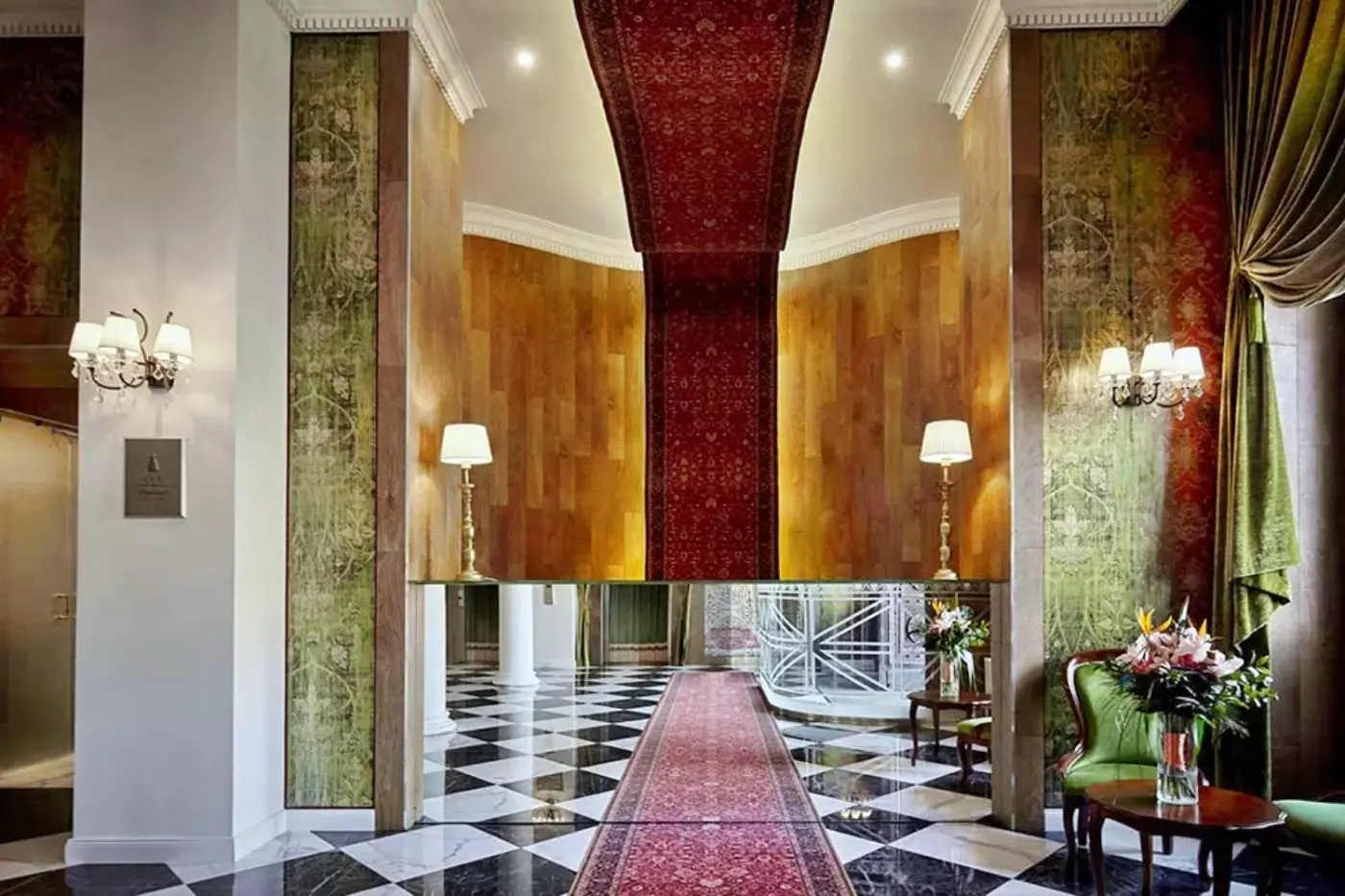
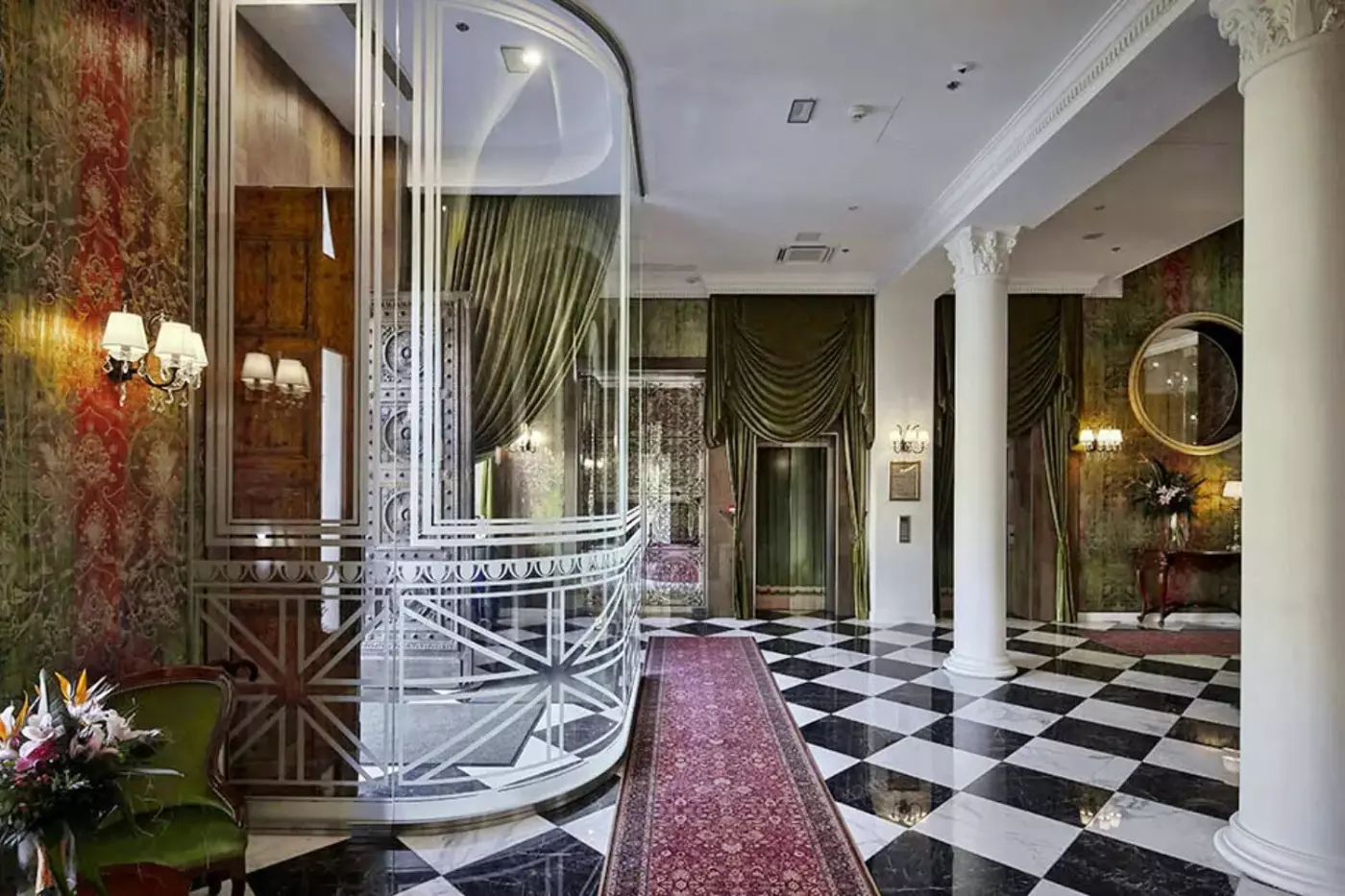
Zoltán Varró’s optical illusions start at reception, where a seemingly floating carpet sets a playful tone for exploring the rest of the hotel.
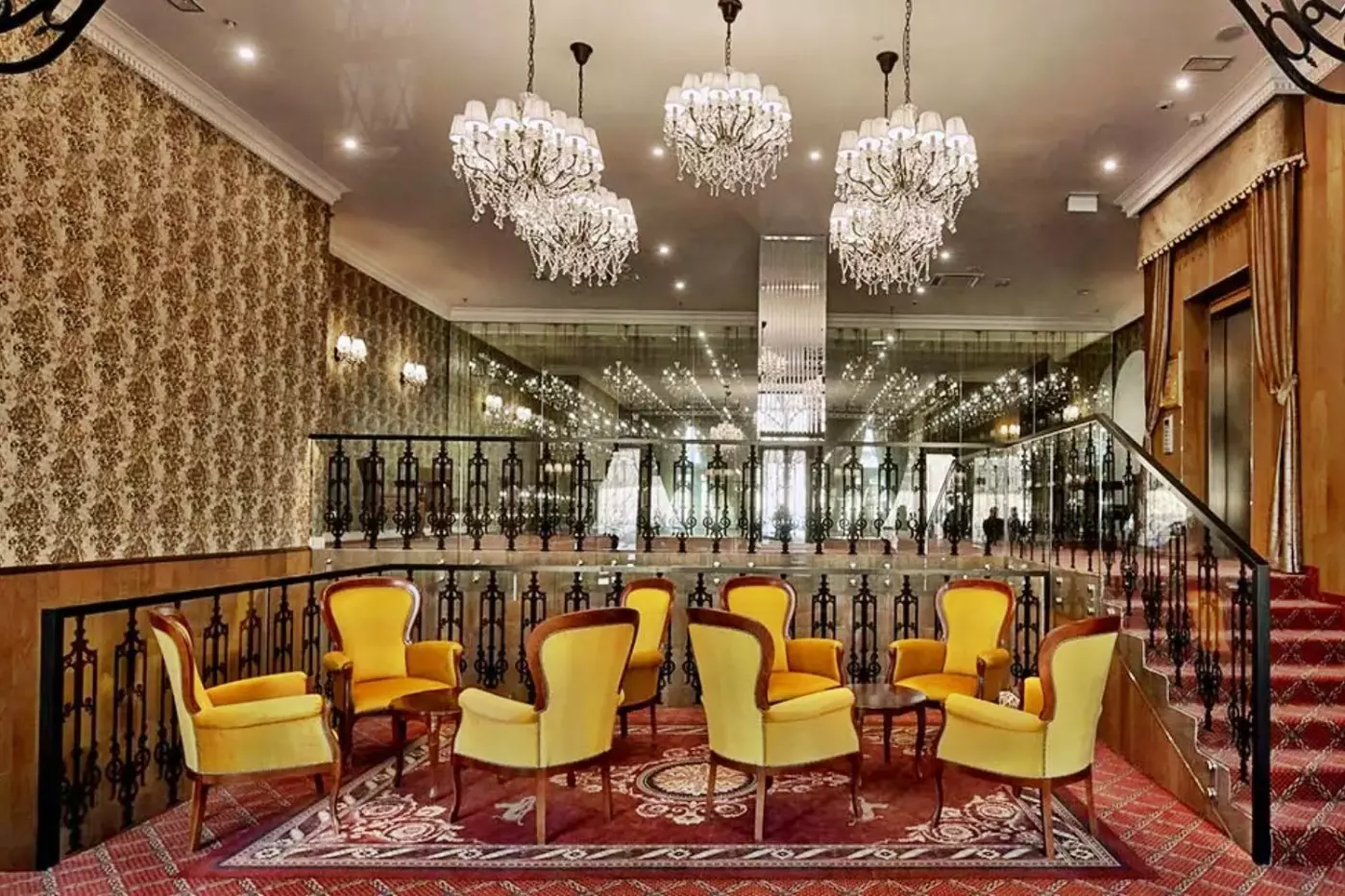
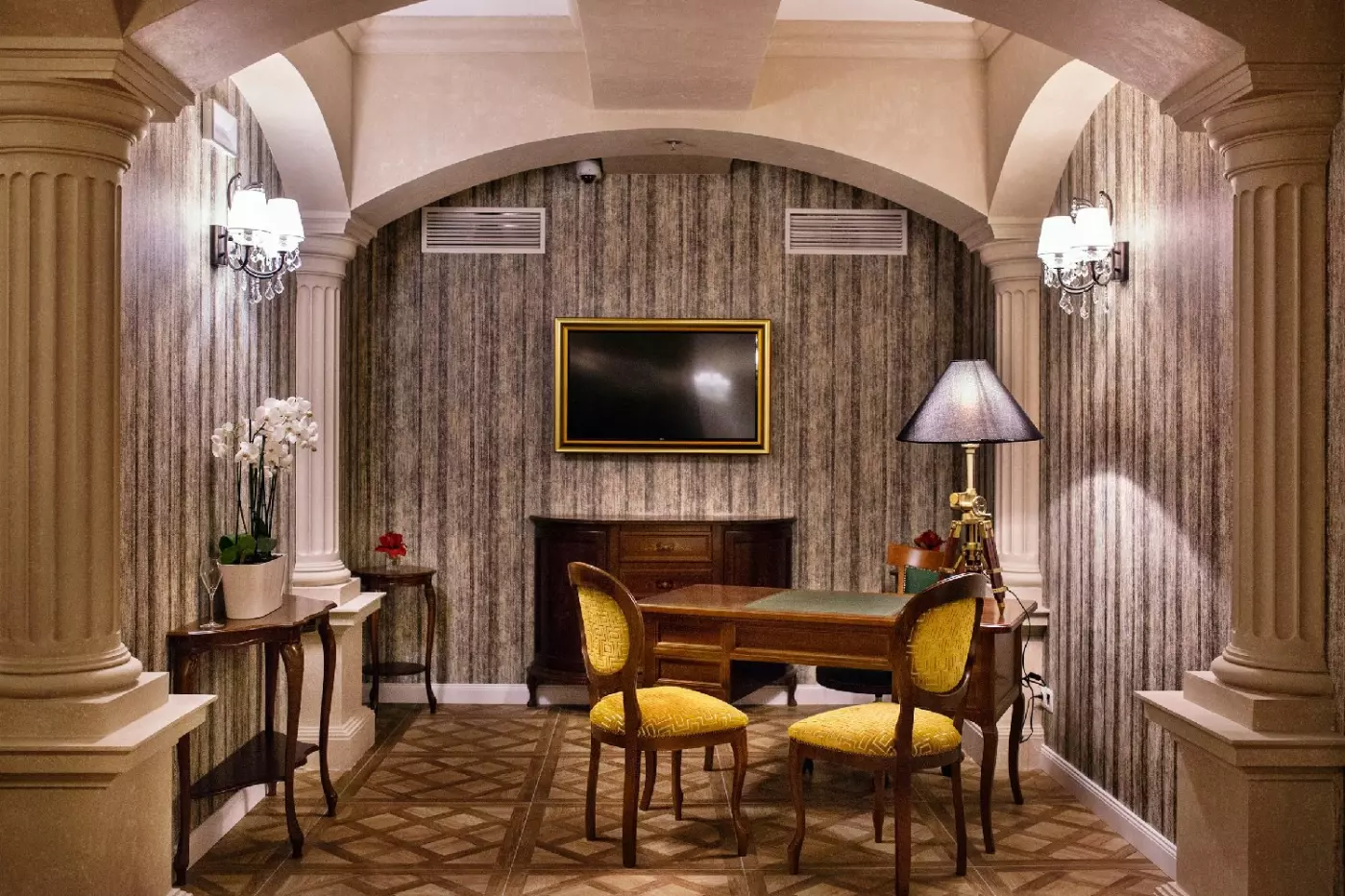
The building’s Doric, Ionic, and Corinthian motifs carry through the common rooms, giving guests architectural details to spot as they explore.
Budapest, Podmaniczky u. 45, 1064, Hungary
Playing this video may share data with YouTube. Please see our Privacy Policy.
Please note: The Sky Garden rooftop terrace is closed for its seasonal break.
Yes. Mystery Hotel Budapest is a strong choice for travelers who want a five-star design hotel with real character. It suits guests who like historic buildings, bold interiors, a spa, rooftop views, and a central Budapest location.
Mystery Hotel Budapest is located at Podmaniczky Street 45 in Budapest's 6th district. The hotel is close to Nyugati railway station, Andrassy Avenue, shops, restaurants, and several public transport options.
Mystery Hotel Budapest is set in a 19th-century building once linked to the Hungarian Freemasons. The hotel uses symbolic design, dramatic halls, art details, and theatrical spaces to create a memorable city stay.
Mystery Hotel Budapest has 82 guest rooms and suites across several design styles and room categories. Options include superior rooms, deluxe rooms, duplex rooms, Mystery suites, the Da Vinci Suite, and the Atelier Studio Suite.
The best rooms are usually the suites, especially if you want more space and a stronger design statement. The Atelier Studio Suite and Da Vinci Suite are good choices for guests who want a more distinctive stay.
More amenities
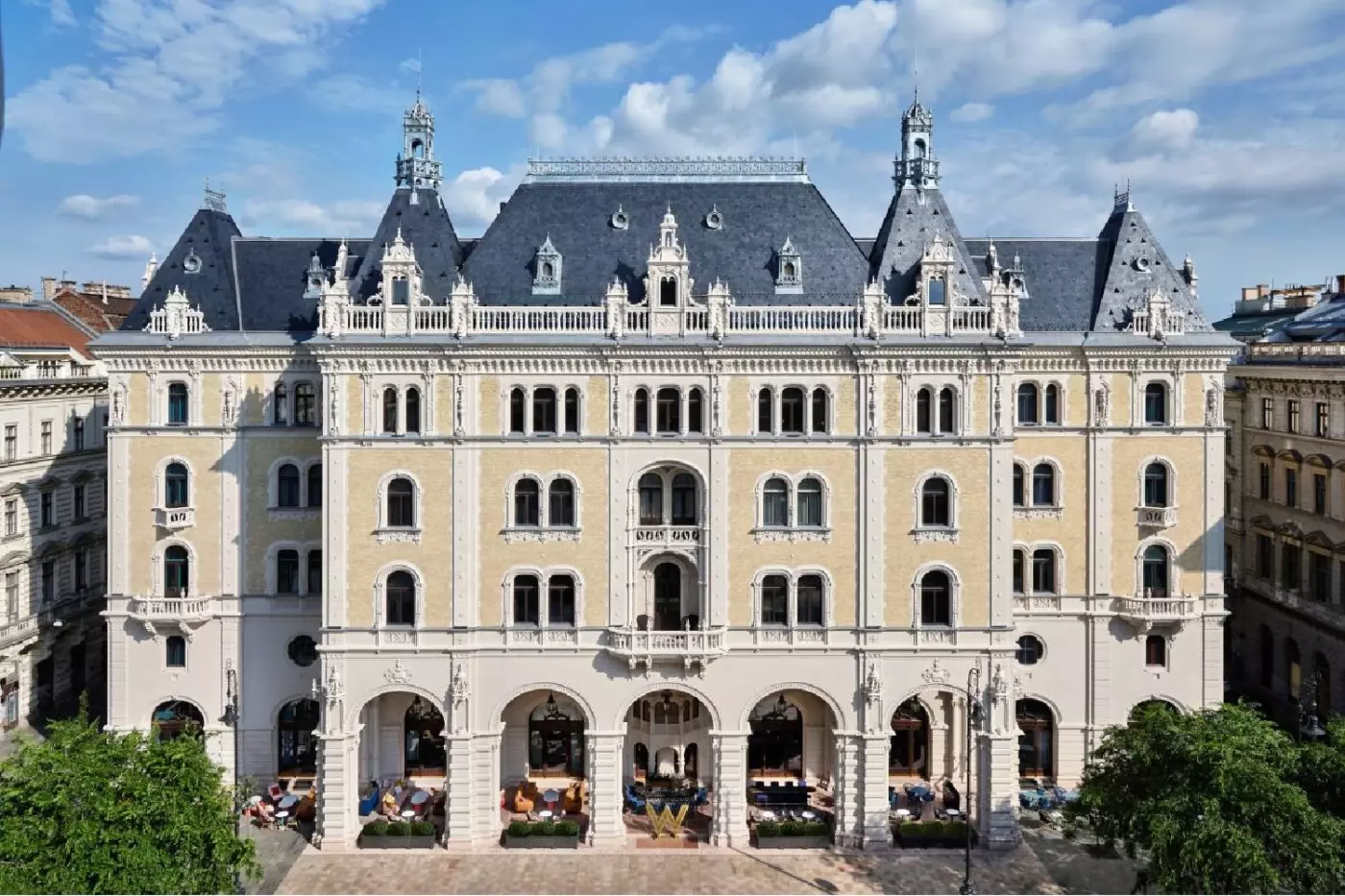
W Budapest occupies the restored Drechsler Palace on Andrassy Avenue, facing the Hungarian State Opera House. It is one of th...
More amenities
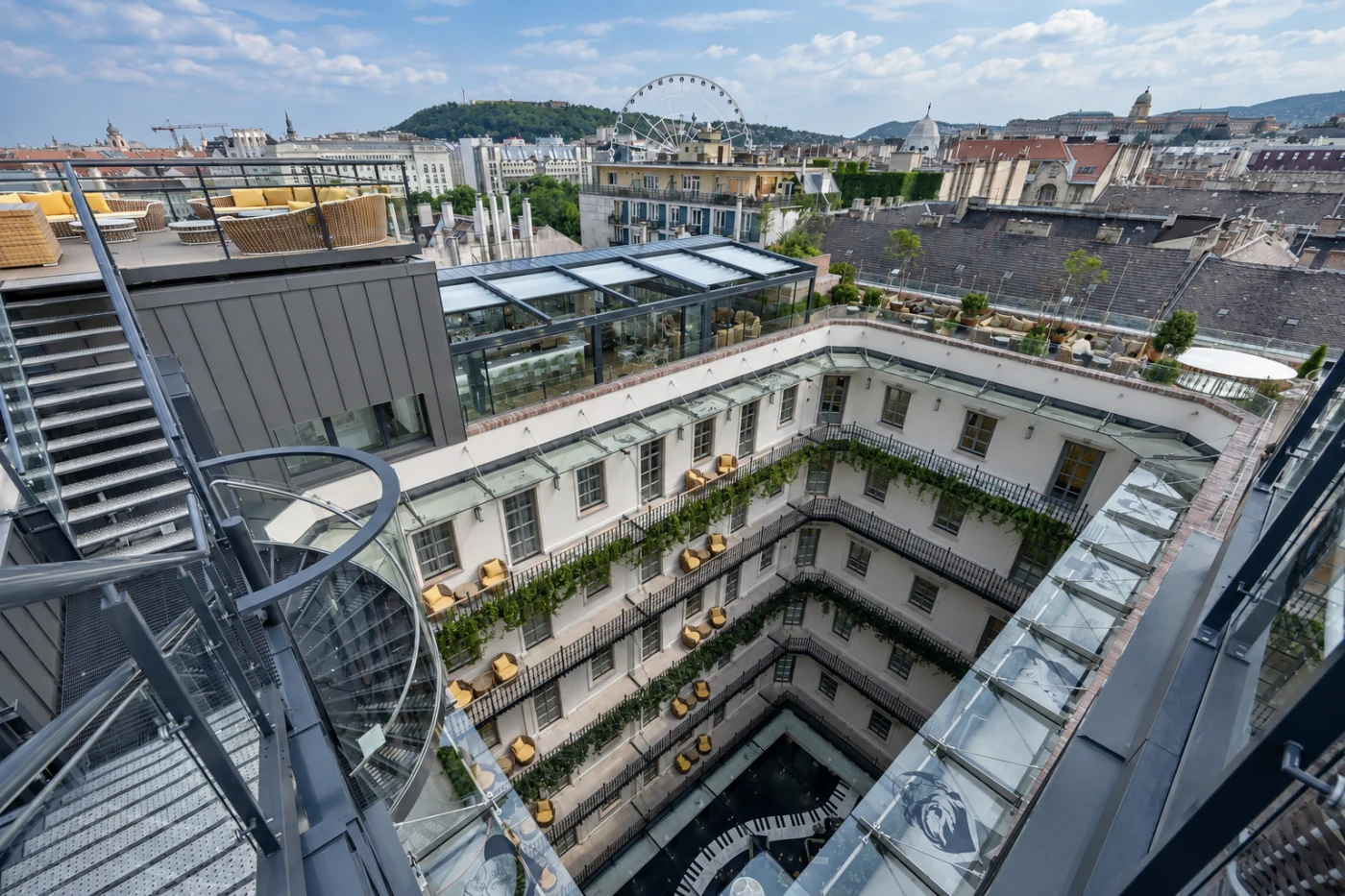
Aria Hotel Budapest is a boutique hotel built around music, beside St. Stephen's Basilica in Hungary's capital. The address p...
More amenities
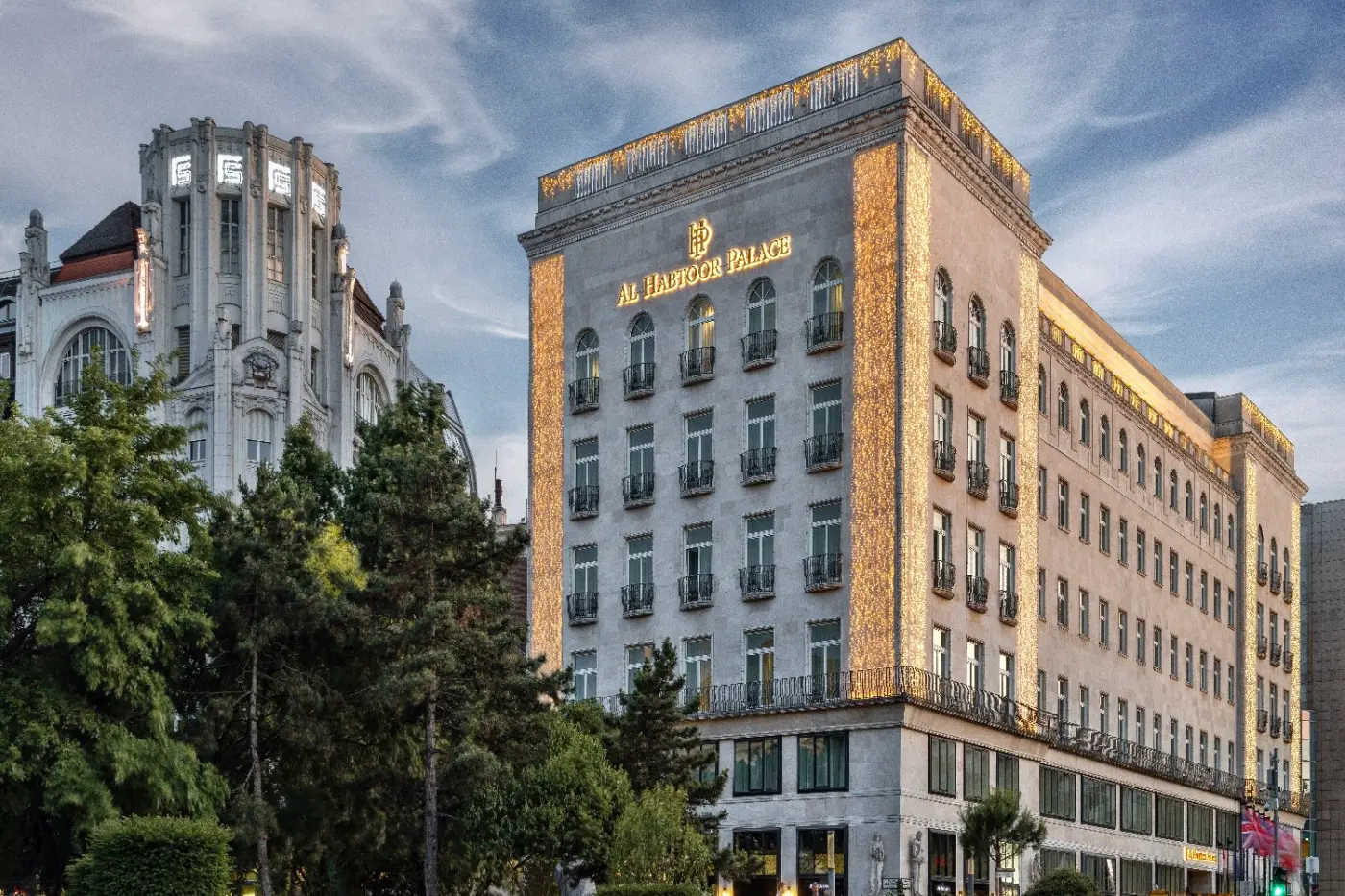
Al Habtoor Palace Budapest is a useful new name in the city's top hotel scene. It stands inside the historic Adria Palace on...