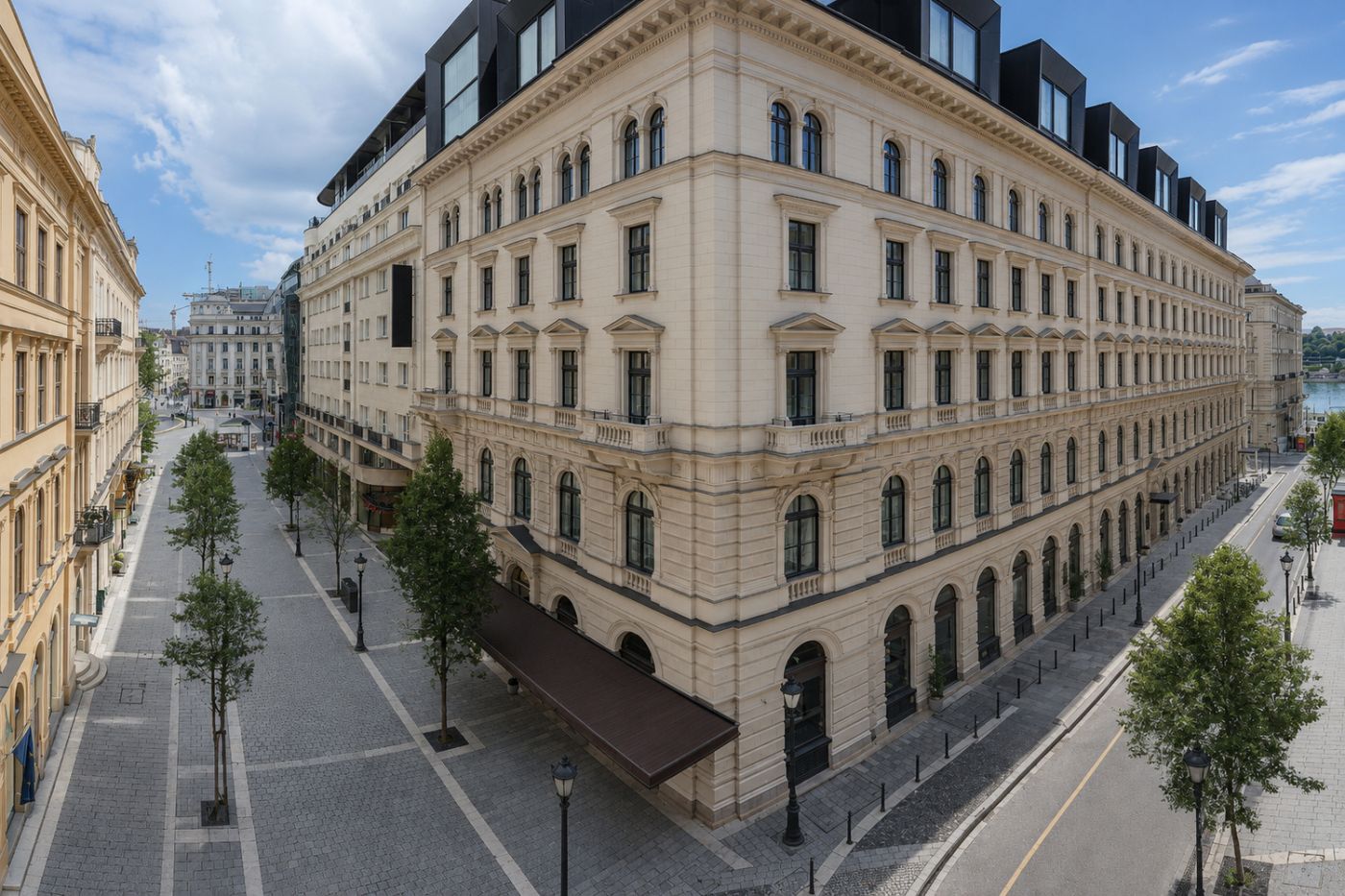
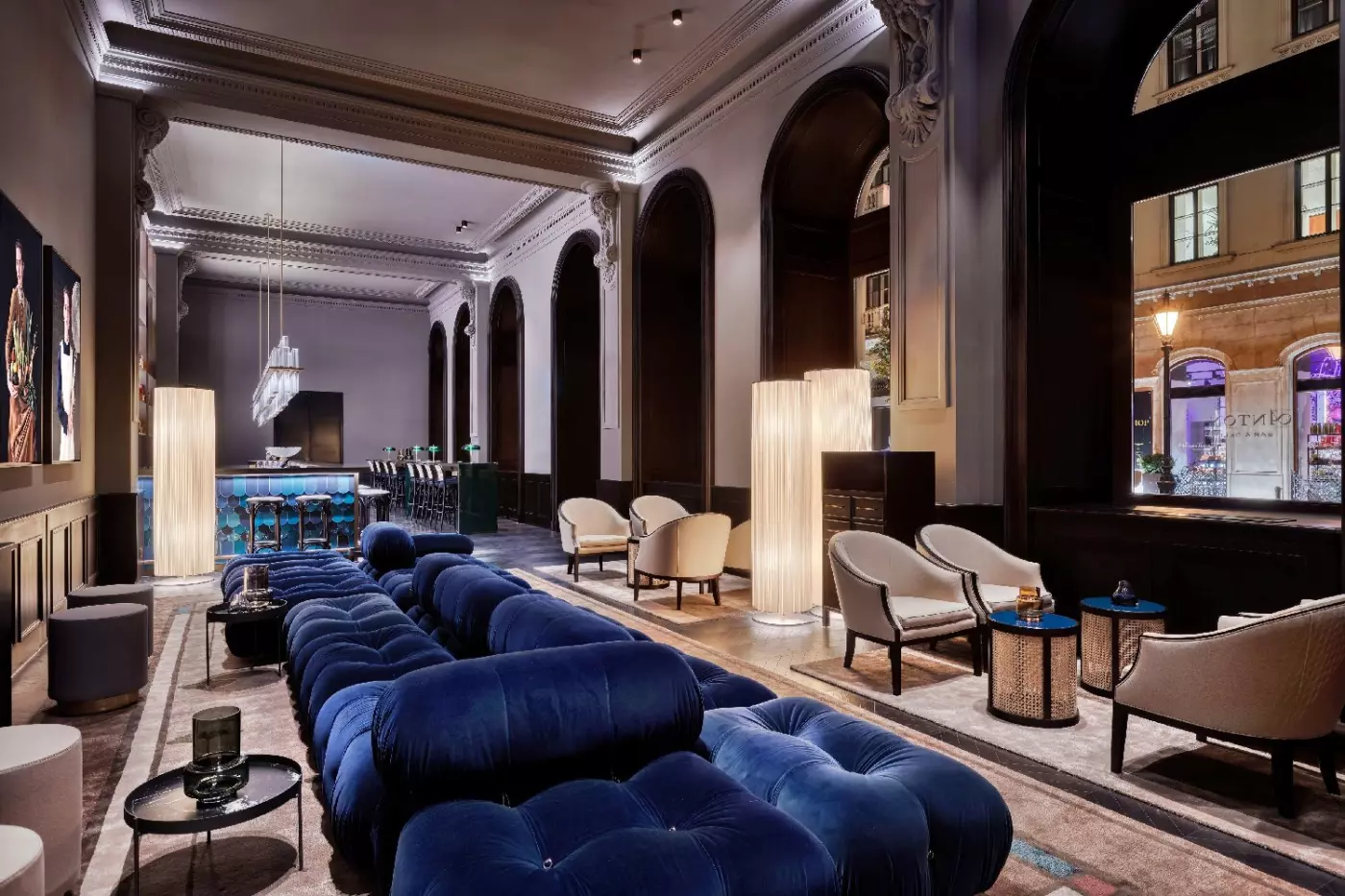
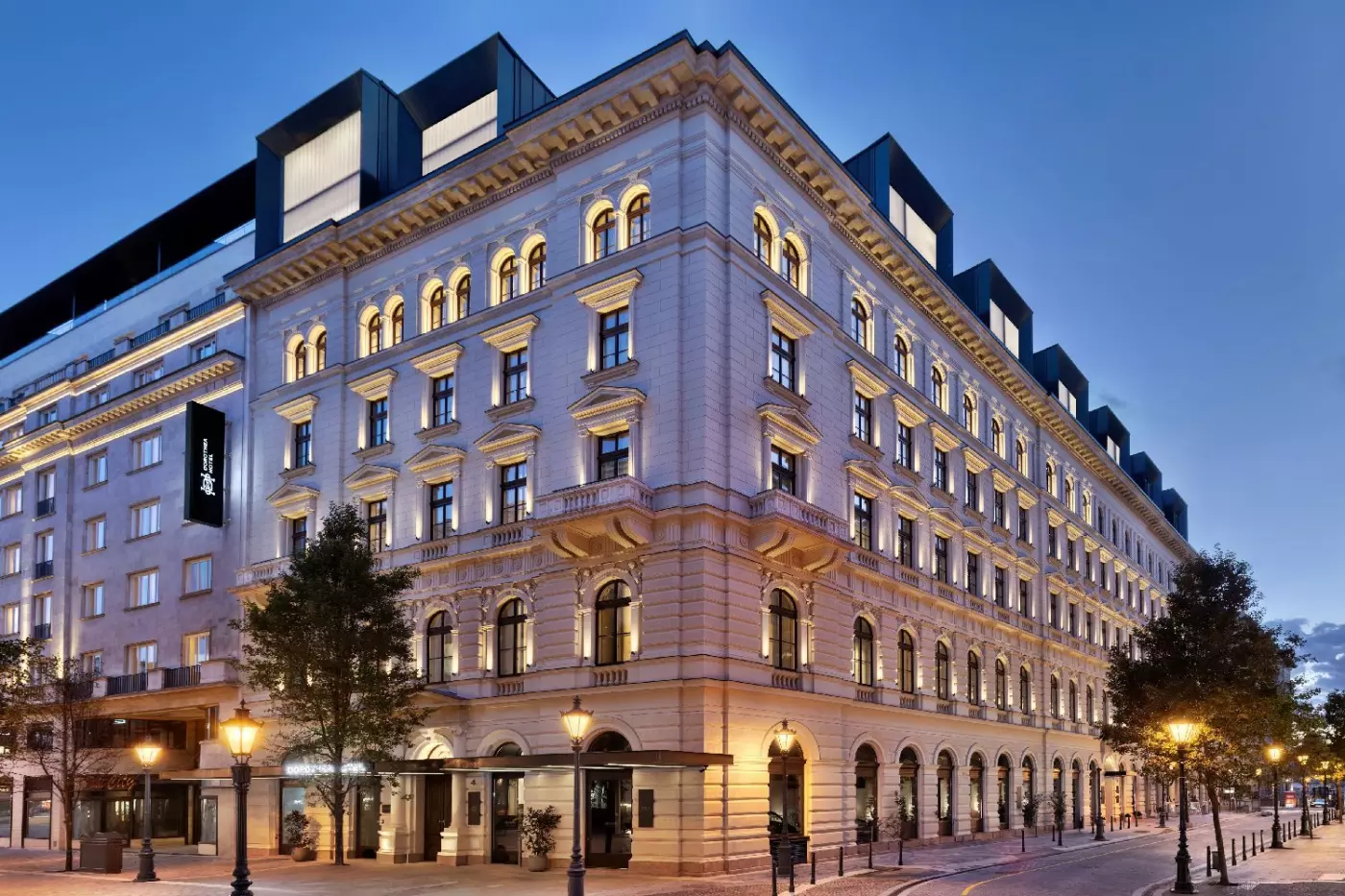
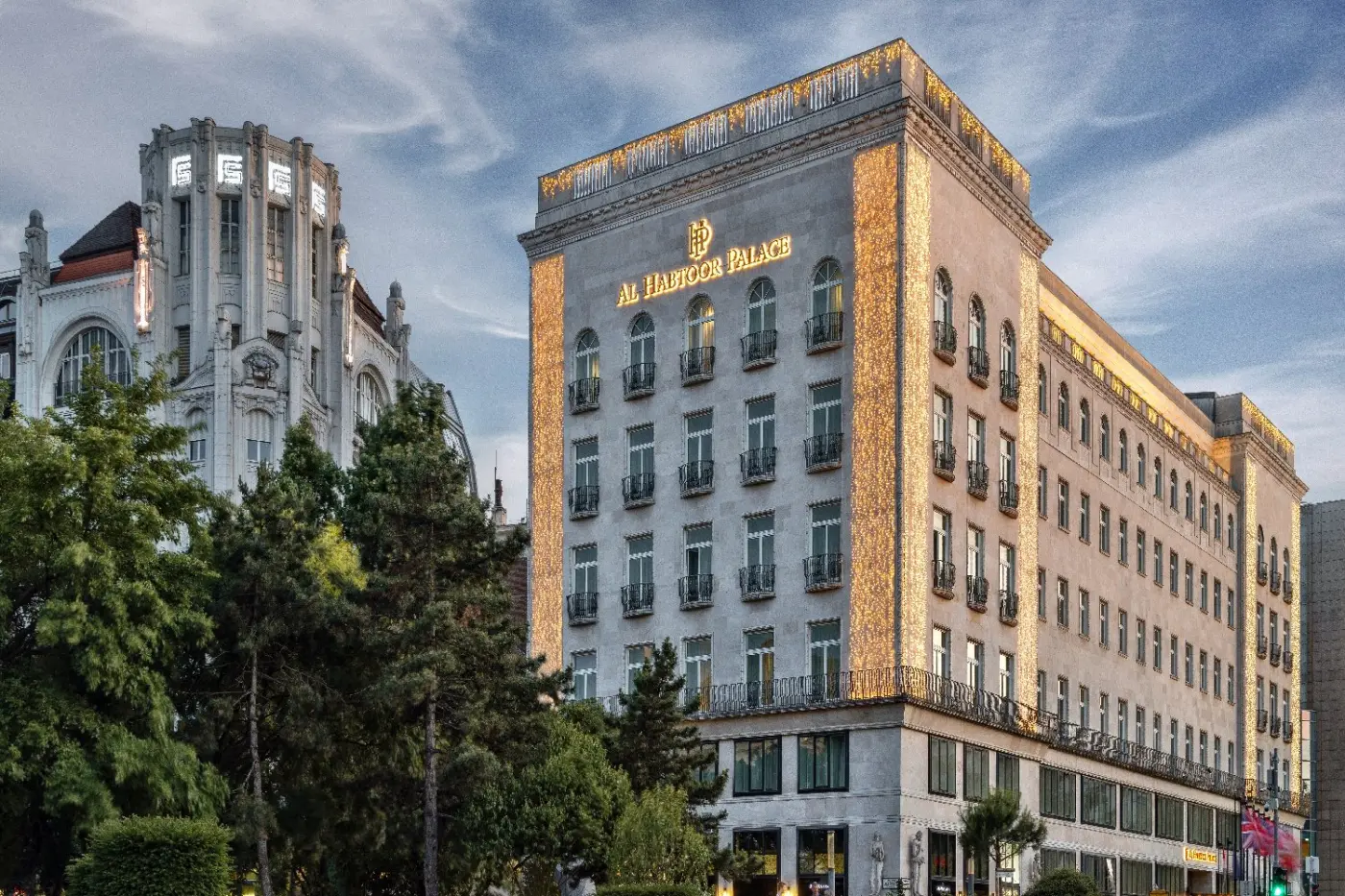
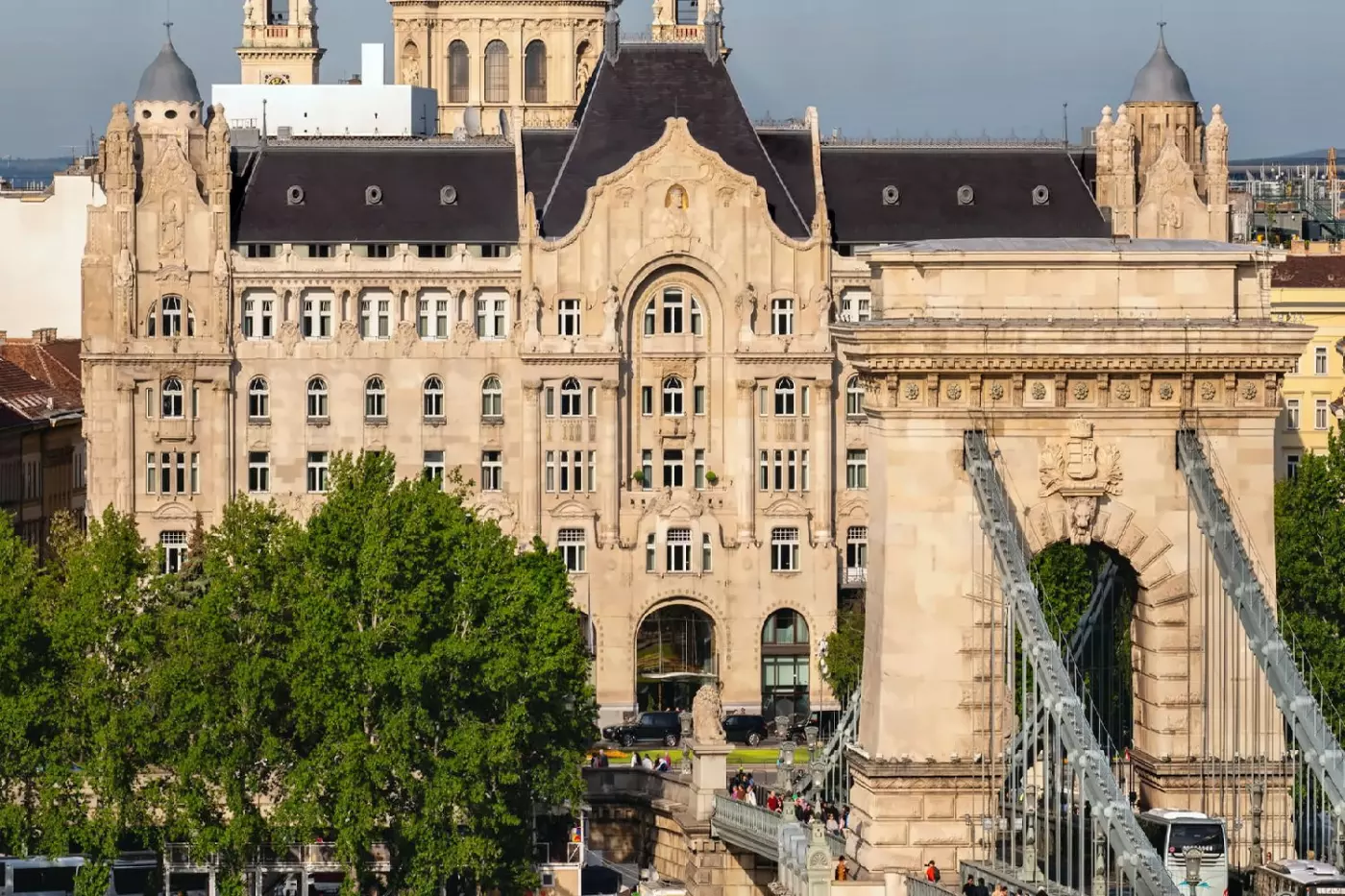
The buildings tell different chapters of the city's history. Weber, dating from 1873, was a savings bank headquarters in the neo-Renaissance style. Mahart followed in 1913 as the headquarters of a river and sea shipping company, with an Art Nouveau character. Munnich, completed in 1937, brings modernist architecture with Art Deco and Bauhaus elements. Keeping these differences visible gives a stay here more interest than a single period style would.
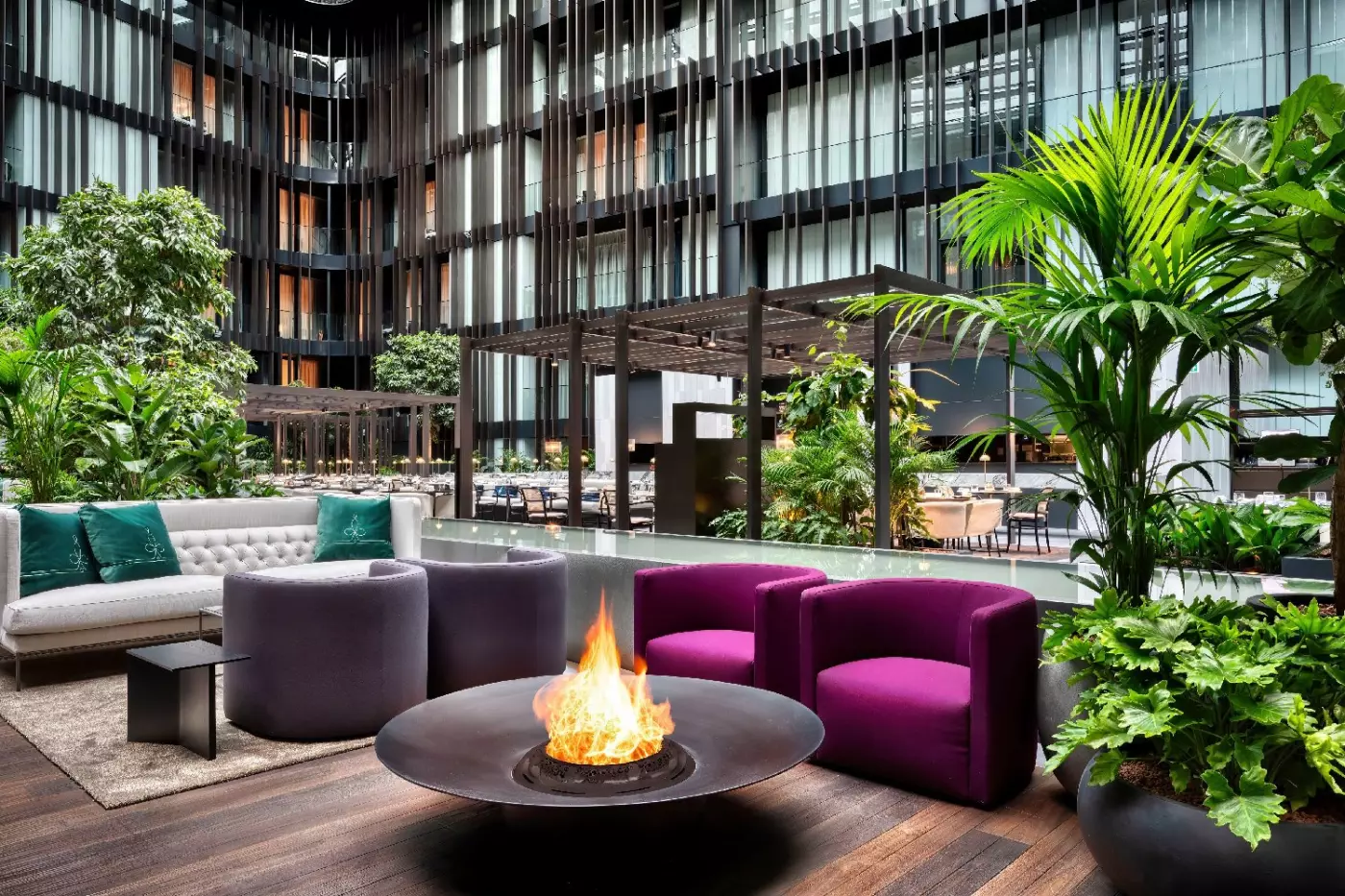
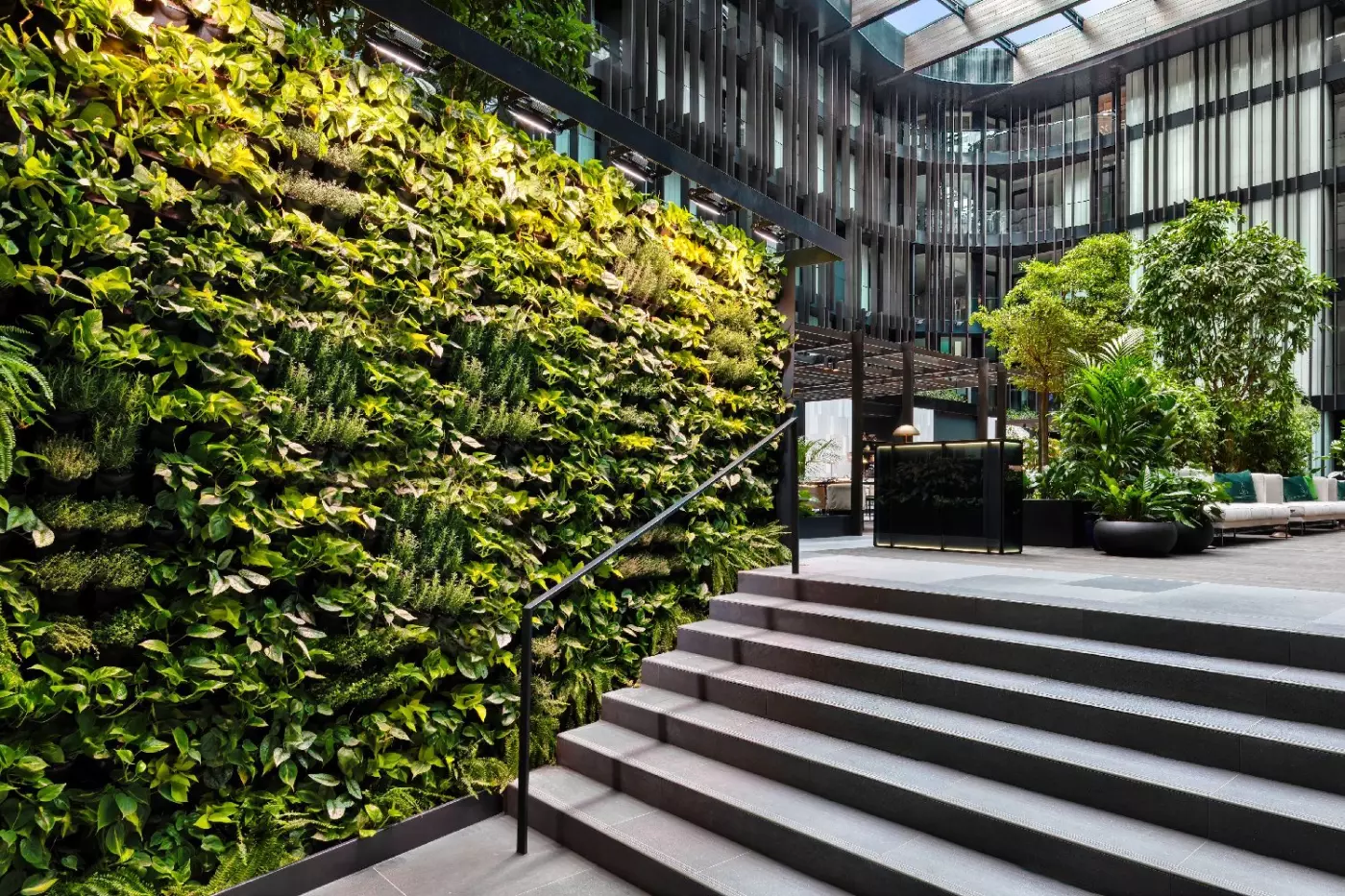
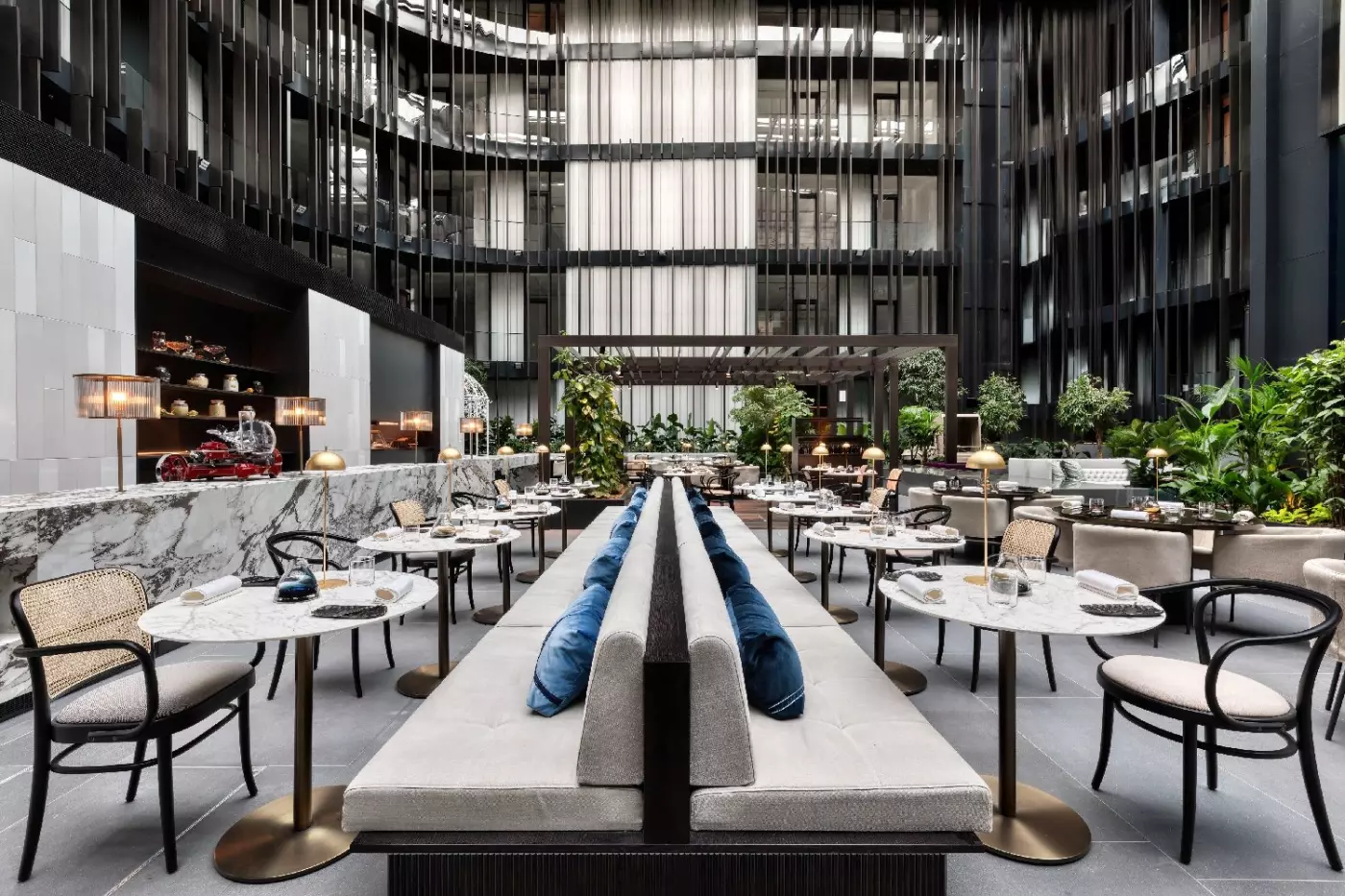
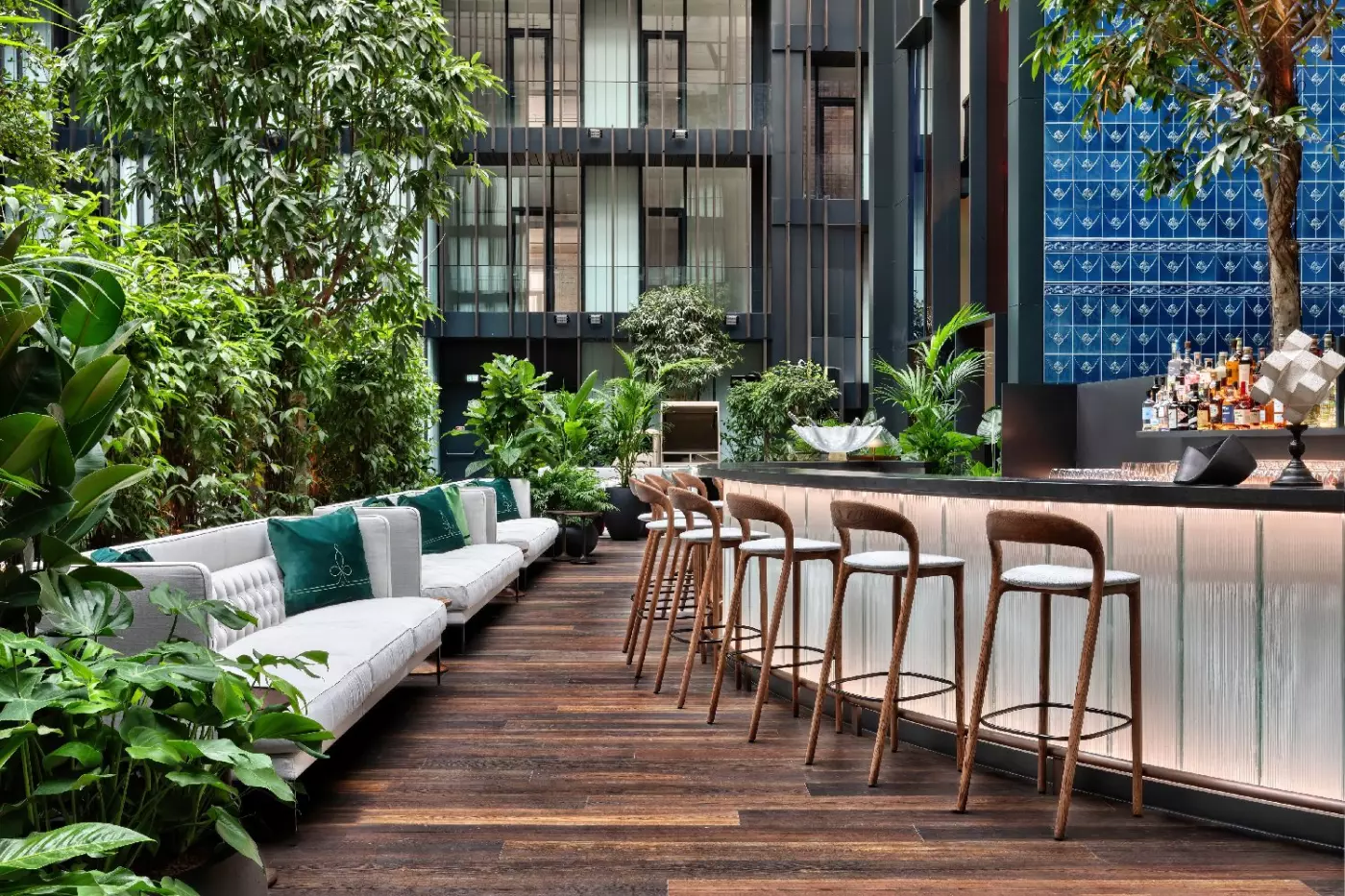
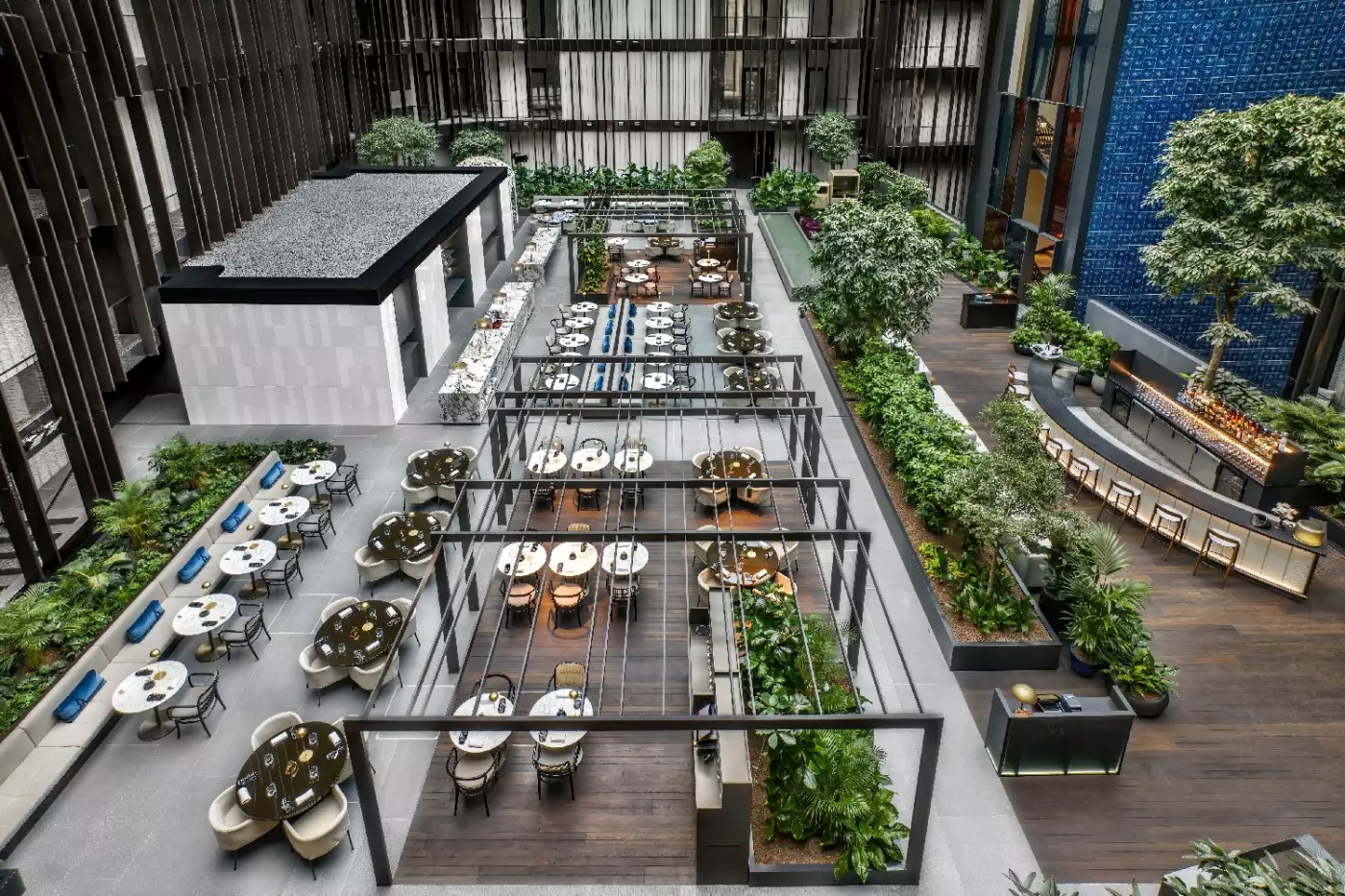
Lissoni & Partners joined the three courtyards into one generous, covered garden. Glass facing the courtyard brings light indoors, while wood elements and balconies give the rooms around it a degree of screening. It is an appealing piece of urban design: greenery occupies space that might otherwise have become another enclosed lobby. The architecture remains legible, yet the hotel functions as a connected whole.
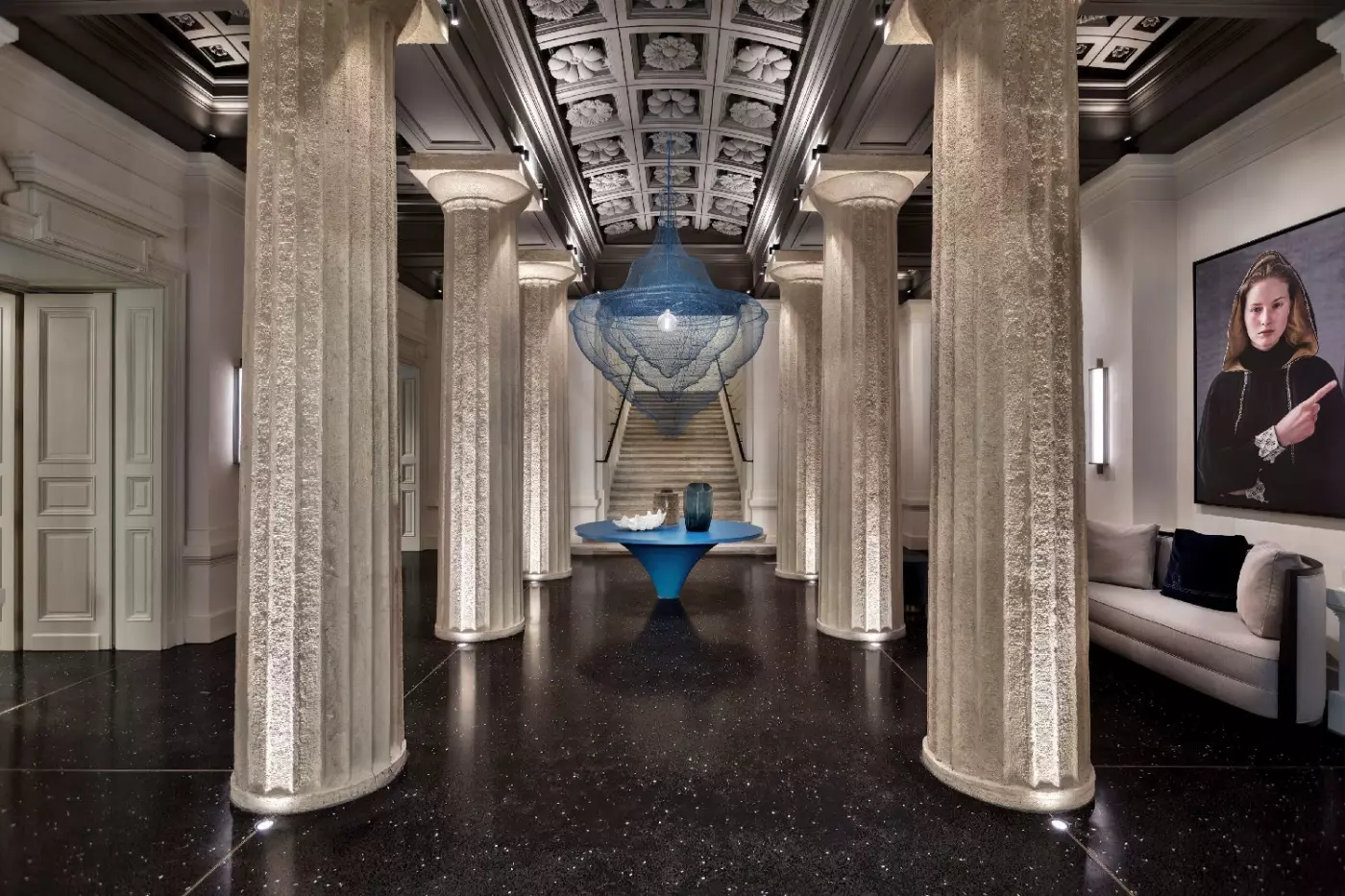
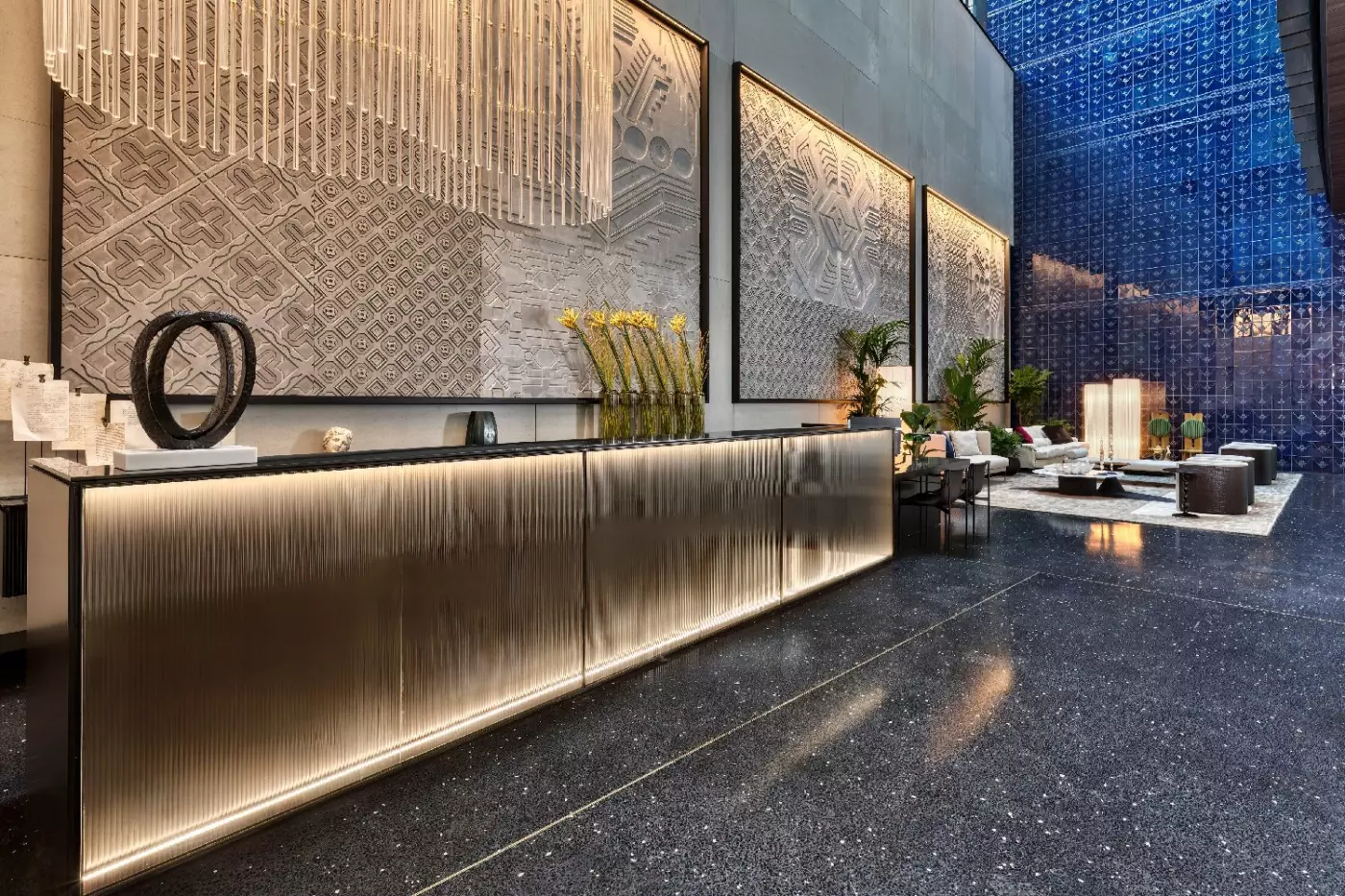
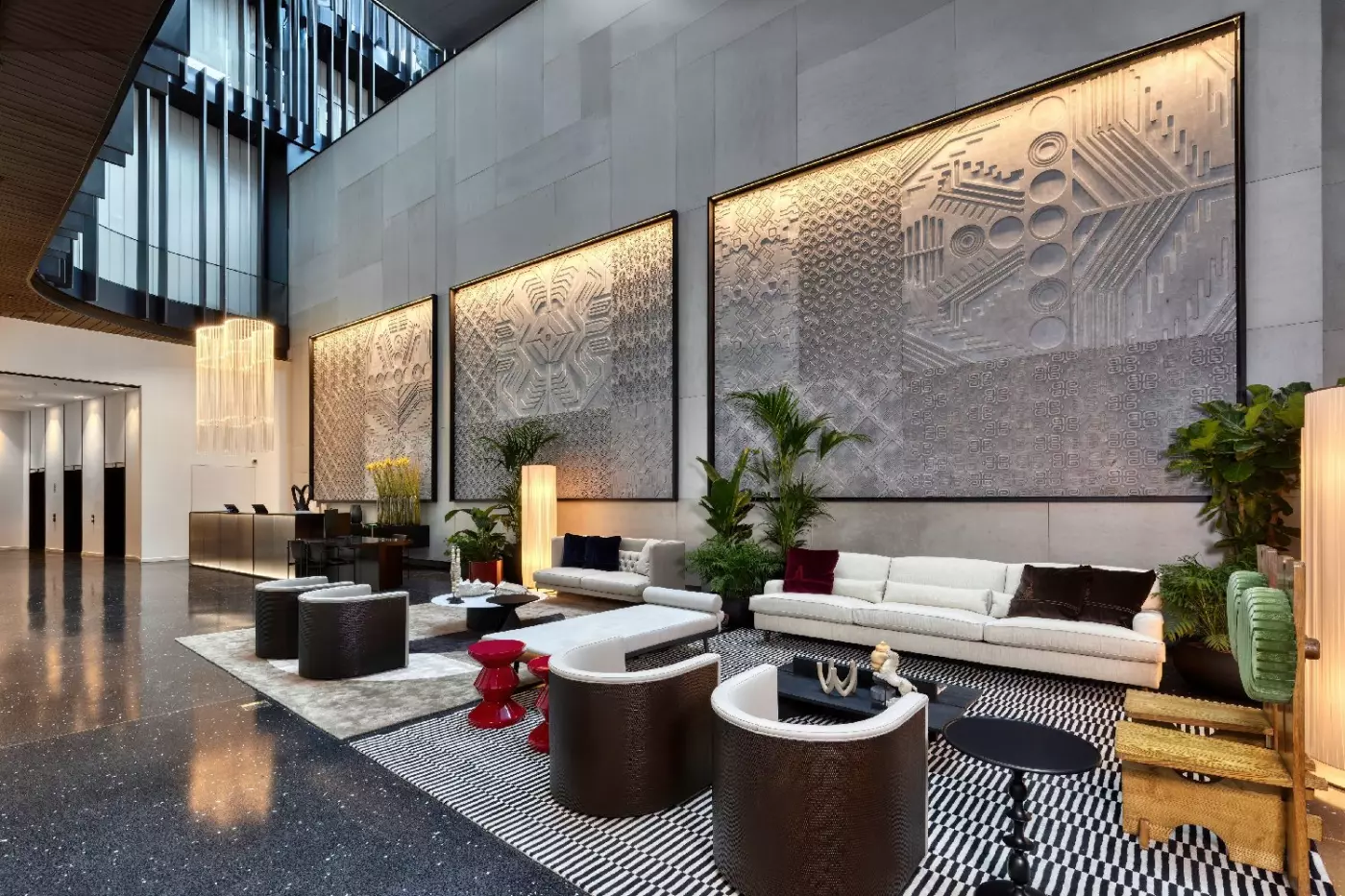
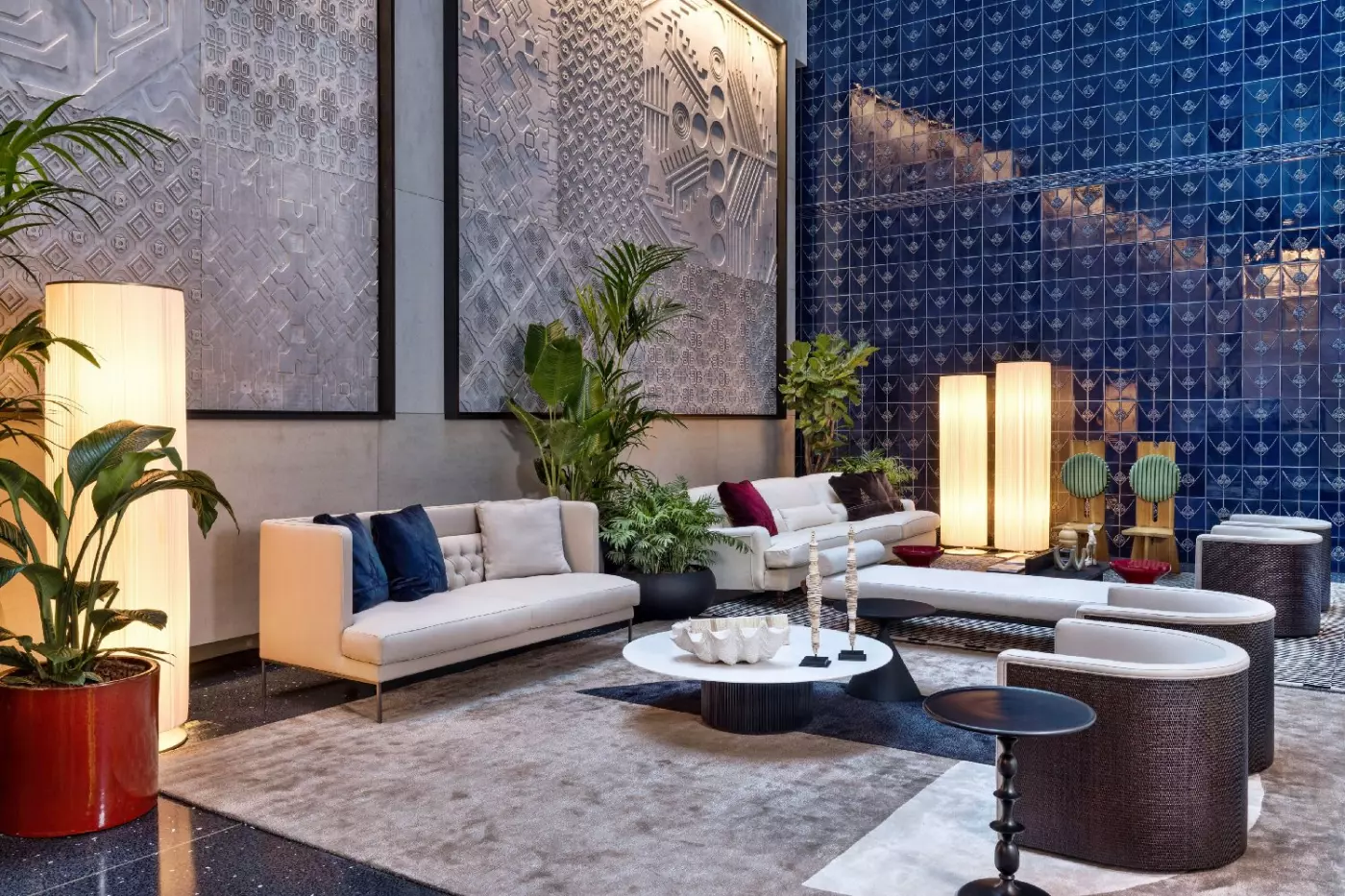
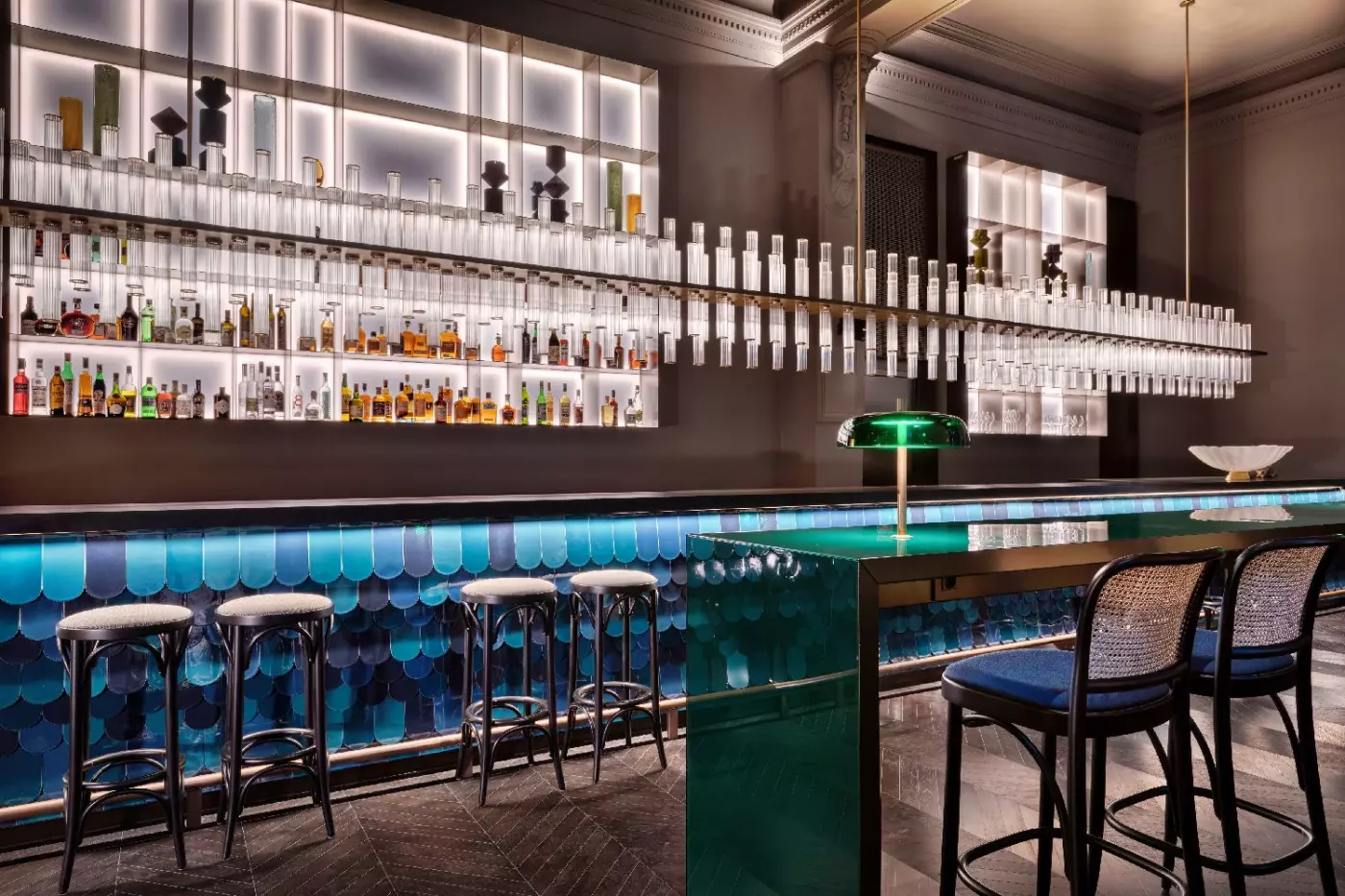
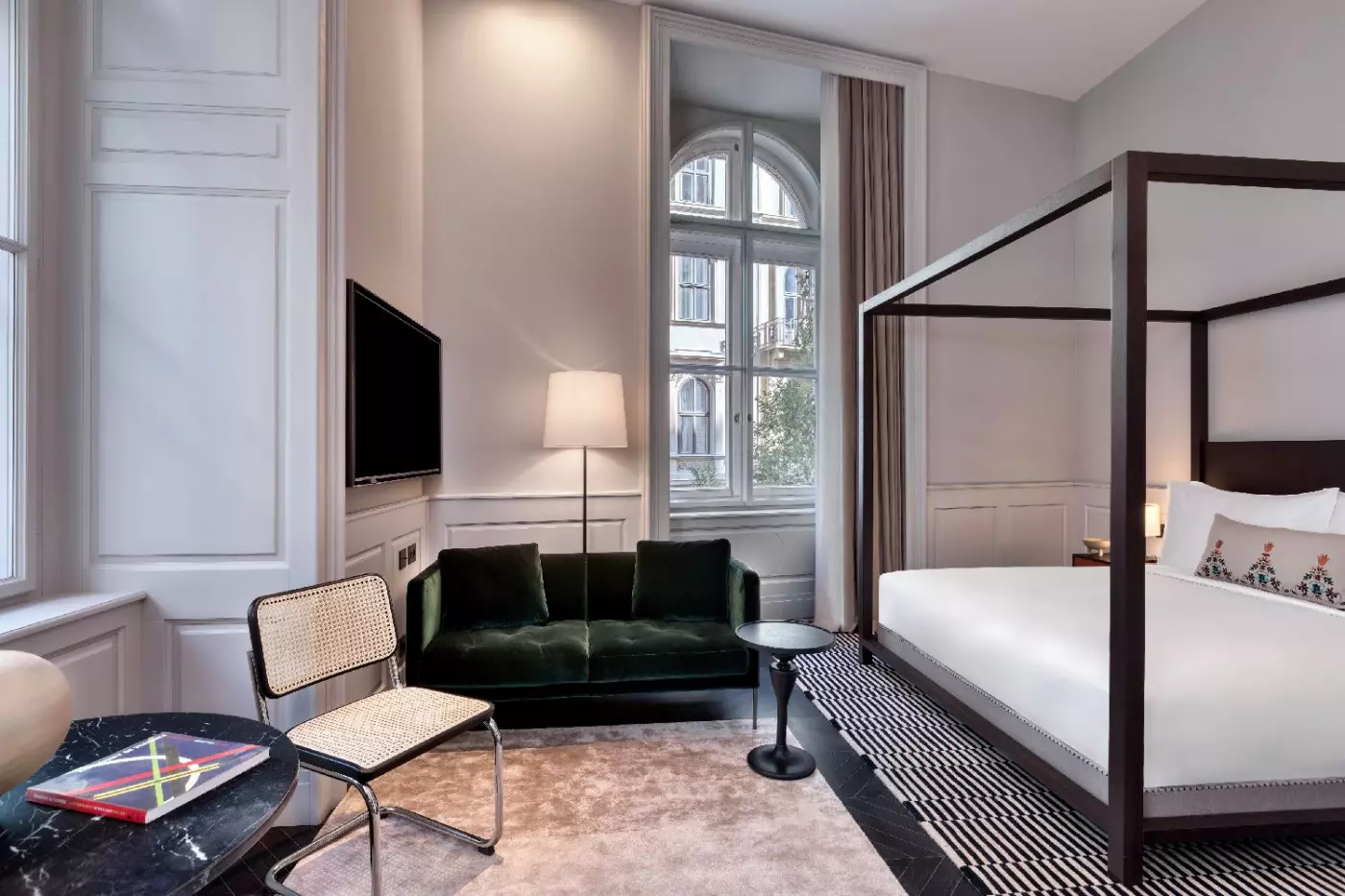
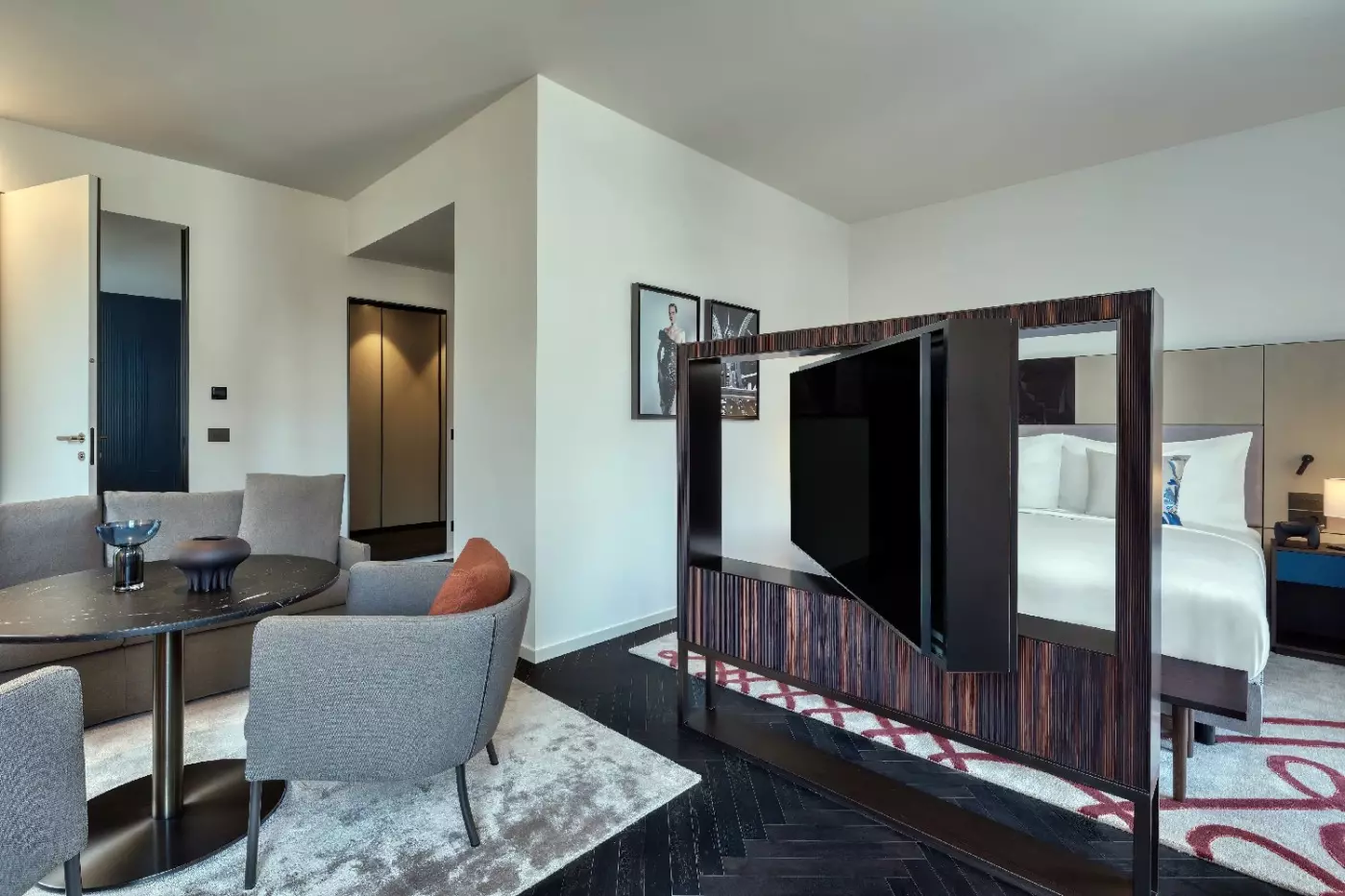
Hungarian references continue in the smaller details. A wall of more than 5,000 custom Zsolnay tiles celebrates the country's ceramic tradition. Patterns inspired by local embroidery appear in the interiors, while the hotel name recalls Archduchess Dorothea and her connection with Palatine Joseph. These references reward a closer look without turning the public rooms into a museum.