Call your Travel Designer +1 617 778 2318
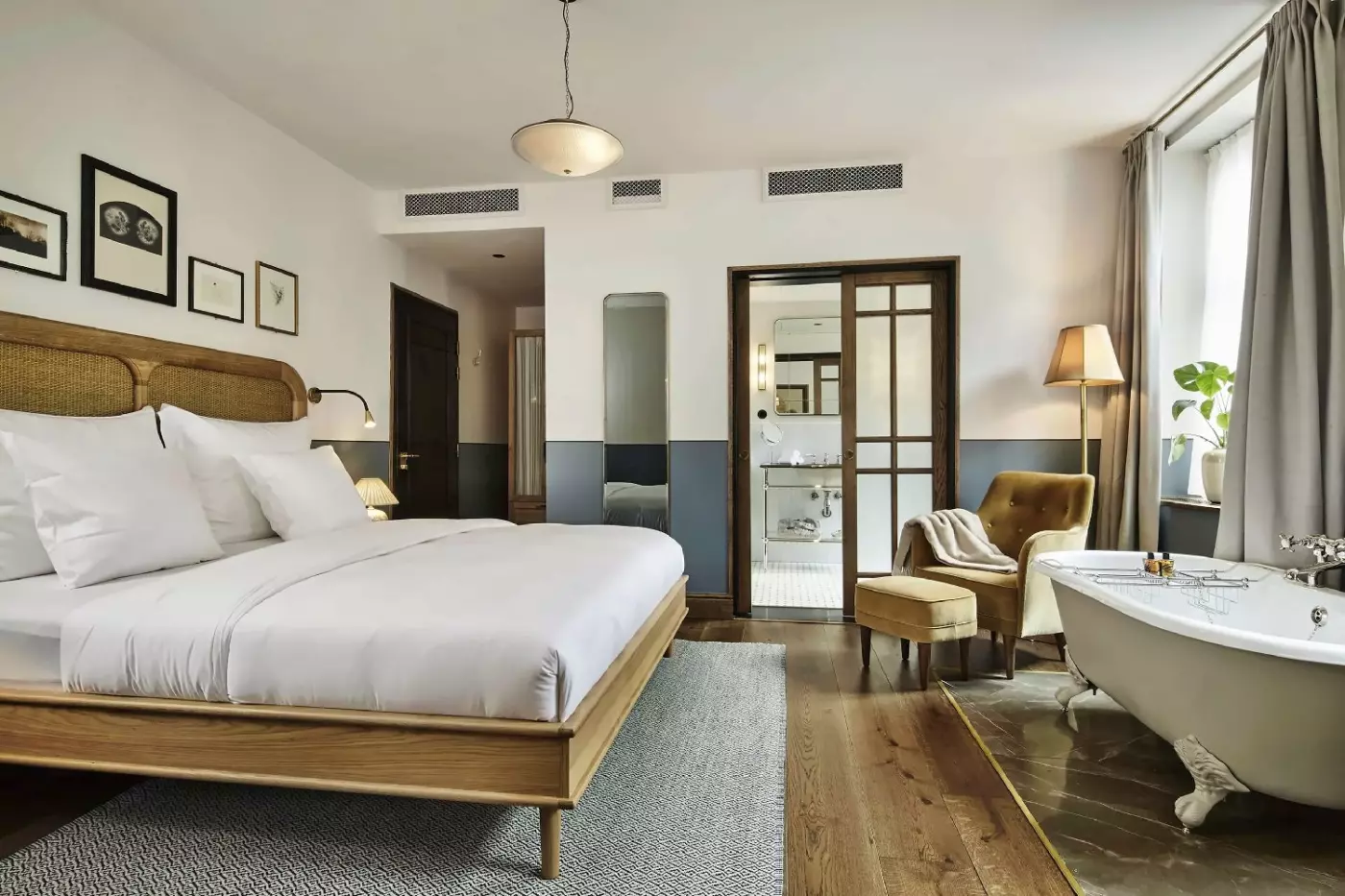
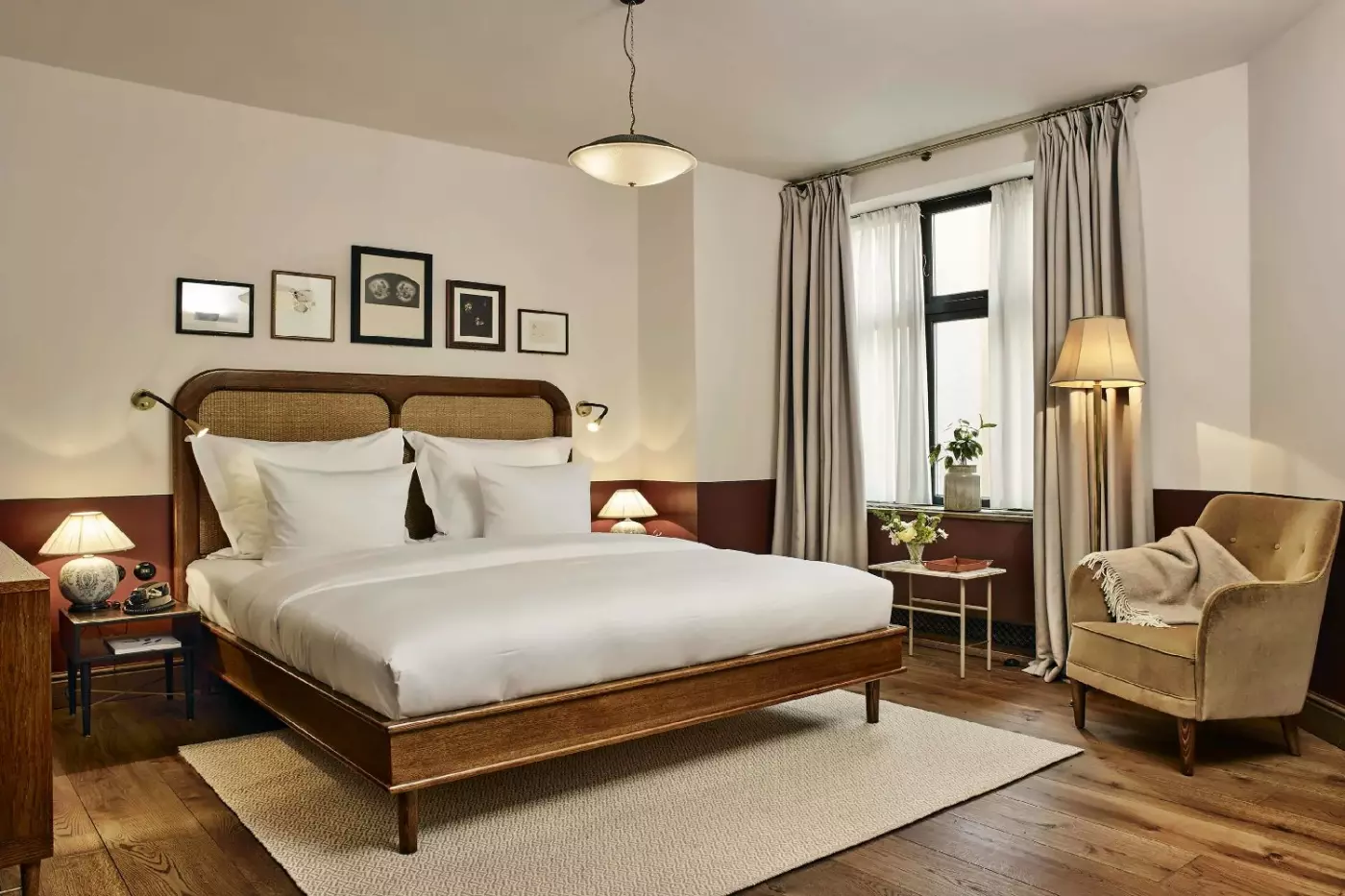
The Double Room is a charming and intimate room with a queen-size bed, providing extra space compared to the Single Room. Despite having the same
Introducing the Sanders Bedrooms: a range of thoughtfully designed spaces that cater to various preferences and needs. Careful consideration has gone into planning each room,
The Single rooms at Sanders have been meticulously designed with the solo adventurer in mind. Seamlessly blending into the boutique ambiance of Sanders, these rooms
Unveiling the Sanders Bedroom Plus: a collection of distinct room sizes, meticulously arranged and designed to highlight their unique attributes. Elegantly furnished to match the
Introducing the One Bedroom Suite: the ultimate choice for travelers seeking a sophisticated and expansive retreat. Designed to offer ample space for relaxation, these suites
Presenting the exquisite Sanders Suite: an optimal selection for travelers seeking extended stays or the prospect of hosting guests in a private, elegantly appointed space.
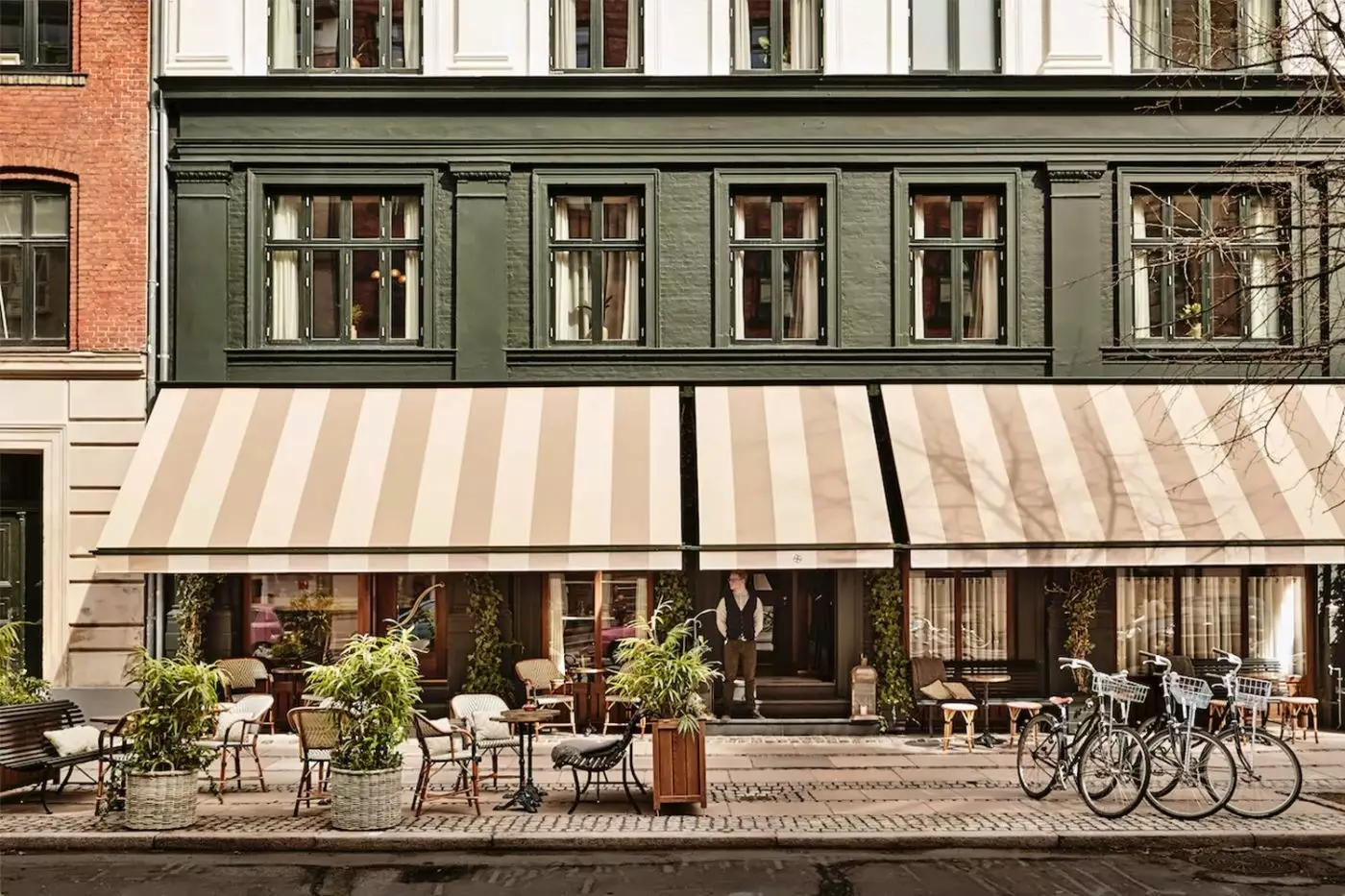
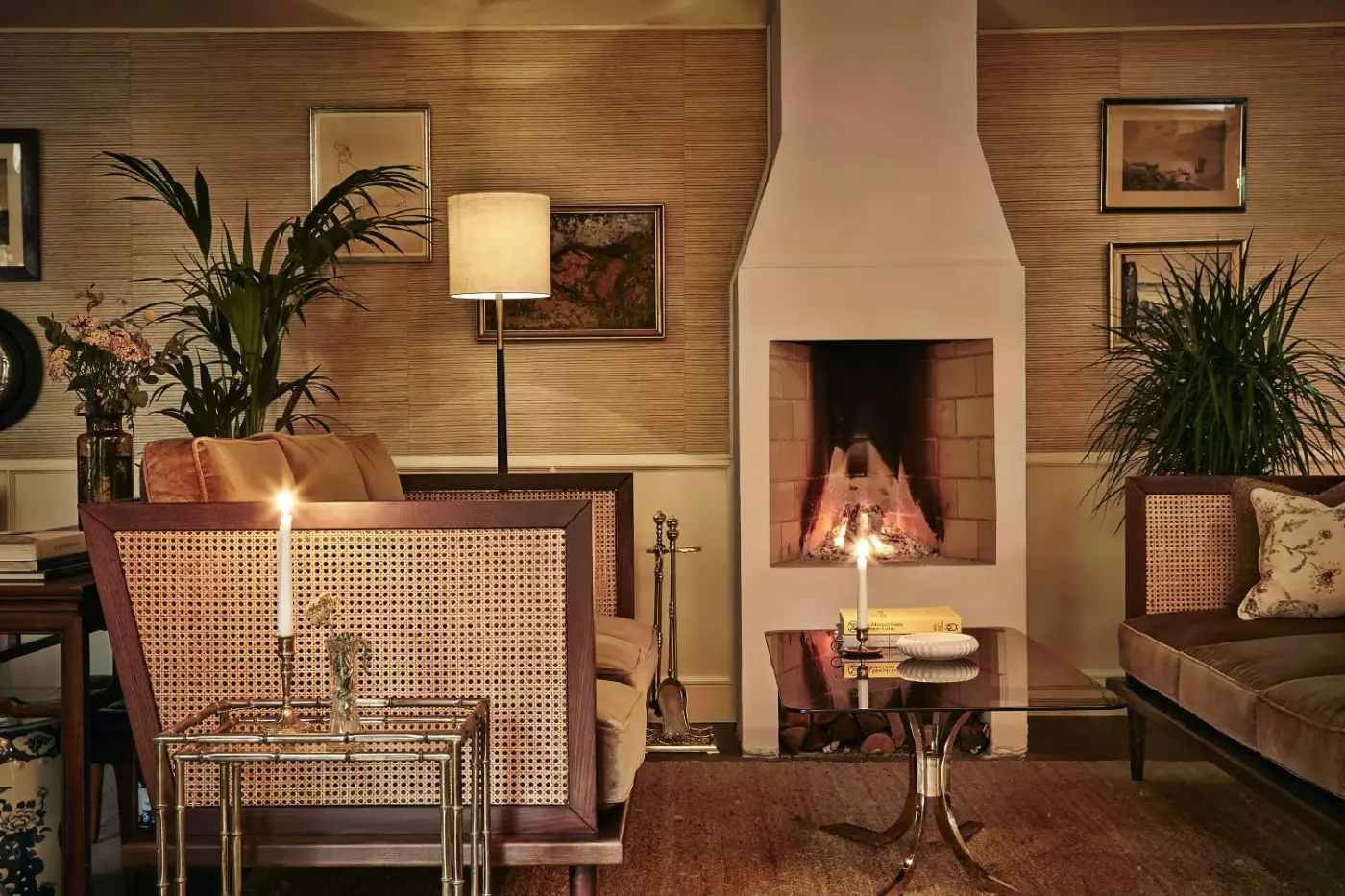
Hotel Sanders sits on Tordenskjoldsgade in central Copenhagen, close to Nyhavn, Kongens Nytorv, and the Royal Danish Theatre. It feels less like a hotel trying to impress and more like a private house that happens to have a rooftop, a cocktail bar, a courtyard, and 54 carefully dressed rooms. The mood is theatrical but not grandiose. It has velvet, rattan, timber, lamps, palms, books, and enough shadow to make the city outside feel sharper when you step back into it.
The hotel is in Copenhagen K, the old central district where the city is easiest to read on foot. Nyhavn is close, but Sanders is not on the postcard canal itself. That small distance matters. Guests can reach the water, shops, galleries, restaurants, and the theatre quickly, then return to a street that feels more discreet.
Kongens Nytorv, Amalienborg, Stroget, Christiansborg, and the harbour areas all sit within a walkable radius. The location suits guests who want Copenhagen without a heavy itinerary. It is easy to drift from coffee to design store, from museum to bar, from waterfront walk to dinner.
The Royal Danish Theatre gives the block a useful sense of backstage life. There is a hint of performance in the hotel, too, but the effect is controlled. Sanders is not themed. It simply understands that Copenhagen has always mixed restraint with a quiet appetite for drama.
Hotel Sanders was founded by ballet dancer Alexander Kolpin, and that background helps explain the staging. Public rooms are arranged with a performer's sense of pause, entrance, texture, and light. Nothing feels random, yet the whole house avoids the stiffness of a showroom.
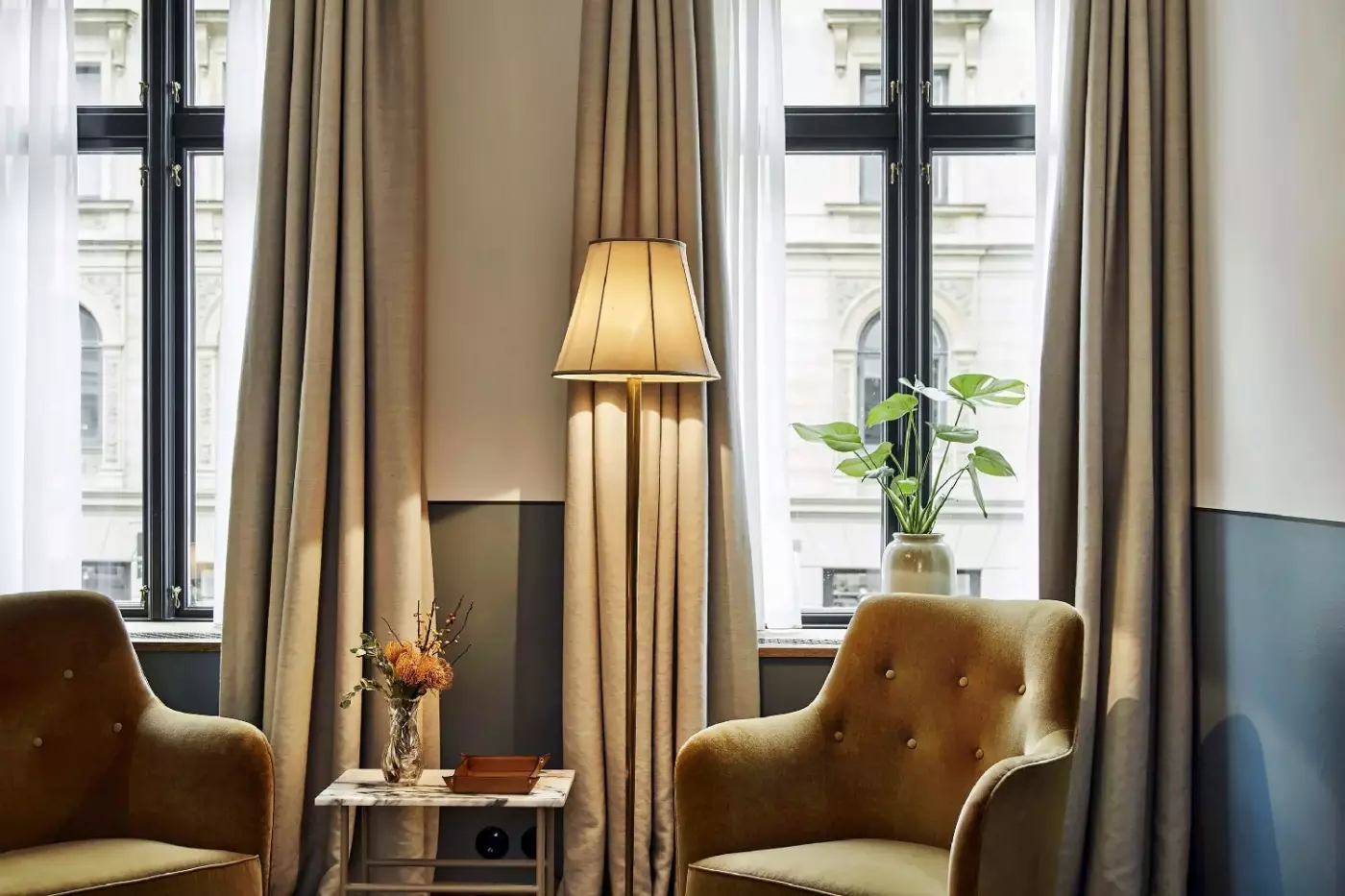
The design moves away from pale Nordic minimalism. Instead, it leans into deeper tones, woven textures, vintage references, and soft corners. The result is cosmopolitan, but still Danish in its control. The hotel has personality without asking guests to admire every object.
Its charm is more specific than a standard stylish city stay. Sanders feels like a traveller's club, a theatre salon, a townhouse, and a Copenhagen hideaway all folded into one compact address.
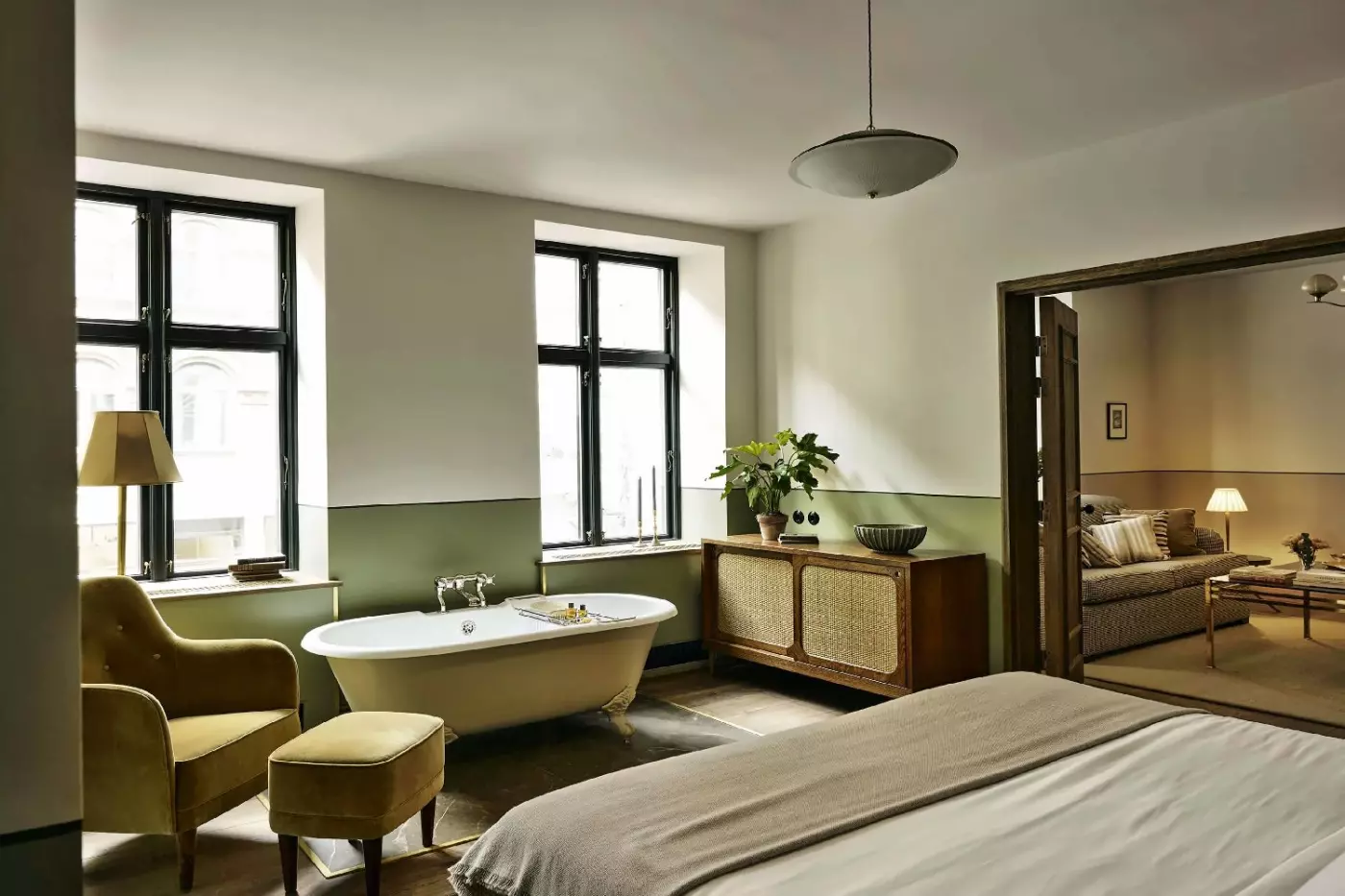
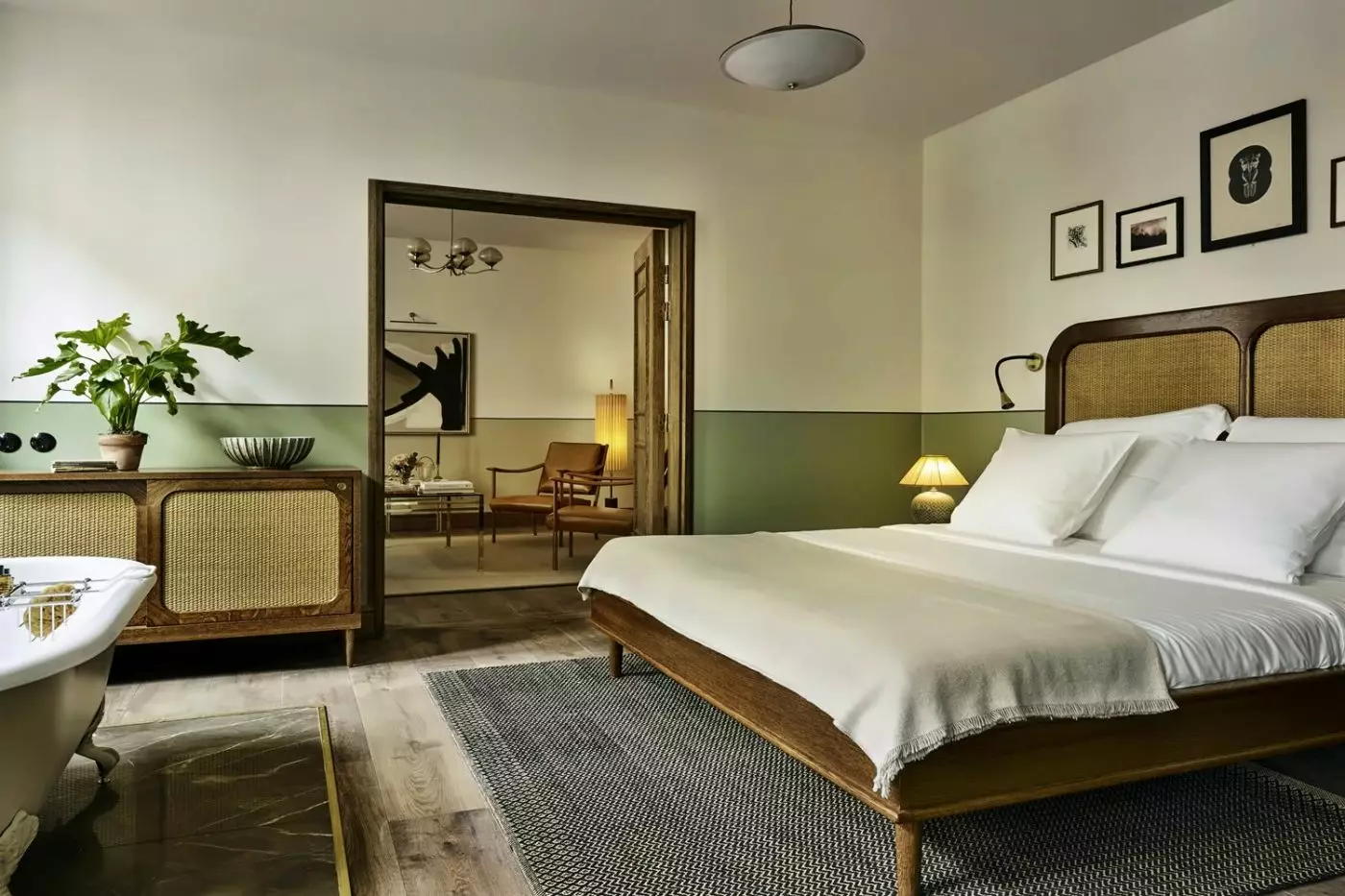
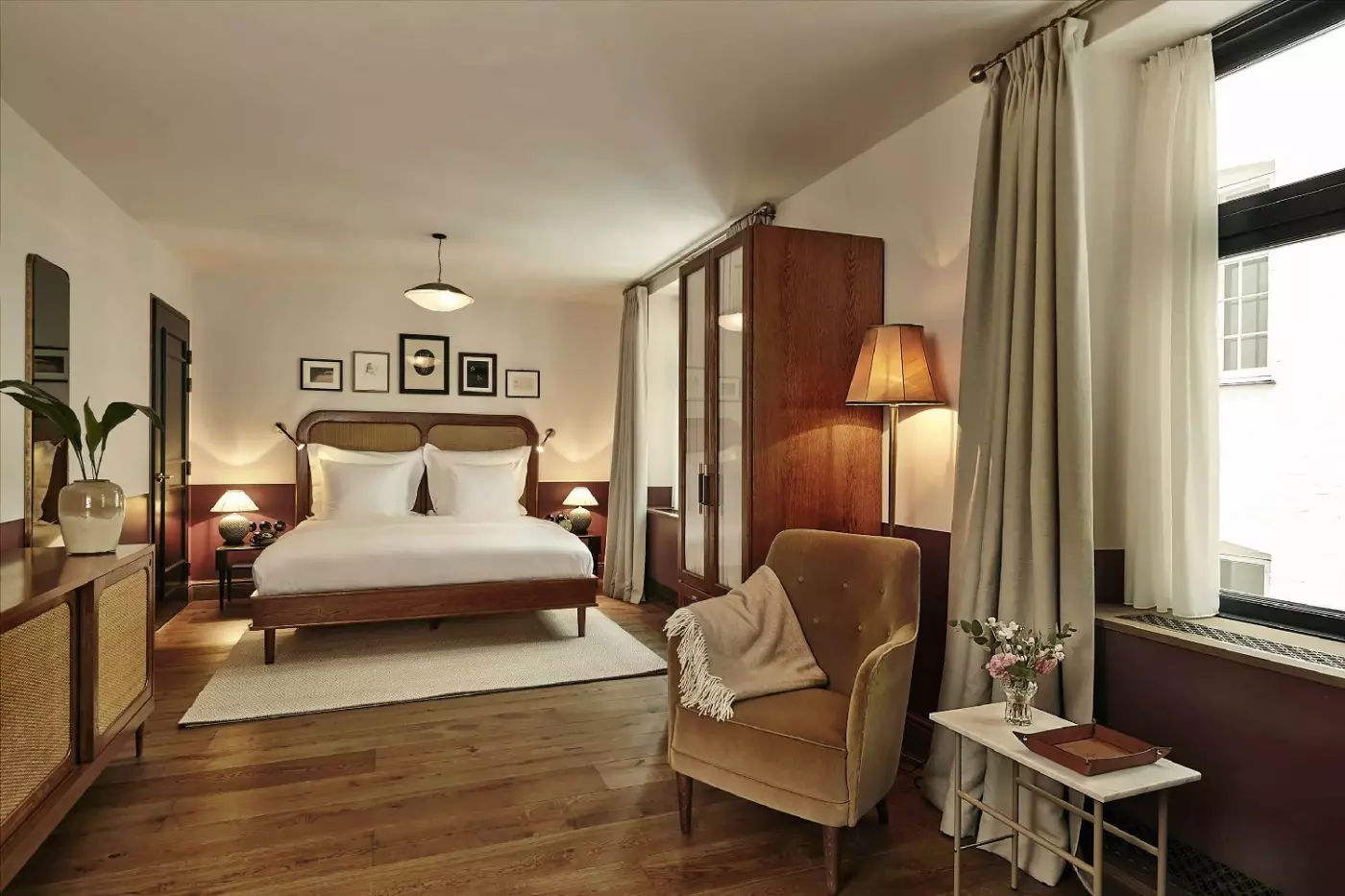
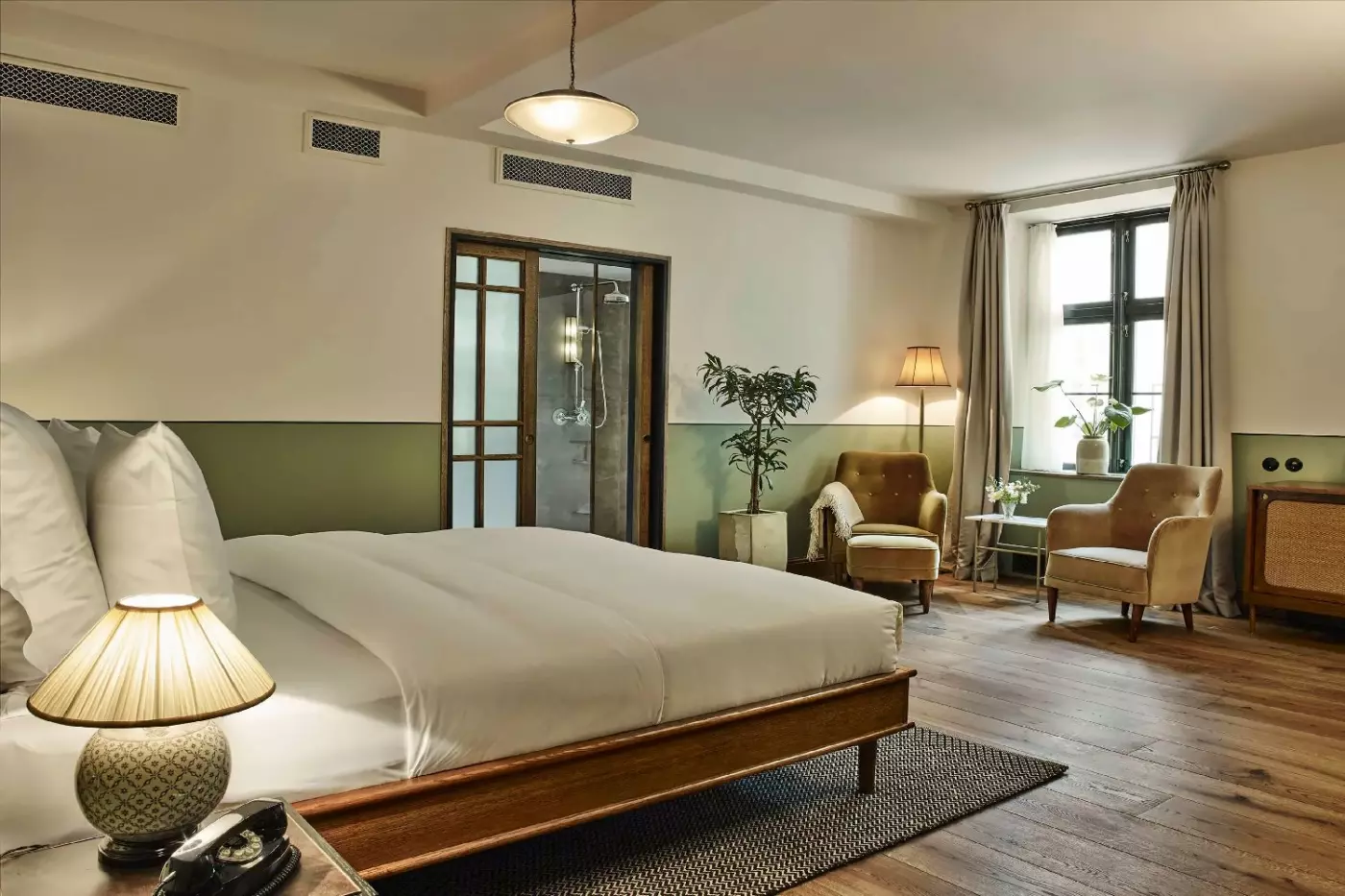
The hotel has 54 rooms, each with its own style and design. Categories run from intimate rooms to larger suites and apartment-style spaces. The smallest rooms are not pretending to be grand. They are meant to be snug, detailed, and atmospheric, with careful materials doing more work than square metres.
Double Rooms are around 12 to 13 square metres and face the green atrium, making them a quieter choice for guests who prefer calm over daylight. That kind of honesty is useful. Sanders is a boutique hotel, and room selection should match how a guest actually travels.
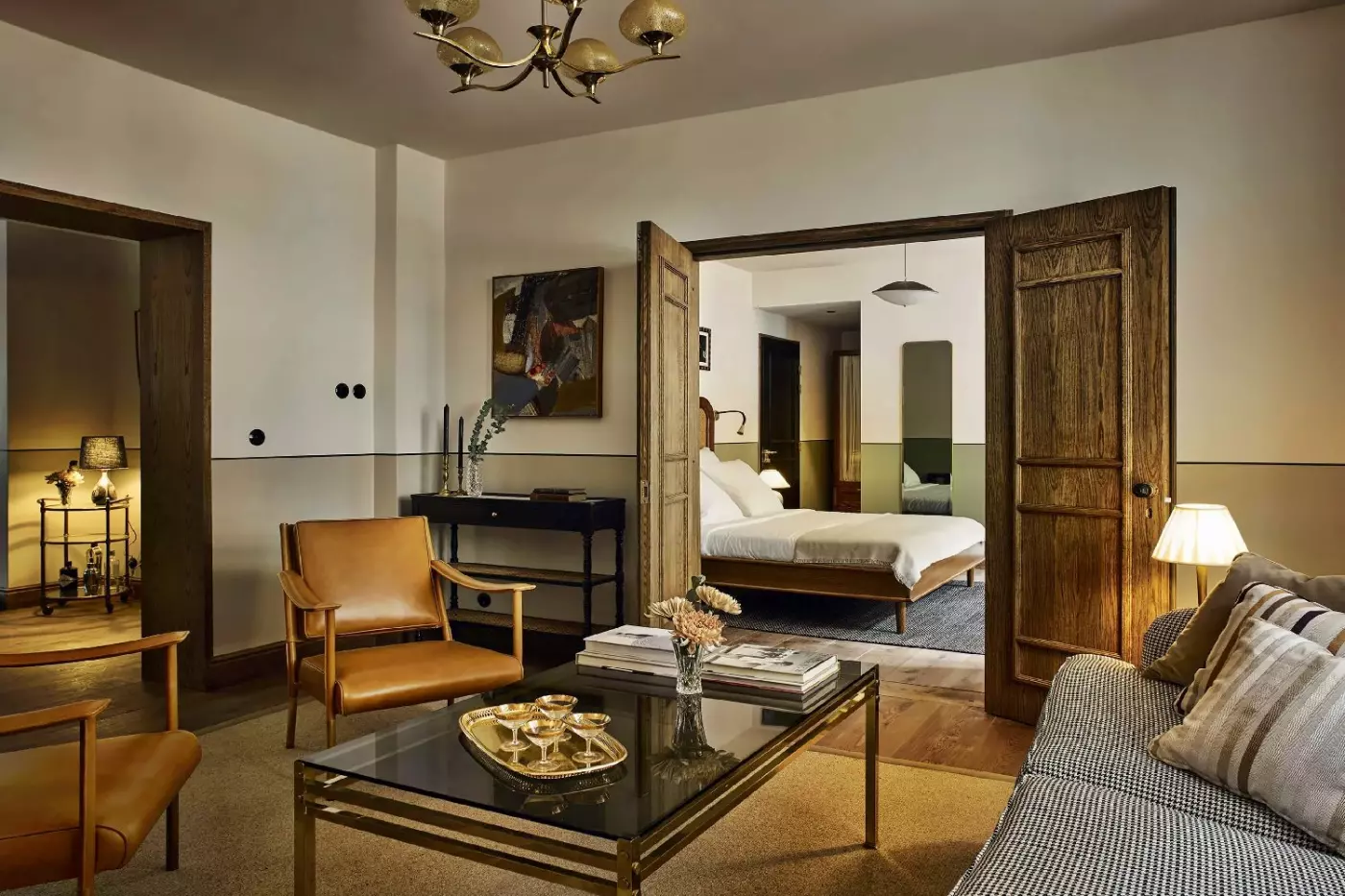
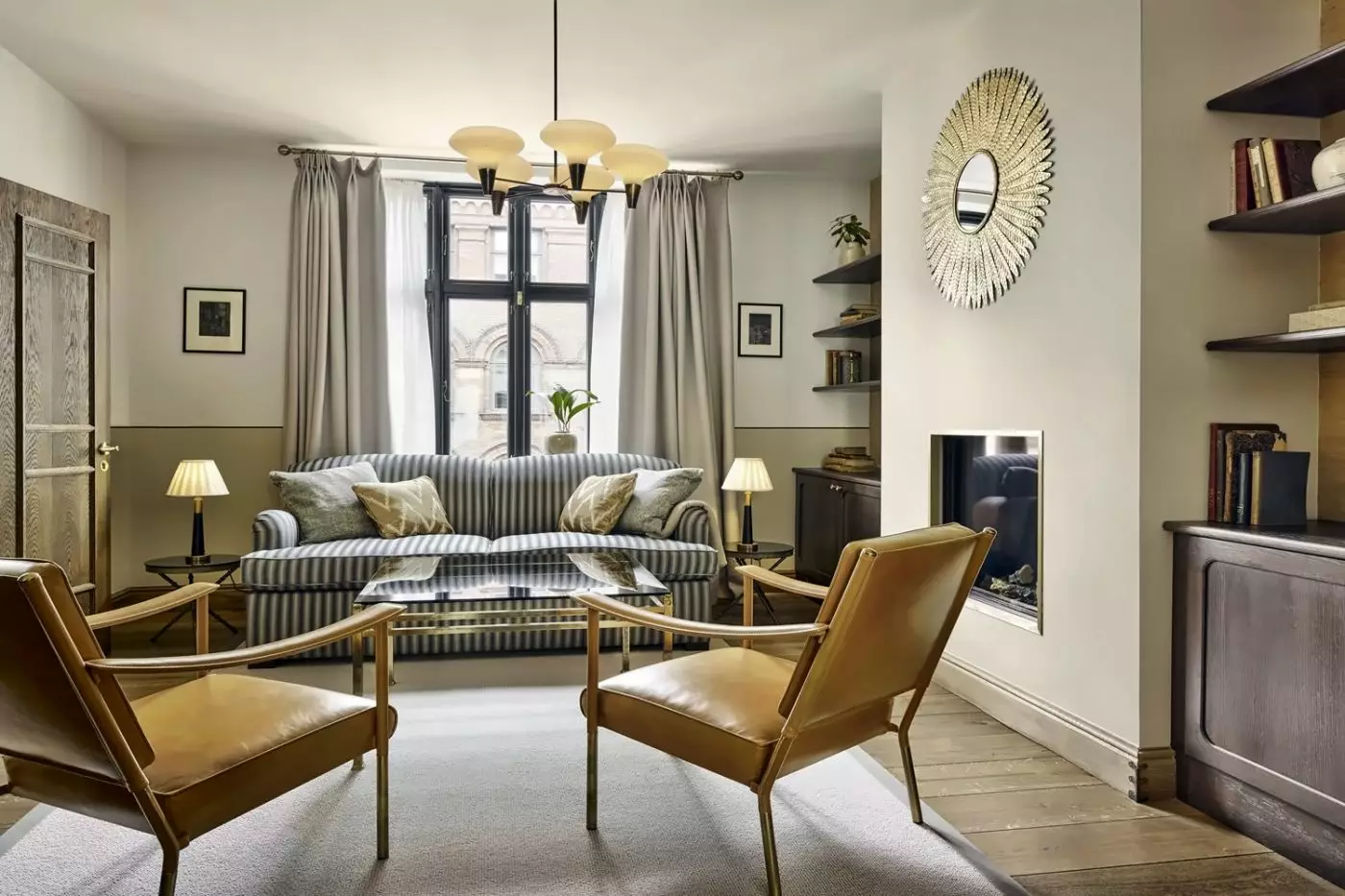
The larger categories create a different stay. Suites and apartment-style spaces offer more room to settle in, sometimes with residential touches such as sitting areas, dining space, or fireplaces. They suit longer visits, fashion-week movement, creative work trips, or guests who want Copenhagen to feel less like a hotel stop and more like a temporary address.
Across the rooms, the pleasure is tactile. Fabric, wood, colour, art, and lighting do much of the storytelling. The best rooms make guests want to slow down before going back out, which is rare in a city with so much waiting beyond the door.

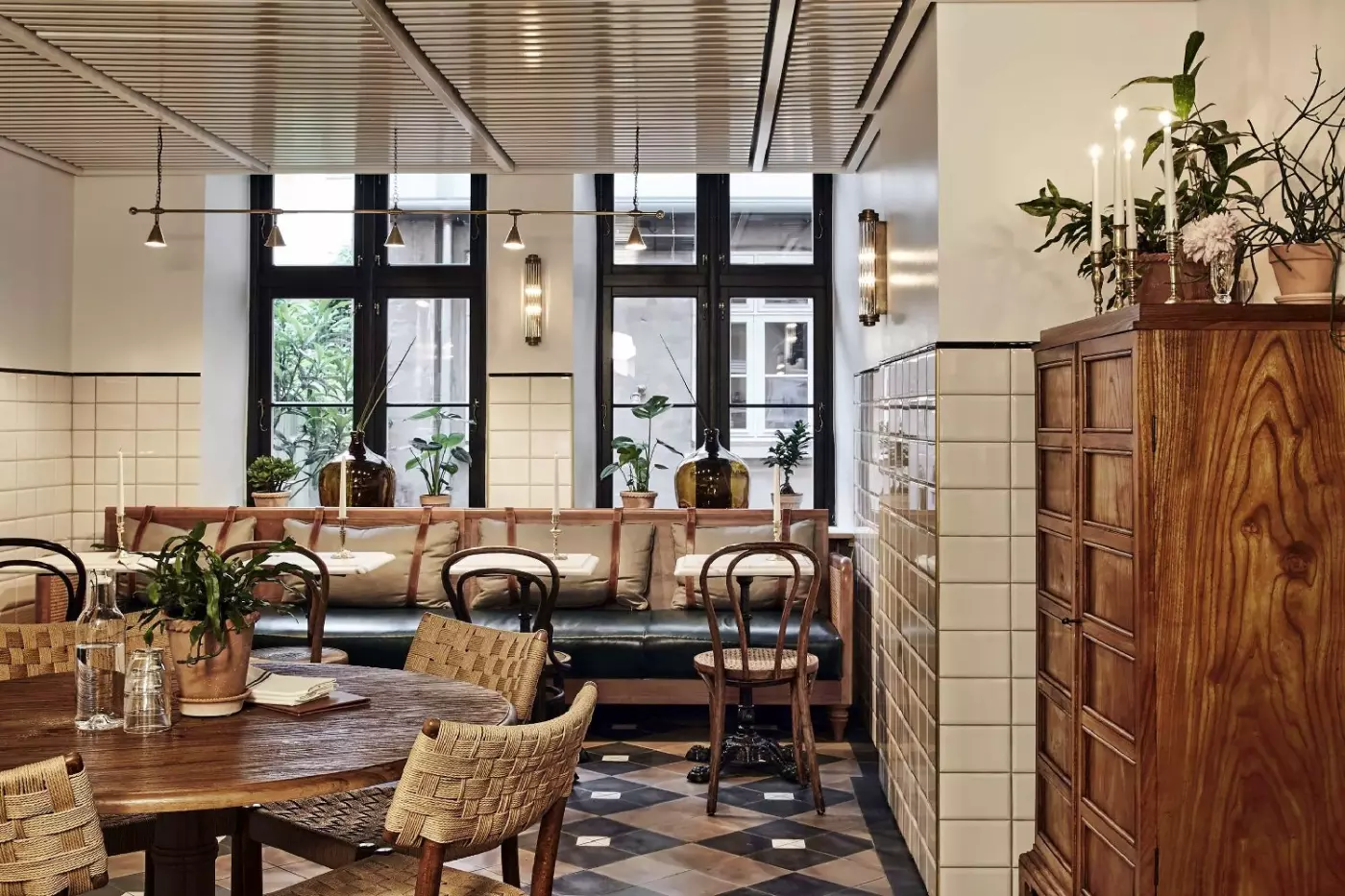
Sanders Kitchen is the social centre of the house. It serves breakfast, lunch, and dinner, with a menu that moves through familiar dishes, seasonal produce, and the kind of food guests actually want to return to during a stay. The room feels more like a gathering place than a formal restaurant.
The kitchen's tone matters because Copenhagen can be intense about dining. Sanders avoids trying to compete with the city's most ambitious tasting-menu rooms. Instead, it offers something useful: a warm table, good wine, unfussy food, and the feeling that one could eat here twice without repeating the same evening.
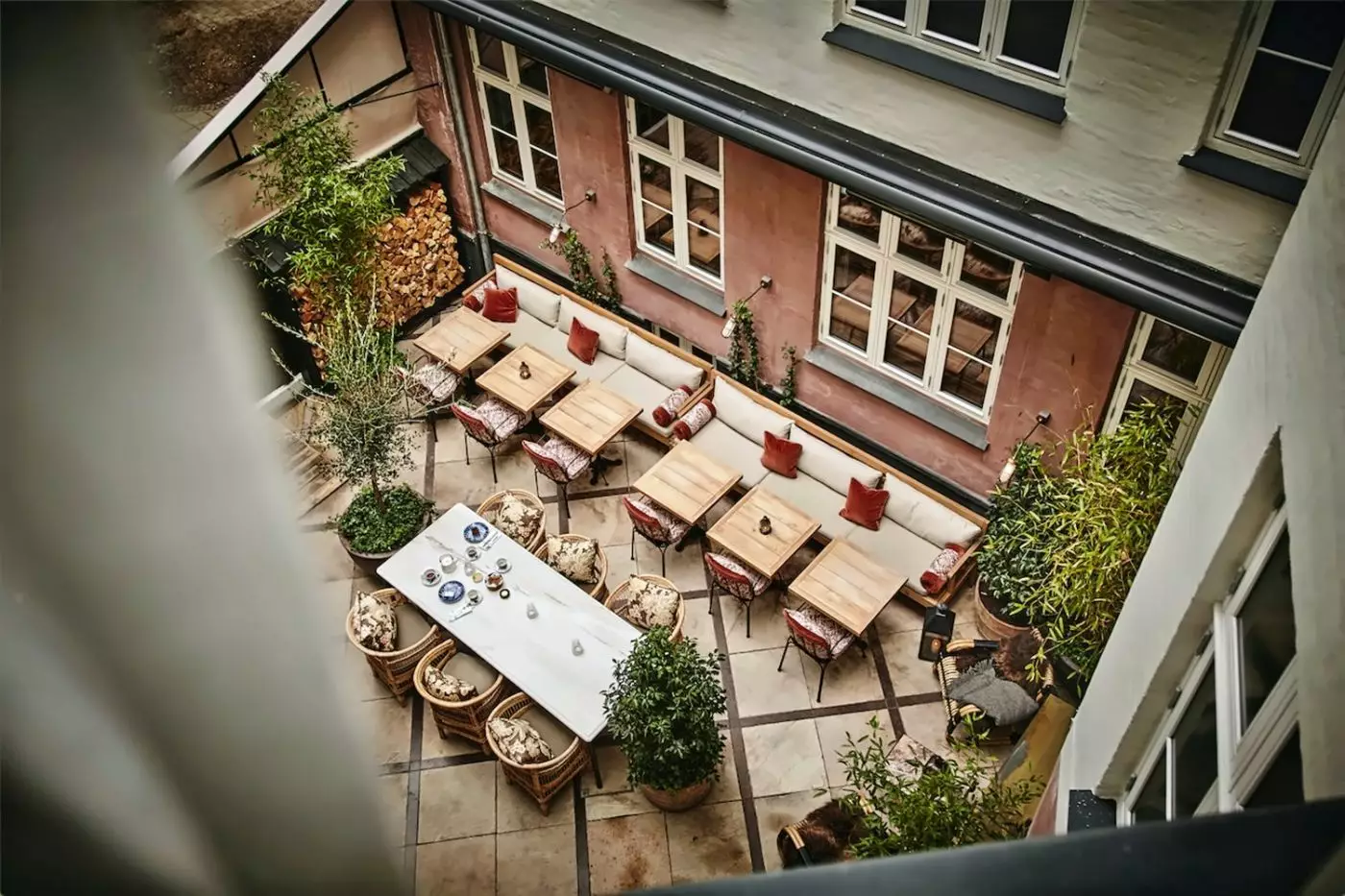
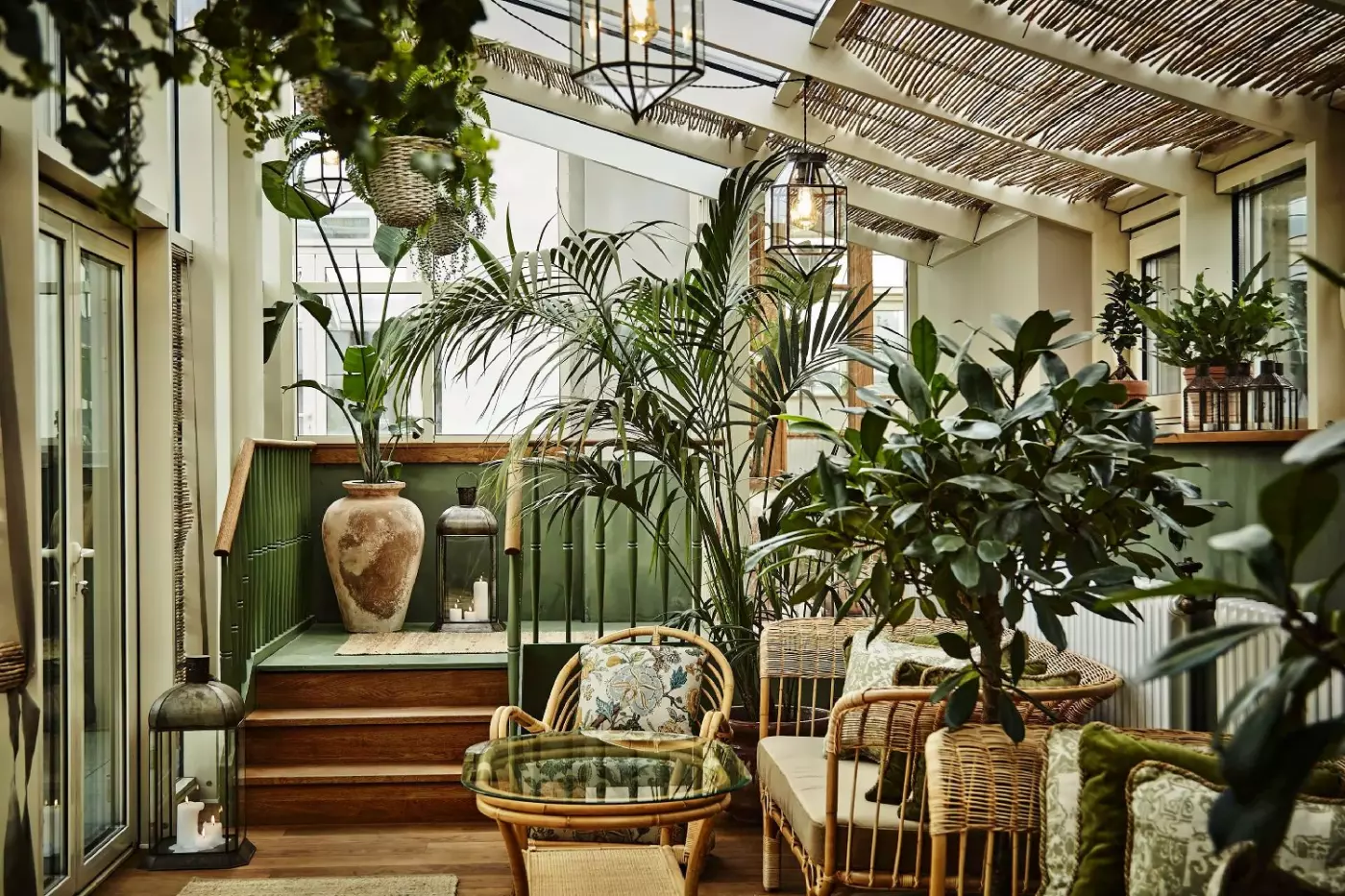
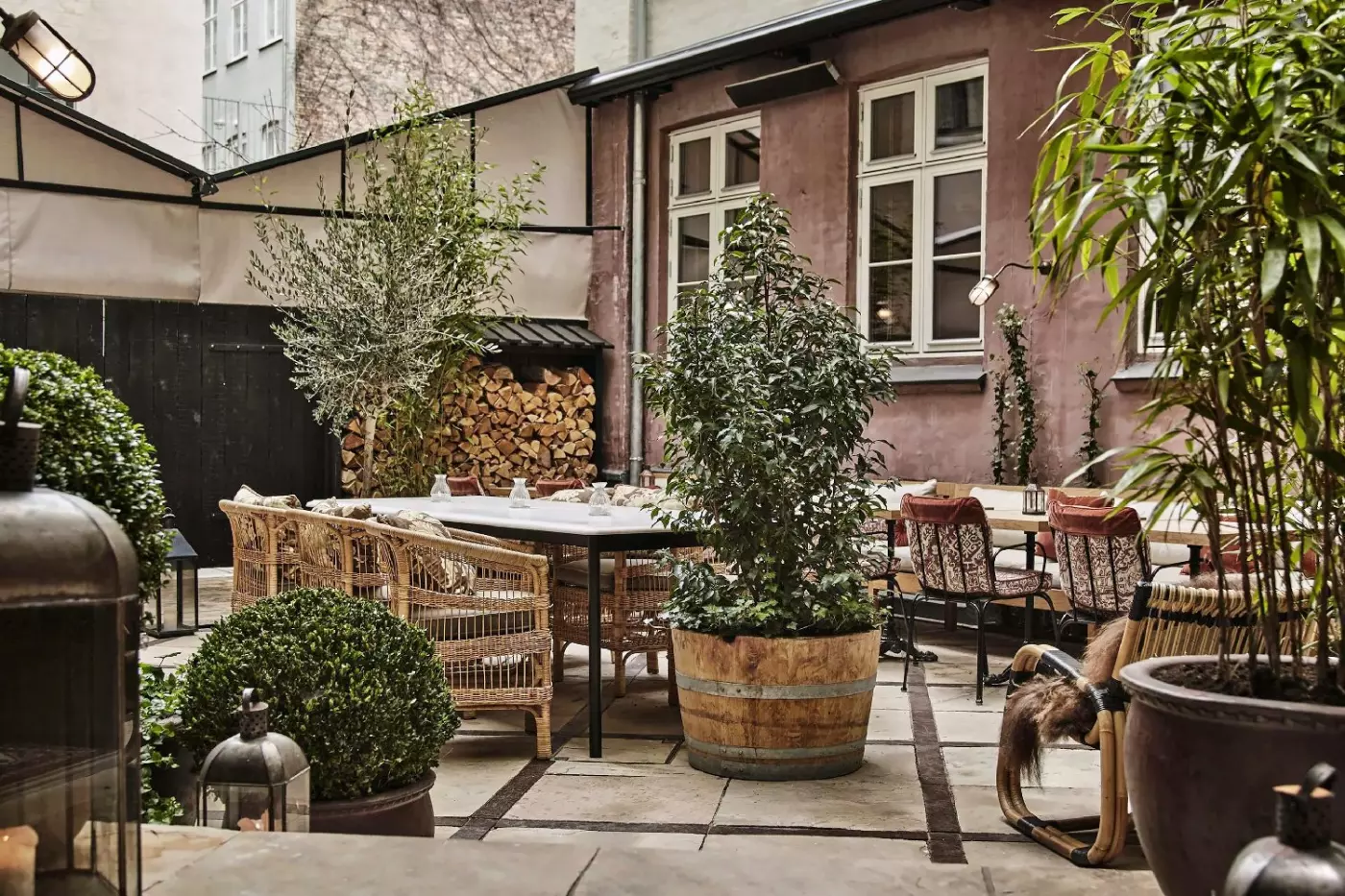
The courtyard adds another register. Ivy, fire, outdoor seating, blankets, and a sense of enclosure make it one of the hotel's most appealing pauses. Copenhagen weather is part of the game, but the courtyard handles that with charm rather than apology.
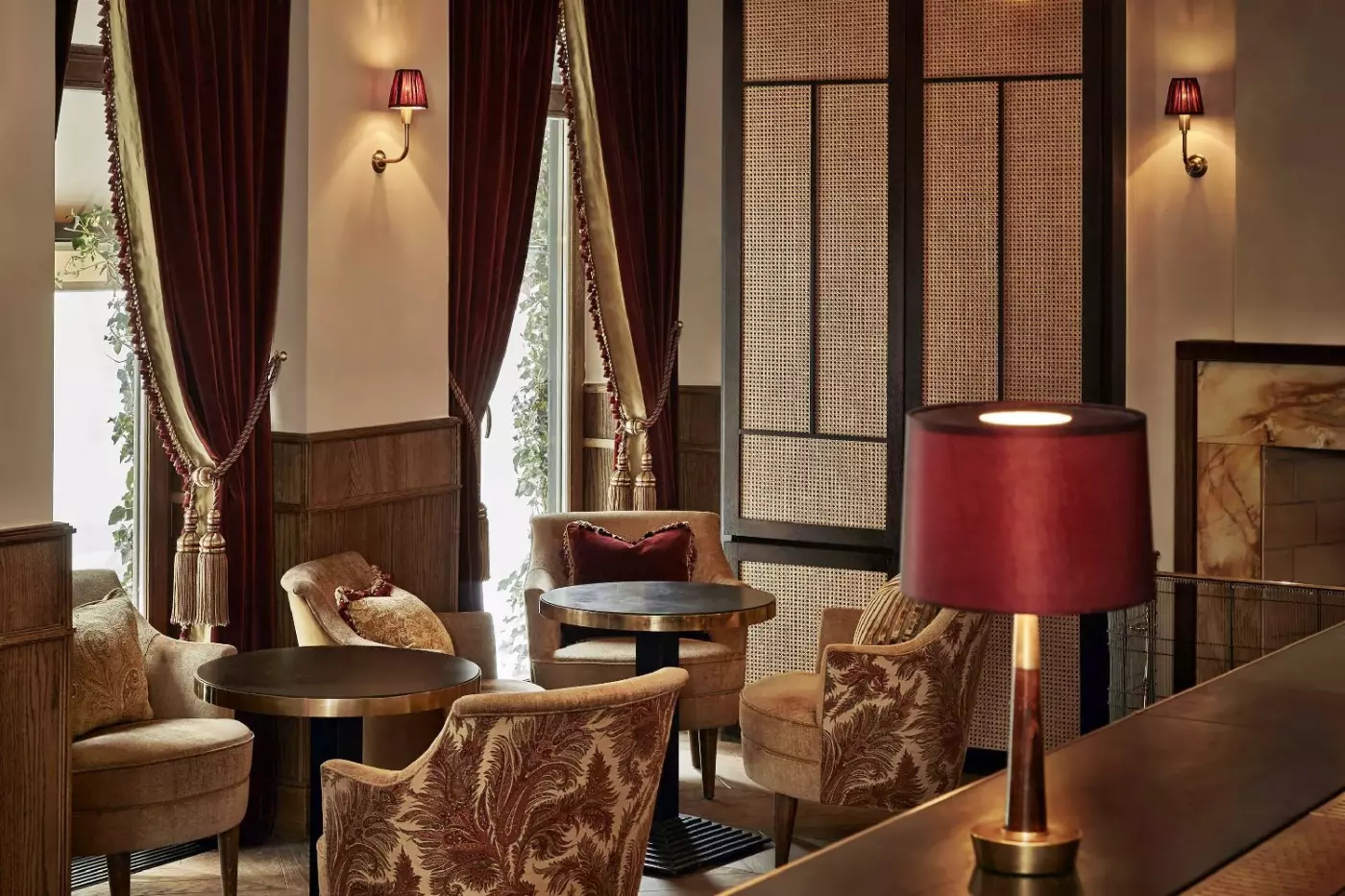
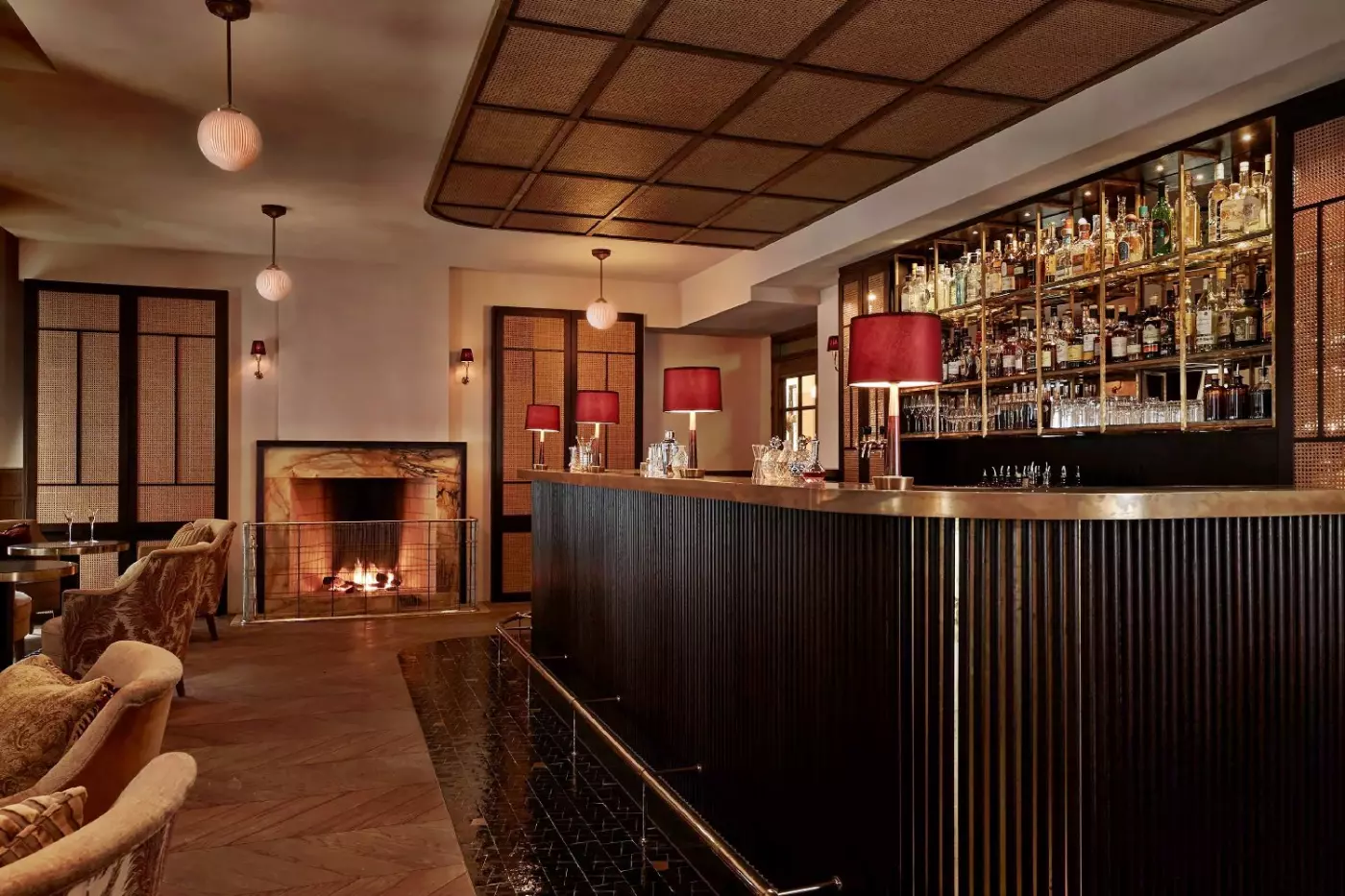
TATA Cocktail Bar faces the theatre world with a wink. It is the place for a late drink, a sharper conversation, or the first signal that the evening may stretch longer than planned. Opening hours vary by day, with later service toward the weekend.
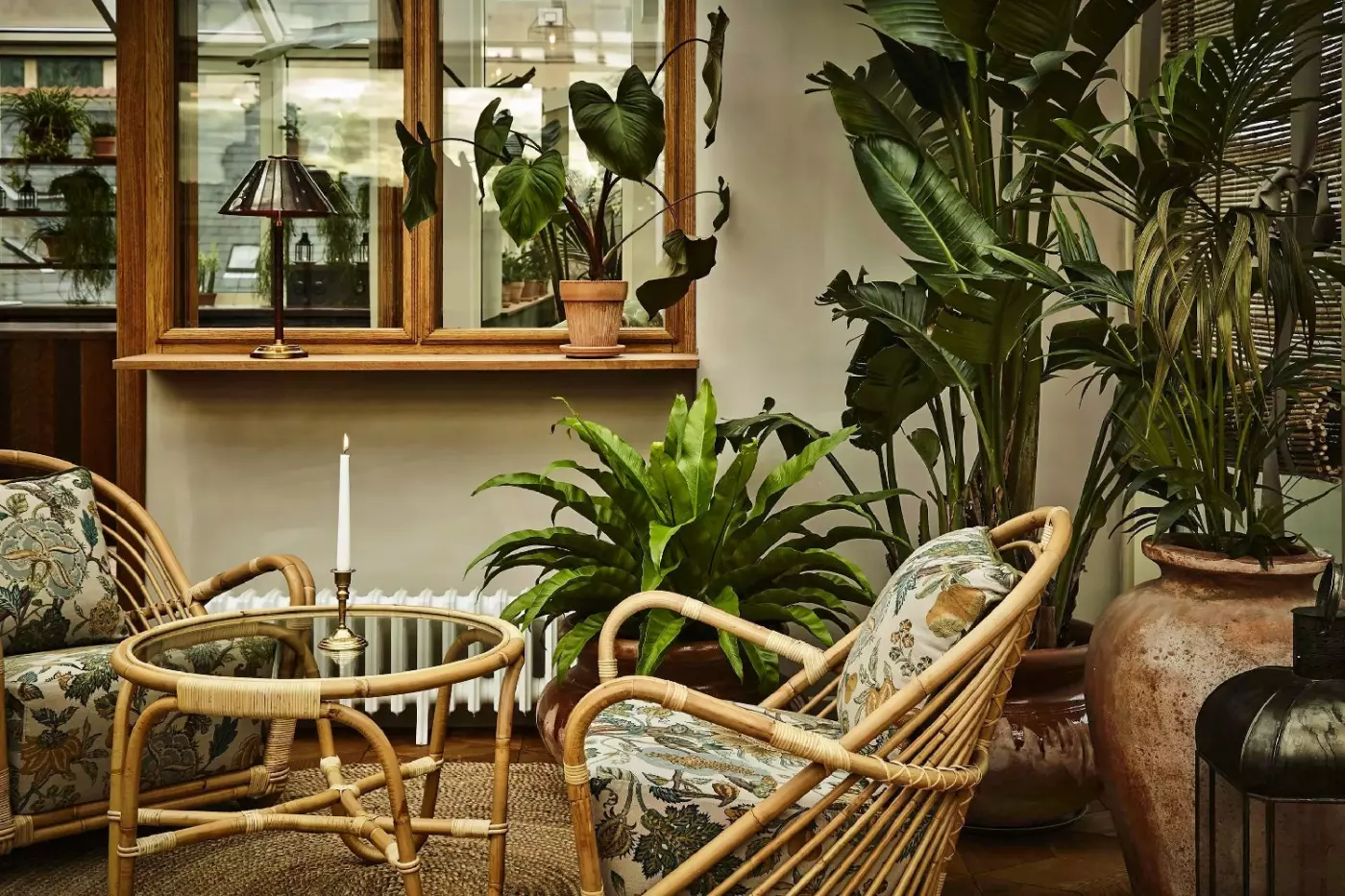
The rooftop changes the mood again. Sanders Rooftop is described as a green urban escape above the city, open for lunch, dinner, or drinks. On selected nights, TATA moves upstairs and brings cocktails to the terrace. That gives the hotel a second social life above street level.
The rooftop is not about skyline spectacle in the usual sense. Copenhagen's roofs are lower, quieter, and more human in scale. The pleasure is in being slightly above the city, surrounded by plants, with the day loosening its grip.
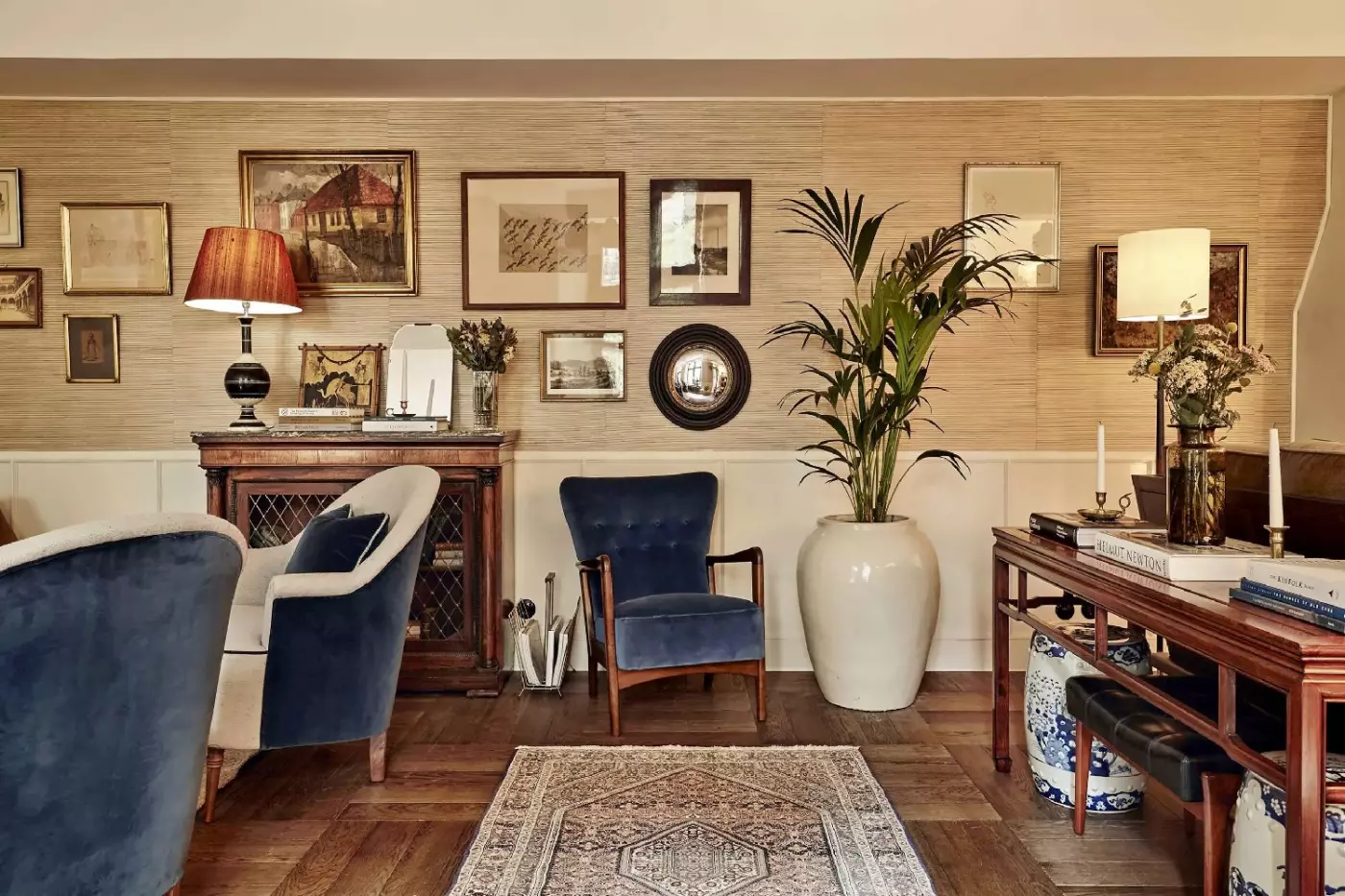
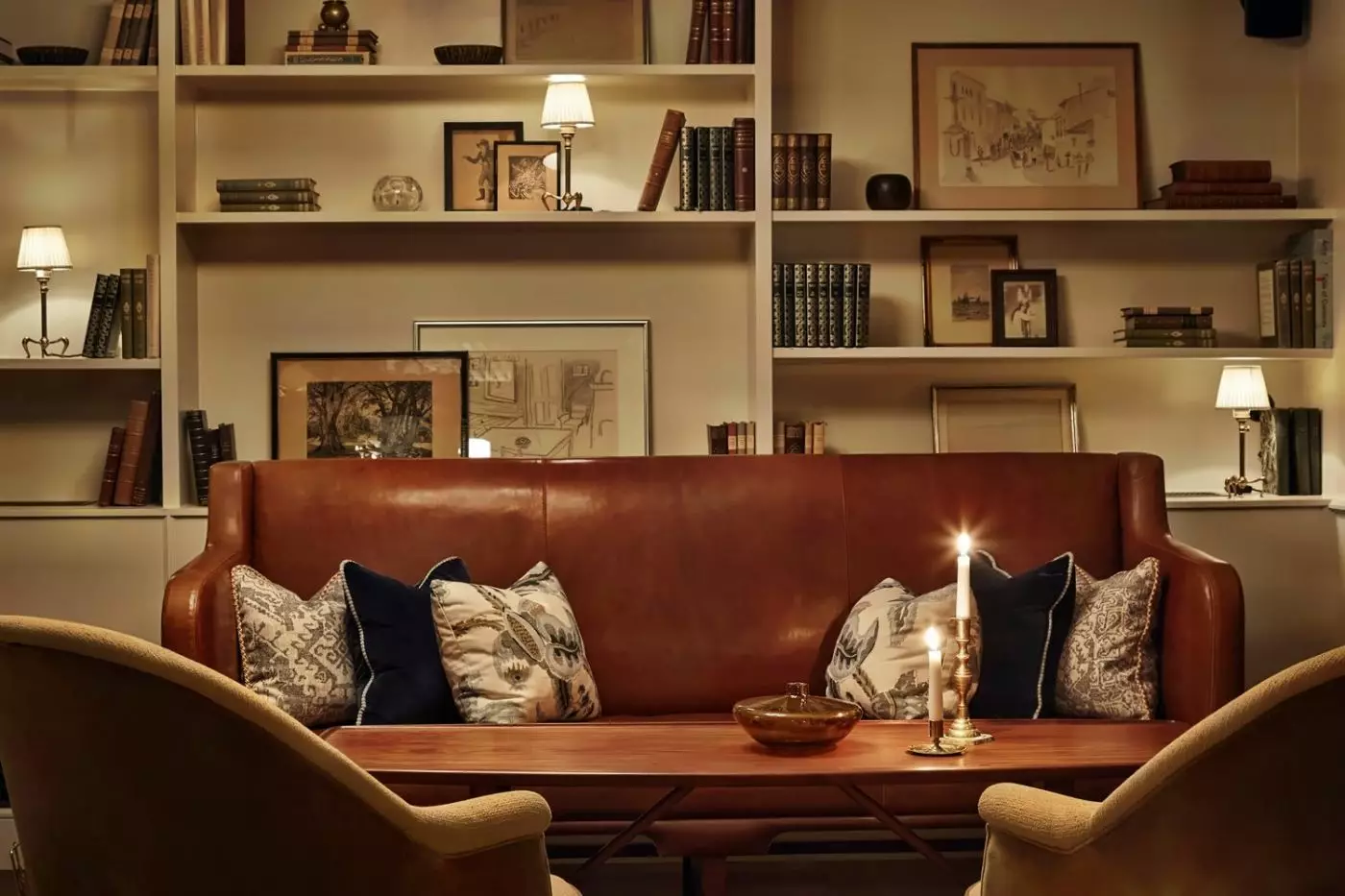
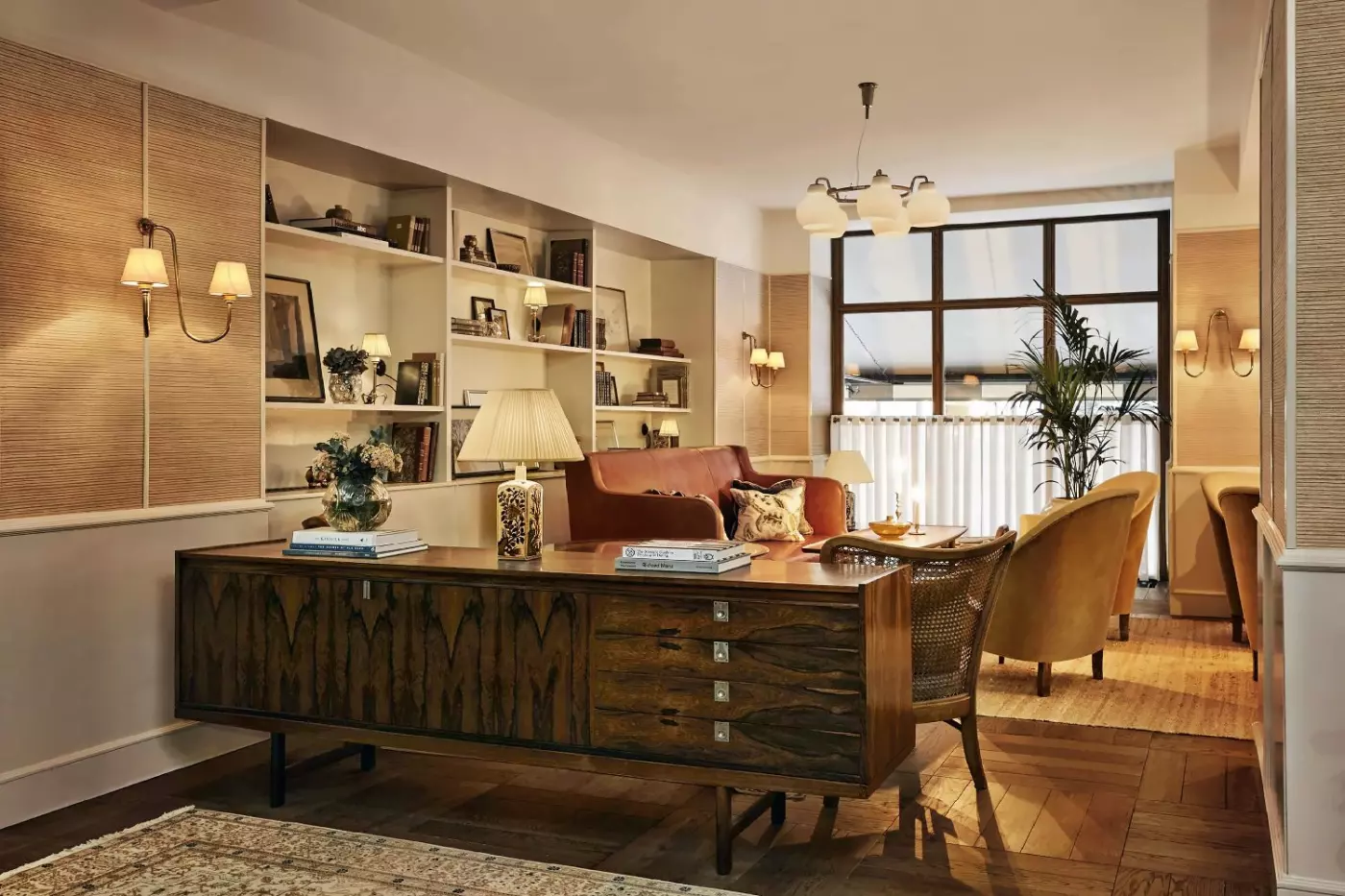
Sanders has several spaces that make the building feel more like a house than a lobby-and-bedroom operation. The Living Room is the softest version of that idea: a place to read, wait, talk, or disappear for half an hour.
Misha Meeting Room gives the hotel a practical private-event layer. It is useful for small meetings, discreet gatherings, or guests who need Copenhagen business to happen in a room with more character than a standard boardroom.
These spaces are part of why the hotel feels coherent. Guests do not have to choose between staying in the room and going out. There are intermediate places, which is exactly what a good townhouse-style hotel needs.
Sanders works best for travellers who want the city edited intelligently. The hotel speaks of curated stays, and that idea suits Copenhagen. The city is compact, but the best experiences are often small: a table, a gallery, a swim, a bakery, a cycling route, a shop hidden behind a plain door.
From this address, guests can move toward design, theatre, harbour baths, restaurants, royal history, and neighbourhood walks without feeling over-managed. The staff's role is not to script every hour. It is to point guests toward the right doors.
That is a valuable service in Copenhagen because the city rewards taste more than speed. Rushing between landmarks misses the point. Sanders encourages a slower, better-edited version of the stay.
Hotel Sanders is best for travellers who care about atmosphere, design, and a central address with a private-house feel. It suits couples, solo travellers, creative guests, theatre lovers, and repeat Copenhagen visitors who want something warmer than a standard city hotel.
It is also a strong choice for guests who like public spaces as much as bedrooms. The rooftop, courtyard, kitchen, cocktail bar, and living room are all part of the experience. A stay here should include time inside the house, not only time out in the city.
Travellers who want large rooms by default, a big spa, or a conventional grand-hotel setup may prefer another property. Sanders is intimate, detailed, and slightly idiosyncratic. Its confidence lies in scale and mood rather than spectacle.
The appeal of Hotel Sanders is not a single feature. It is the accumulation of small decisions: the street near the theatre, the green atrium rooms, the rooftop plants, the courtyard fire, the bar's late-night energy, the kitchen's easy rhythm.
That makes the hotel feel lived-in from the start. It does not present Copenhagen as a checklist. It offers a way to inhabit the city for a few days, with enough style to make the stay memorable and enough comfort to make it useful.
For a boutique hotel in central Copenhagen with character, warmth, dining, cocktails, rooftop life, and a strong sense of address, Hotel Sanders remains one of the city's most distinctive choices.
Sign up now and benefit from VIP Status, Room Upgrades, free daily breakfast, 100 USD Hotel credit with every booking. Best Available Rates & Free Membership!
By watching the video, you agree that your data will be transmitted to YouTube and that you have read the privacy policy.
The information provided is circumstantial - and is not indefinite in accuracy. Changes may have occurred.
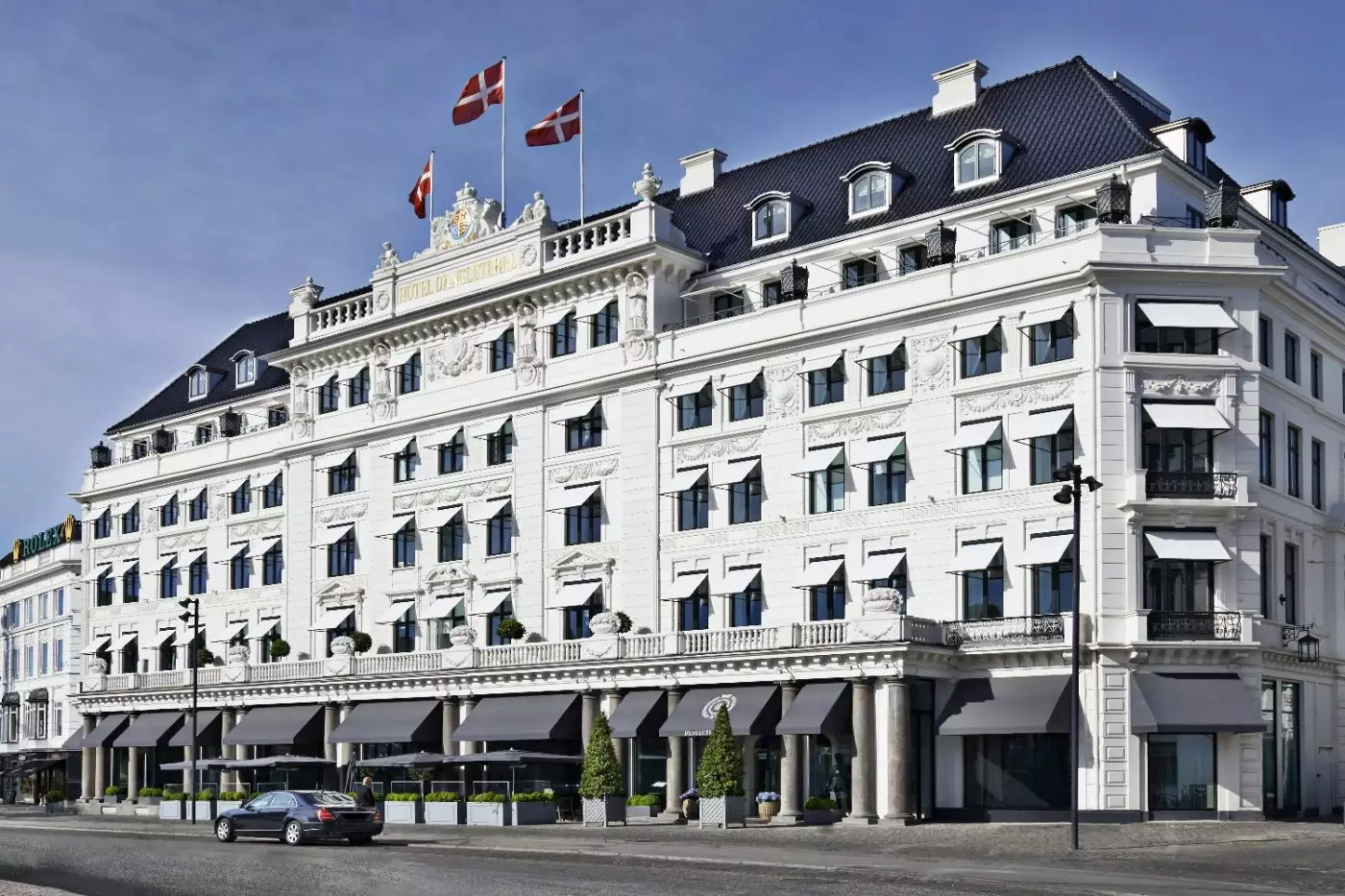
Hotel d'Angleterre Copenhagen is the city's classic luxury address. It stands on Kongens Nytorv, one of the capital's most important squares, with Nyh...
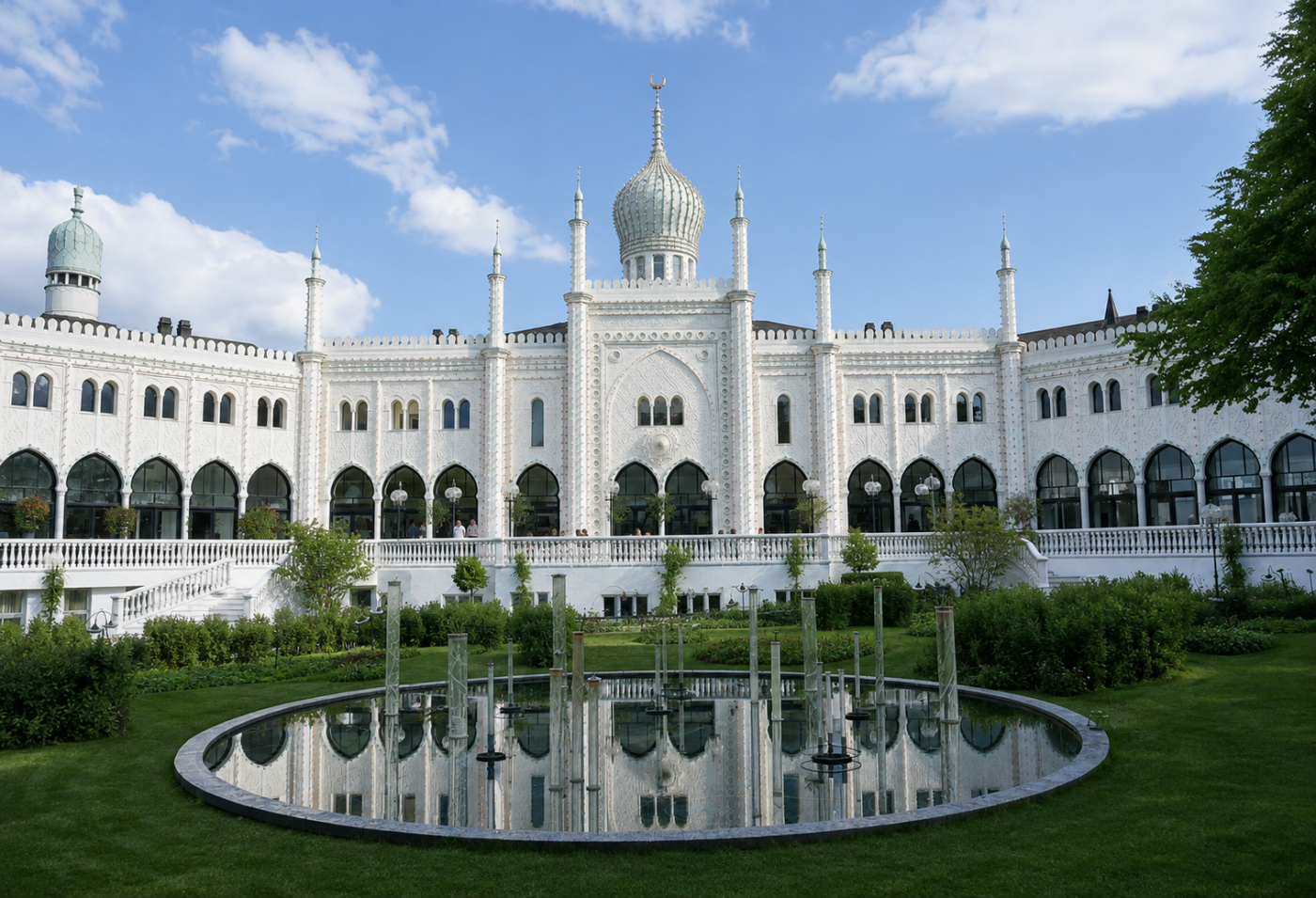
Nimb Hotel is one of Copenhagen's most distinctive places to stay because it is not simply near Tivoli Gardens. It is part of Tivoli's world. The whit...
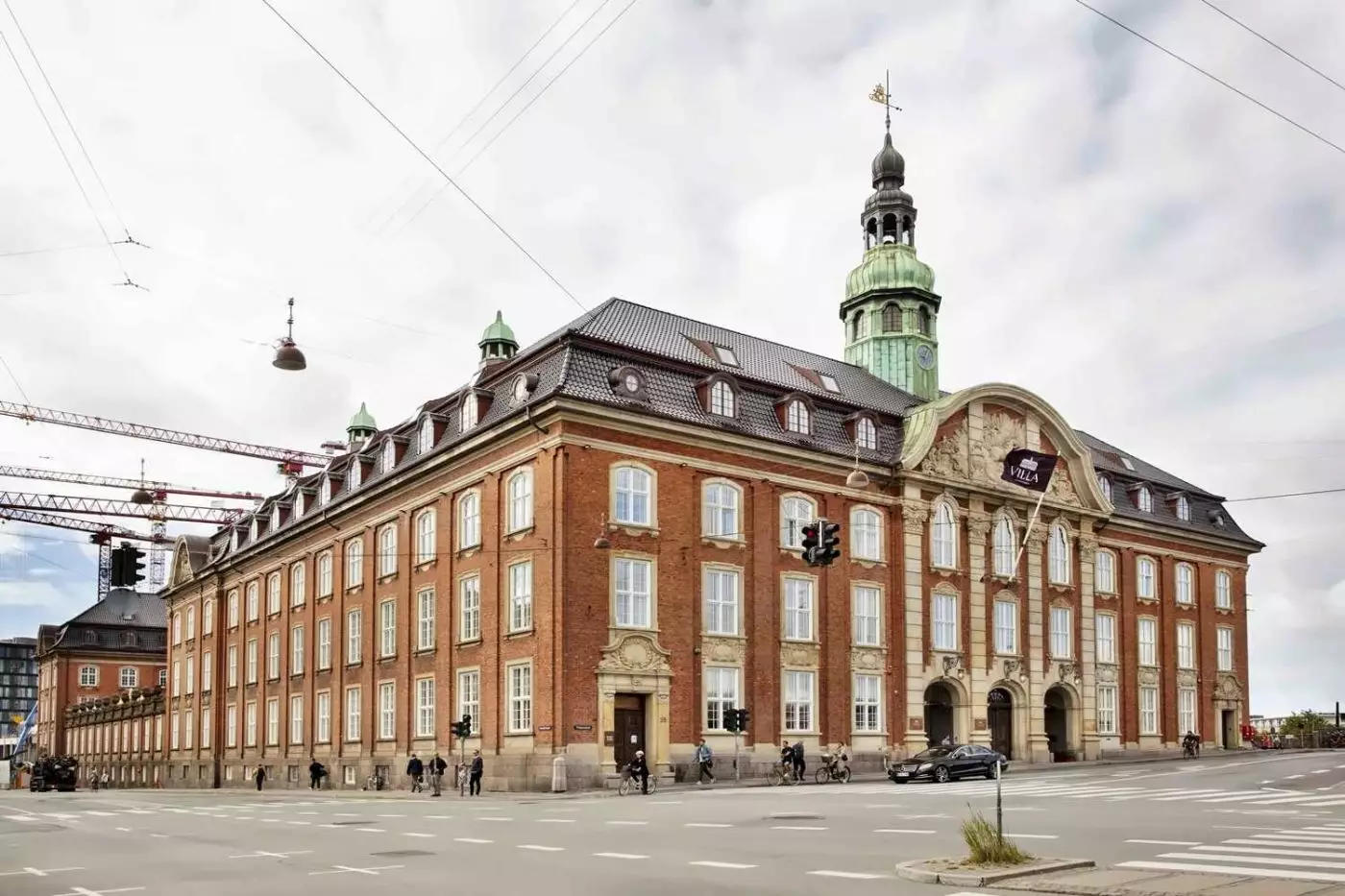
Villa Copenhagen is a luxury hotel in the former Central Post and Telegraph Head Office, close to Tivoli Gardens and Copenhagen Central Station, with...