Best for
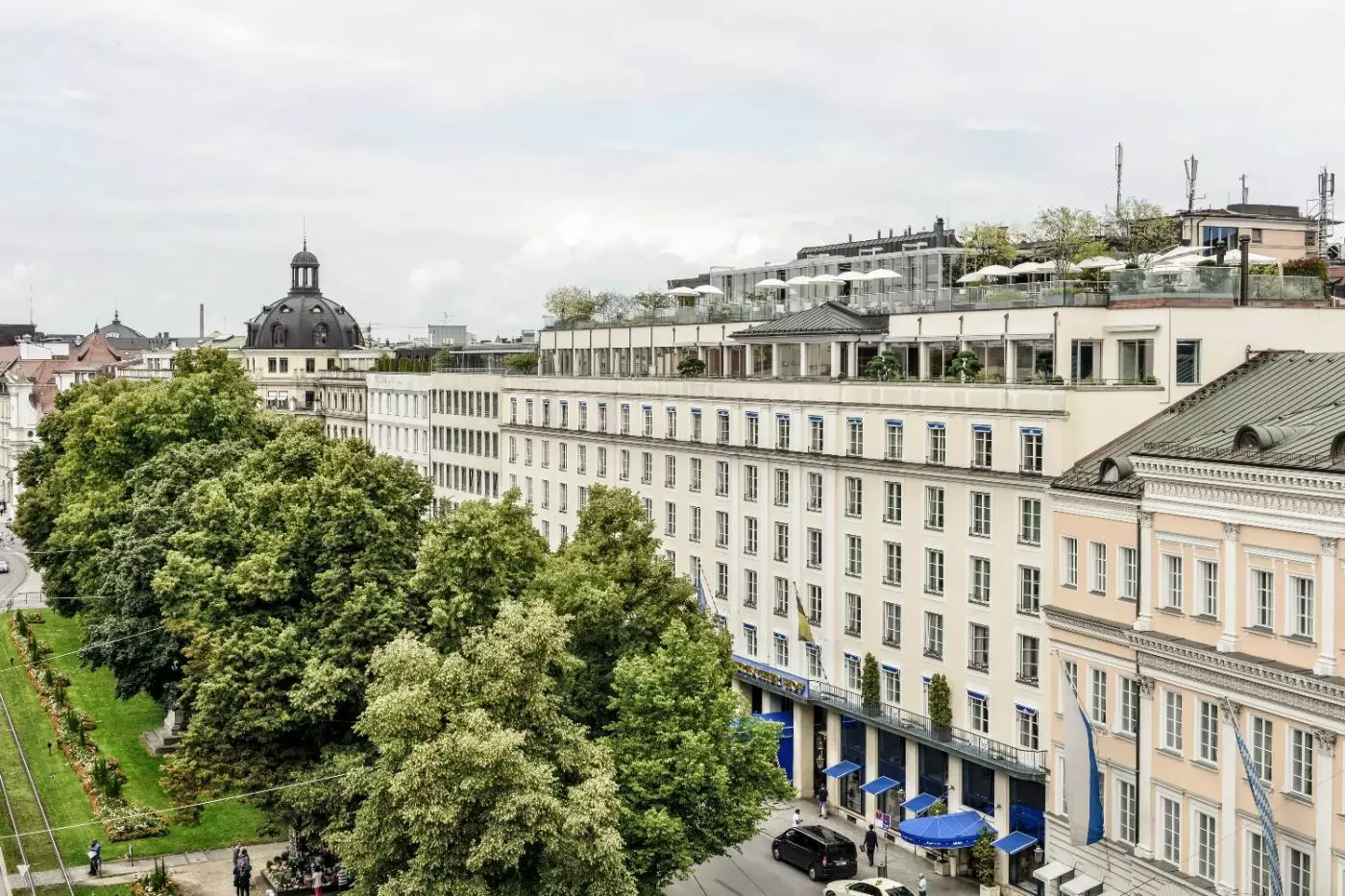
For travelers who prefer exploring Munich on foot, Promenadeplatz places the opera house, Frauenkirche and nearby boutiques within an easy walk.
Please choose a hotel or destination from the list.
We couldn’t open your search results. Please try again.
Your private search
Finding exceptional stays
Best for
For travelers who prefer exploring Munich on foot, Promenadeplatz places the opera house, Frauenkirche and nearby boutiques within an easy walk.
What makes it special
Evenings can stay within the hotel: its intimate Cinema Lounge and live music venue offer culture after a day exploring Munich.
Room to consider
Consider a Standard Junior Suite if you want space to sit or work; its integrated living area includes a writing desk.
Insider tip
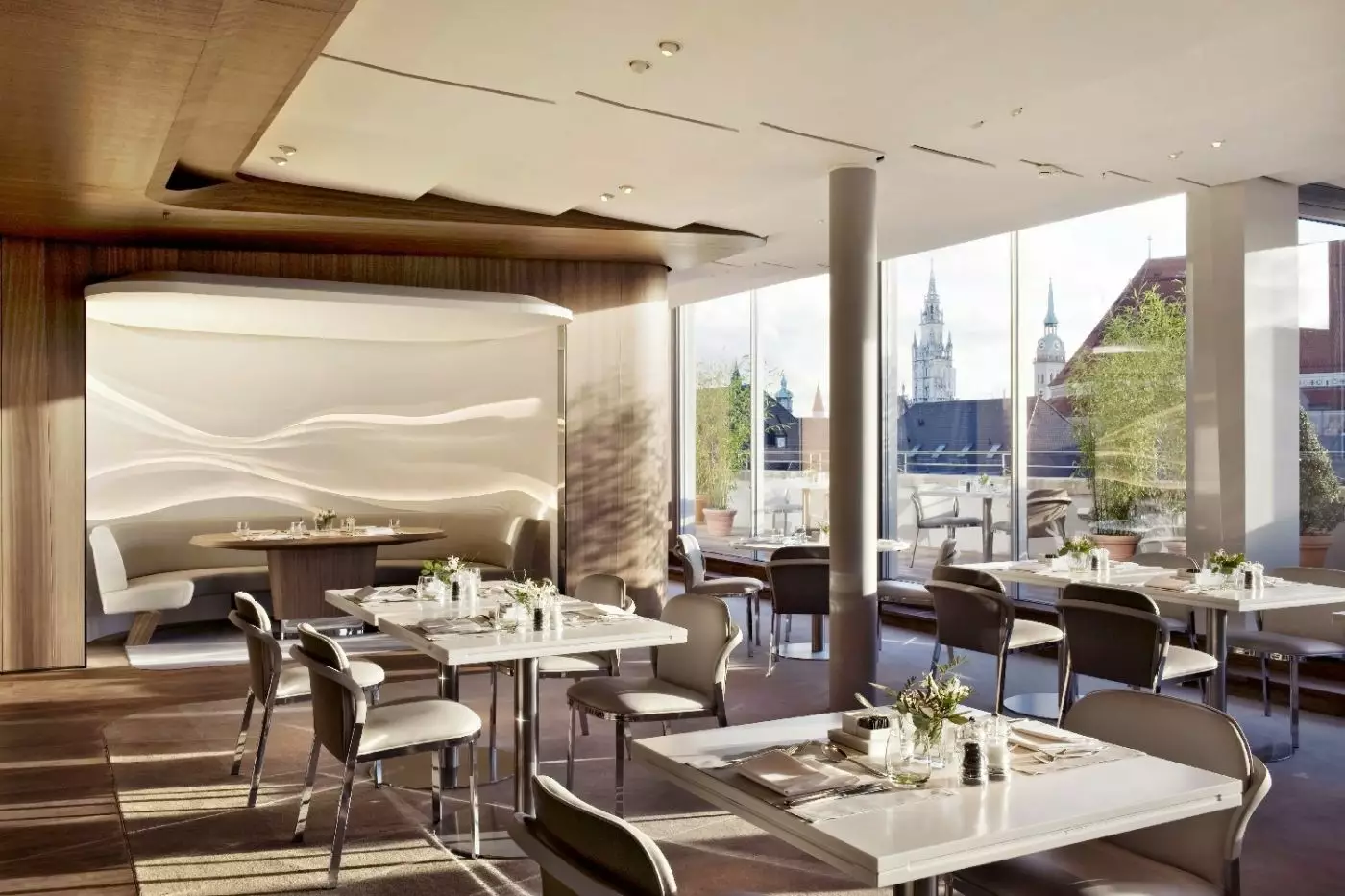
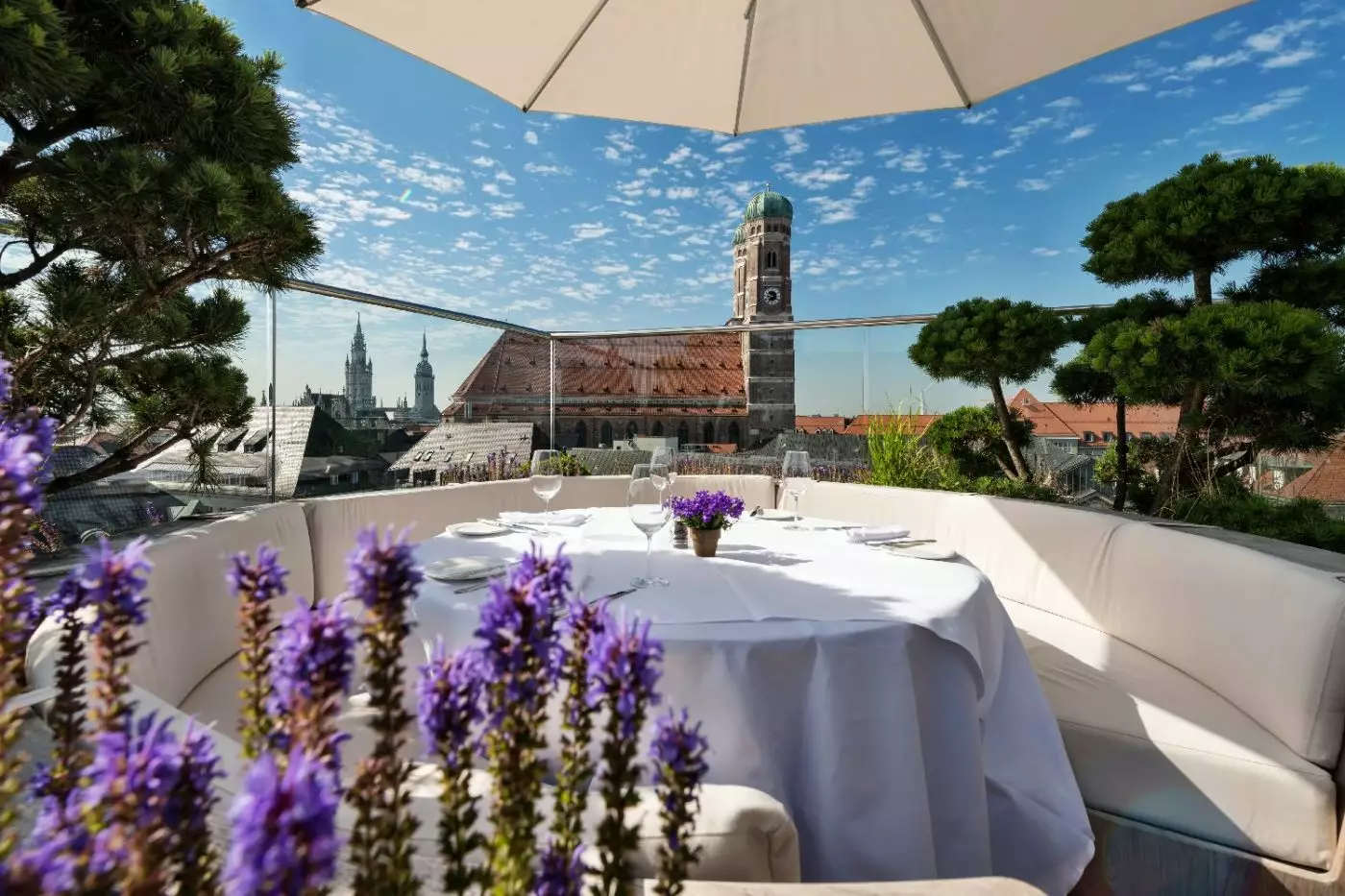
For breakfast, consider the Roof Garden; its terrace frames Munich's skyline, while the indoor lounge works when the weather changes.
Free membership gives you access to preferred rates, exclusive benefits and current promotions for your stay.
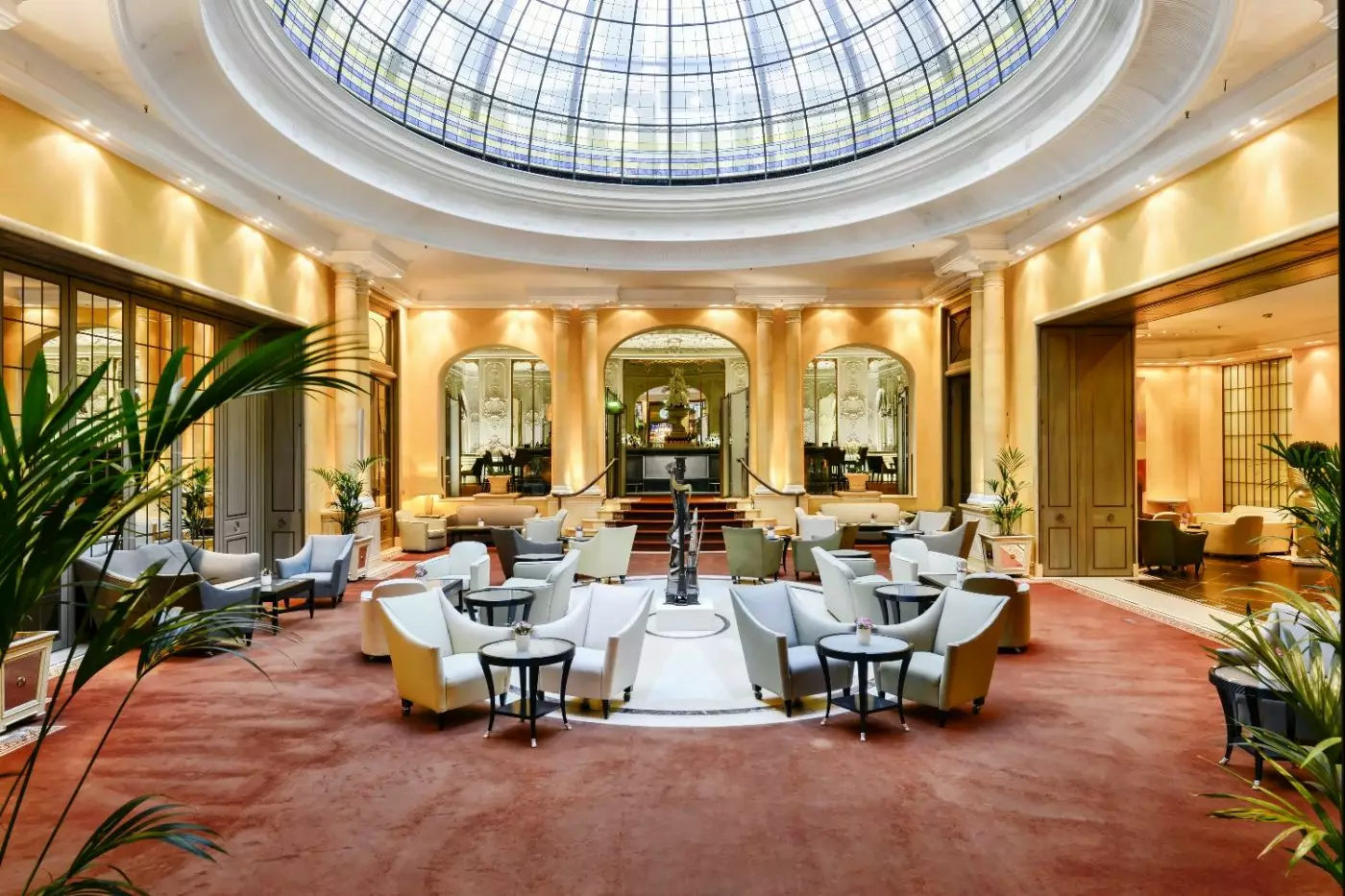
A jazz concert, a film screening, and dinner beneath a medieval vault can all be part of an evening at Hotel Bayerischer Hof Munich. The hotel stands on Promenadeplatz in the historic center, and its restaurants and cultural venues are part of Munich's public life. The house is large and layered, with 337 rooms in total, including 74 suites. Different wings and interior styles give the accommodation variety, while the Blue Spa occupies the upper levels above the old town.
 337
 Charming
 Fitness
 Pool
 Spa
 Sauna
 Culture
 City Vibe
 Pet Friendly
 Gourmet Restaurant
 Connecting Rooms
The queen-bed option is a single room.
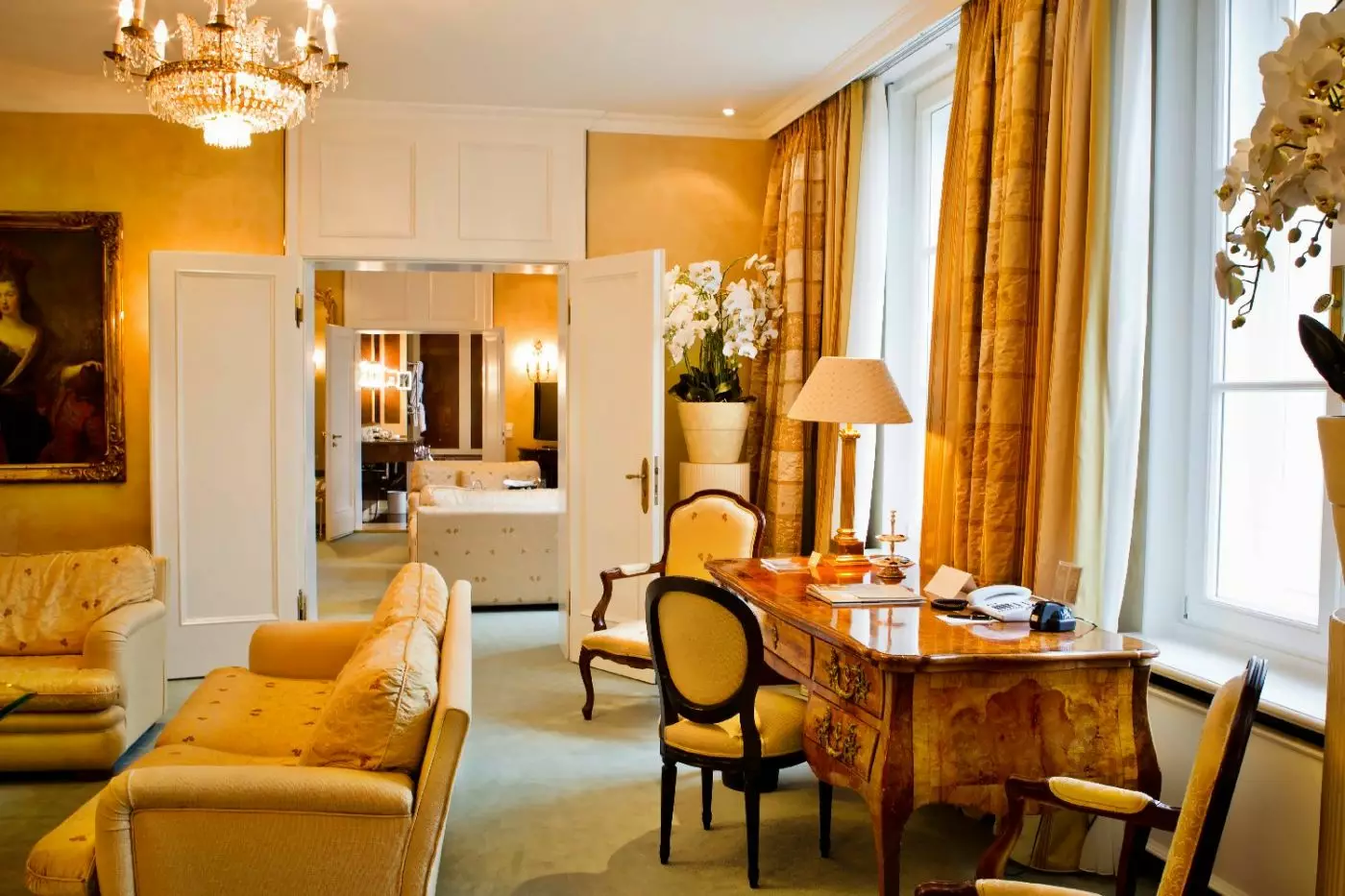
A writing desk and seating area share the room with the sleeping space. Traditional rooms in the historic Palais Montgelas have antique furniture. Other designs use softer colors and modern pieces. Floral fabrics, padded headboards and framed art give the styles their character.
In the pale Cosmopolitan design, tall windows rise beside a chair and low table. Curtains frame the glass, while wall lights flank the headboard. A desk stands against the window wall. The standard double-room layouts have marble bathrooms, with a bathtub and double vanity.

A writing desk and seating area share the room with the sleeping space. Traditional rooms in the historic Palais Montgelas have antique furniture. Other designs...
One design pairs green walls with framed portraits and patterned curtains. Others use pale fabrics and clean-lined headboards. The Colonial style has warm colors and a bathroom by an Italian designer.
An armchair and low table sit by the windows in the pale Cosmopolitan design. A small desk stands along the same wall, near the sleeping area. The marble bathrooms have two basins. Some have a bathtub and separate shower. Selected rooms have walk-in wardrobes or connecting doors.

One design pairs green walls with framed portraits and patterned curtains. Others use pale fabrics and clean-lined headboards. The Colonial style has warm colors and...
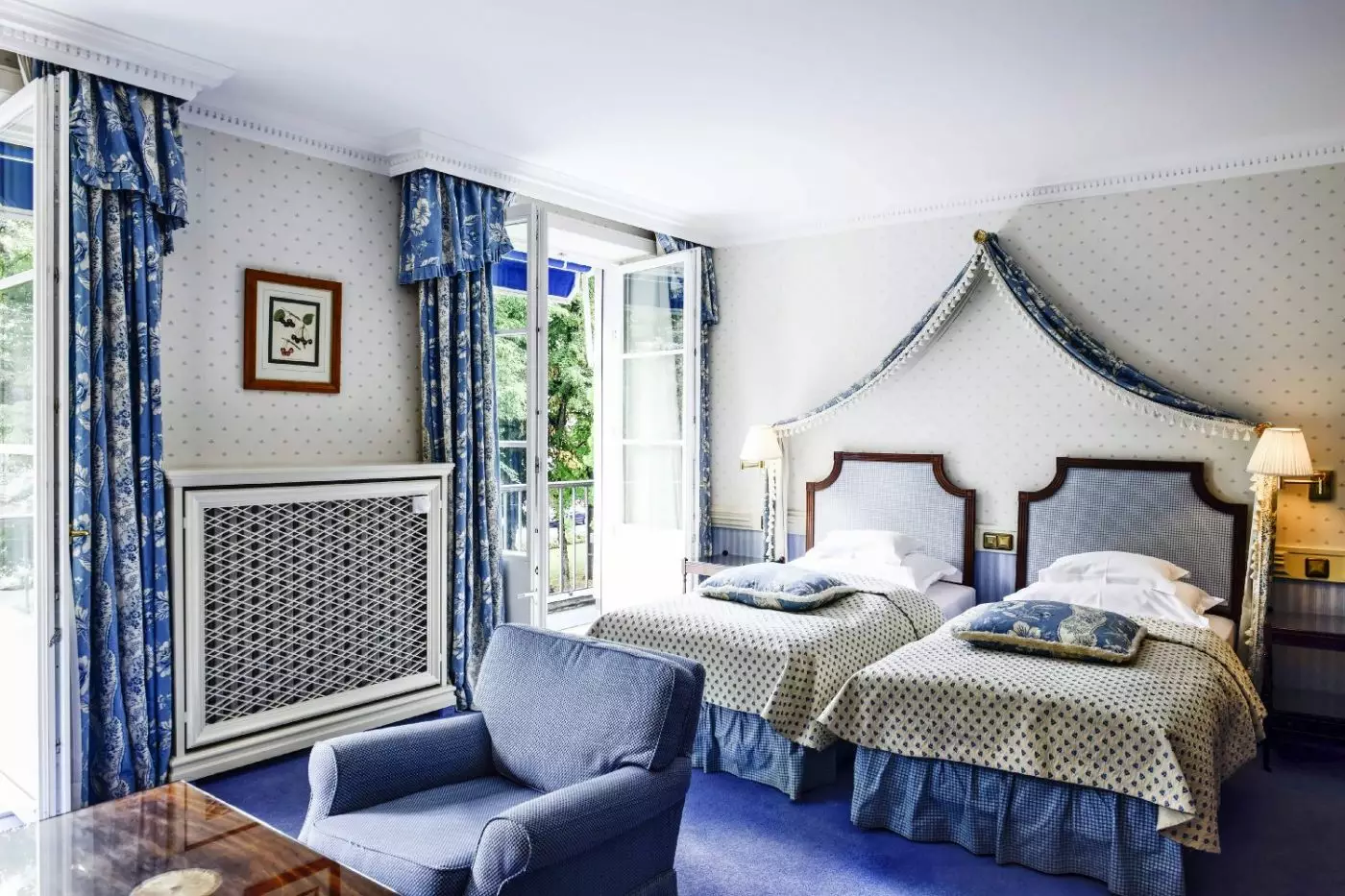
Floral fabrics and classic furniture give each room its own character. Every layout has a desk and seating space. In one design, a framed mirror stands by the window, beside a tapered lamp and floral curtains.
The Graf Pilati style has furniture with piping, in pearl gray, taupe or champagne. Colonial bedrooms use warm clay tones, with bathrooms by Italian designer Renato Rabbiolo. Classic rooms in the historic Palais Montgelas have antique furniture. Light Cosmopolitan rooms use pale colors and large windows. Selected rooms face Promenadeplatz.

Floral fabrics and classic furniture give each room its own character. Every layout has a desk and seating space. In one design, a framed mirror...
Some rooms have a sofa bed or a door connecting to another room.
Floral fabrics and traditional furniture feature in some rooms, while others have pale modern interiors. A writing desk and sitting area share the bedroom. Large windows frame the seating in the Cosmopolitan design. Curtains, framed art and padded headboards bring color into the rooms.
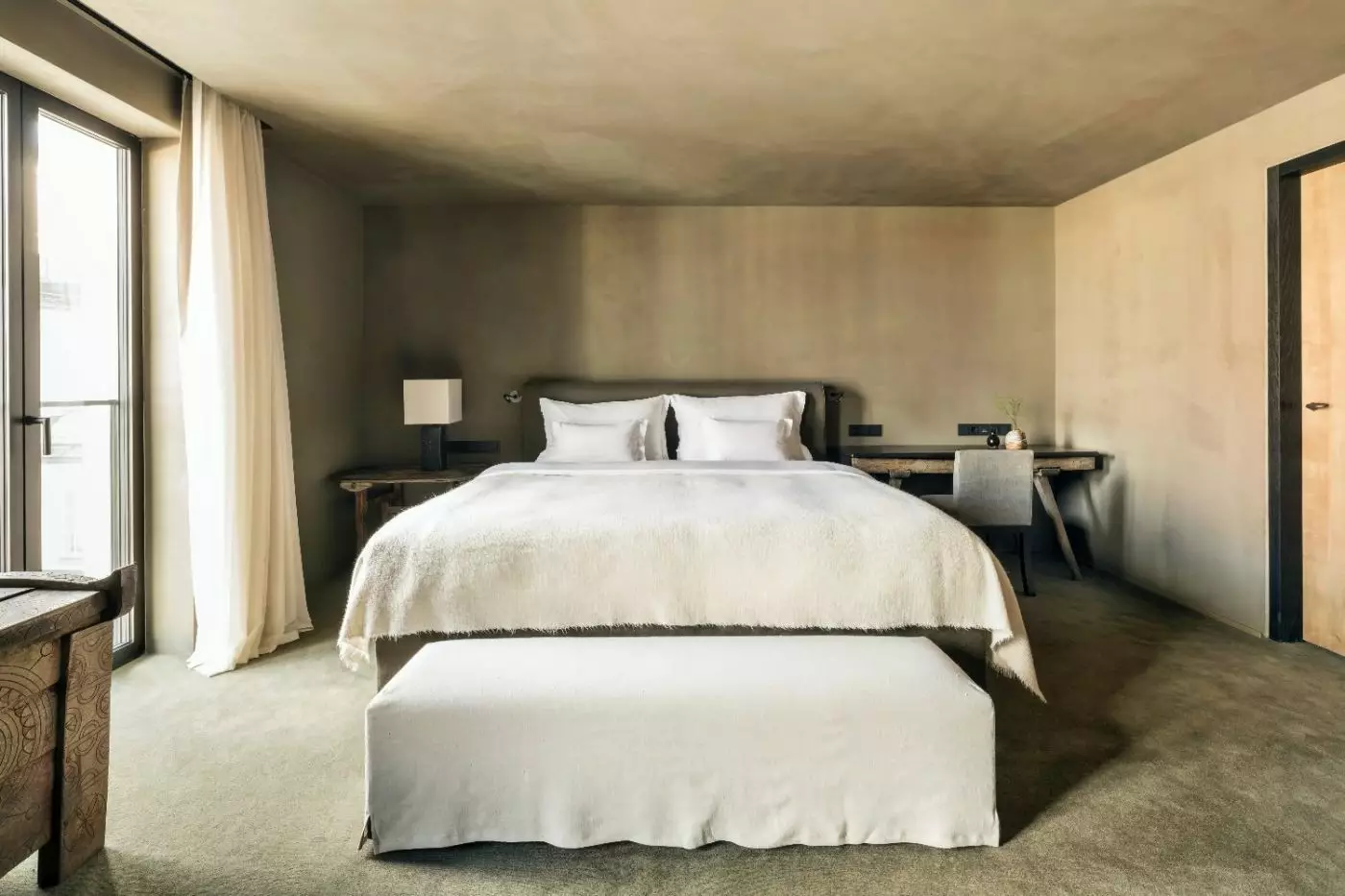
The Axel Vervoordt version uses natural tones, linen and reclaimed wood furniture. Distinctive lamps stand near the sleeping area. The bathroom uses Valverde stone, with a bathtub and separate rain shower. Other designs have marble bathrooms, with a separate bath and shower in selected rooms. Some layouts also have a walk-in wardrobe.

Floral fabrics and traditional furniture feature in some rooms, while others have pale modern interiors. A writing desk and sitting area share the bedroom. Large...
Some suites have a French balcony or a door connecting to another room.
The open living area has a work surface and upholstered seating. In one design, blue chairs stand beside tall windows. Dark botanical curtains frame the glass, with a table lamp between the chairs. Colonial, Laura Ashley and Graf Pilati styles bring other fabrics and colors.
Double washbasins line the marble bathroom, alongside a bathtub and shower. Many suites have a walk-in wardrobe, and selected rooms also have a sofa bed. Framed pictures and patterned fabrics add detail around the seats and sleeping space.

The open living area has a work surface and upholstered seating. In one design, blue chairs stand beside tall windows. Dark botanical curtains frame the...
Sitting and work areas are set apart from the sleeping space. In one traditional design, a pale sofa and oval-backed chairs face a rectangular table. Framed art hangs above them. Other rooms have gray fabrics and a desk by the window, with glazed panels between the bedroom and sitting area.
The Axel Vervoordt version uses linen and reclaimed wood furniture. Pale curtains and lamps with individual shapes add detail. Its bathroom uses Valverde stone, while other styles have marble. Baths, showers and double washbasins form part of the bathroom layouts. Selected suites have a walk-in wardrobe or sofa bed, and the degree of separation between rooms varies by design.

Sitting and work areas are set apart from the sleeping space. In one traditional design, a pale sofa and oval-backed chairs face a rectangular table....
A separate living room keeps the seating and work area apart from the bedroom. The styles range from classic fabrics to Graf Pilati color schemes. In the Cosmopolitan design, pale sofas and dark-framed chairs sit beneath an abstract picture. Green cushions add color to the seats, with tall windows nearby.
A walk-in wardrobe provides dressing space between the rooms. The marble bathroom has a bathtub and double washbasins. Most layouts also have a rain shower. Some suites can connect to further rooms.

A separate living room keeps the seating and work area apart from the bedroom. The styles range from classic fabrics to Graf Pilati color schemes....
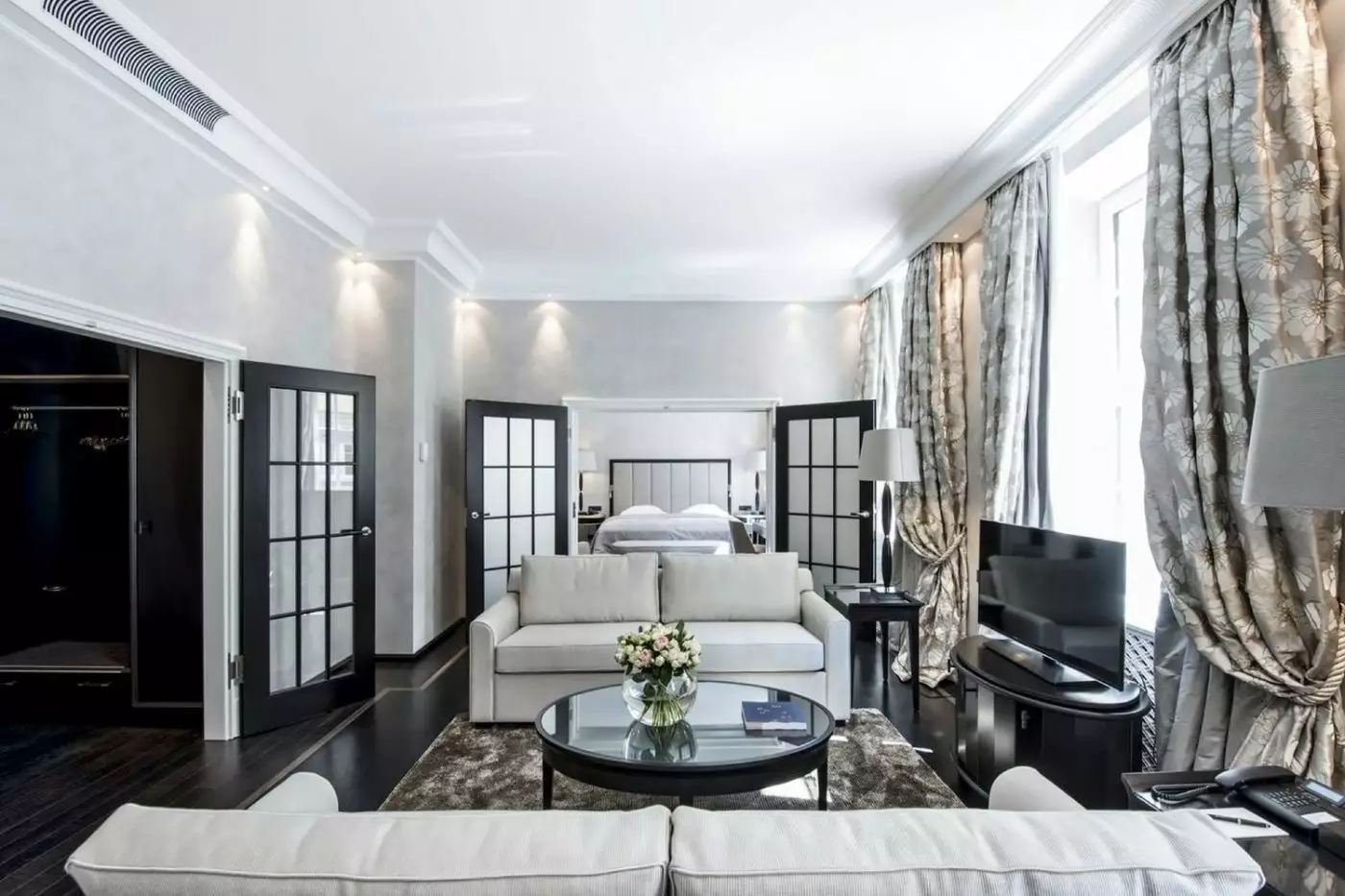
The suite has separate living and sleeping rooms. In the pearl-gray and taupe designs, glazed double doors connect them. Pale sofas face one another below tall windows. Parquet floors and patterned curtains continue between the rooms, with dining and work areas in selected layouts.
The Graf Pilati designs have separate entrances to the lounge and bedroom. An induction hob and sink equip the kitchenette. A hall leads to a walk-in wardrobe and two marble bathrooms. Other designs include a Bavarian salon with wood paneling and upholstered dining chairs. Bathrooms across the category have a bathtub and double washbasins. Most suites also have rain showers.

The suite has separate living and sleeping rooms. In the pearl-gray and taupe designs, glazed double doors connect them. Pale sofas face one another below...
In the Panorama Suite 705 duplex design, a spiral staircase rises from the living room to a gallery bedroom with a walk-in wardrobe. A second bedroom lies on the main level, while the lounge opens toward Munich's rooftops. Mahogany, Siena marble and Brazilian granite bring warm color and polished surfaces to the rooms.
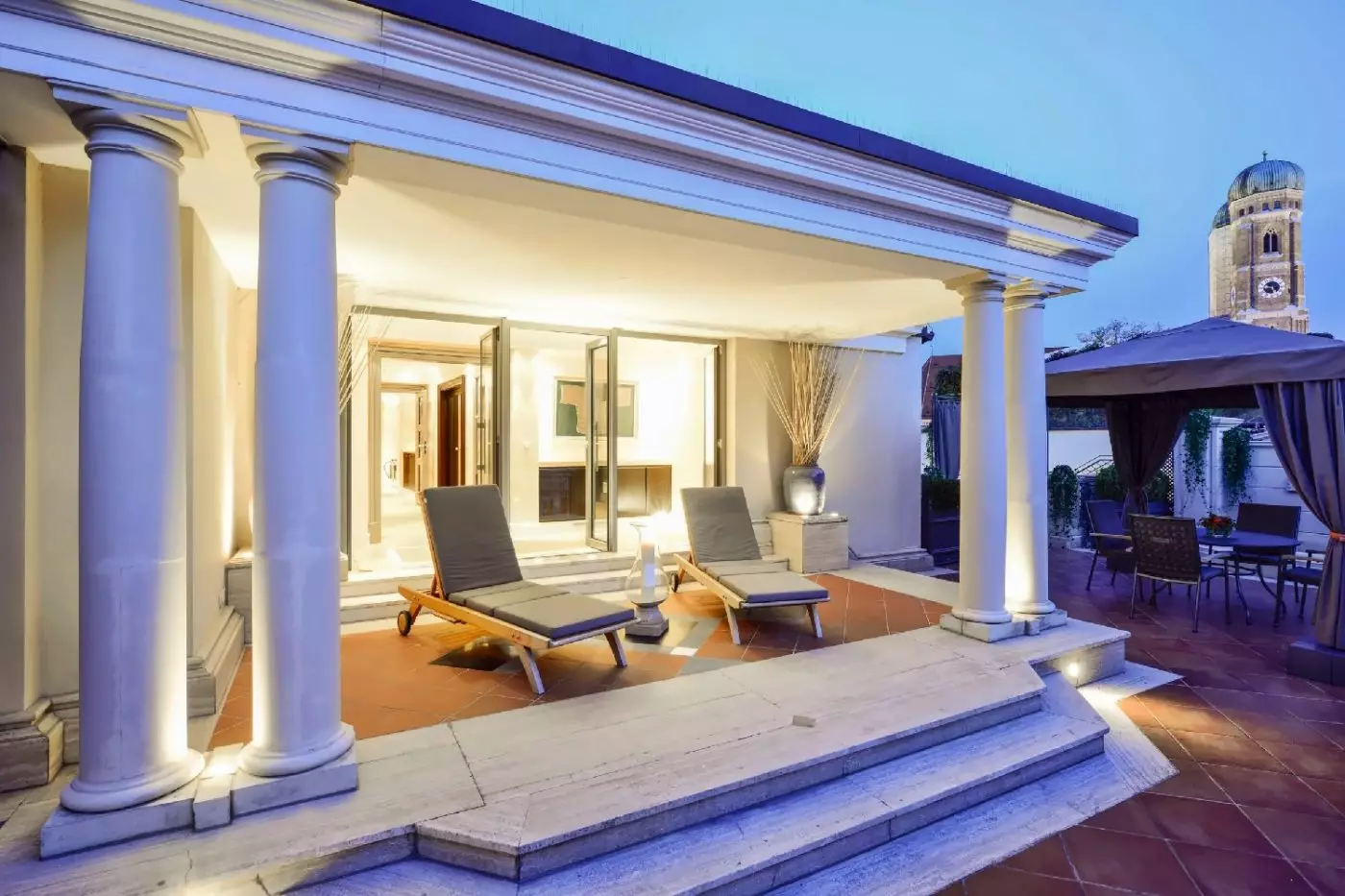
An open marble fireplace anchors the tall living room. The kitchenette has a hob, sink and refrigerator, with dining space nearby. Outside, the roof terrace has a fountain, loungers and a dining table. Glazed doors connect it to the indoor rooms, and a small loggia adjoins the upper bedroom.

In the Panorama Suite 705 duplex design, a spiral staircase rises from the living room to a gallery bedroom with a walk-in wardrobe. A second...
Living, dining and work areas sit high above the city. Each layout has its own room shapes and walk-in dressing space. One suite has a gallery bedroom reached by a spiral staircase. Another has a roof terrace with views of Munich and the Frauenkirche.
Graf Pilati interiors pair warm fabrics with polished stone. In the duplex, pale armchairs surround a low table below the sloping upper level. Another design has seats around an open fireplace, with plaid curtains at tall windows. Marble bathrooms have double washbasins, a bathtub and rain shower. Only selected layouts include a whirlpool, steam bath or outdoor space.

Living, dining and work areas sit high above the city. Each layout has its own room shapes and walk-in dressing space. One suite has a...
The suite can have two or three bedrooms. The extra bedrooms have their own entrances.
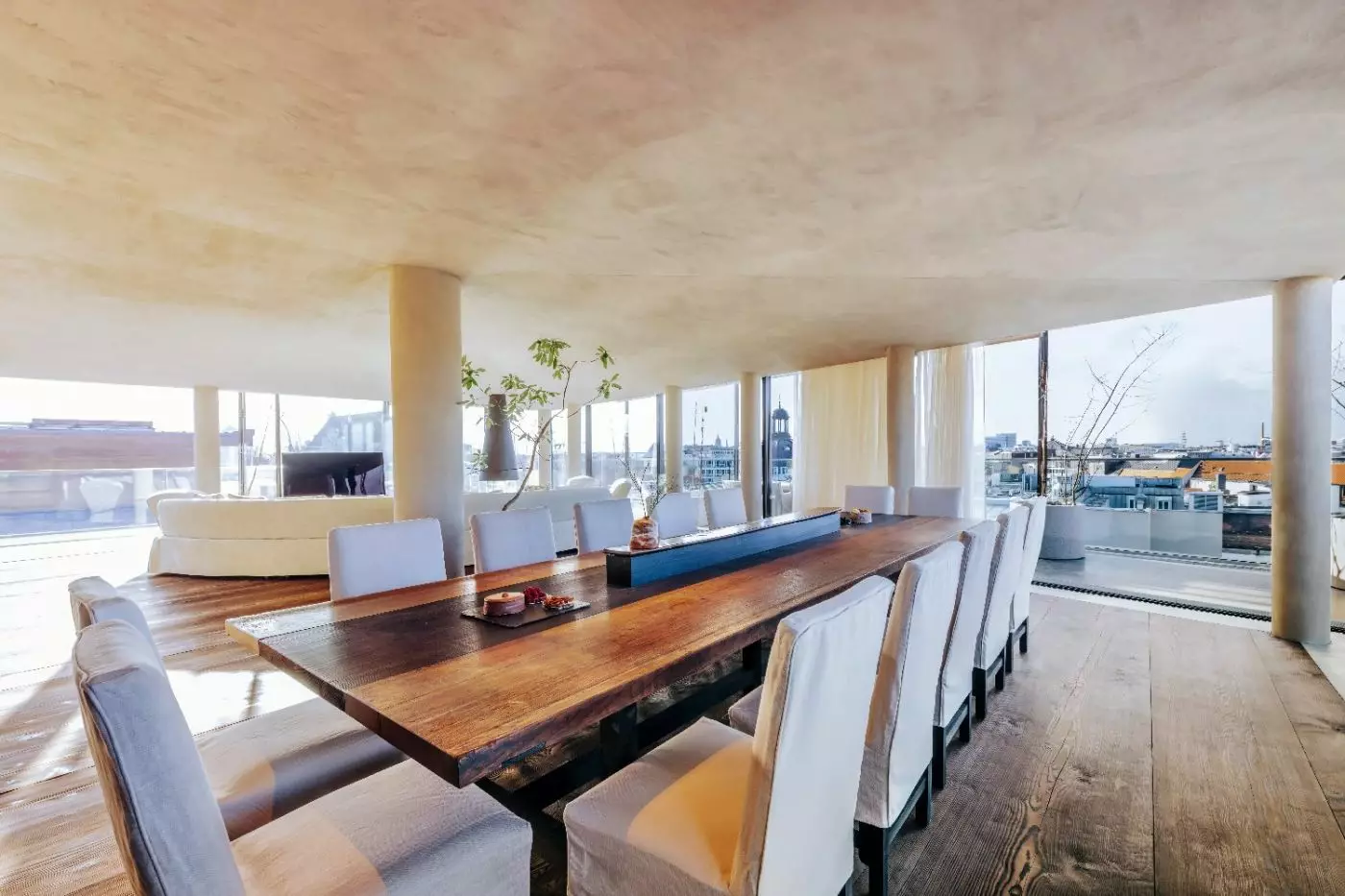
Axel Vervoordt's design combines a bar, an open kitchen and a dining table for eight. The lounge opens toward a loggia overlooking Munich. Pale upholstery, restored furniture and earthy tones give the shared rooms the feel of a private apartment.
In the sitting area, a sofa and armchair stand under the sloping roof. Broad windows frame the seating beside a low table. Timber framing surrounds the bedroom's headboard. A wooden cabinet and lamp stand alongside it. A separate cloakroom adds storage beyond the main rooms. The bathroom has a rain shower and a separate bathtub.

Axel Vervoordt's design combines a bar, an open kitchen and a dining table for eight. The lounge opens toward a loggia overlooking Munich. Pale upholstery,...
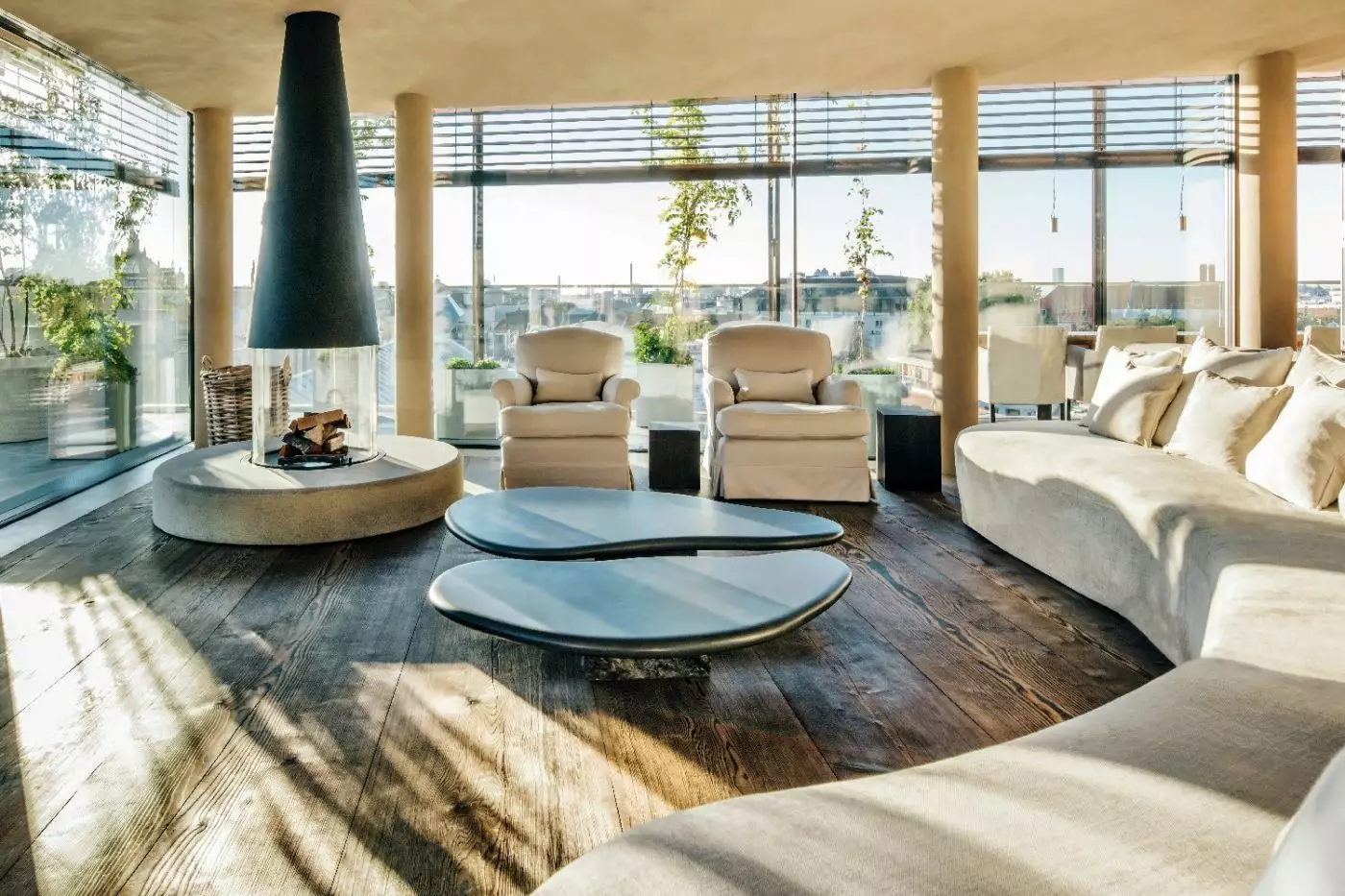
Full-height windows link the bedrooms, lounge and dining room to a planted roof terrace. It wraps around three sides, with views across Munich's rooftops. A long timber dining table stands beside the glass. Pale sofas and armchairs face a suspended fireplace in a separate seating group.
Axel Vervoordt's interiors combine linen, light natural tones and restored wood furniture. A broad counter and oven stand beside the bar, with dining and lounge space beyond. Each bedroom has an en-suite bathroom lined in Valverde stone. A massage and lounge area form part of the private wellness space, with direct access to outdoor seating. Full-length curtains frame the bedroom windows.

Full-height windows link the bedrooms, lounge and dining room to a planted roof terrace. It wraps around three sides, with views across Munich's rooftops. A...
Room choice here involves both layout and design. Standard Junior Suites measure 45 square meters, with a king or twin beds, an integrated sitting area, a writing desk, and a natural-stone bathroom. Axel Vervoordt's seventh-floor Deluxe Junior Suites range from 45 to 55 square meters. Linen upholstery, reclaimed wood, and earthy colors define these rooms; their Valverde-stone bathrooms have a bathtub and separate rain shower.
The 85-square-meter Bavarian Suite takes a different direction. A wood-paneled salon overlooks Promenadeplatz, and the separate bedroom has a canopy bed. Its marble bathroom includes a Philippe Starck bathtub. On request, adjoining rooms can extend the arrangement to two or three bedrooms, making this a concrete option for a larger family. The broader collection includes Panorama suites and suite ensembles in the historic Palais Montgelas. Babysitting and laundry services can also be arranged.
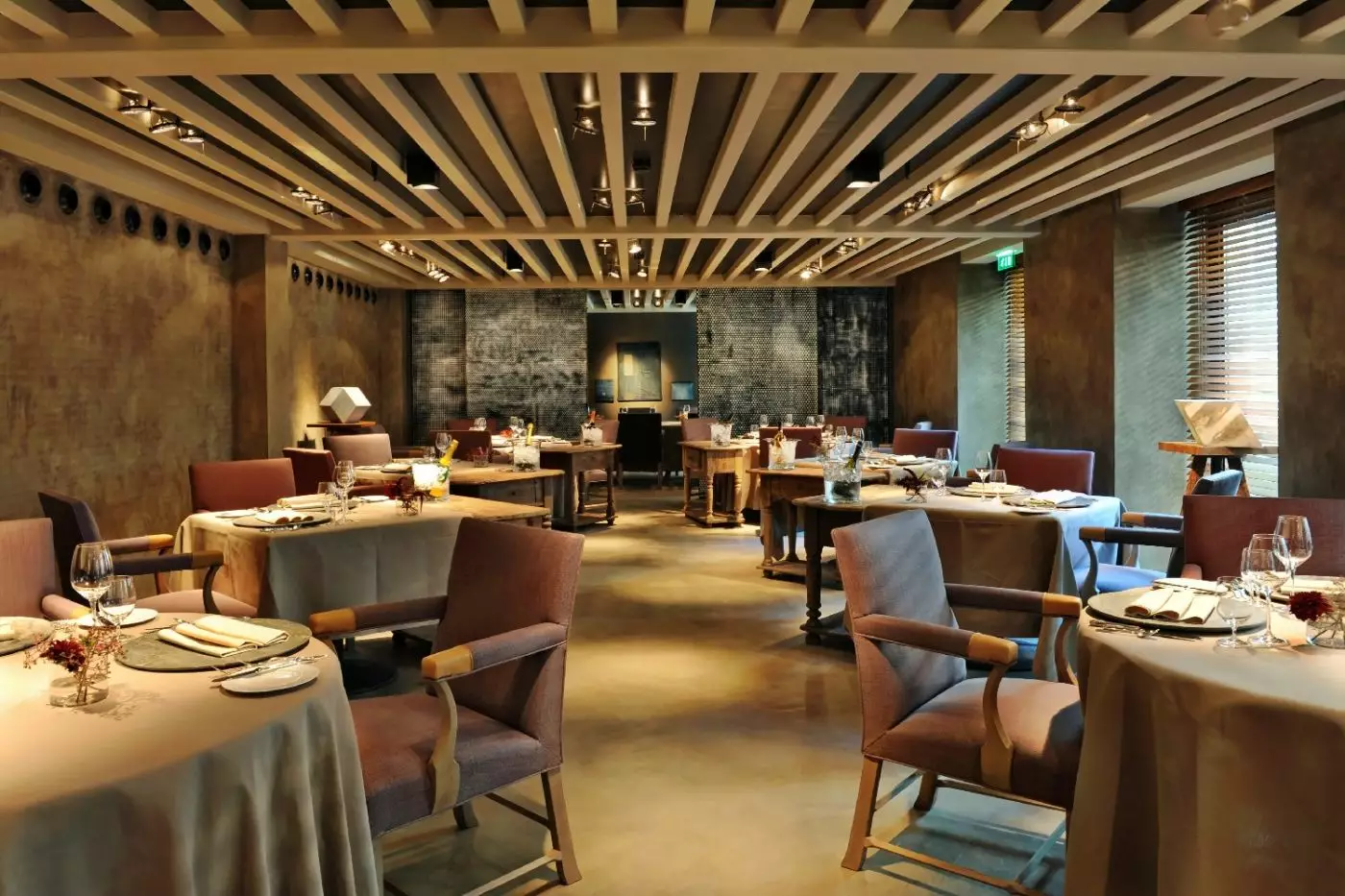
Atelier holds two Michelin stars and is led by chef Kevin Romes. Its cooking follows seasonal ingredients, with carefully composed menus and a restrained presentation. The dining room, designed by Axel Vervoordt, has the intimate scale and spare furnishings of an artist's studio. A movable wall by artist Dirk Vander Eecken conceals a private dining area, and the small Silent Garden terrace sits among maple trees.
Dinner follows a set-menu format rather than an à la carte selection. A vegetarian menu can be prepared by prior request. The combination of a compact dining room and a menu-led meal gives Atelier a particular place within the hotel's much wider restaurant collection.
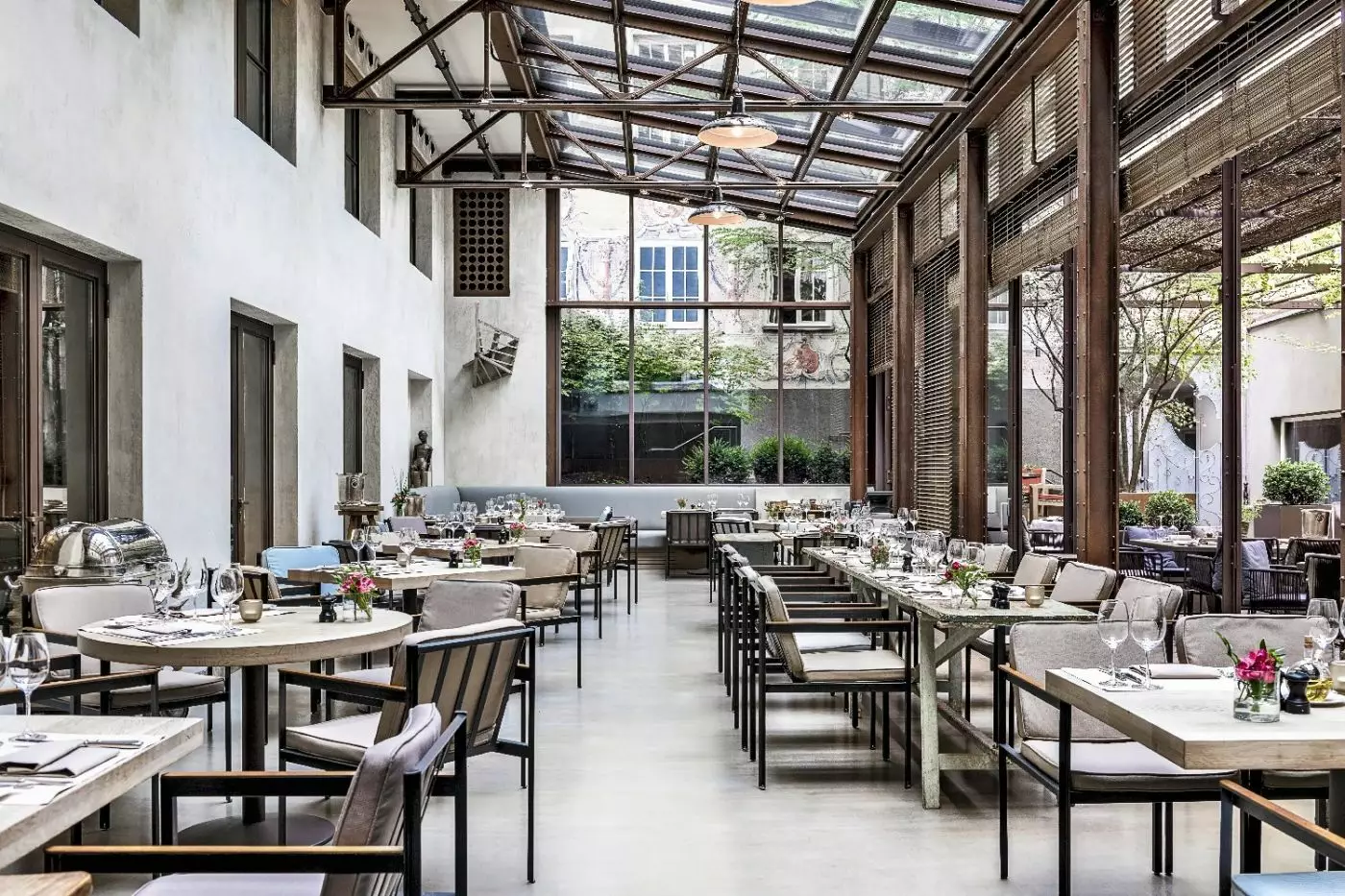
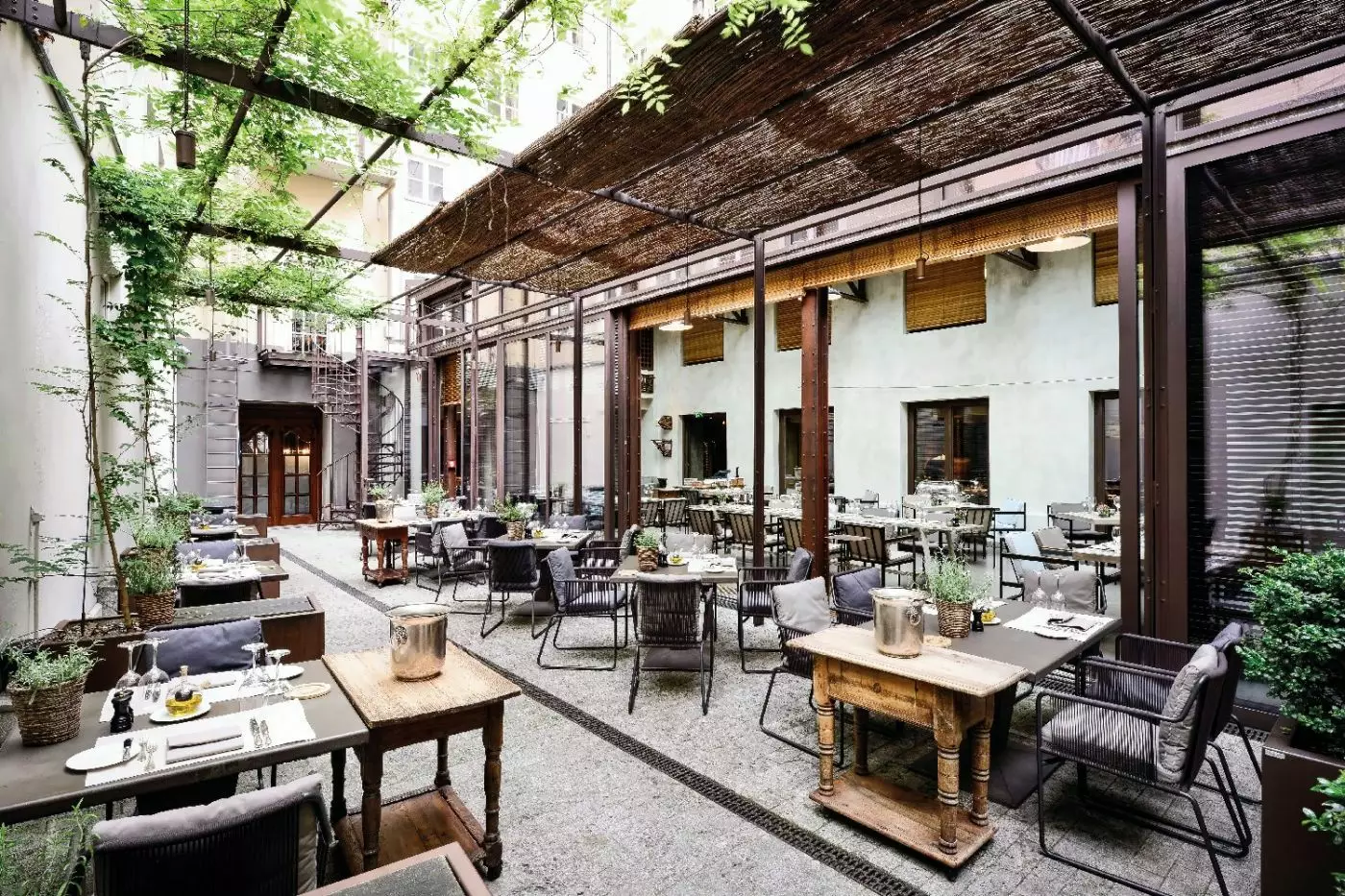
Garden centers on brasserie classics and contemporary dishes, with seasonal vegetables and fresh herbs. Its winter garden is another Vervoordt interior, with industrial accents, an adjoining terrace, and a fireplace separating the restaurant from the Garden Salon. Lunch and dinner are served here. The conservatory brings daylight into the meal, while the summer terrace takes tables outdoors. This is also a setting for business lunches, with the same menu identity carrying through the day.
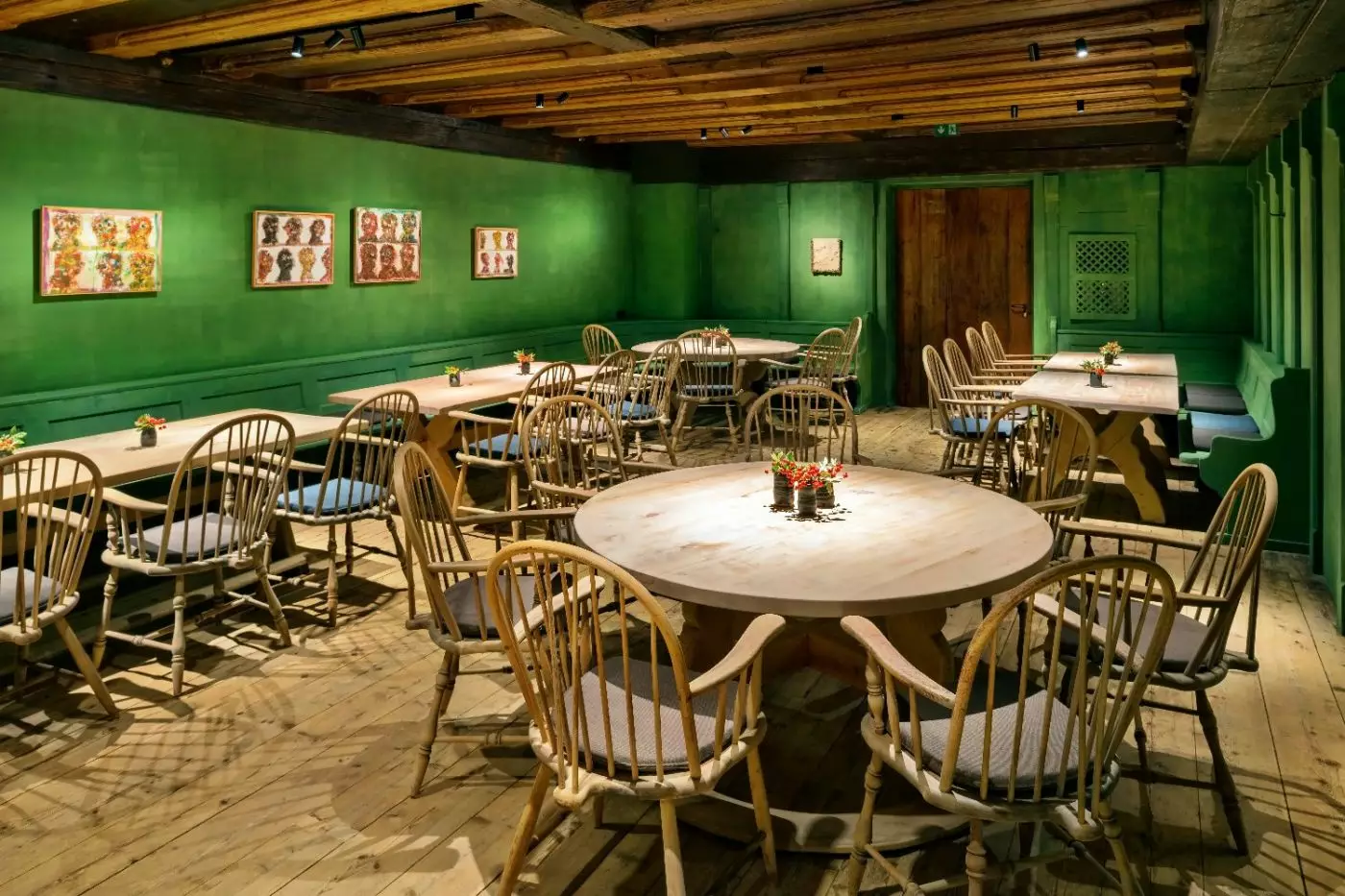
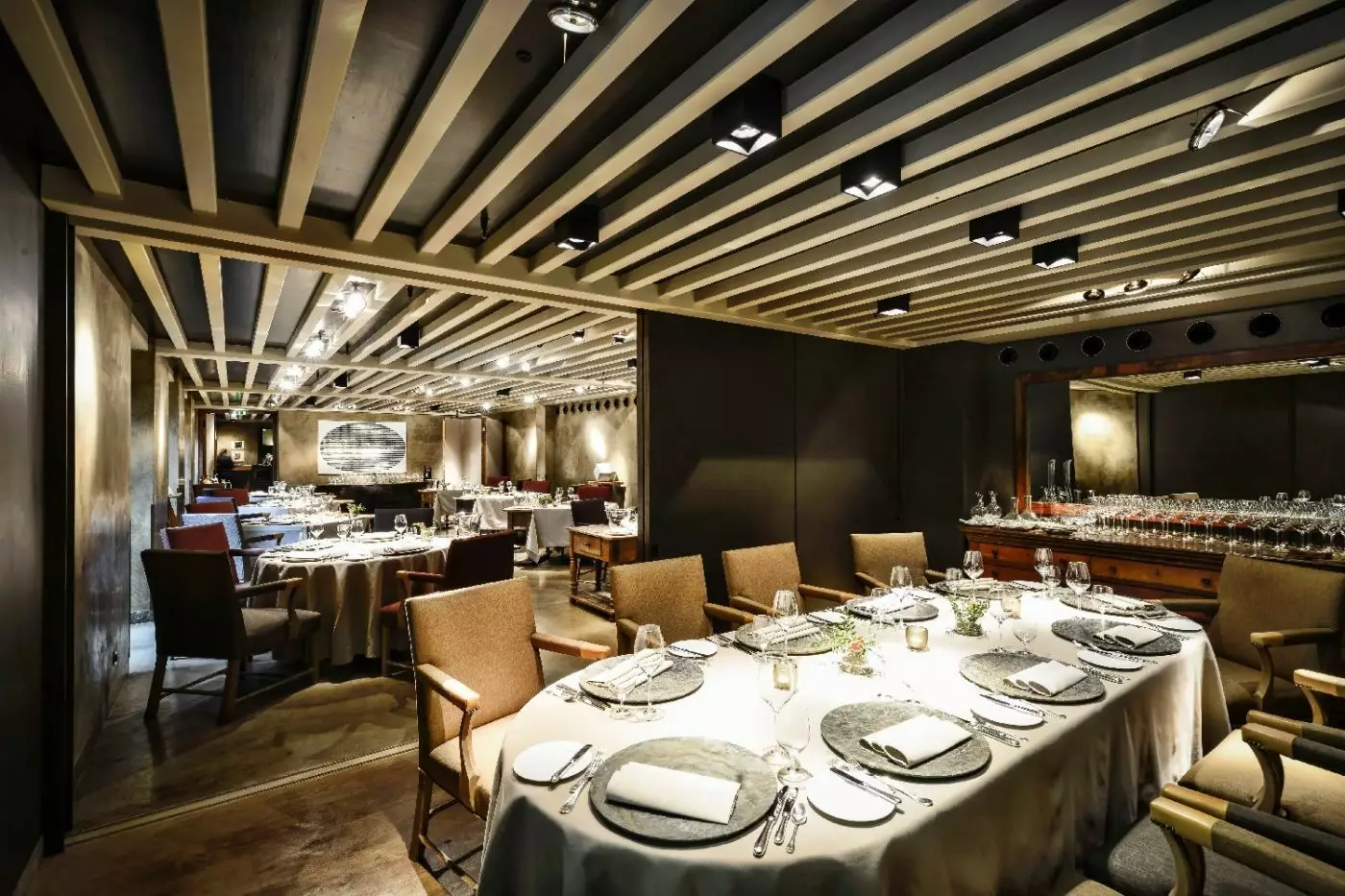
Palais Keller brings Bavarian character beneath a historic vaulted ceiling. The stone chamber dates to 1443 and was once a salt storehouse. Regional produce shapes its contemporary Bavarian cooking, and the open kitchen lets diners see dishes being prepared. The vault remains the defining feature of the room, with Vervoordt's interiors working around the old masonry. Its substantial walls and low arches make the restaurant feel closely connected to the building's earlier life.
Trader Vic's follows its own long-established Polynesian theme. A beech-wood oven is central to the cooking, while the winding dining rooms contain carvings from Tahiti and Hawaii, shells, and handmade Fijian tikis. The adjoining Menehune and Trader Vic's bars serve South Pacific-style cocktails. The bar setting continues the dining rooms' carved-wood details and South Seas decor.
The Roof Garden is the hotel's breakfast setting, with a buffet and freshly prepared dishes. Jouin Manku's design opens the room toward Munich's skyline, and the lounge has a fireplace and terrace. Breakfast is served to hotel residents as well as outside visitors, so the room forms part of the hotel's connection to the city beyond overnight stays.
The Blue Spa Lounge and Winter Garden has a separate role, serving lighter meals and drinks. Andrée Putman's glass-enclosed room frames views over the rooftops around an open fireplace. In summer, drinks extend onto the Blue Spa terrace. The enclosed winter garden preserves the elevated setting when an outdoor table is less appealing.
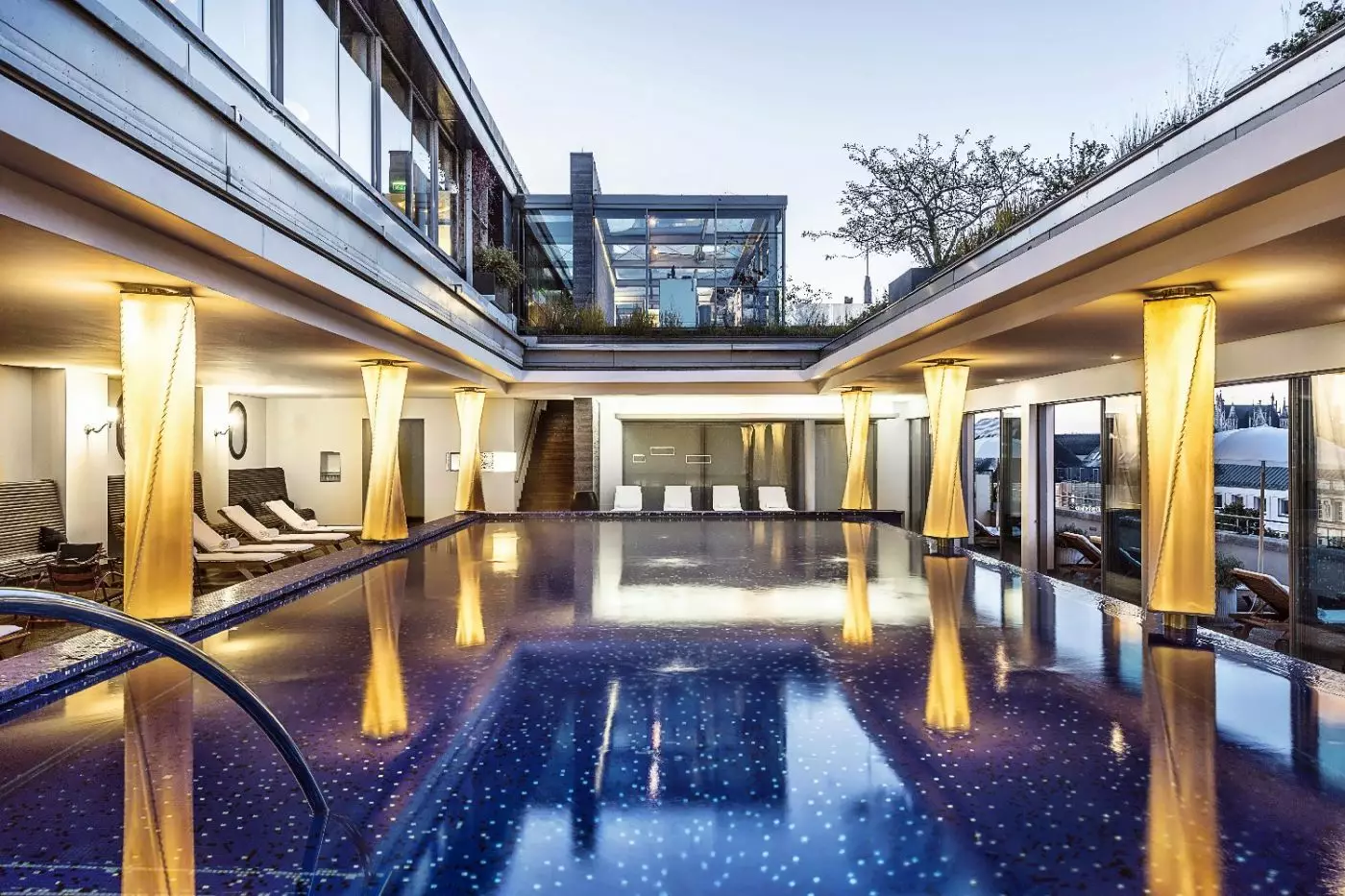
Designed by Andrée Putman, the Blue Spa covers 1,300 square meters across four levels. Its pool measures 6.5 by 14.5 meters and has a sliding glass roof, which opens in suitable weather. A fireplace beside the pool and a sun terrace give this rooftop space a character that changes with Munich's weather. The spa welcomes hotel guests and day visitors, with reception on the seventh floor.
Facilities include a mixed Finnish sauna, a bio-sauna in the women's area, an aroma steam bath, a plunge pool, and a separate relaxation room. Massages are available by appointment, and there is a fitness studio. A beauty center and hairdresser operate within the hotel as well.
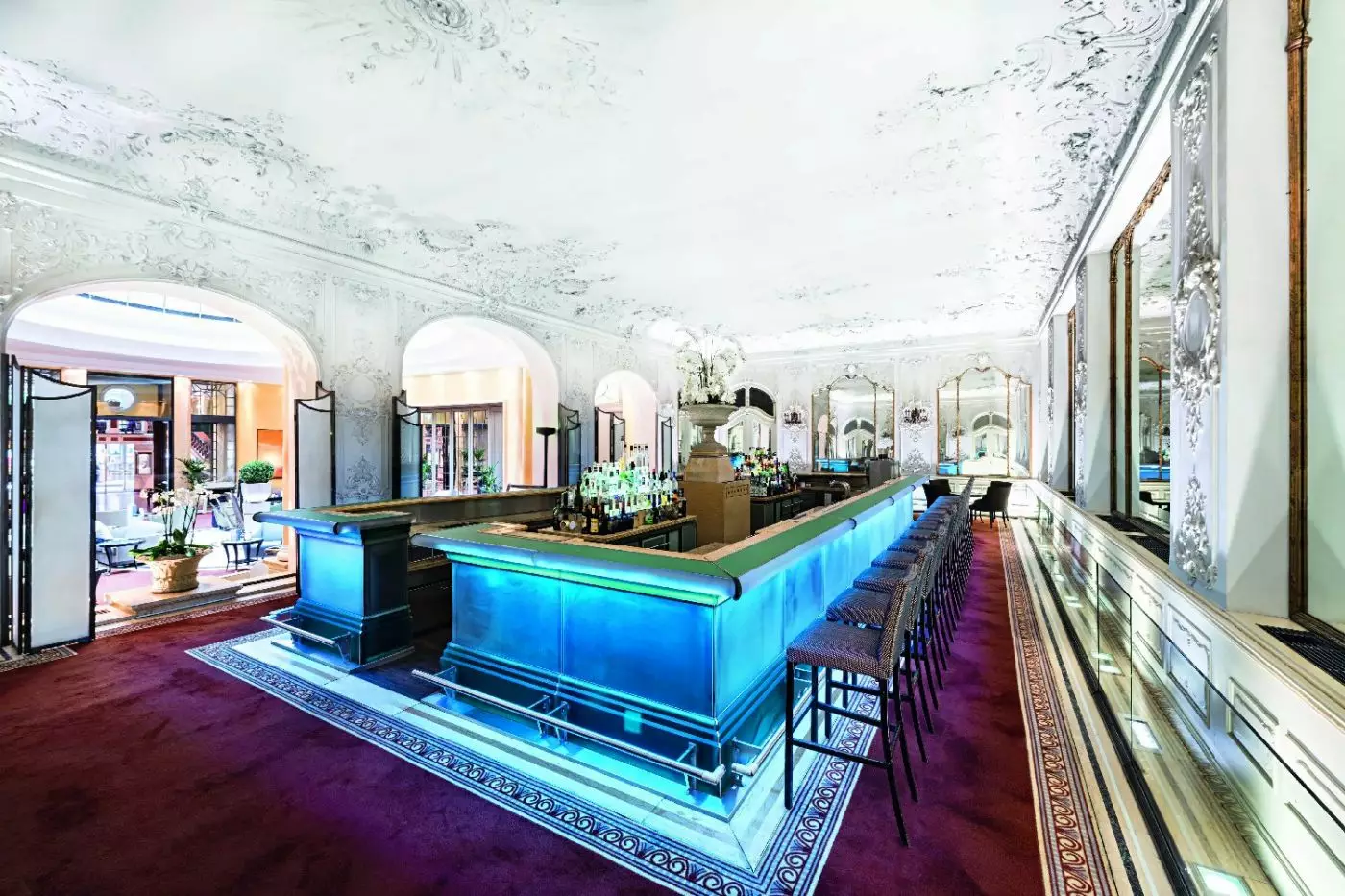
Falk's Bar occupies the hall of mirrors, a room dating to 1839 that survived the Second World War intact. Ornate stucco overhead contrasts with colored lighting at the bar. Cocktails include familiar classics and the bar team's own recipes, with small dishes from Garden. The cinema is adjacent, making the bar a natural meeting point before a screening without leaving the building.
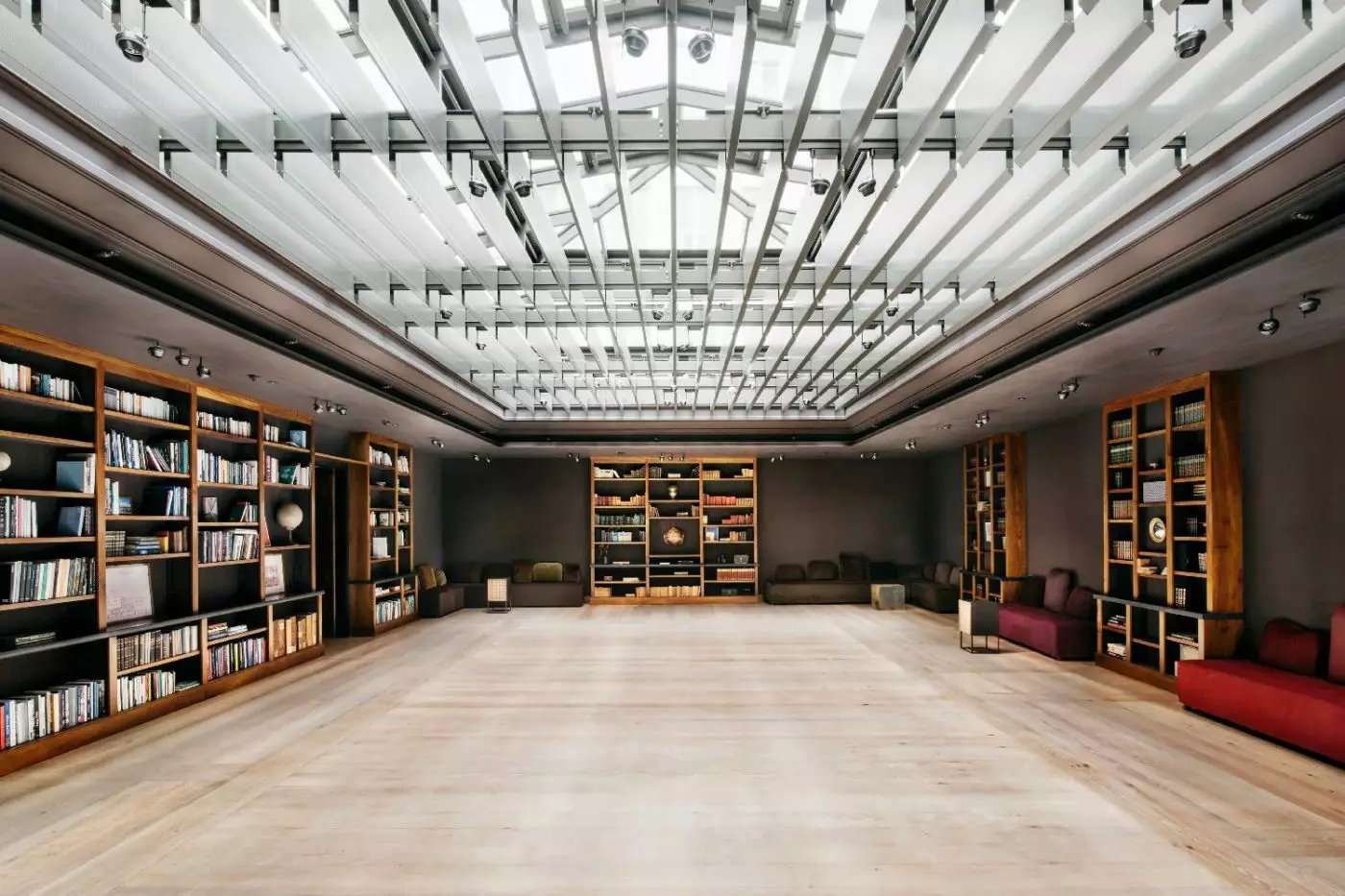
The astor@Cinema Lounge has 38 seats arranged on lounge sofas. It screens films using digital picture and sound equipment, including support for 3D presentations. Tickets are available through the hotel shop or online, and the room can also be booked for private screenings. The sofa layout keeps the screening intimate, whether attending the public program or arranging a private event.
The Komödie im Bayerischen Hof is a 560-seat theater with a program of comedy and drama. The Night Club adds jazz and blues concerts, with party bands on selected evenings, while the associated Piano Bar provides another setting for live music. These venues run their own programs. Alongside the hotel's screening room, they make performance an established part of the address, with audiences arriving specifically for the evening's entertainment.
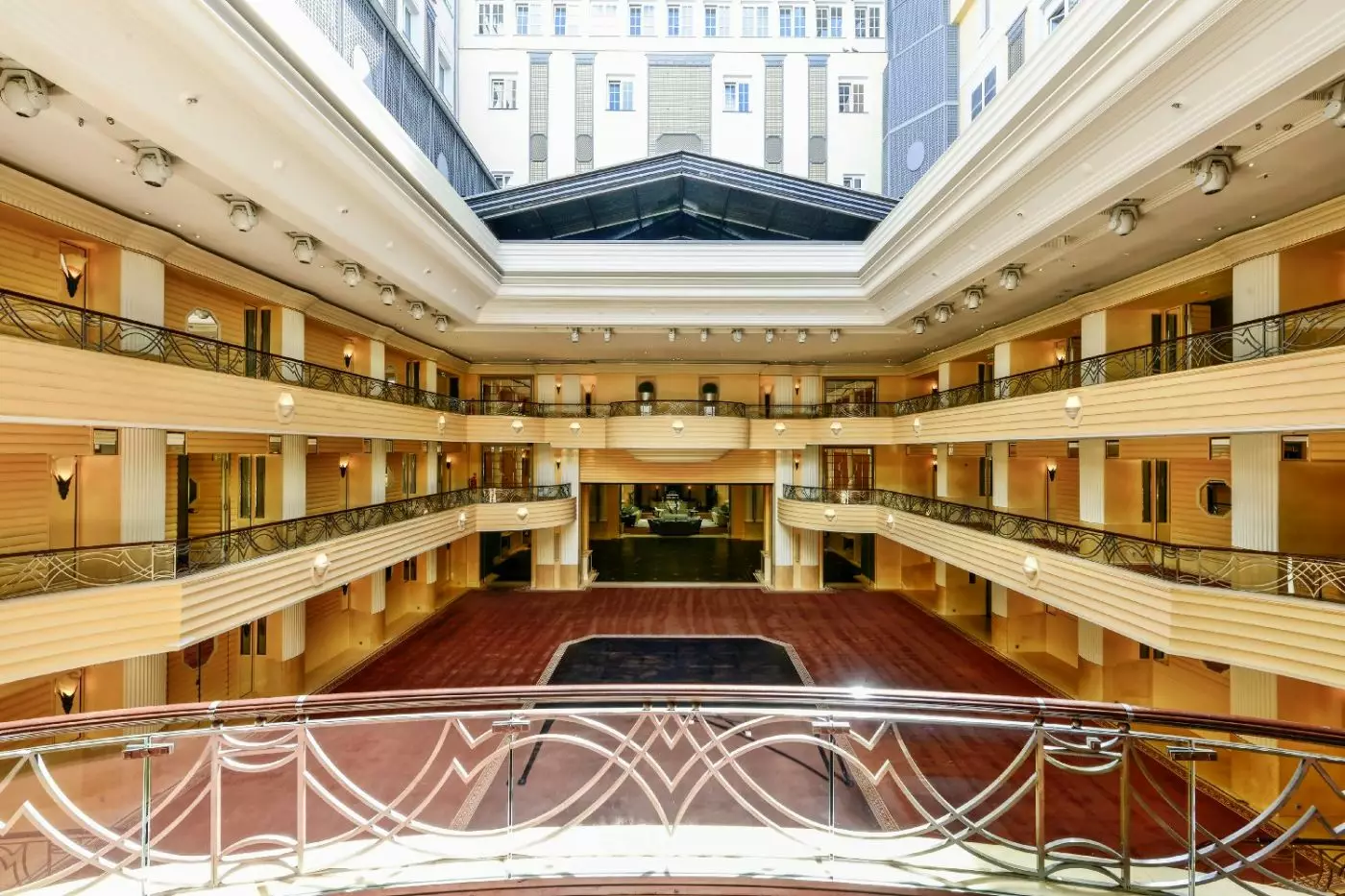
For meetings and celebrations, the hotel has 40 function rooms. The Art Deco ballroom ensemble includes a sliding glass roof, while Palais Montgelas contains classical salons such as the Königssaal. A shopping and art passage runs through the property, and practical services include a business center and 24-hour room service. The range of spaces allows public entertainment, private gatherings, and everyday hotel life to coexist under one roof.
The Frauenkirche and Bavarian State Opera are a short walk from the hotel, with the Residenz and Hofgarten also within the old-town area. For public transport, Marienplatz serves the S-Bahn, while Marienplatz and Odeonsplatz are nearby U-Bahn options. The nearest tram stop is Theatinerstraße. Munich's main railway station is about one kilometer away; the hotel lists Munich Airport at approximately 35 kilometers. Road travel depends on traffic. Underground parking and limousine services are available, and the hotel entrance is at Promenadeplatz 2–6.
We value the hotel's layered history: Palais Montgelas brings classical architecture into a city-center stay, giving the property character beyond its scale.
The Blue Spa gives a central Munich stay an unusual rooftop pause, with a pool beneath a glass roof that opens in good weather.
falk's Bar occupies the hotel's historic hall of mirrors; its surviving stucco setting makes an evening drink feel rooted in the building's past.
Promenadepl. 2-6, 80333 München, Germany
Playing this video may share data with YouTube. Please see our Privacy Policy.
Yes. Hotel Bayerischer Hof Munich is one of the city's classic luxury hotels and a strong base for first-time visitors. It works well for travelers who want old-town access, serious dining, rooftop wellness, nightlife, and full-service comfort.
Hotel Bayerischer Hof Munich is at Promenadeplatz 2-6 in Munich's historic center. The location places guests near shopping streets, Marienplatz, the opera, museums, restaurants, and many central sights.
The hotel has been part of Munich hospitality since 1841 and remains a grand city landmark. It combines historic character, individually designed rooms, major event spaces, restaurants, bars, entertainment, and a rooftop spa.
Hotel Bayerischer Hof Munich has 337 rooms and 74 suites, according to the hotel's official information. This large collection gives guests many style choices, from classic Munich elegance to more contemporary design.
Rooms and suites vary by style, layout, and decor, which is part of the hotel's character. Guests can choose a more traditional grand-hotel mood or a quieter modern look, depending on category and availability.
More amenities
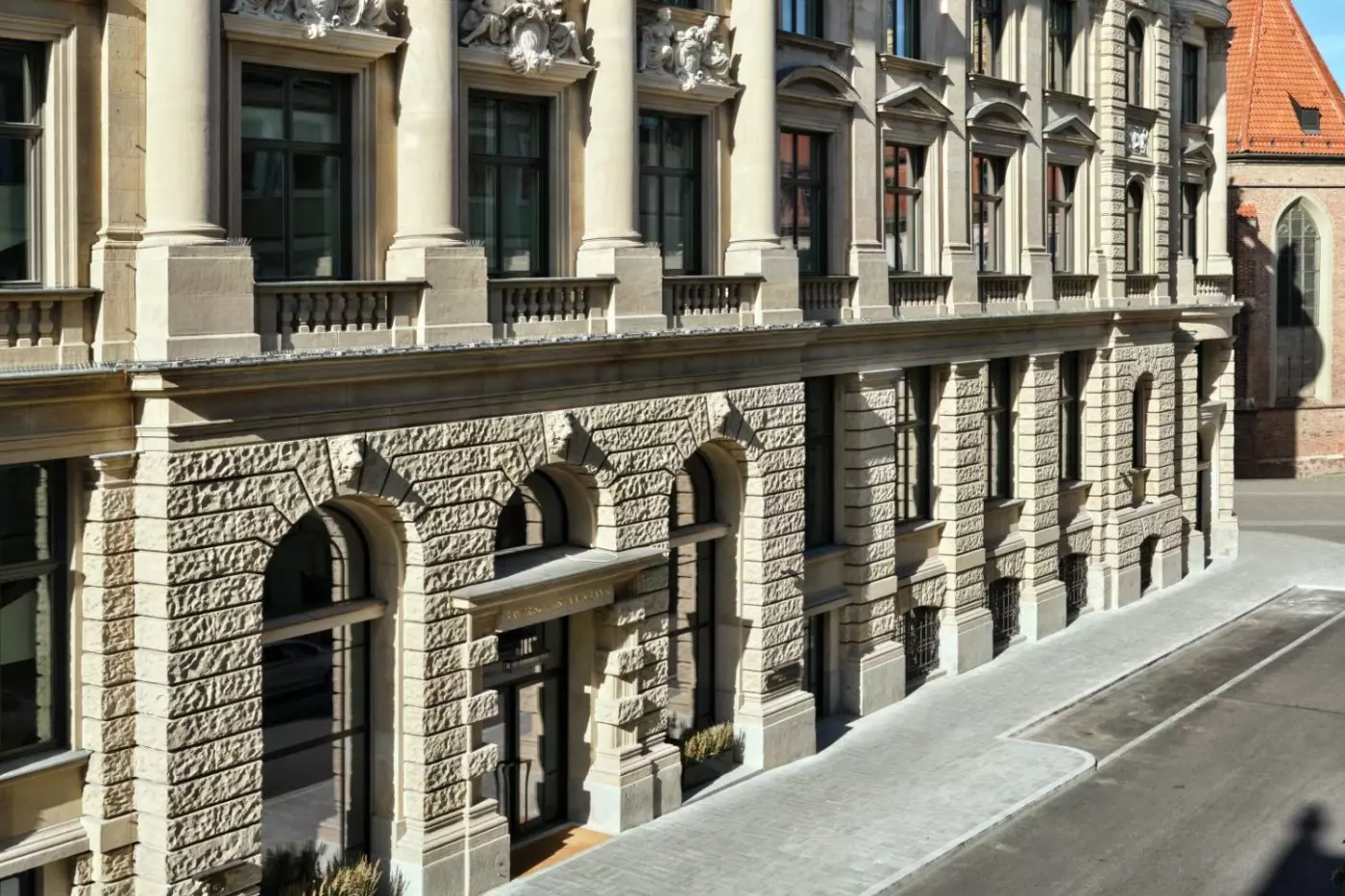
Rosewood Munich brings a calm, residential style to one of the most historic corners of the city. The hotel sits on Kardinal-...
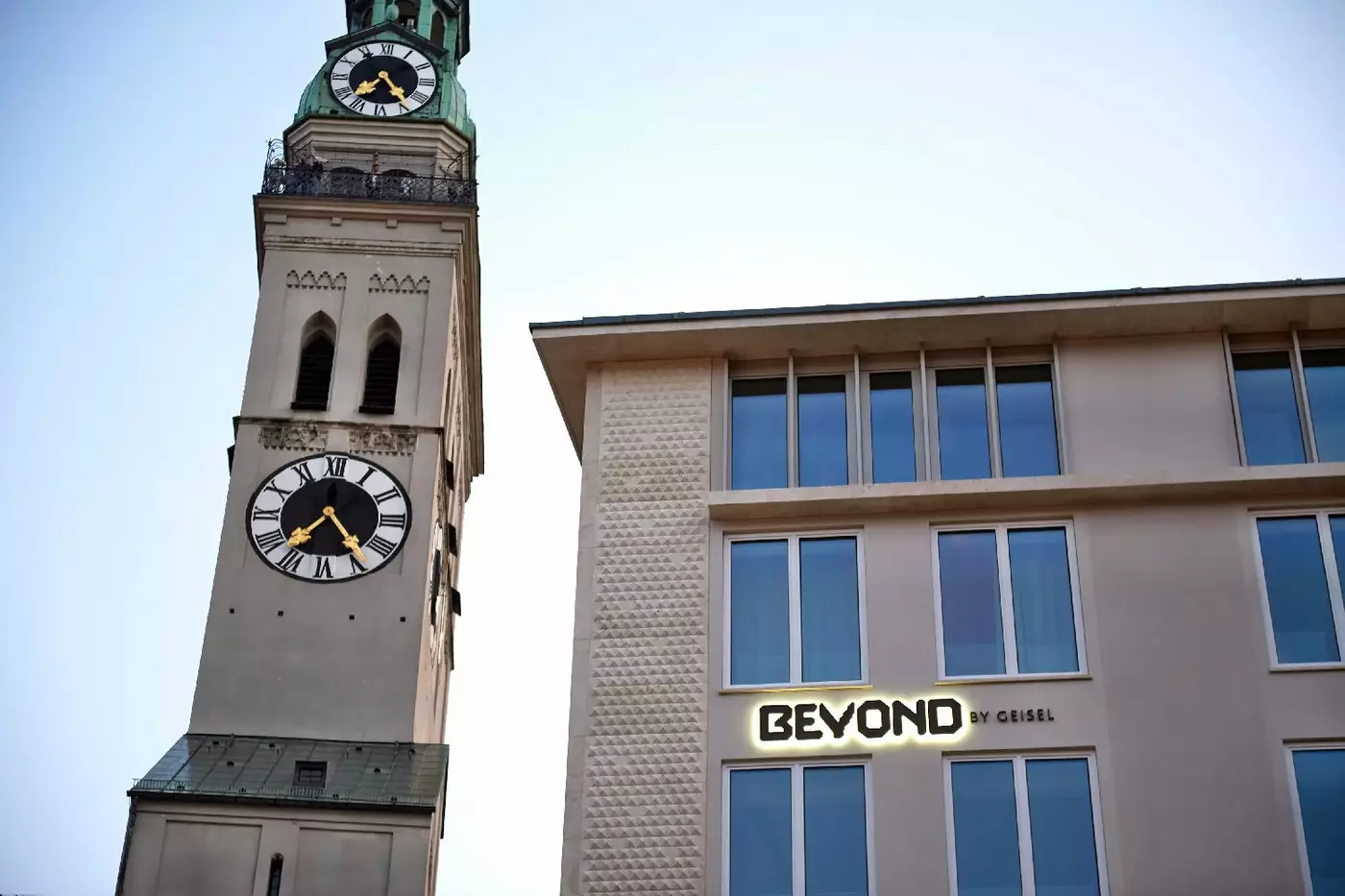
BEYOND by Geisel is a small luxury boutique hotel directly on Munich's Marienplatz, designed for travelers who want the Old T...
More amenities
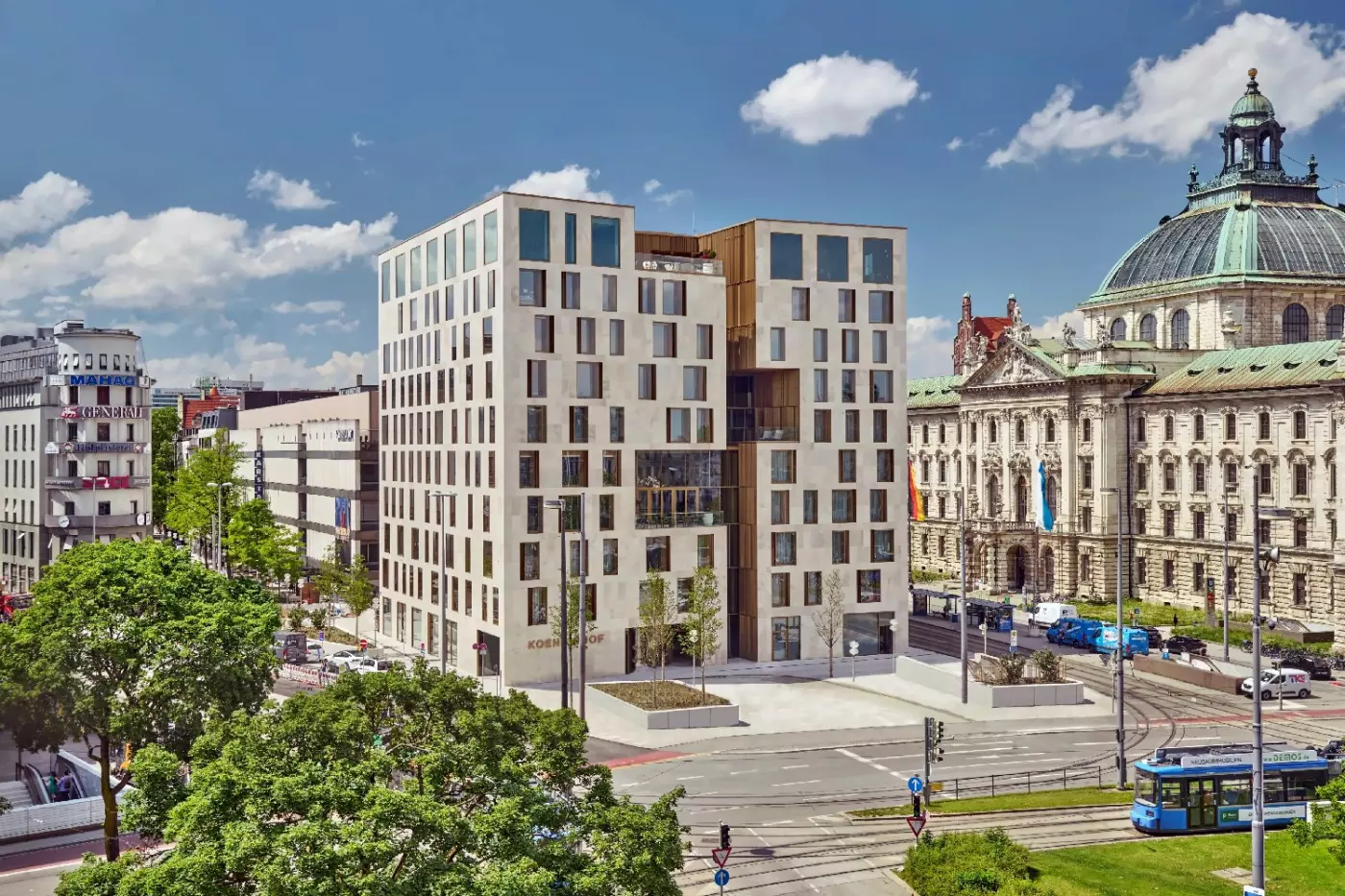
Hotel Koenigshof Munich gives a historic hotel name a distinctly contemporary address at Karlsplatz, also known as Stachus. T...