



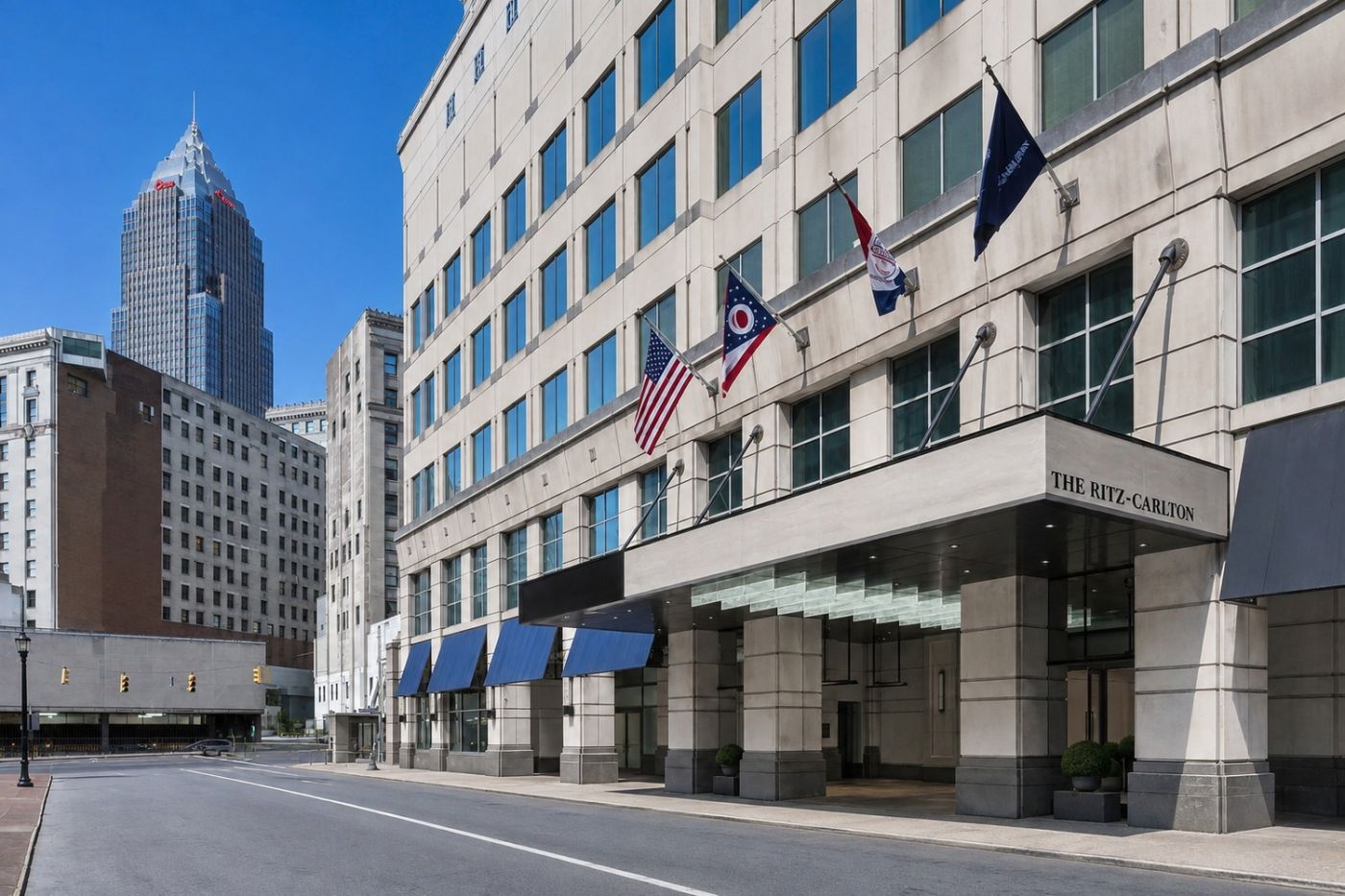
The Ritz-Carlton, Cleveland
Prices From 598 USD
The Ritz-Carlton, Cleveland is a polished downtown hotel connected to Tower City Center. It is close to Public Square, Rocket...
Please choose a hotel or destination from the list.
We couldn’t open your search results. Please try again.
Your private search
Finding exceptional stays
Cleveland brings music history, cultural collections and the life of a historic public market into a city stay. Downtown provides one hotel setting for exploring those subjects, with the particular institutions helping to define the visit.
Prices From 598 USD
The Ritz-Carlton, Cleveland is a polished downtown hotel connected to Tower City Center. It is close to Public Square, Rocket...
The Ritz-Carlton, Cleveland is part of the city's central accommodation landscape. Choose the actual base around the daily journeys you expect to make, rather than assuming every attraction belongs to one compact walking circuit.
The Rock & Roll Hall of Fame gives music history a clear Cleveland focus. Its original building, completed in 1995, also introduces a distinctive architectural subject on the downtown lakefront: I.M. Pei's glass pyramid. Consider the relationship between that geometric building and the waterfront when architecture is part of your interest. The building's form gives the cultural visit another scale beyond the stories within it.
University Circle includes the Cleveland Museum of Art. Keep the particular institution in the plan when arranging the cultural part of the stay.
West Side Market anchors a food and neighborhood interest in Ohio City. Its 1912 building was designed by W. Dominick Benes and Benjamin Hubbell, with a Guastavino tile-vaulted ceiling and a clock tower. Those features give the market an architectural identity as well as a trading purpose.
The market's early history is connected with Cleveland's growing immigrant population. Looking at the building and that role together offers a way to consider how ordinary commerce helped shape the city. Choose this subject when the history of a working neighborhood interests you, alongside the food businesses that first draw attention to the market.
Explore our Ohio hotel guide for wider regional planning. The questions below retain specific cultural, geographical and visit-format distinctions for Cleveland.
No. They provide different geographical reference points within Cleveland. Choose a base around the cultural interests and daily journeys you actually want, rather than assuming one central address puts every museum nearby.
Its main visitor role is a museum focused on music and its cultural stories. Choose the outing for that subject rather than assuming it is simply another evening performance on the itinerary.
It is a public market in Ohio City, bringing food businesses and neighborhood life into the experience. Browsing there serves a different interest from sitting down for a formal hotel meal.
Yes. The Cleveland Museum of Art and the wider University Circle setting provide a substantial cultural thread. Give that interest its own time rather than treating it only as an alternative to the city's music identity.
Choose one cultural or neighborhood interest that fits the hours available, then leave a comfortable return. A focused visit can be more rewarding than compressing a complete leisure itinerary around professional commitments.