
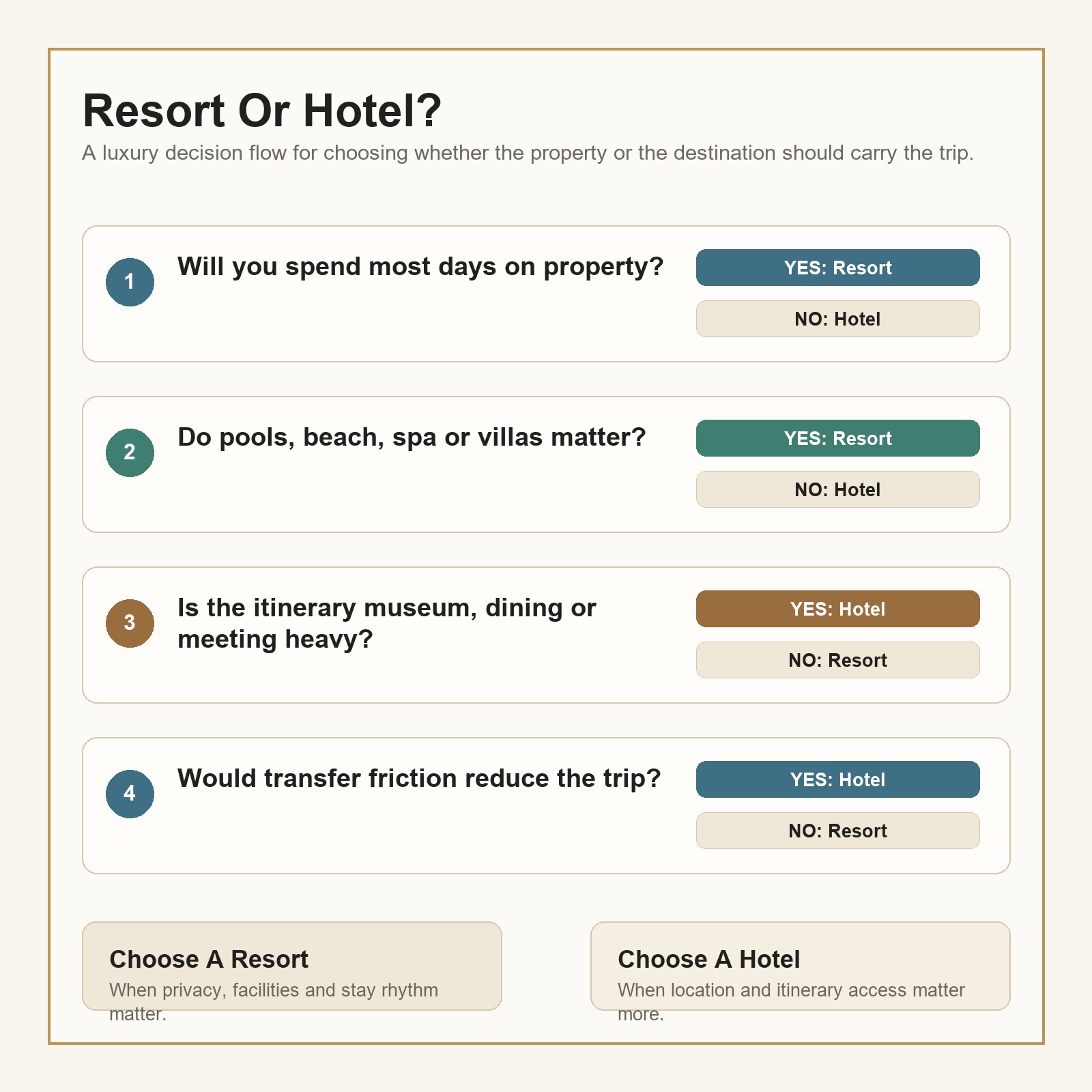
A resort is not automatically better than a hotel. For luxury travelers, the real question is whether the stay needs a self-contained world: space, privacy, dining, wellness, pools, beach access, gardens, kids facilities, or a reason to slow down.
A city hotel can be perfect when the destination is the main event. A resort becomes the stronger choice when the property itself shapes the trip. That distinction matters for luxury honeymoons, family vacations, winter sun escapes and longer stays where room category, service flow and benefit value can change the experience.
Table of Contents
Key Takeaways
The choice between a luxury hotel vs luxury resort comes down to whether the destination or the property itself will carry the trip.
Resorts provide a self-contained rhythm ideal for honeymoons and family vacations, offering expansive outdoor spaces, spas, and slower mornings.
City hotels excel when location, walkability, and access to museums, dining, and nightlife are the primary focus of the itinerary.
Booking with VIP benefits like early check-in, late check-out, and hotel credits actively protects your time and improves the daily rhythm of both resorts vs hotels.
Planning A Luxury Stay?
PrivateUpgrades can help you compare the right hotel style, confirm current benefits and book eligible stays with breakfast, hotel credit, upgrade priority, early check-in, late check-out and VIP recognition where available.
Fast Answer
| Trip Type | Better Choice | Why |
|---|---|---|
| Honeymoon or anniversary | Resort | Privacy, outdoor space, spa time and slower mornings matter. |
| Museum-heavy city break | Hotel | Location and walkability beat resort-style facilities. |
| Family beach vacation | Resort | Pools, kids clubs, connecting rooms and dining ease reduce friction. |
| Business trip | Hotel | Access, transfers and meeting logistics usually come first. |
| Winter sun escape | Resort | Weather, beach access and on-property rhythm drive the trip. |
Related PrivateUpgrades Planning Guides

PrivateUpgrades Hotels To Compare
| Hotel | Why It Fits This Guide |
|---|---|
| Viceroy Riviera Maya | Adults-only Riviera Maya resort logic: private pool villas, beach access, spa rituals and a calm boutique mood. |
| La Mamounia Marrakech | Palace-resort logic: gardens, restaurants, spa and a hotel that becomes part of the destination. |
| Park Hyatt Maldives Hadahaa | Private-island resort logic: reef, villa privacy, transfer planning and a stay where the resort carries the trip. |
What Are The Main Differences Between Luxury Hotel Vs Luxury Resort
To choose between a luxury hotel vs luxury resort, decide if the property or the city is the main event. A strong resort creates a self-contained travel rhythm with comprehensive space, dining, and wellness facilities. You can move between room, restaurant, and water without constantly planning transportation. For luxury travelers, this is not laziness; it is control.

When Are Hotels A Smarter Choice Than Resorts
A hotel wins when the destination needs to be outside the door. In New York, Paris, Florence, Vienna or London, the best stay is often about being close to galleries, shopping streets, dining and theaters. A resort outside the center can make every day heavier. The most luxurious choice is not always the biggest property; it is the address that removes friction.
The Booking Details That Matter Most
For resorts, the room category deserves more attention than the base rate. A garden villa, beachfront suite or private-pool room can change the entire stay. Transfer time also matters. A beautiful resort that requires a difficult late-night arrival may be better for a longer trip than a three-night escape. Luxury travelers should also check dining variety, family policy, spa depth, seasonal weather and whether the property has enough space during peak weeks.
How PrivateUpgrades Changes The Resort Equation
At a resort, benefits are not decorative. Daily breakfast can be meaningful on a five-night stay. A hotel credit can support spa time, dining or resort experiences. Upgrade priority can shift a standard room into a better view or more comfortable layout when available. Early check-in and late check-out are also valuable because resort arrivals and departures often connect to long-haul flights.
How To Choose
Book A Resort If
You want the hotel to carry the trip: beach, wellness, villas, privacy, family ease or a slower daily rhythm.
Book A Hotel If
You want the destination to carry the trip: museums, restaurants, shopping, nightlife, meetings or short transfers.
Book Early If
You need festive dates, villas, connecting rooms, private pools or a specific resort view.
Stay Flexible If
You are traveling off-season, can accept several room types and care more about value than exact placement.
PrivateUpgrades Booking Lens
The most useful luxury hotel decision is not only where to stay. It is when to book, which room category to protect, and which benefits will actually improve the trip. PrivateUpgrades helps travelers compare eligible hotels, identify where VIP benefits matter, and avoid booking a beautiful property that does not fit the journey.
When To Book
For resort vs hotel, timing should follow the constraint of the trip. If the stay involves festive dates, school holidays, major events, a small resort, a top suite, connecting rooms, private pools or a specific view, early booking protects choice. If dates are flexible and the hotel category is not critical, travelers can compare closer to arrival without losing the structure of the trip.
The luxury mistake is waiting only because a rate might drop. Price matters, but so do room quality, arrival time, benefit availability and the emotional value of the trip. A cheaper room that misses the right view, layout or location can make a high-end stay feel compromised.
What To Ask Before You Confirm
Before confirming, ask five practical questions. Is the hotel in the right location for the actual itinerary? Is the selected room category the one that delivers the experience shown in the photos? Are breakfast, credit and upgrade benefits meaningful for the length of stay? Does arrival timing work with transfers and check-in? And would another hotel style make the trip easier, calmer or more memorable?
This is where a refreshed editorial guide should help. It should not only describe beautiful hotels. It should help travelers avoid the common mismatch between a famous property and the trip they are actually planning.
Sample Itinerary Logic
A short trip built around resort vs hotel should stay simple. Two or three nights rarely leave room for complicated transfers, experimental locations or a hotel that requires effort to enjoy. For a short stay, choose the base that gives the clearest access to the trip’s main purpose and spend more attention on room comfort, breakfast quality and arrival timing.
For a longer trip, the strategy changes. You can pair two moods, such as city and resort, beach and culture, jungle and coastline, or heritage and contemporary design. The luxury is not only in adding more hotels. It is in giving each stay enough nights to feel intentional. A split stay only works when the second hotel adds a new chapter rather than repeating the same experience with another logo.
Who Should Avoid This Choice
Not every traveler should choose the most obvious version of resort vs hotel. If the trip is short, if arrival is late, if children need predictable routines, or if the itinerary is built around fixed reservations, the more glamorous hotel can be the less practical choice. The better luxury decision is often the one that protects energy.
This is especially true when a hotel looks spectacular in photos but creates daily friction. Long transfers, small rooms, limited dining, weak sound insulation, difficult beach access or a location far from the real itinerary can turn a beautiful stay into work. A polished luxury trip should feel edited, not overloaded.
Benefit Value Checklist
| Benefit | When It Matters Most | Luxury Impact |
|---|---|---|
| Daily breakfast | Longer stays, resorts, family trips | Reduces friction and improves daily value. |
| Hotel credit | Spa, dining, resort or experience-led stays | Supports the parts of the stay travelers actually enjoy. |
| Upgrade priority | View, terrace, suite or room-size-sensitive trips | Can materially improve the room experience where available. |
| Early check-in / late check-out | Long-haul flights, short stays, resort transfers | Protects arrival and departure days from feeling wasted. |
The best use of VIP benefits is practical rather than decorative. Breakfast matters when mornings should feel calm. Credits matter when the hotel has a spa, strong restaurants or resort experiences. Upgrade priority matters when room category changes the stay. Timing benefits matter when flights do not align neatly with check-in and check-out.
Red Flags Luxury Travelers Should Notice
| Red Flag | Why It Matters | What To Do |
|---|---|---|
| Only generic room photos | The shown experience may not match the booked category. | Ask which room type the images represent. |
| Vague location language | A hotel can sound central while still adding daily transfer friction. | Map the real itinerary before booking. |
| Too many promises in one stay | Beach, culture, nightlife, privacy and wellness rarely peak in one hotel. | Choose the two or three priorities that matter most. |
| Weak dining or spa detail | Luxury travelers use hotel facilities more than they expect. | Check menus, opening days, spa depth and reservation needs. |
| No clear benefit value | A cheaper rate may lose breakfast, credit or upgrade priority. | Compare total stay value, not only nightly price. |
These red flags do not mean a hotel is wrong. They mean the traveler should slow down before confirming. A strong luxury booking should be specific: exact category, clear location, realistic daily rhythm, known benefit value and a plan for arrival and departure.
Best For / Less Ideal For
Best For
Travelers who want a clearer decision framework for resort vs hotel, care about room category, and prefer a stay planned around comfort, access and benefit value.
Less Ideal For
Travelers who only want the lowest possible rate, do not care about room type, or are comfortable correcting hotel mismatches after arrival.
Worth Upgrading When
The upgrade changes the view, privacy, outdoor space, sleeping setup, arrival comfort or the way the hotel is used each day.
Keep Flexible When
Dates are soft, the trip is short, several hotels would work equally well, and room category is not the emotional center of the stay.
FAQ: Luxury Hotel vs Luxury Resort
What is the main difference between a luxury hotel vs luxury resort?
A hotel is typically built around accommodation and prime location, serving as a base for exploring a city. A resort is designed as a standalone destination offering leisure facilities such as pools, beach access, multiple restaurants, and expansive grounds.
Is a resort always better for a luxury vacation than a hotel?
Not always. A resort is better when prioritizing space, privacy, wellness, or beach access. However, if the destination’s primary attractions (like museums or shopping) are outside the property, a centrally located luxury hotel removes daily travel friction and is the smarter choice.
When is the best time to book resorts?
Book early – ideally six to twelve months in advance – if your stay involves festive dates, private villas, connecting rooms, or small island resorts. If your travel dates are flexible and the specific room category is not critical, you can compare hotels closer to arrival.
How do VIP benefits change the resort and hotel equation?
Benefits shift the stay from decorative to practical. Daily breakfast reduces daily friction, hotel credits support spa time and dining, and early check-in/late check-out protect your arrival and departure days when coordinating long-haul flights or resort transfers.
Luxury Traveler Takeaway
Plan The Stay With PrivateUpgrades
Ready to compare hotels, benefits and room categories? Start with PrivateUpgrades or use the destination link above to find eligible luxury hotels with VIP benefits where available.