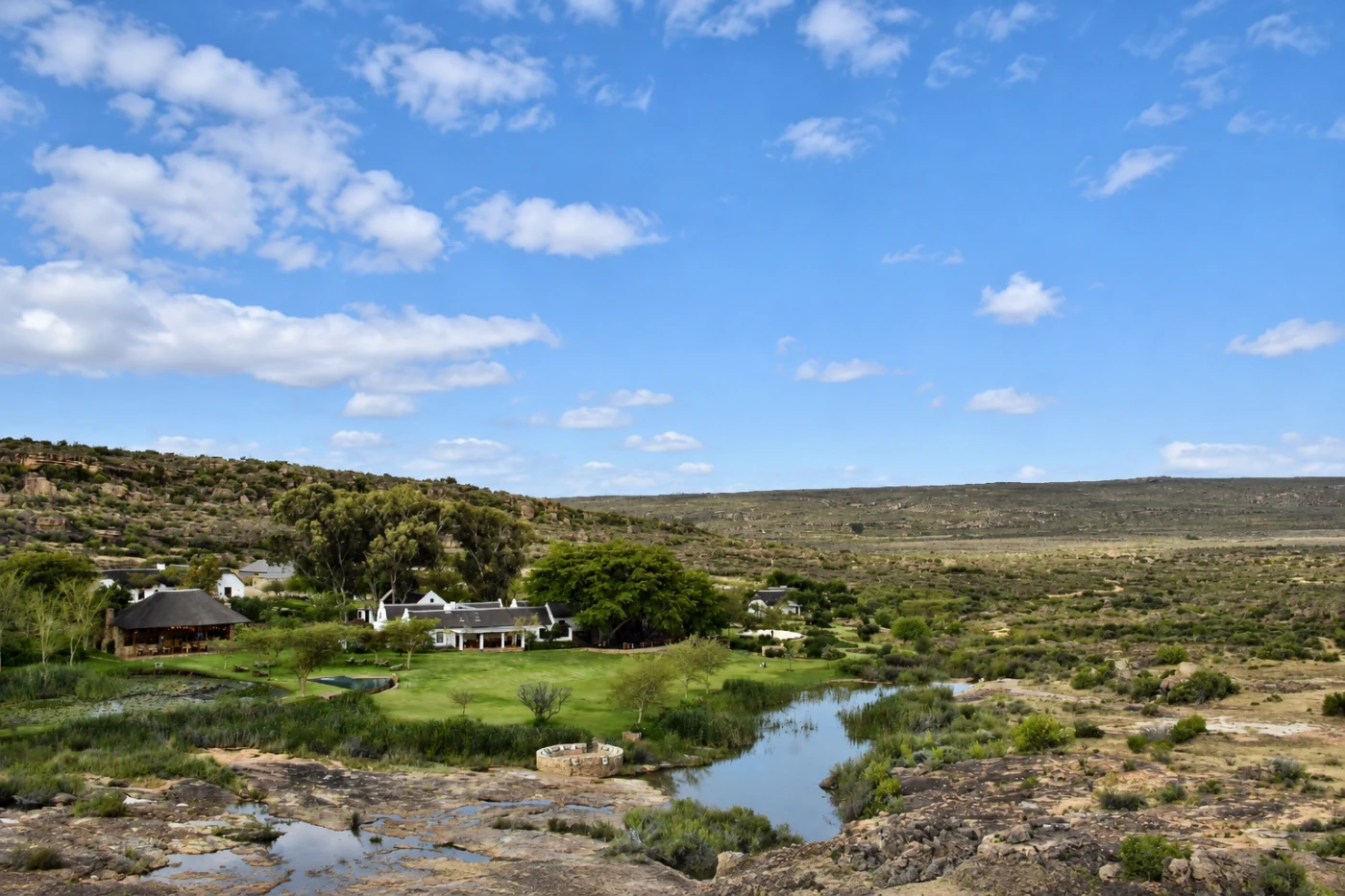
At Bushmans Kloof, the first outing worth planning is to a painted sandstone shelter. The San rock art remains in the landscape that gives it context, reached with a guide rather than encountered on a museum wall. That combination of cultural history and Cederberg country is what sets this small lodge apart.
Three nights give you two full days to look at San rock art with a guide, spend time in the reserve and enjoy the hotel without feeling you have checked in only to leave again. This is a different kind of South African wilderness stay: more about the landscape and its cultural history than pursuing a list of large animals.
It can follow a few days in Cape Town, but deserves to be more than a spare night at the end of the trip. Arrive in time to settle in, leave the first morning free for the reserve, and let the days take their shape from there.
A Small Lodge in a Much Larger Landscape
Bushmans Kloof Wilderness Reserve & Wellness Retreat lies in a private reserve in the Cederberg, beyond Clanwilliam in South Africa’s Western Cape. The main lodge has 17 rooms and suites, with private patios looking onto gardens that soften the transition to the rocky surroundings.
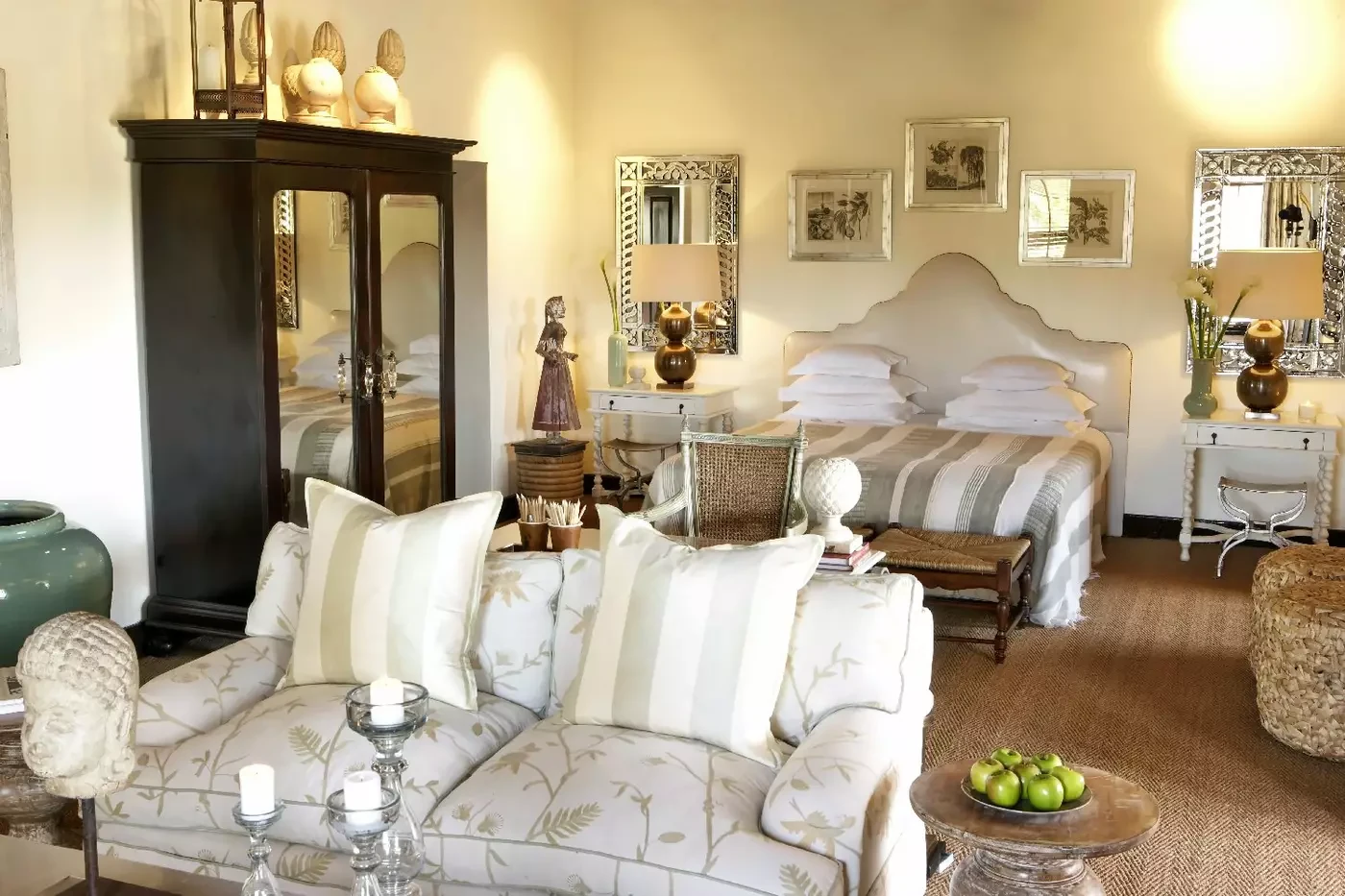
The interiors are furnished and individual, not a bare platform for the view. That matters if you plan to spend the warmer part of the afternoon inside with a book. Outside, lawns, garden paths and pools give the day a gentler counterpoint to walks and drives in the reserve.
For a couple who will spend most of the day outside, a Luxury Room supplies the essentials: a private patio and a bedroom of around 20 square meters, plus a separate bathroom of roughly seven. It is an intimate base, not an expansive suite. A Deluxe Room is the more natural comparison for guests who want additional space for unhurried afternoons indoors.
The Homestead is the social center, with a bar, library and terrace. You can return from an outing, sit down somewhere comfortable and remain part of the place without having to join another activity. Bushmans Kloof works best when the lodge itself is given some of your time.
Make the Rock Art the First Outing
The reserve protects more than 130 San rock art sites. Visits are guided and reserved for overnight guests. Seeing paintings in their sandstone setting is central to the stay, and the guide’s explanation brings a depth that a quick photograph cannot provide.
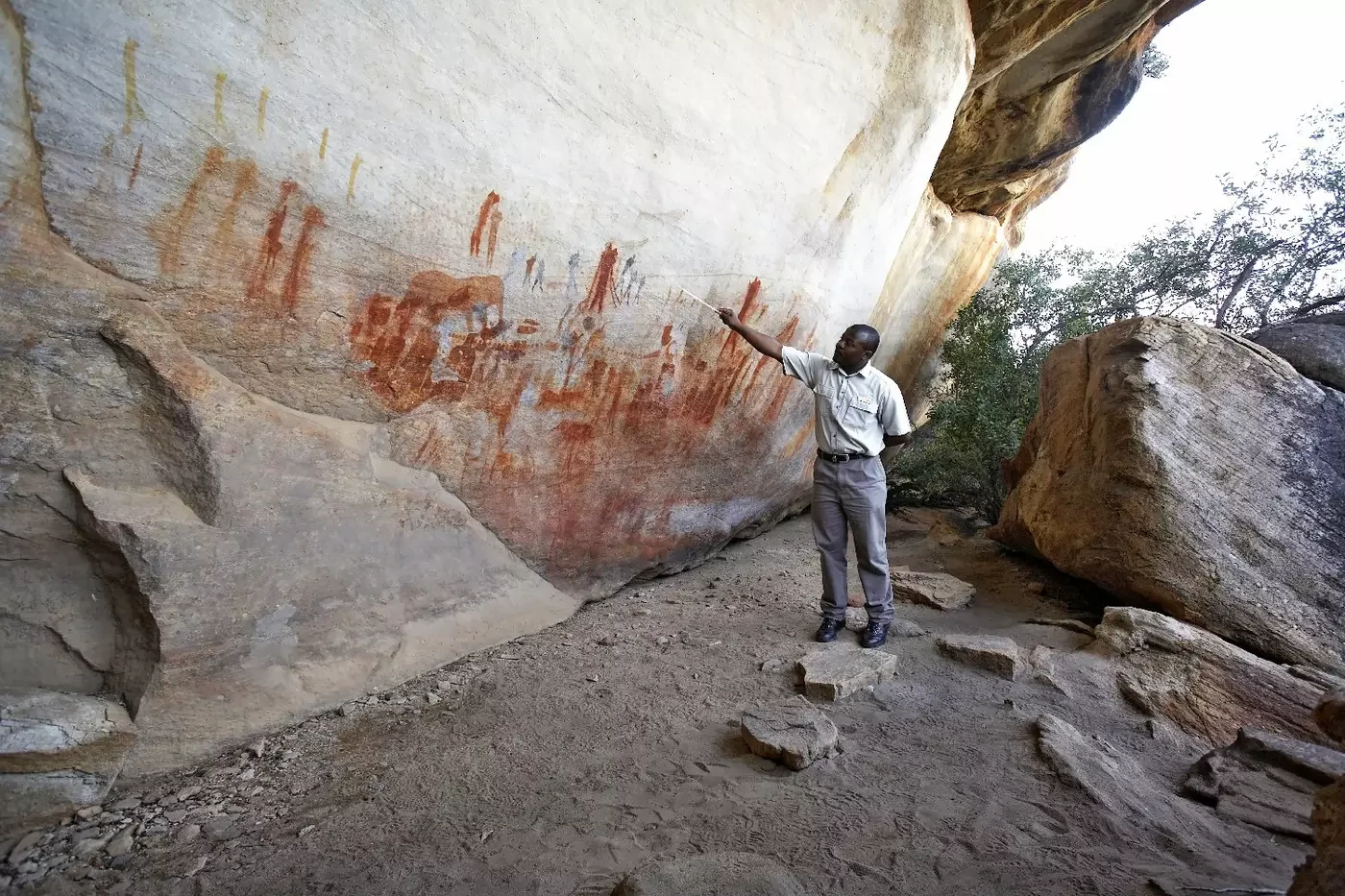
The visits take place in rocky country, not along museum corridors. Walking ability and the day’s conditions shape which shelter is appropriate. PrivateUpgrades passes those practical needs into the guiding arrangements, so the experience is selected for the people making the journey, not for the longest possible circuit.
Animal figures can seem familiar at first, but treating the paintings as a simple record of hunting misses much of their significance. Research at the University of the Witwatersrand connects San rock art with spiritual beliefs and ritual, including the importance of the eland. That is context for looking, not a key that explains every panel. Let the guide distinguish evidence from interpretation at the site in front of you.
The lodge’s dedicated rock art curator works with its guiding team on preservation and interpretation. One carefully explained shelter is more valuable than a circuit designed to count sites. Questions about how the pigments were used, why a surface was chosen and what remains unknown can stay with you long after the visit.
Follow the guide’s conservation and photography rules, keep to the agreed route and never touch the paintings. Their survival in these shelters is part of what makes the visit meaningful.
Back at the lodge, the Heritage Centre offers a way to continue the subject. It is worth leaving time for that after the outing, when questions are more specific than they were before you saw the paintings.
A Nature Drive, Not a Big-Five Safari
The reserve’s wildlife includes Cape mountain zebra and several antelope species, with birdlife adding another reason to pause. A nature drive here is an introduction to the Cederberg’s animals, plants and geology. It is not a substitute for a safari planned around the Big Five.
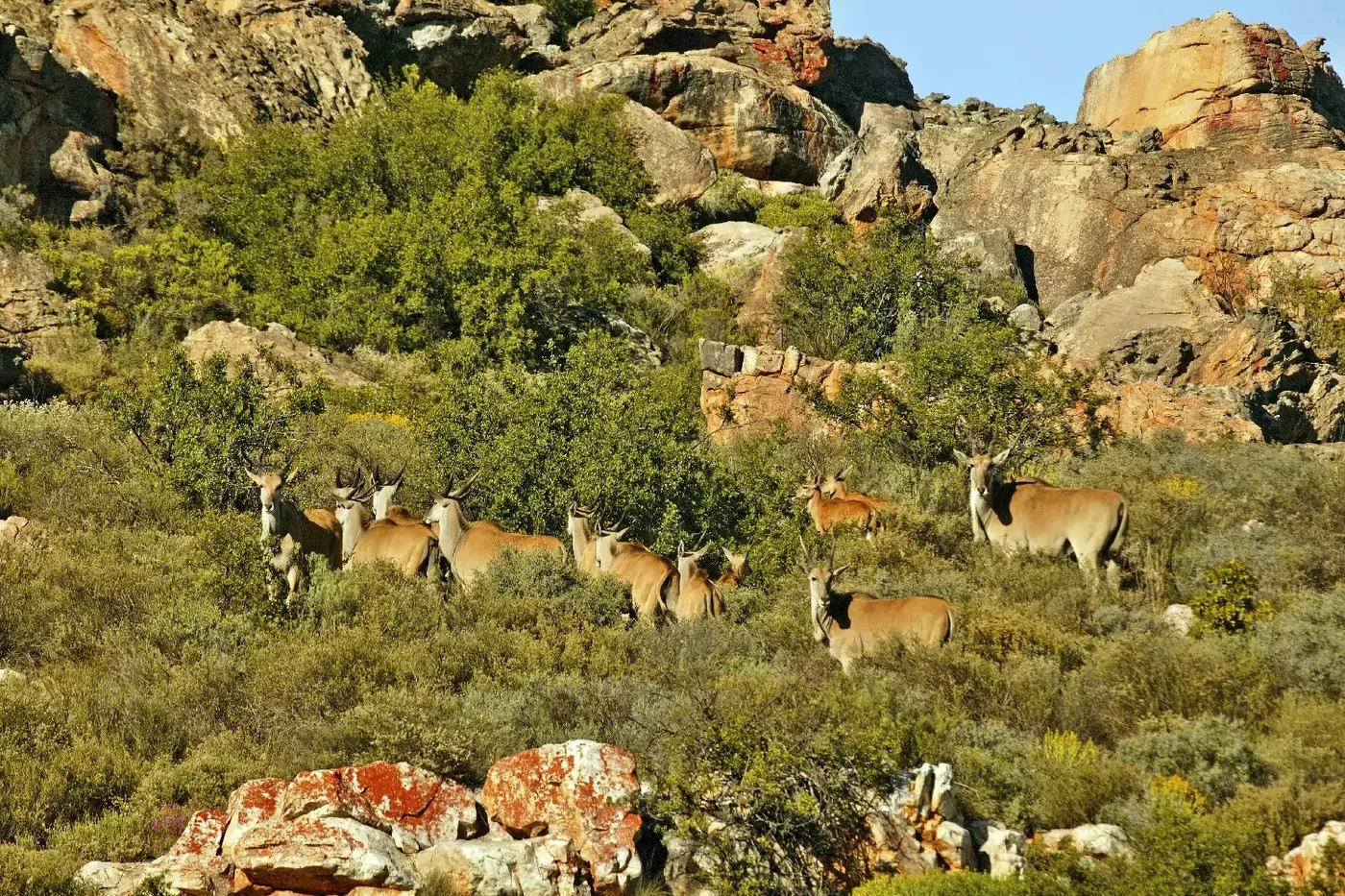
Pairing a rock art visit with a nature drive gives the reserve two complementary stories. The first concerns people and the images they left; the second introduces the living landscape around those shelters. A guest interested in plants or birds can make that the focus of a drive instead of treating it as a lesser version of a Big-Five safari.
Do not interpret the absence of a Big-Five program as an absence of wildlife risks. Follow the reserve’s directions about where independent walking is permitted and which routes are suitable that day. Conditions, terrain and your own fitness still matter.
A private guide and vehicle can be arranged at additional cost, subject to availability. That may be worthwhile for a photographer who wants to wait for the light, or a family who needs a different pace. It is not something to assume comes with every room reservation.
How Three Nights Can Unfold
Keep the first afternoon uncomplicated. After the drive from Cape Town, unpack, take in the gardens and discuss the next morning with the guiding team. If there is time for an outing, enjoy it; if not, the stay has not fallen behind.
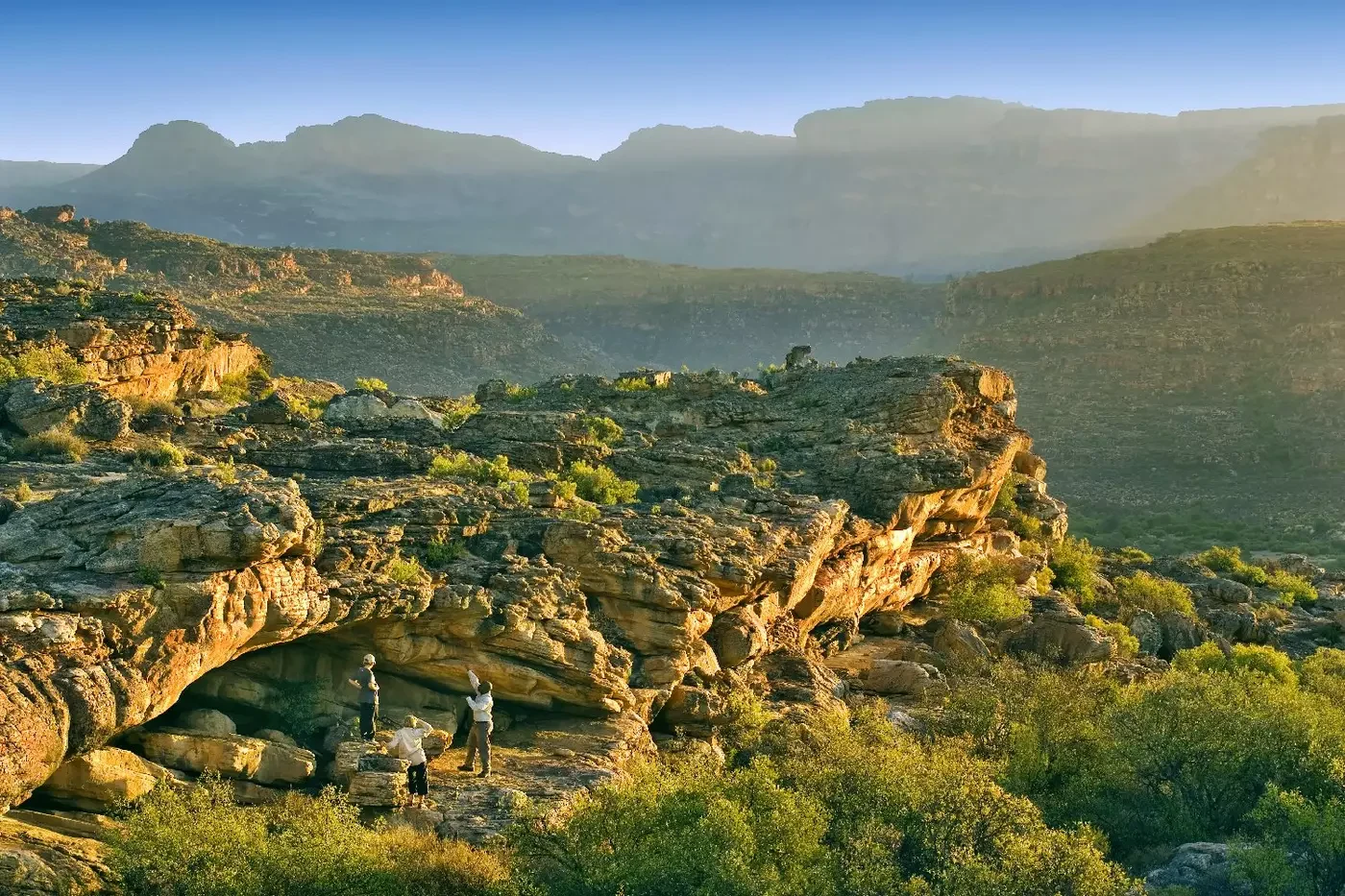
First full day: rock art and time back at the lodge
Give the morning to a guided rock art visit. The hotel can provide coffee and pastries before an early activity, with a leisurely breakfast on your return. That avoids the awkward choice between a proper breakfast and a well-timed excursion.
Leave the middle of the day for the pool, a book or a spa treatment. Later, a nature drive can bring a different view of the reserve. If the morning has been absorbing, it is equally reasonable to stay near the lodge and let the day remain small.
Second full day: choose one deeper interest
Use the second morning for whatever caught your attention: a botanical walk, more time with the guide or another suitable outdoor activity. The reserve offers options such as canoeing, mountain biking and archery, but availability and conditions should decide the choice rather than a fixed checklist.
Couples need not make identical plans. One person can enjoy a more active morning while the other rests, then meet for lunch. For families, agree a pace that leaves the children curious rather than exhausted before dinner.
Last morning: leave without rushing
Breakfast and a little time on the patio are enough. Avoid fitting a substantial excursion in before a long onward drive or a flight from Cape Town. If a morning in the reserve is important, add a night rather than forcing it into departure day.
An Evening at Kadoro
Kadoro offers a distinctive change from dinner at the main lodge. The restored shepherd’s cottage has stone walls, timber rafters and tables lit by candles. It is an intimate setting within the reserve, with none of the formality that a grand dining room can impose.
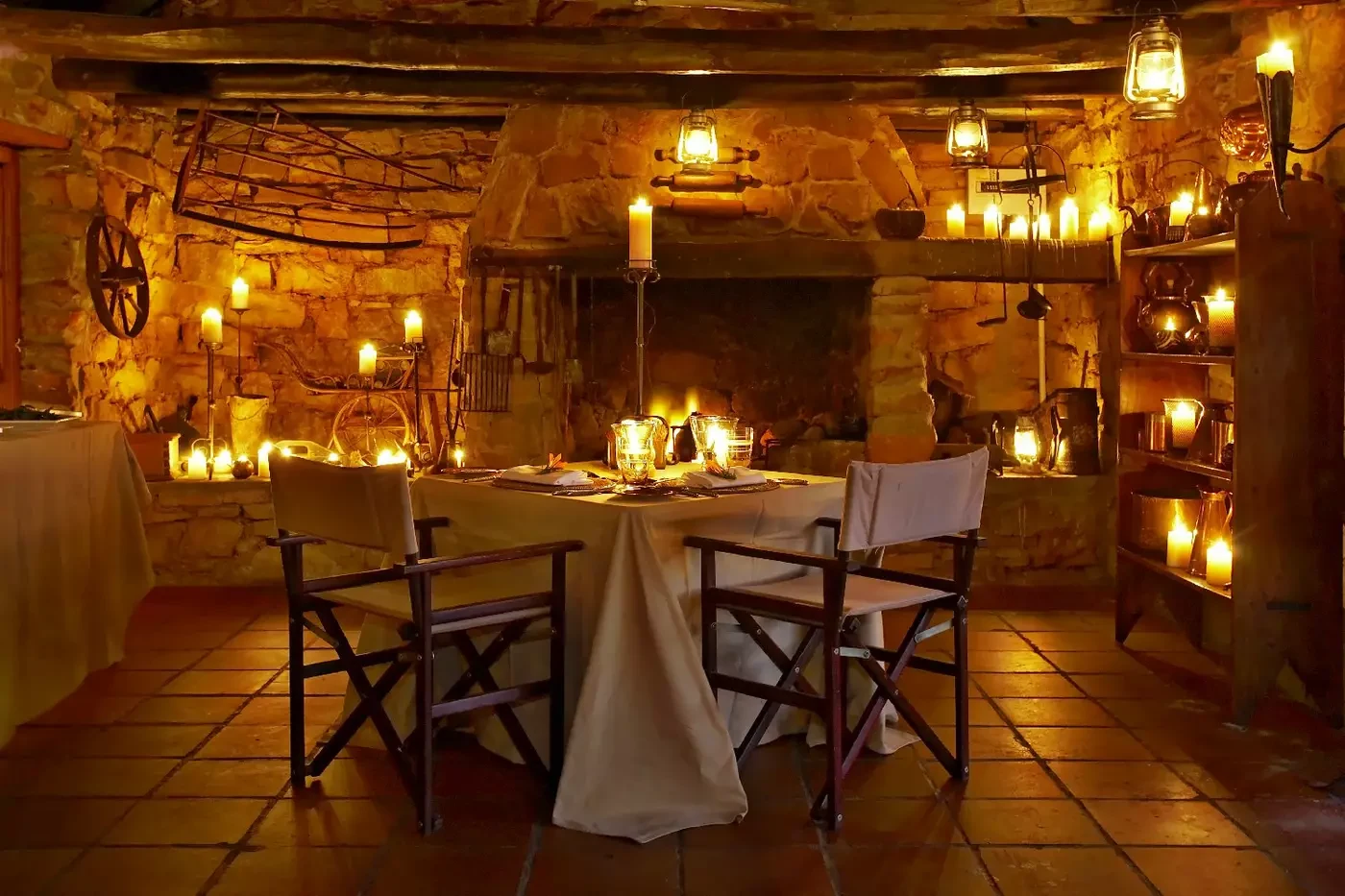
The cottage has no electricity; candles and the fire set the room’s evening mood. A late-afternoon nature drive can form part of the approach, turning dinner into the conclusion of time spent in the reserve rather than a separate formal occasion.
Kadoro is a separately arranged dinner at an additional charge, not the lodge’s default dining room. We include its availability, menu arrangements and cost in the stay proposal when it is a priority. The candlelit setting deserves an evening of its own.
On the other evenings, the lodge’s changing menus and South African wines need no special occasion. Makana looks over the Boontjies River, while the Homestead’s dining room and terrace offer a more settled base for dinner.
When a Private Villa Makes More Sense
A family does not necessarily need a private villa. The Niven Family Deluxe Room has a king bedroom, a second twin or double bedroom, two en-suite bathrooms, a lounge area and a private terrace. It keeps the family together within the main-lodge experience. Koro Lodge or Cederberg House offers a more separate stay, with dedicated guiding arrangements for a party wanting greater independence.
Koro Lodge is set apart from the main lodge and has its own pool, terrace and private team, including a chef and wilderness guide. It is a different style of stay, not simply a larger room. You gain control over shared time while giving up some of the easy contact with other lodge guests.
The private pool and dedicated team change the way a family spends time together, but do not replace adult supervision. Ages, sleeping arrangements and mobility needs inform the accommodation and activities we propose. Child-minding is a separate, advance arrangement at an additional cost, useful for an adults’ dinner or treatment.
Choose the Season for the Stay You Want
The reserve highlights August and September for spring wildflowers, though rainfall and local conditions affect the display. Treat flowers as a seasonal reason to choose those months, not a guaranteed spectacle. The rock art gives the stay a more dependable focus across the year.
For a warmer-weather visit, put longer walks earlier in the day and keep the middle of the afternoon flexible. In cooler months, bring layers for outings and evenings. Check the forecast near departure; a season label says less about comfort than the conditions you will actually meet.
The rock art and landscape give the stay a purpose beyond a brief flowering period. Choose dates that allow you to enjoy being outside at your preferred pace, then treat any exceptional display of flowers or wildlife as a welcome addition.
Getting There and Understanding the Rate
Allow around three hours for the drive from Cape Town, with extra time for traffic, stops and your starting point. The route continues beyond Clanwilliam over the Pakhuis Pass. A late international arrival is better followed by a night in Cape Town than a hurried drive into the Cederberg.
A private transfer leaves the driving to someone else. The arrival plan includes the pickup and gate arrangements, with enough margin to enjoy the changing scenery. For self-drive guests, we supply the lodge’s route and arrival instructions.
The booked rate separates meals and guided activities from additions such as private vehicles, Kadoro dining and spa treatments. Full-board describes meals; it does not make every experience across the reserve complimentary.
Through PrivateUpgrades, compare the sociability of the main lodge with a private villa and its dedicated team, then build the guiding around your interests. Three nights can connect a painted shelter, a nature drive and dinner at Kadoro into a coherent stay. That is a stronger reason to come to the Cederberg than trying to reproduce a conventional safari.