The dinner is included. The wine, the restaurant you had in mind and the meal served on your terrace may each have a separate charge. A hotel meal plan becomes useful when its terms describe the holiday you want to have.
Half board generally means breakfast and one main meal, usually dinner. Full board covers breakfast, lunch and dinner. All-inclusive usually adds selected drinks and other specified services. To choose between them, start with your dining plans, then compare the additional price with the meals and services you expect to use.
Hotel meal plans at a glance
The names provide a useful first distinction, but there is no universal hotel-industry specification for each package. Restaurant access, drinks and room service can differ between two offers carrying the same label.
| Plan | Typical coverage and important limits |
|---|---|
| Bed and breakfast | The room and breakfast for the named guests. The breakfast venue, menu and room-service terms still matter. |
| Half board | Breakfast and one main meal, usually dinner. Lunch substitution, drinks and restaurant choice depend on the offer. |
| Full board | Three main meals. Drinks, snacks and meals during excursions may be charged separately. |
| All-inclusive | Meals plus a defined drinks and services package, with possible limits on premium items, restaurants, activities and transfers. |
For a city stay with restaurant reservations each evening, breakfast may be sufficient. At a mountain resort, half board can make evenings easy. A remote island changes the calculation again, because most meals will be taken at the property.
Half board: useful when dinner belongs to the hotel
Half board works best when you expect to have breakfast and dinner at the resort but want lunch to remain flexible. At a ski resort such as Park Hyatt Niseko Hanazono, lunch on the mountain can make that pattern appealing. The hotel’s actual offer determines whether a half-board option is available and which dinners it covers.
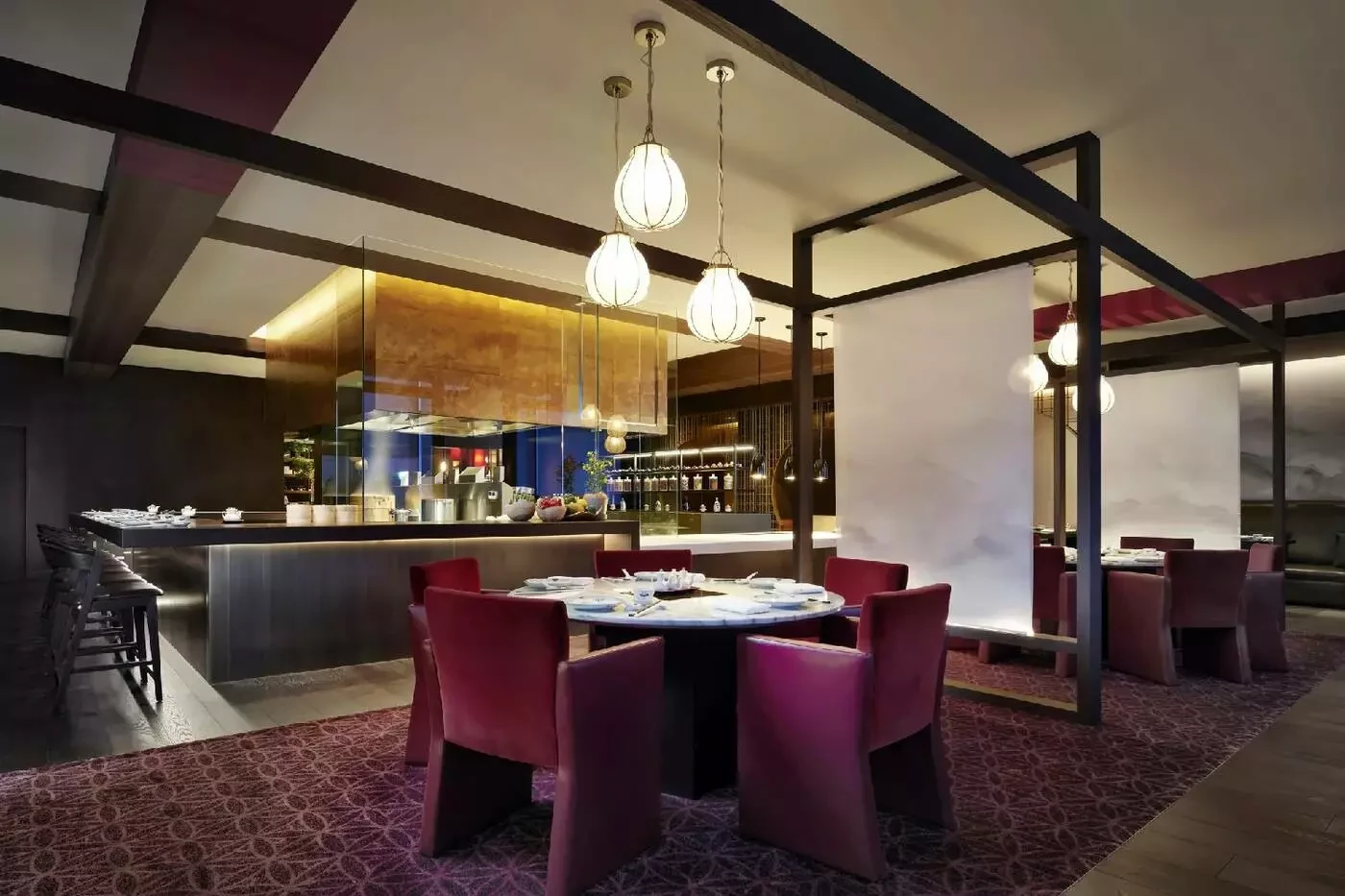
The published Half Board Special at Anantara Al Jabal Al Akhdar combines breakfast with a set dinner. That detail tells you more than the package name: it does not promise unrestricted ordering from every restaurant menu.
Some dine-around plans instead provide a food credit at participating venues. With an allowance of 60 EUR and a food bill of 85 EUR, you would pay the 25 EUR difference, plus separately charged drinks or additions. A credit is useful if it applies to the dinner you would have chosen anyway.
The weak point is an evening spent elsewhere. A missed dinner often has no refund or carry-forward value; any exchange for lunch or another service must be included in the terms. Count the hotel dinners you actually intend to eat before comparing the package price.
Full board: three meals, with room for variation
Full board can be comfortable on a family holiday with a regular lunch routine, or at a resort where leaving for a meal requires a boat or a substantial drive. The convenience is greatest when the included restaurants and service times fit your day.

At Kokomo Private Island Fiji, published Beachfront Villa inclusions cover à la carte breakfast, lunch and dinner, including in-villa dining, together with a personal bar stocked with non-alcoholic drinks and snacks. That is a useful example of why the actual inclusions deserve more attention than a broad meal-plan label.
For a week with several full-day excursions, three hotel meals may be less valuable. A packed lunch or lunch served during an outing replaces a resort meal only where the package explicitly provides it. Likewise, a substantial late breakfast may reduce how often you want a full restaurant lunch.
Full board vs all-inclusive: what changes?
The main difference is usually what happens beyond the three meals. Full board does not automatically include drinks throughout the day. An all-inclusive package normally extends to a specified selection of drinks and may add activities or other services.
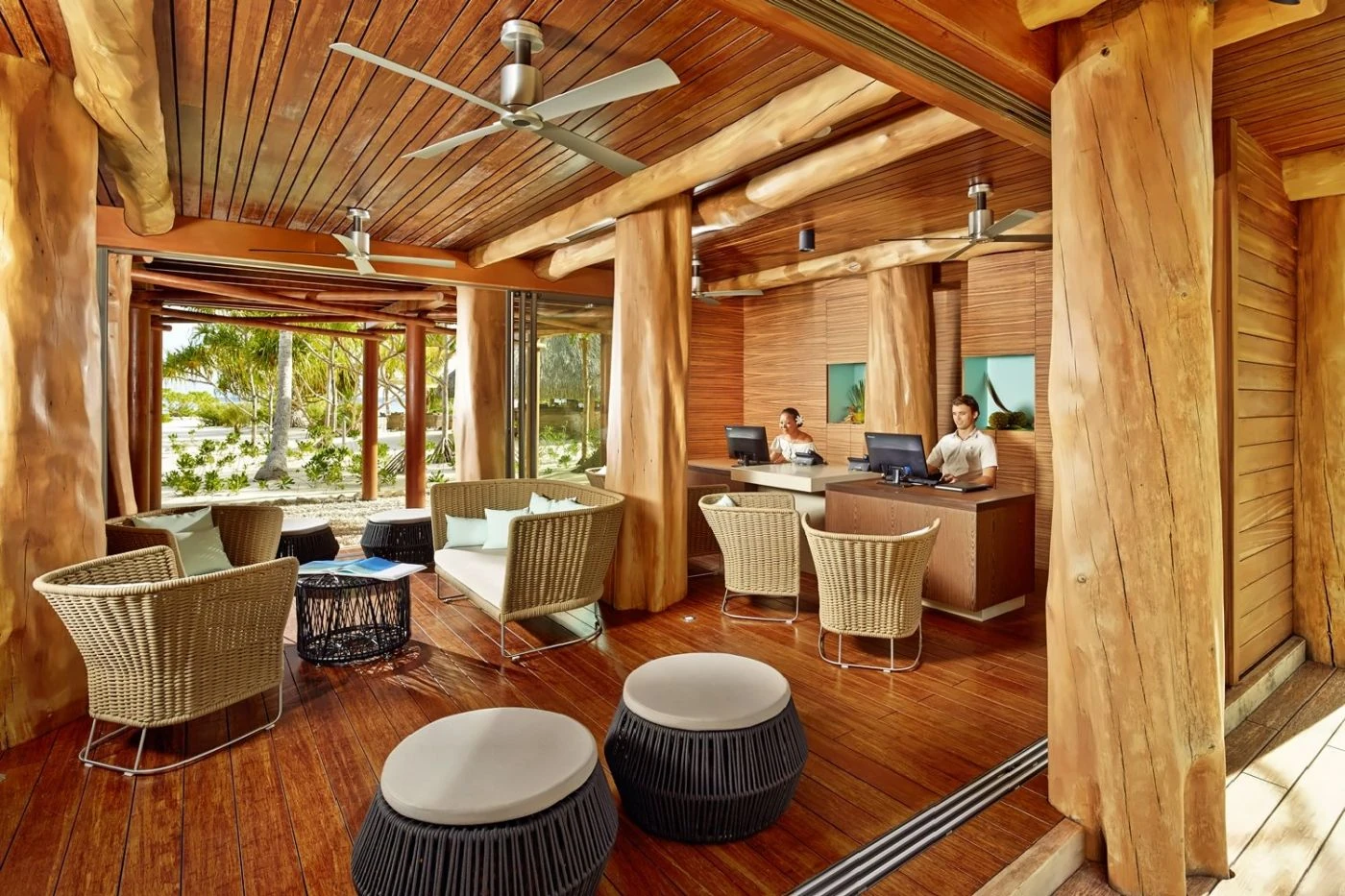
Neither label establishes access to every restaurant, bottle or experience. Premium wines, private dining, specialist excursions and spa treatments may remain chargeable. An all-inclusive arrangement can still require restaurant reservations and can apply different rules to dining in your villa.
For The Brando, compare the actual villa-and-breakfast and all-inclusive offers available for your dates. Include each named service in the calculation, with transfers and special experiences treated according to the selected offer. The wider package earns its premium when those are services you want to use.
Compare options within the same hotel and room category first. A lower room-only price at another resort also reflects a different property, destination and accommodation; the difference cannot be attributed entirely to food and drink.
A dining reservation can decide the plan
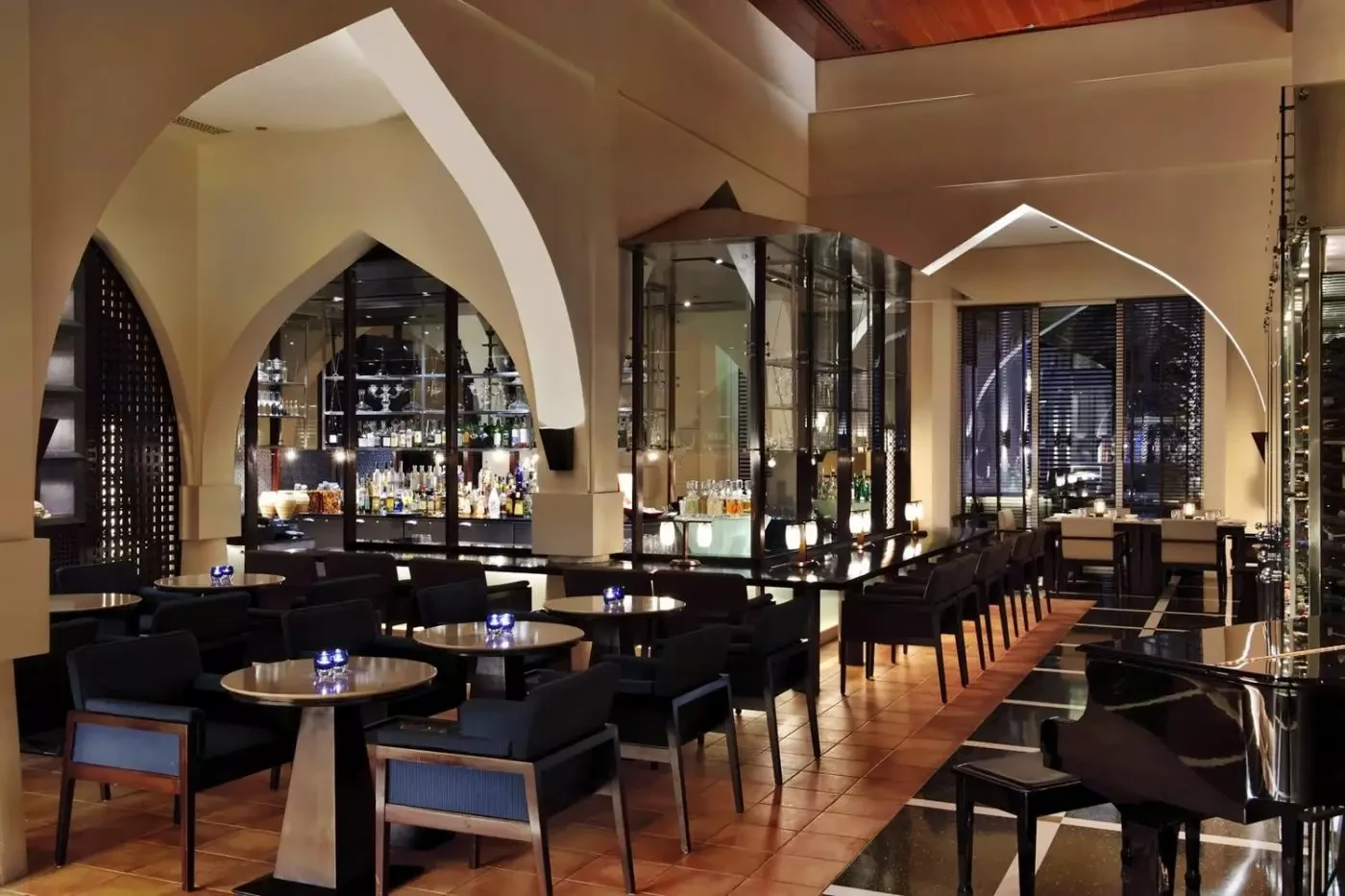
A wine-country stay at Les Sources de Caudalie may revolve around dinner at La Grand’Vigne. In that situation, establish the reservation and its price before assigning value to a general dining allowance. A package covering another restaurant will not pay for the evening that prompted the trip.
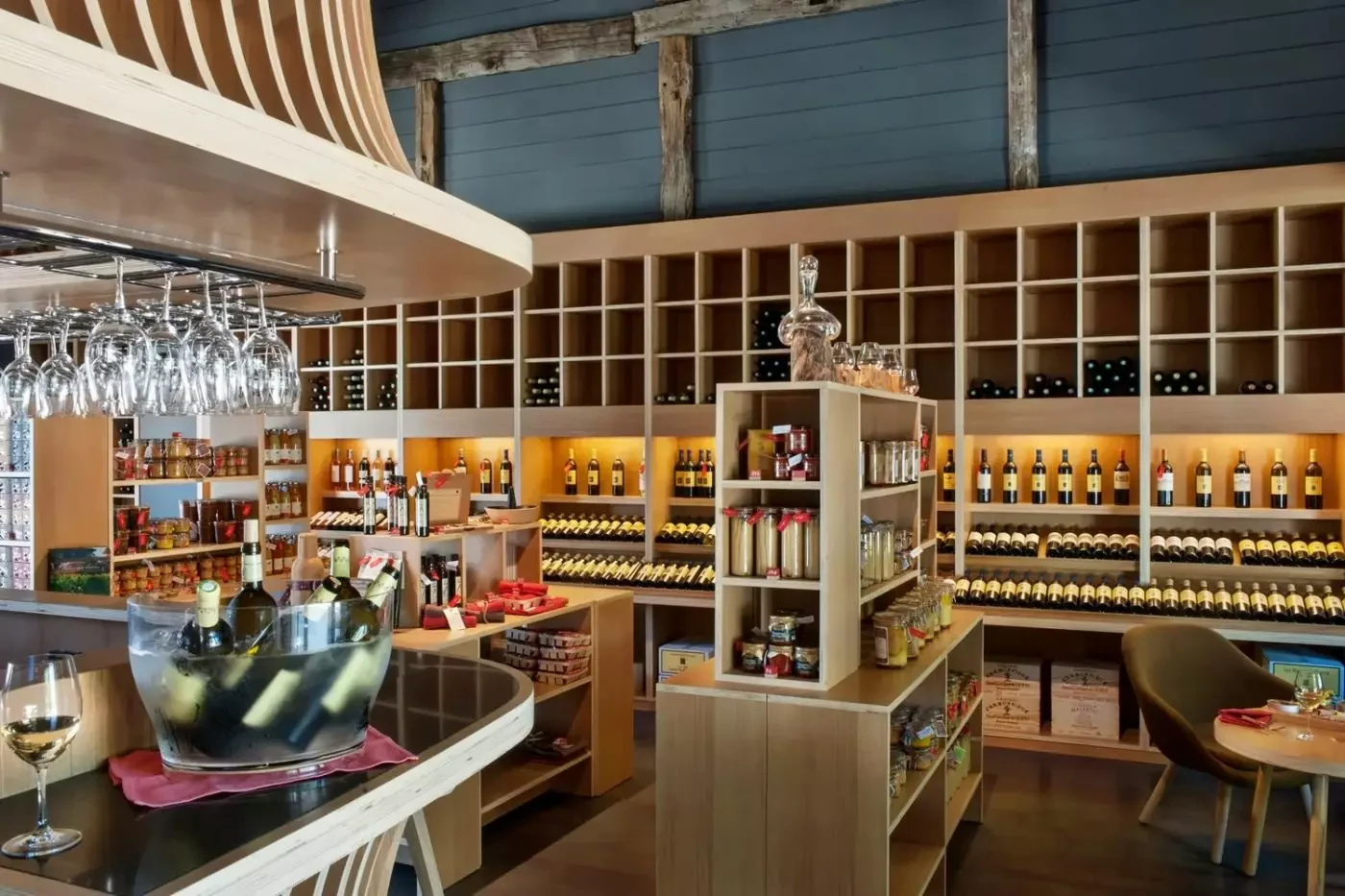
Elsewhere, look at how the plan handles the restaurant you expect to use most. It may include a set menu, accept a fixed credit against à la carte dishes or add a supplement for a tasting menu. Those arrangements can all be reasonable, but they produce different final bills.
Room service is a separate consideration for late arrivals and families who want dinner on the terrace. Some packages include it; others exclude it or add delivery and late-night charges. Festive dinners and special events can also carry supplements that belong in the total price.
When half board saves money: a worked example
Take two adults staying five nights in the same room, with identical taxes and cancellation terms under both offers. These hypothetical figures illustrate the calculation; they are not prices quoted by any named hotel.
| Option | Illustrative cost for two adults |
|---|---|
| Bed and breakfast | 500 EUR per room per night: 2,500 EUR for five nights. |
| Half board | 590 EUR per room per night: 2,950 EUR for five nights. |
| Half-board premium | 450 EUR across the stay. |
| Comparable dinner bought separately | 130 EUR for two, excluding drinks. |
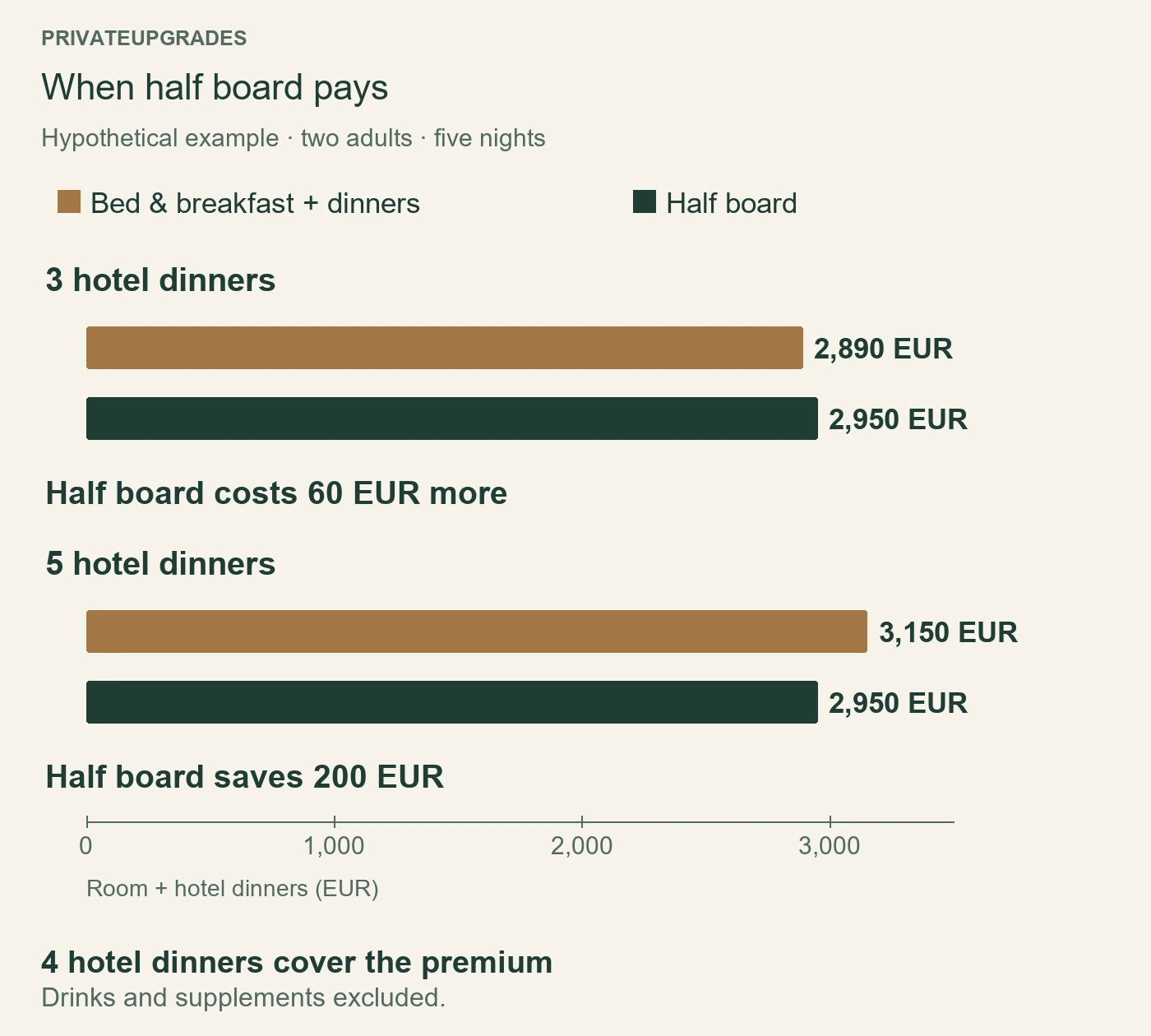
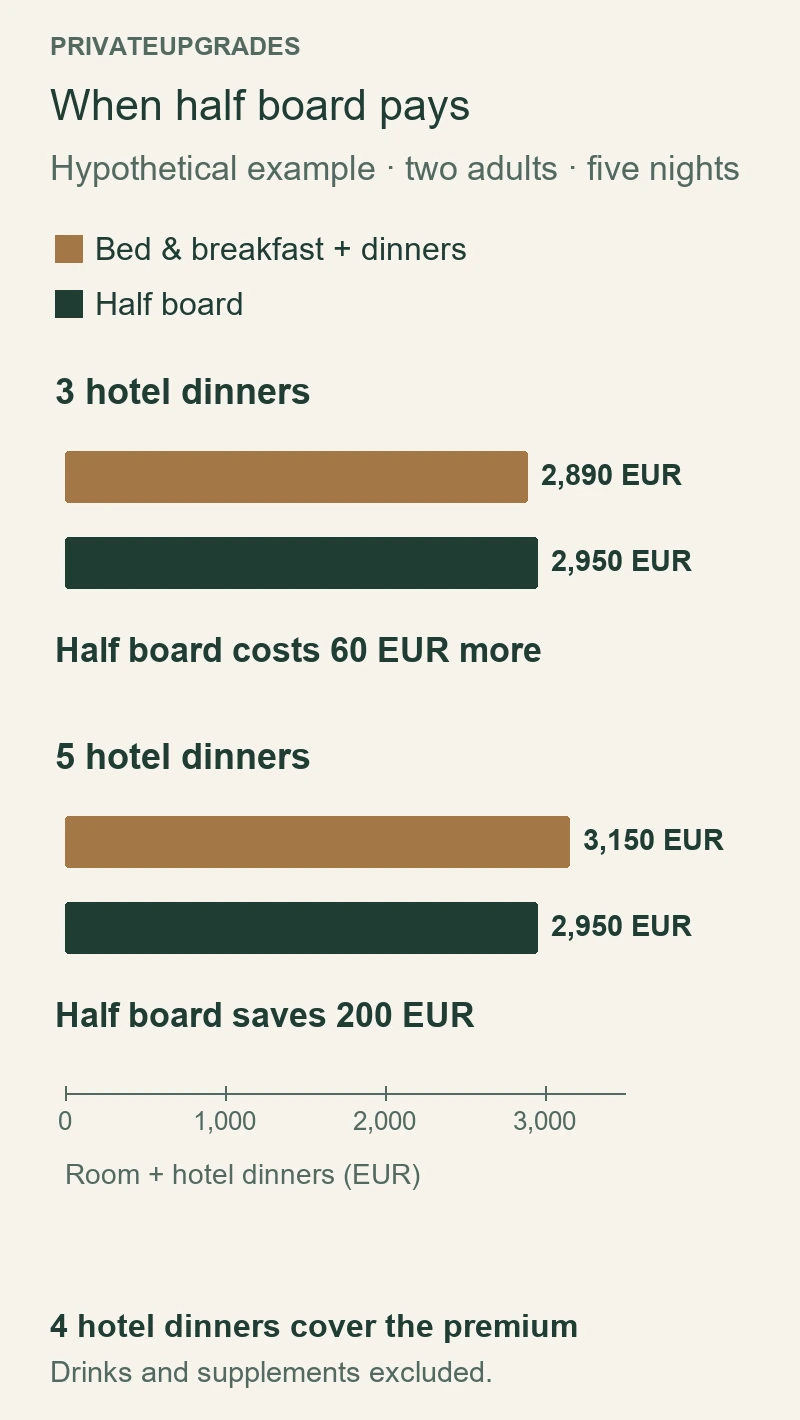
Five hotel dinners bought separately cost 650 EUR. Added to bed and breakfast, that gives a total of 3,150 EUR. Half board costs 2,950 EUR, saving 200 EUR on that dining pattern.
With only three dinners at the hotel, the separate meals cost 390 EUR. Bed and breakfast plus those dinners totals 2,890 EUR. Half board is then 60 EUR more expensive. The two dinners outside cost the same under both options and do not change the difference.
In this example, the break-even point is 450 divided by 130: just under three and a half dinners. Four comparable hotel dinners would justify the premium; three would not. Drinks and supplements must be added consistently, and the included dinner must be comparable to what you would otherwise order.
Children and partial days alter the arithmetic
A room rate for two adults does not establish meal coverage for accompanying children. Age bands, children’s menus and adult-menu supplements can differ from the rules used to price the room. A family comparison needs the dining charge for every guest.
Then count usable meals on the arrival and departure days. A plan may start with dinner and finish with breakfast, or operate within specified check-in and check-out times. An arrival lunch has no value if the flight lands that evening; a departure lunch is included only if the arrangement extends to it.
Dietary requirements deserve the same practical approach. A shorter list of suitable dishes served comfortably can matter more than theoretical access to several restaurants. PrivateUpgrades establishes relevant dietary arrangements alongside the accommodation and rate selection.
Where hotel credits and privileges fit
Breakfast and a hotel credit on an eligible PrivateUpgrades rate can improve the comparison. They do not automatically convert that rate into half board. Count the breakfast guests covered, the services eligible for the credit and whether its value applies per stay or per day.
An unused credit may have no cash value, and availability-based privileges should not be valued as guaranteed room features. Keep those benefits separate from paid meal inclusions so the same saving is not counted twice.
PrivateUpgrades compares the room, cancellation terms, dining arrangement and applicable privileges together. For your own shortlist, the decisive figure is the additional package cost divided by the meals and services you will use. That turns an attractive label into a useful answer about the holiday.