The door between two bedrooms can matter more than the size of either. Here is how to get the room arrangement your family actually needs.
A beautiful suite is not much comfort if bedtime leaves the adults sitting in the dark. Two rooms can solve that problem, but only if the arrangement works as you imagined it. A door between bedrooms, a shared entrance and two doors across a public corridor are three different ways to stay.
Connecting hotel rooms have an internal door between them. Adjoining rooms may simply be next to one another, although hotels do not always use the term consistently. For a family who needs to move between bedrooms without entering a public hallway, the physical connection is the essential feature. A reassuring room name is not a substitute.
There is a second distinction: a confirmed combination for every night of the stay, or a preference to be considered at arrival. Only the first provides the certainty a family needs before committing to a non-refundable booking.
Connecting vs adjoining rooms: follow the door
Start with the floor plan. A room name can suggest closeness without explaining how you will move between the spaces. Even within one hotel, some categories connect and others do not.
| Room arrangement | How the rooms connect |
|---|---|
| Connecting rooms | An internal door links two rooms; each normally retains its own corridor entrance. |
| Adjoining or adjacent rooms | Nearby rooms, potentially without an internal door. Moving between them may require the public hallway. |
| Rooms behind a private entrance | A shared vestibule brings separate doors behind an outer entrance. It is not necessarily a direct bedroom-to-bedroom connection. |
| Two-bedroom suite | Separate sleeping rooms and shared living space within one accommodation layout; bathroom and access arrangements vary. |
Two doors in the same corridor may be perfectly suitable for adults traveling together. They are a different proposition when your priority is staying close to young children. Choose the layout around your family’s supervision needs and the hotel’s rules, rather than assuming that a monitor or a short distance solves the problem.
A private vestibule may feel like a small apartment, yet still involve separately locking doors. Its usefulness depends on whether the entrance serves only your party and how those doors operate. An annotated floor plan settles that question more clearly than another photograph of the bed.
Choose for bedtime, breakfast and the hours in between
The best room arrangement is the one that suits an ordinary evening. Picture where a child will sleep, where someone can read with a light on, and how another person reaches the bathroom. Floor area matters less when the only route crosses a sleeping space.
Two connecting rooms can give you two bathrooms, separate wardrobes and more freedom over bedtimes. What they may not provide is a living room. If you expect long afternoons indoors, a suite connected to a bedroom can be worth comparing with two standard rooms. You are paying for a place to spend time together, not just more beds.
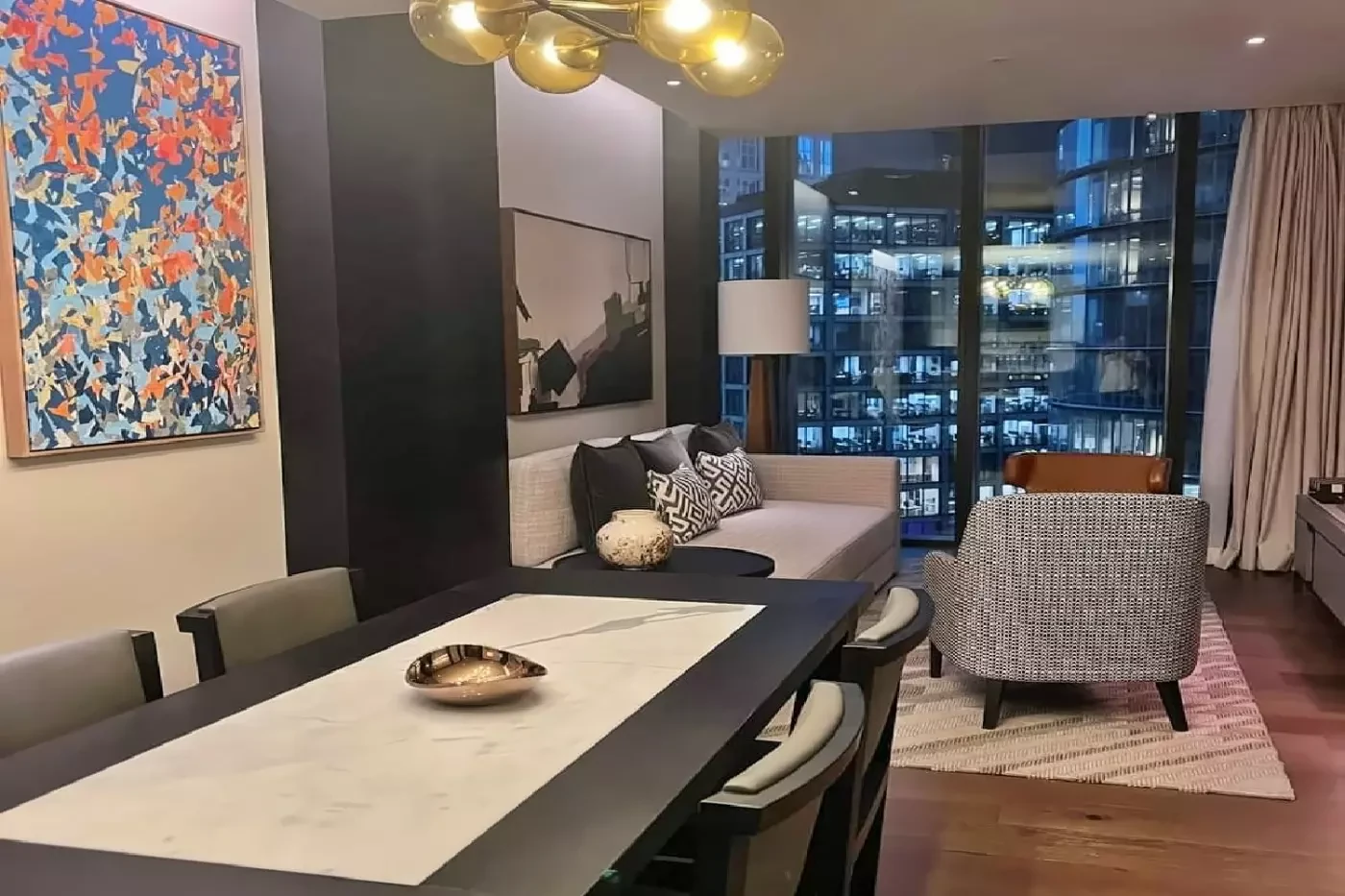
For grandparents or friends, equal rooms may be the happier choice. One impressive suite and one small connecting bedroom can leave part of the party feeling like an afterthought. Compare natural light, outlook, bathroom access and storage on both sides of the door.
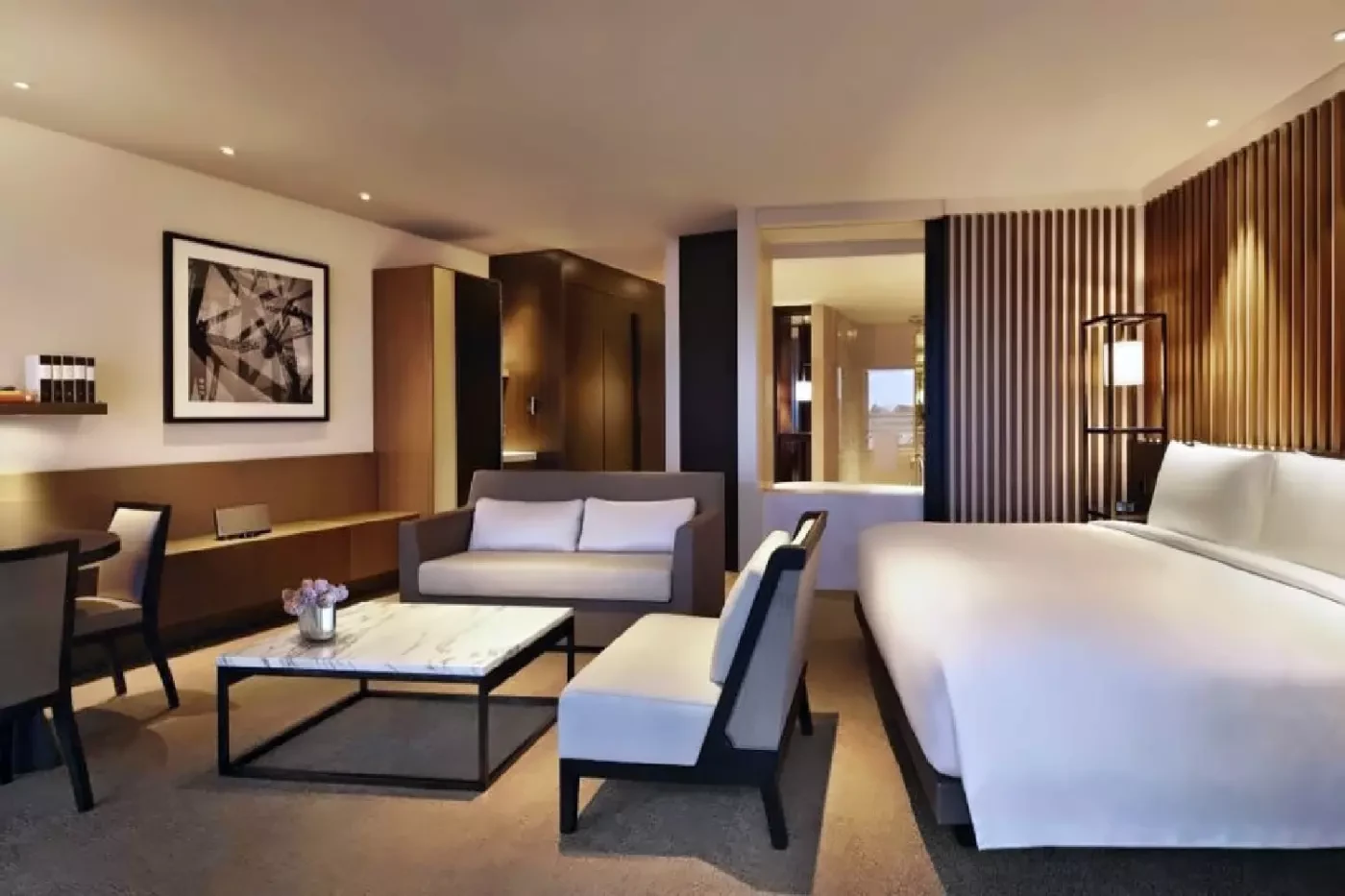
A king room linked to twins may be ideal; two king rooms may not be. A sofa bed, rollaway and permanent bed offer different comfort and take up different amounts of space. The useful comparison is the furnished room with all the beds in place, not its empty floor area.
Occupancy limits depend on the guests’ ages and the actual configuration, not square meters alone. For a guest using a wheelchair, the bathroom and connecting doorway both need to work. PrivateUpgrades obtains the relevant layout and measurements as part of selecting the rooms.
Two different ways to give a family more room
Capella Sydney and the George V in Paris illustrate two different possibilities: flexible combinations for a family city break, and a signature suite expanded with a second bedroom.
Capella Sydney: space for a family city stay
Capella Sydney explicitly offers connecting rooms and suites for family and multi-generational stays. The historic building and contemporary interiors make a handsome base, but the practical choice begins with which categories can be joined on your dates.
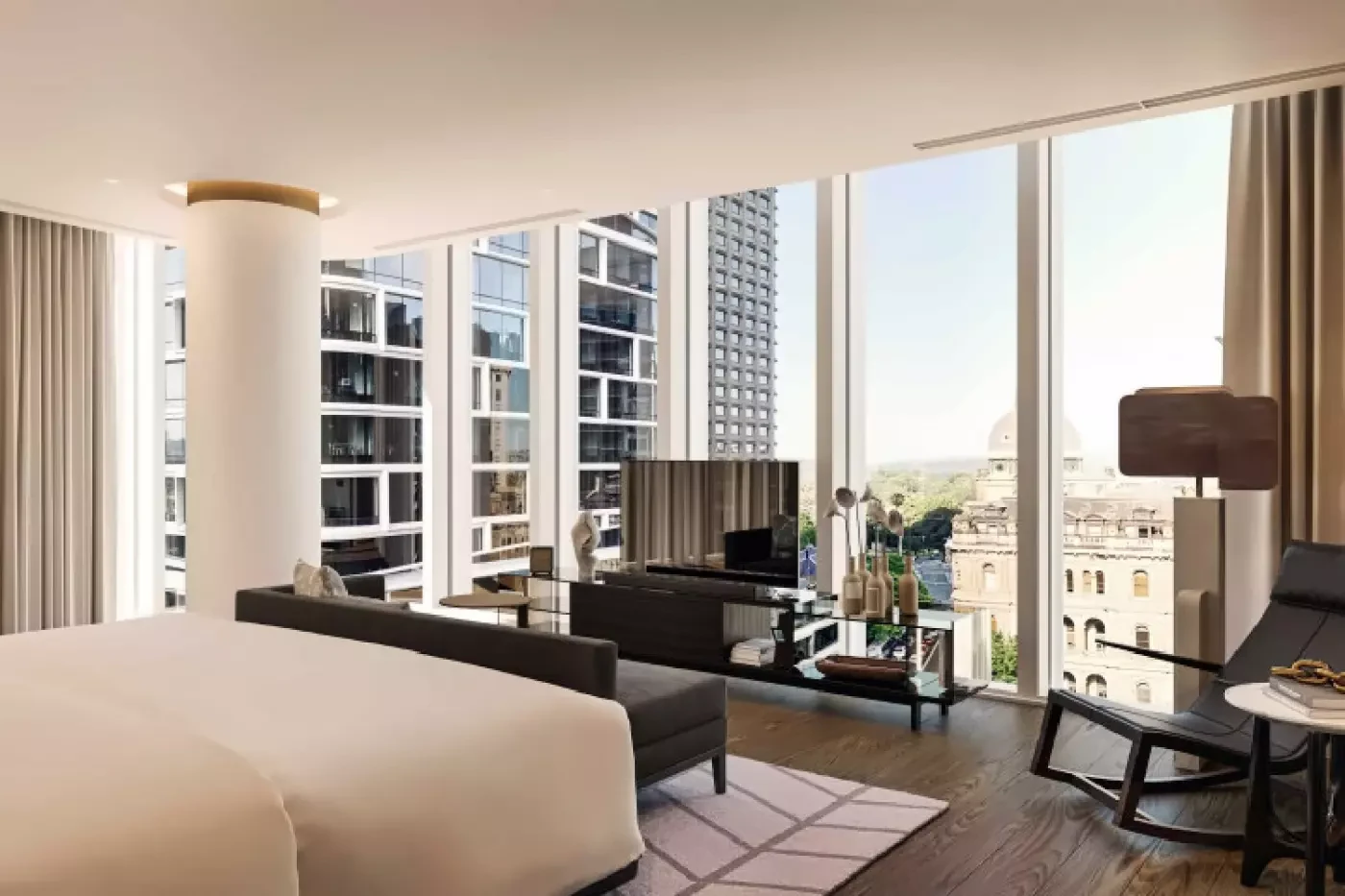
The Premier Room is a useful benchmark: around 50 square meters, an outward-facing aspect, and either a super king or two king singles, with published occupancy of two adults and one child. Those specifications do not establish a connecting pair. For a family returning between outings, a suite’s separate sitting space may justify more of the budget than two larger bedrooms; the available pairing determines the final choice.
Capella’s Little Stars activities are designed for shared family time: the hotel requires parents or caregivers to be present. Connecting accommodation is useful for the hours around those activities, but it does not turn a family program into supervised childcare.
Four Seasons Hotel George V: a suite with room to expand
At Four Seasons Hotel George V, Paris, the Eiffel Parisian Suite offers a connecting configuration as well as a one-bedroom stay. The hotel’s published occupancy distinguishes the two: two adults in the one-bedroom version, or four adults, or two adults and two children, in the two-bedroom version.
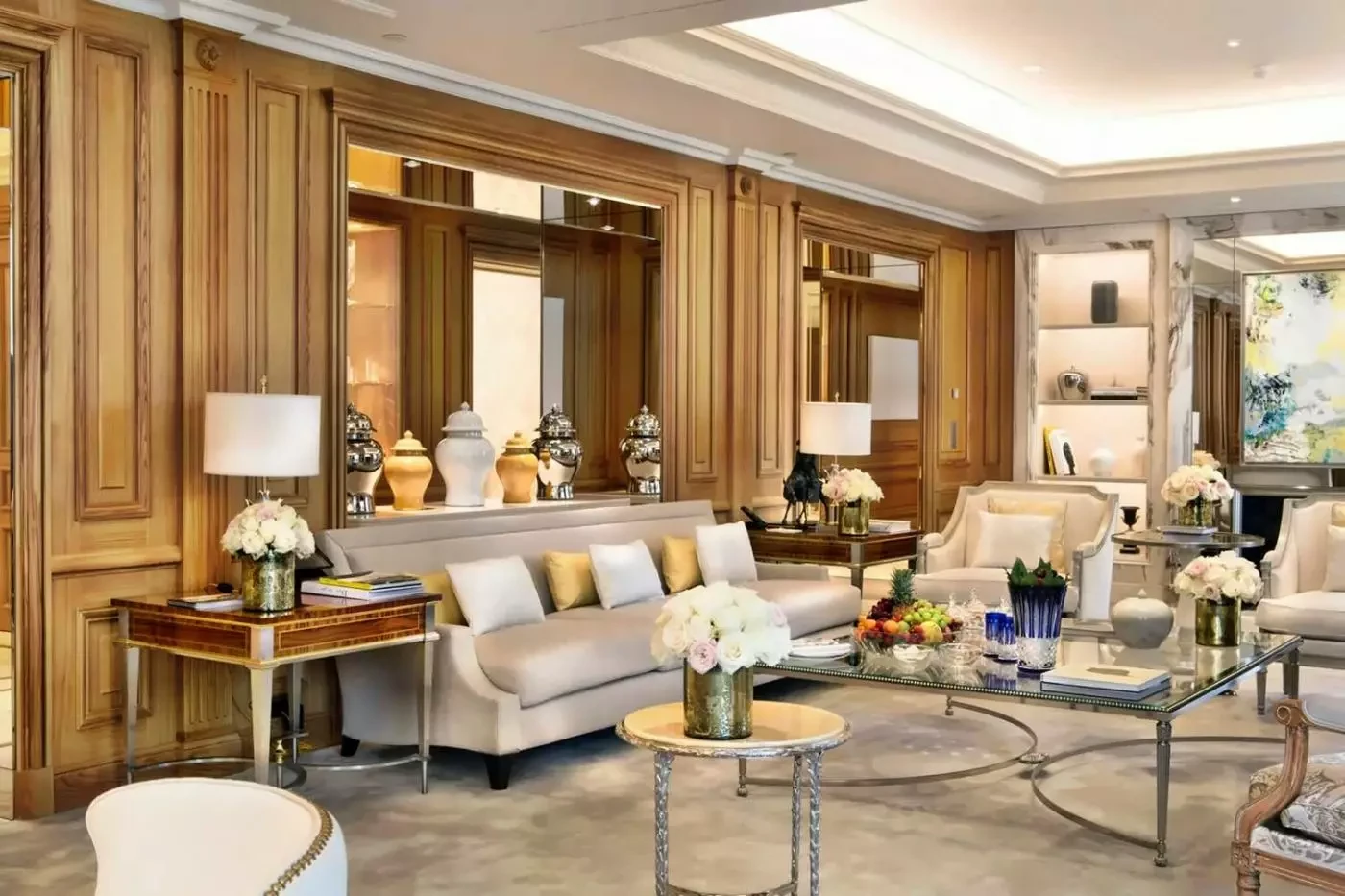
The published two-bedroom layout measures 230 square meters. Its appeal is not simply adding beds: shared living space lets the adults continue the evening after the children have gone to sleep. Four guests occupying one joined arrangement is a different proposition from reserving two unrelated rooms under the same surname.
Move from a request to a confirmed arrangement
“We have noted your preference” does not confirm that two rooms will connect. PrivateUpgrades establishes the precise arrangement with reservations and obtains written confirmation covering the entire stay. If the required combination cannot be secured, we propose a suitable alternative before you commit.
Some hotels sell connecting combinations as a named room product. Others arrange a suitable pair through their reservations team. The booking method matters: a hotel’s ability to confirm a combination through one channel should not be assumed to apply to every rate shown elsewhere.
The confirmation brings together the room pair, bed types, occupancy and any essential cot or accessible-bathroom requirement. When relatives arrive on different days, both reservations need to preserve the connection for the nights spent together. A pair secured for only part of the family holiday is not an equivalent arrangement.
Compare the complete stay, not just two room rates
Put the full cost of both rooms beside the cost of a suitable two-bedroom suite. Include extra beds, the correct number of breakfasts and the terms attached to each option. A lower nightly price can lose its appeal when the second room’s essentials are added.
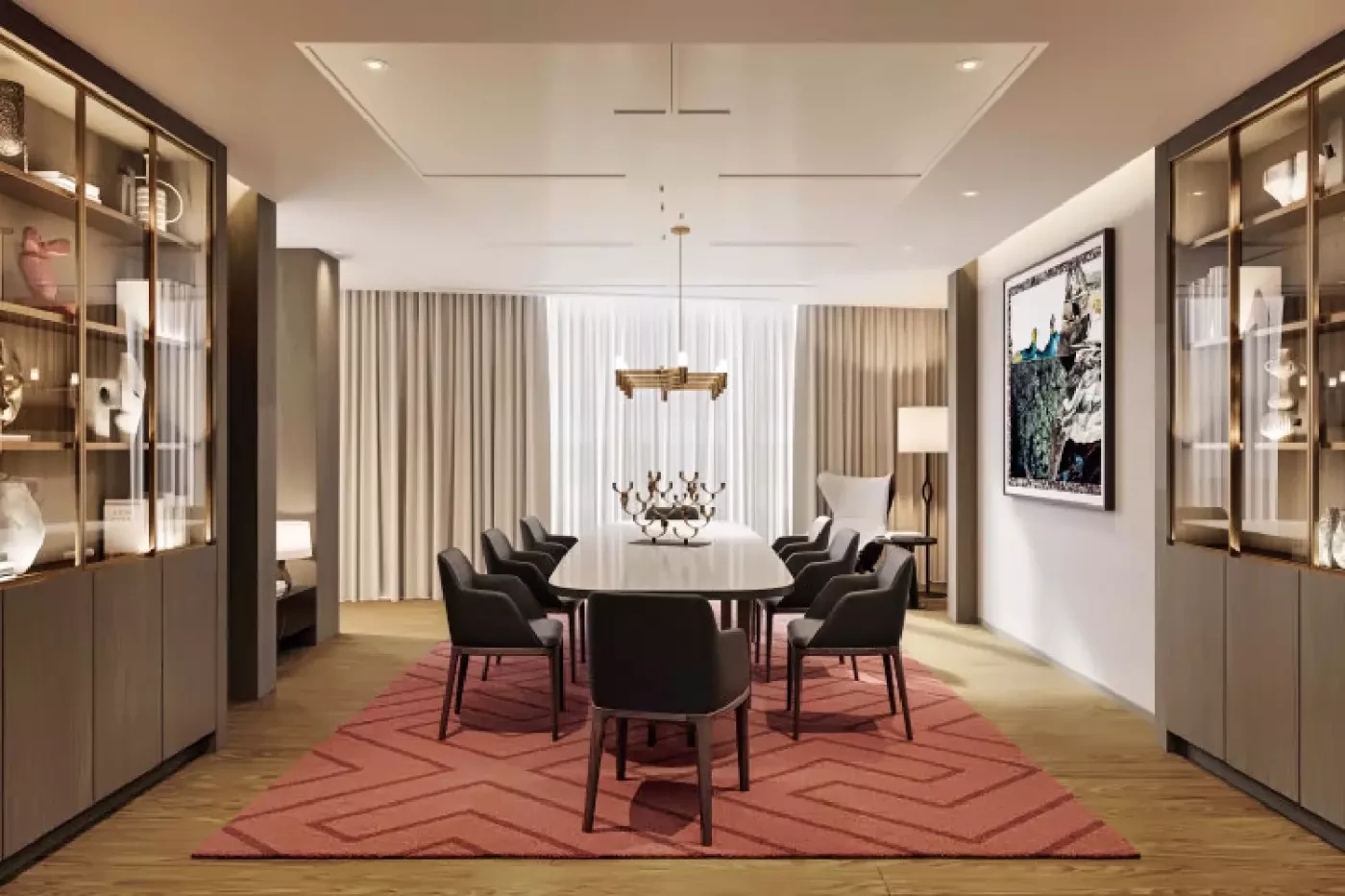
For a longer family holiday, the comparison can extend beyond two hotel rooms. A suite, villa or hotel residence changes the balance of shared space, privacy and independence, particularly when a kitchen and laundry become useful.
Breakfast for two in one room does not establish breakfast for everyone in a family party. Credits may apply per room or per stay, subject to the booked offer. Our comparison sets out the benefits for the actual party; it does not multiply a headline allowance by the number of bedrooms.
Matching cancellation and payment terms make the arrangement easier to manage. An upgrade also has to preserve the connection: more space is not an improvement if it separates the family. Any change of dates or category needs a revised confirmation of the joined layout.
Once that is settled, the reward is simple: children can go to bed, adults can keep a light on, and the family can enjoy two rooms as one considered arrangement.