Punakha asks a traveler to make a decision. Reaching its warmer river valley means crossing a mountain pass, and the journey consumes a meaningful part of the day. Stay long enough and that transition becomes part of Bhutan‘s appeal. Spend just one night, and the next departure arrives almost as soon as you have unpacked.
For six nights, two valleys usually make the more satisfying Bhutan itinerary. Seven or eight nights open up a three-valley journey through Thimphu, Punakha and Paro. The best route depends on whether you want the capital, a stronger change in landscape or more days returning to the same lodge.
Two valleys or three: decide by full days
Four or five nights call for Paro and Thimphu, or one base with selected outings. Six nights allow a more deliberate choice: combine Paro with Punakha when the river valley interests you more than the capital. For a seven-night first visit, two nights in Thimphu, two in Punakha and three in Paro create a logical progression.
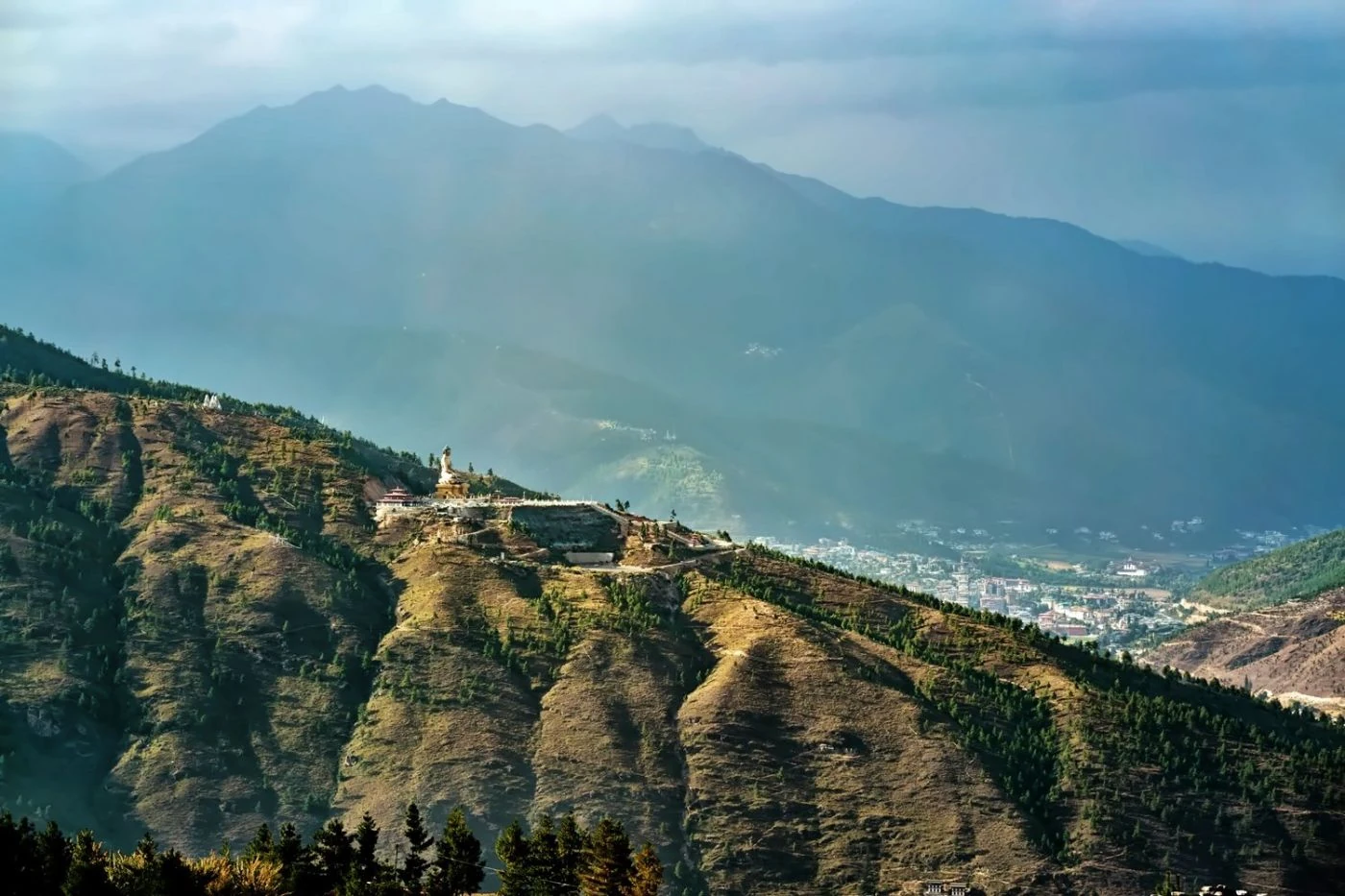
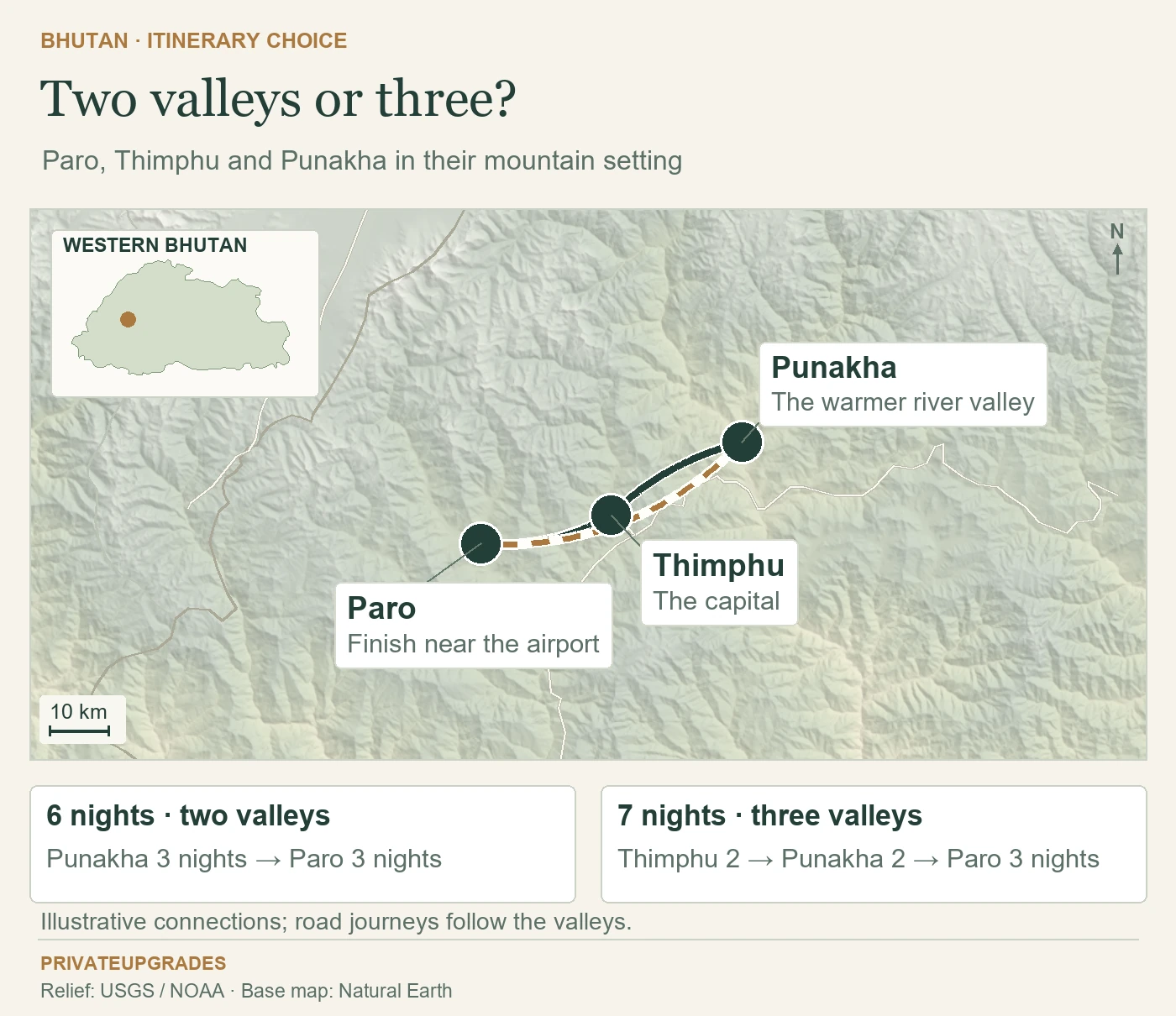
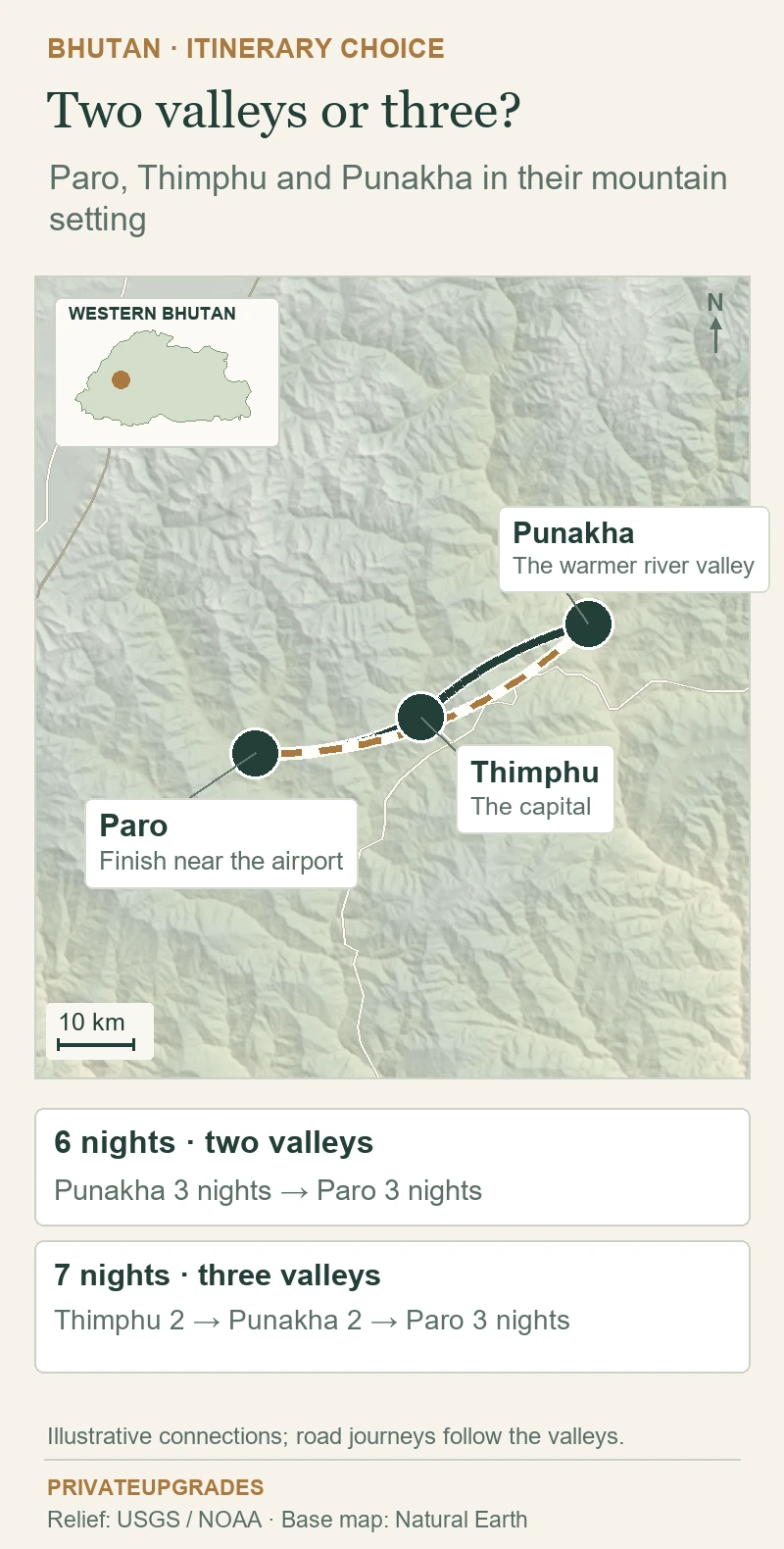
Terrain data: Mapzen, using USGS SRTM/GMTED2010 and NOAA ETOPO1 data. Base-map geometry: Natural Earth.
| Available nights | Our preferred shape |
|---|---|
| 4–5 | Paro and Thimphu, with a short transfer between the principal valleys. |
| 6 | Three nights in Punakha and three in Paro for landscape, walking and more time at each lodge. |
| 7–8 | Thimphu, Punakha and Paro; add the eighth night where your interests are strongest. |
| 10 or more | Consider Gangtey or another valley as a substantial stay, with the extra road days included. |
These are suggested allocations. Festival dates, the arrival flight and the walks you want to do can alter their order. The important arithmetic is the number of full days between hotel changes: two nights produce one full day, while three give you a second day to use differently.
What the road journeys actually involve
Lodge locations make a difference beyond the town names. Six Senses’ published inter-lodge estimates allow about two hours between its Paro and Thimphu lodges, two-and-a-half between Thimphu and Punakha, and four between Punakha and Paro. Sightseeing, lunch, road conditions and weather add to those driving estimates.
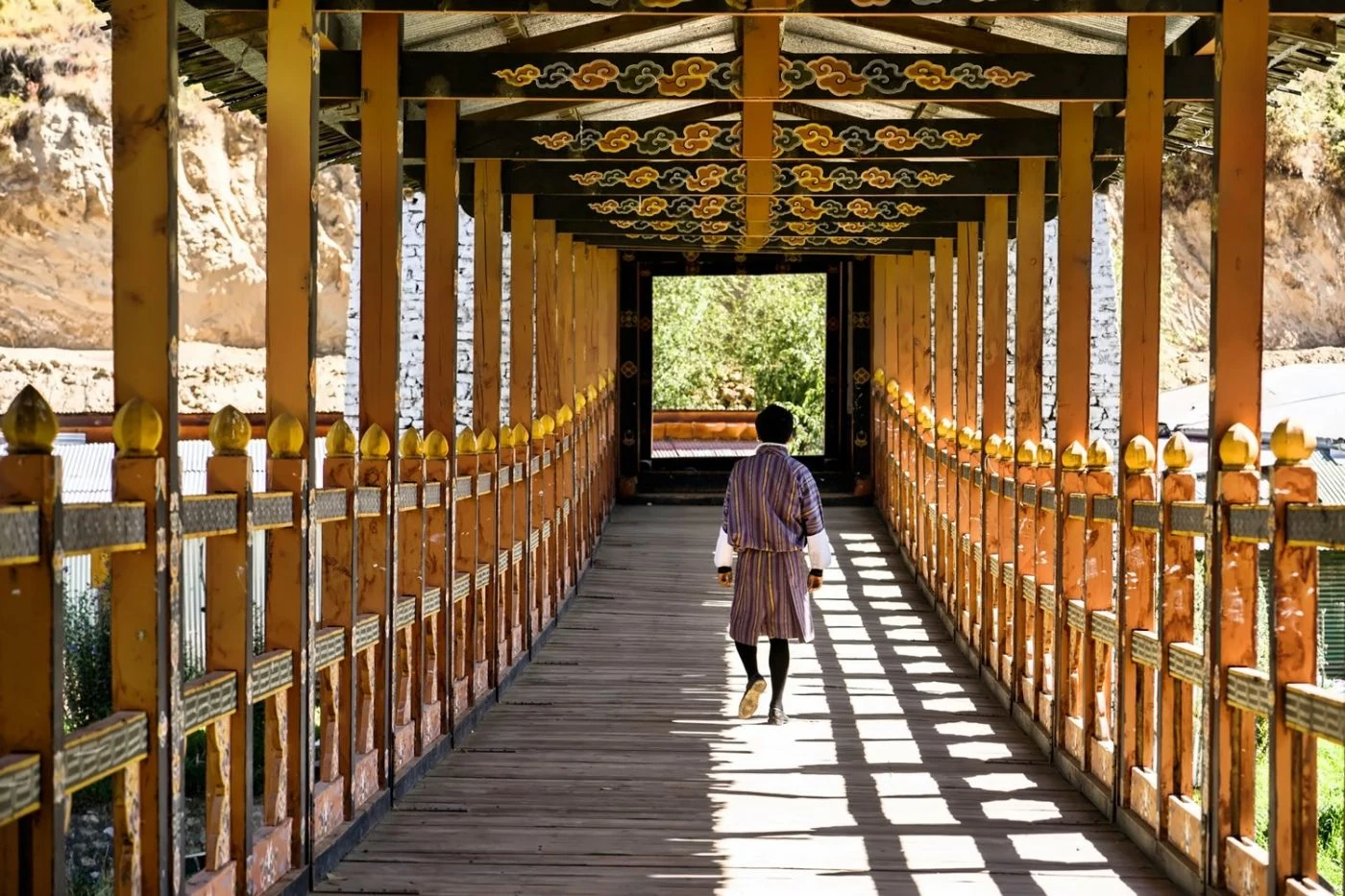
For the three-valley journey, arrive in Paro and continue to Thimphu when the flight allows. Cross Dochula toward Punakha after two nights, then finish with three in Paro. This sequence leaves the final stay near the departure airport and places the more demanding Paro walk later in the trip.
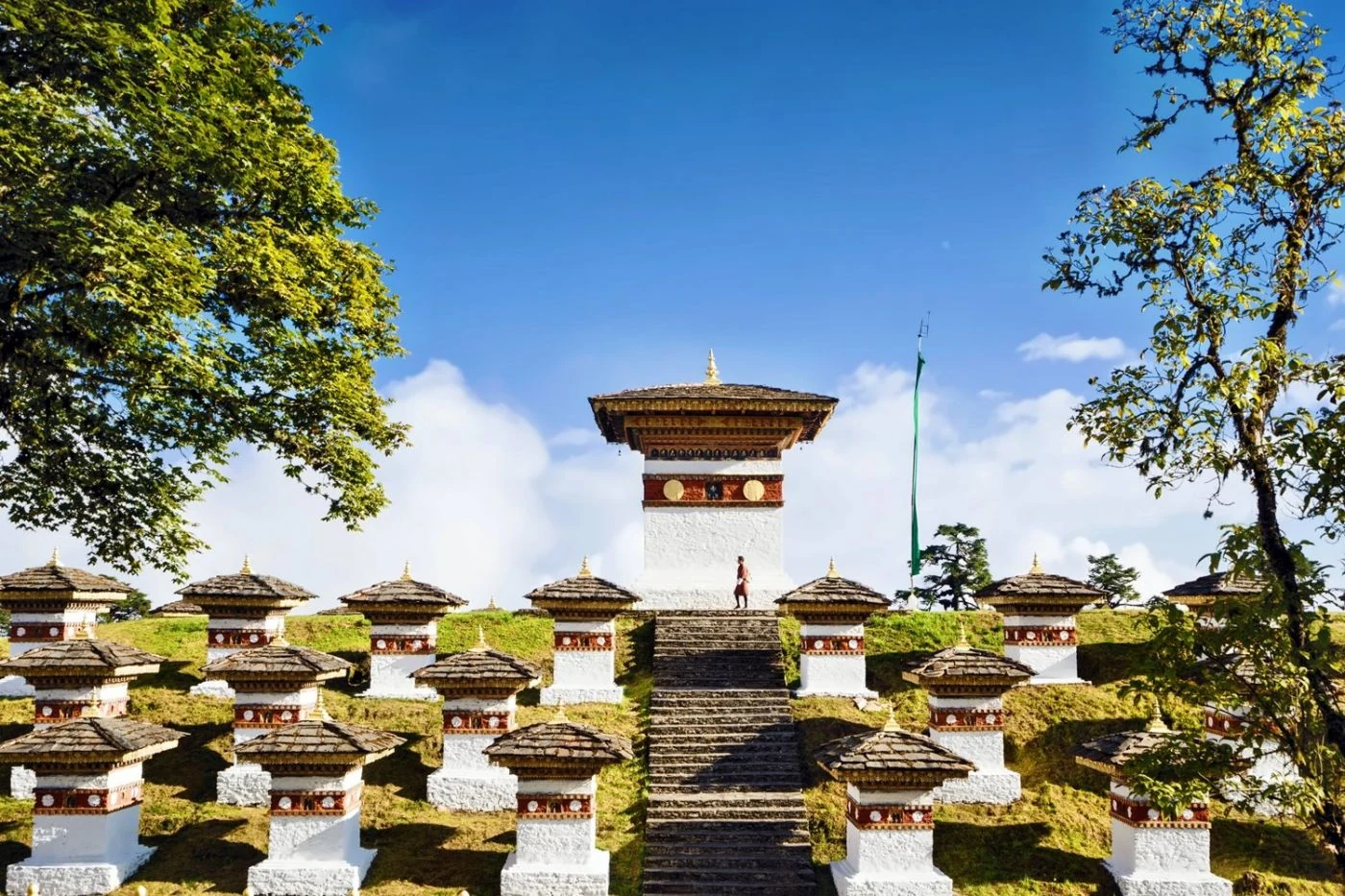
A Dochula stop has cultural interest even when clouds conceal the distant mountains. Treat a clear panorama as an opportunity. The pass crossing still belongs in the day when visibility is poor, with the driver adapting to conditions.
Paro: a lodge among trees and a day beyond the famous hike
COMO Uma Paro sits on a wooded hill above town. Its rooms and villas combine Bhutanese craftsmanship with contemporary comfort; Bukhari draws on seasonal produce, including the kitchen garden. It is a convincing base for travelers who enjoy walking and culture followed by an uncomplicated return to a smaller property.
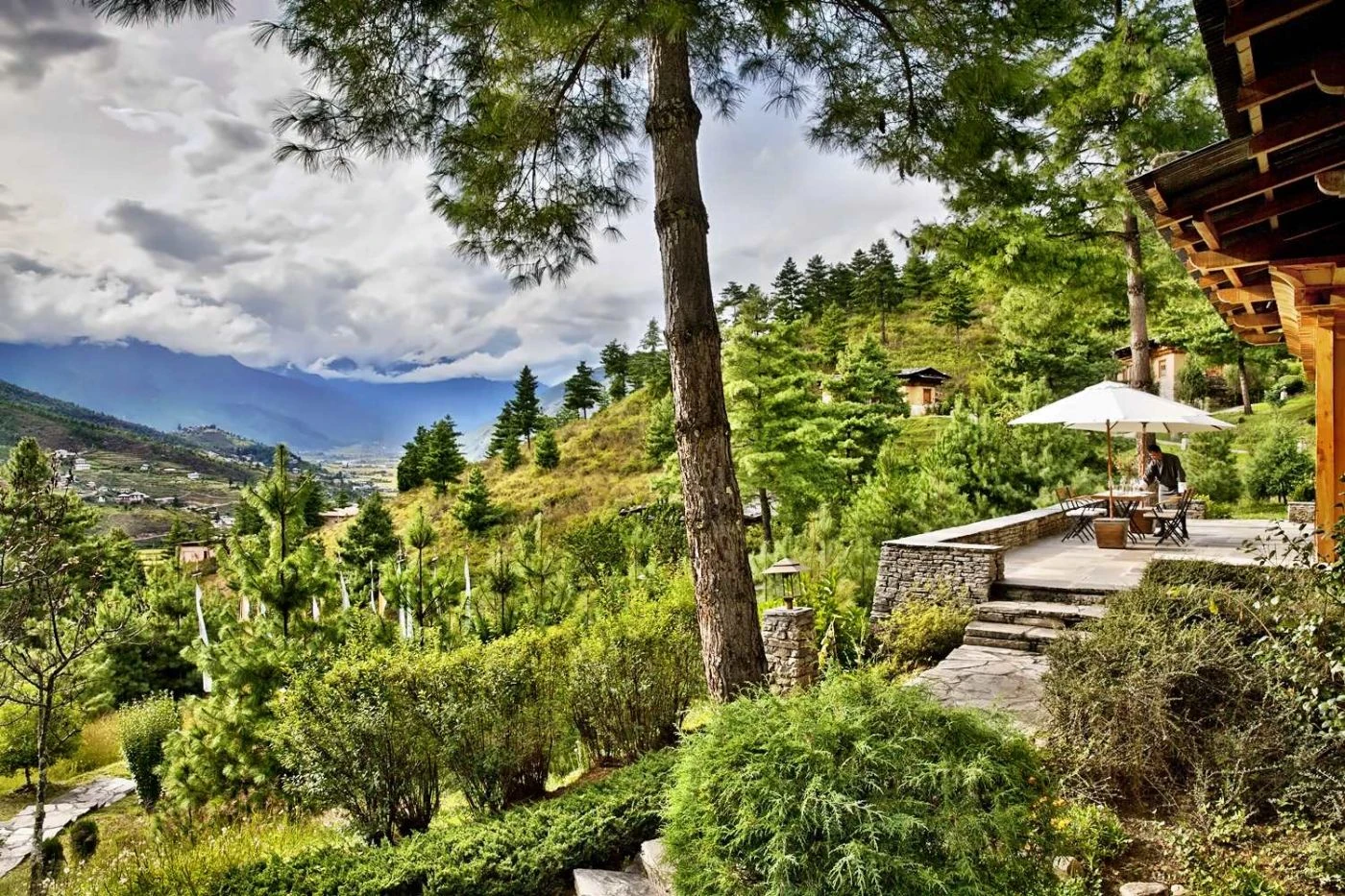
Three Paro nights accommodate more than Taktsang. Use the first afternoon for a short introduction to the valley. Another day can include a temple or the town, followed by time at COMO Shambhala or the indoor pool. A quieter day at the lodge has a purpose here, particularly after several road journeys.
The choice between a room and a villa should reflect how much private space you will use. A couple planning full days out may prefer the main accommodation; a longer lodge-centered visit gives additional living space more value. Exact bedrooms and any extra-person arrangement belong in the room selection.
Give Tiger’s Nest a day of its own
Taktsang is a climb to a religious site, with altitude, steps and weather shaping the effort. Place it after some time in Bhutan, use a licensed guide and dedicate the day to the outing. Combining it with a long transfer would diminish both.
The Paro Valley also supports gentler alternatives for anyone who does not want the full walk. Decide on those options in advance so that members of a mixed-ability party can enjoy the day on their own terms. Your condition and the guide’s judgment take priority on the mountain. Travelers with health concerns about altitude should discuss the proposed route with a clinician; a hotel itinerary cannot promise acclimatization.
Punakha: the change in landscape that earns another night
Punakha brings a lower, warmer valley, cultivated land and rivers. The dzong is a reason to come, but three nights make the journey more than an architectural visit. You have time to see it properly and to spend another day walking through the surrounding landscape.
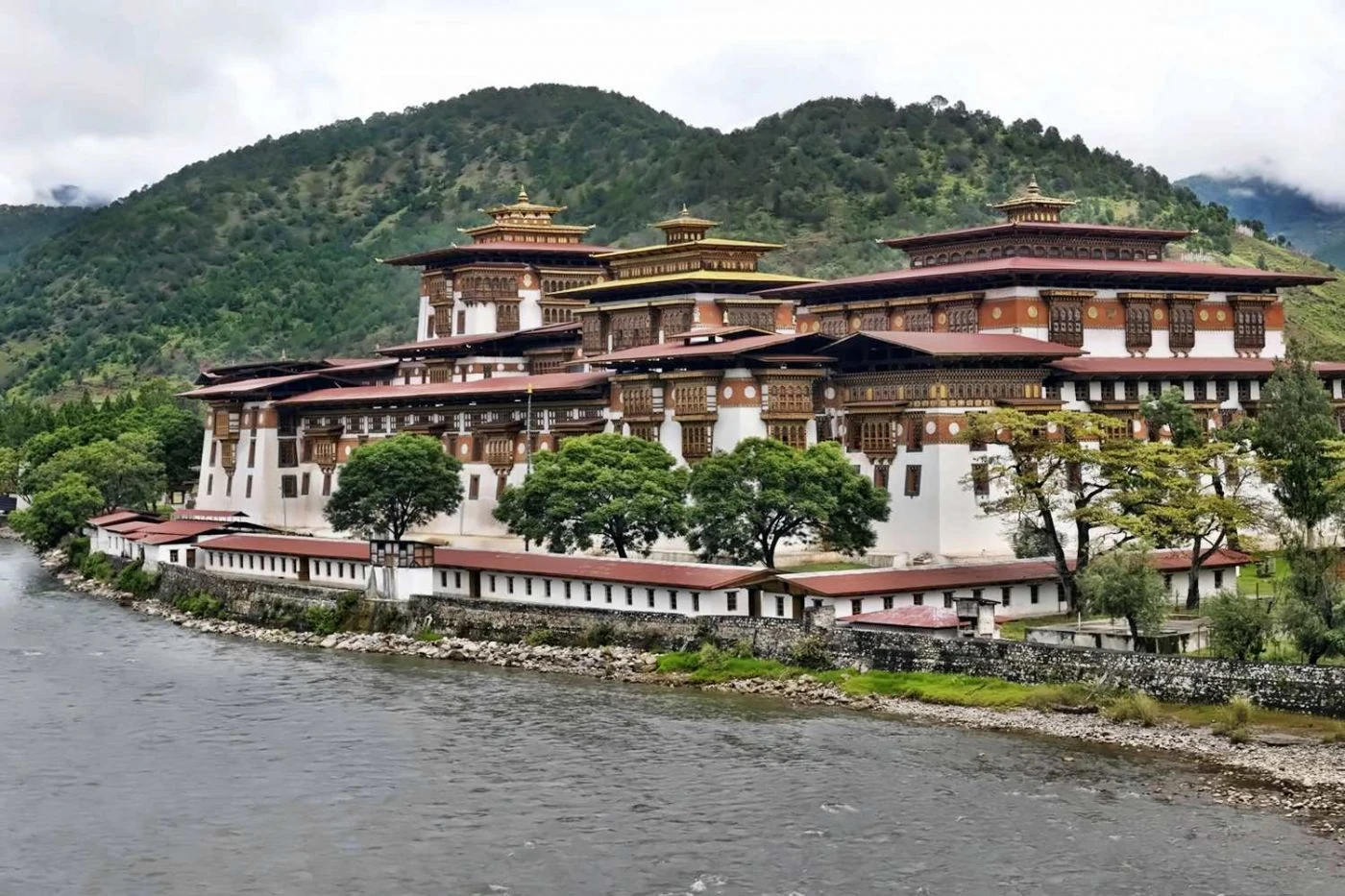
Six Senses Bhutan operates separate lodges across five valleys. Its Punakha stay is a distinct stop within that collection, not a room location at the Thimphu lodge. Reserving several valleys means coordinating the accommodation and journey across separate properties.
The lodge becomes especially useful in the warmer afternoon. A walk in the morning followed by lunch and time at the property gives this valley its own daily pattern. Choose the route for the party’s mobility and the season. Rafting can be considered as a separately arranged outing when conditions and participation rules suit; it is not essential to a cultural visit.
For a six-night traveler, this is the strongest case for leaving out Thimphu. Three nights here and three in Paro provide two substantial stays, with a clear contrast in landscape and temperature.
Thimphu: include the capital when contemporary Bhutan interests you
Thimphu brings town life, crafts and the workings of the capital into the trip. A visit to the Memorial Chorten, a walk through town and one museum or cultural stop can form a coherent full day. The point is to see another part of Bhutan, not to reproduce the countryside routine in a third hotel.
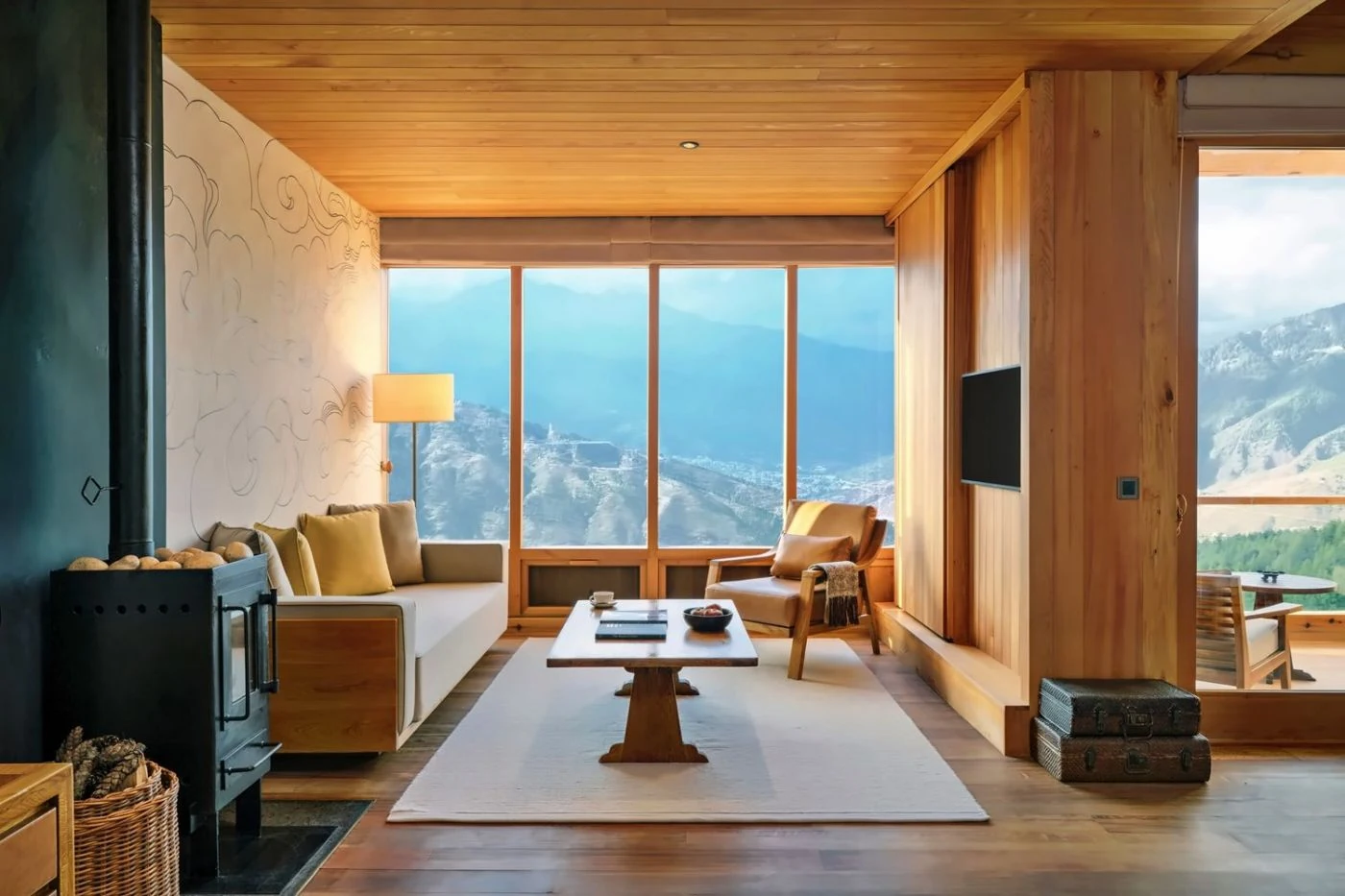
Six Senses Thimphu sits outside the center and looks toward the valley. It suits travelers who want an excursion into town followed by a return to a lodge setting. Transport is part of that choice. Someone wanting everything on foot from the hotel should understand the location before deciding.
Two nights are appropriate on a seven-night route. Add the eighth here if museums and craft are the main interest, or to Punakha for walking and a warmer valley. Paro deserves to keep its three nights when Taktsang is an important part of the journey.
Seasons and the costs outside the room
Spring and autumn are natural choices for cultural visits and walking. Winter favors travelers comfortable with cold nights and possible snow on higher routes. Summer brings a greener landscape and monsoon rain. The different altitudes mean that no single weather description covers every lodge.
A festival can be a compelling reason to choose a particular valley and date. We build the lodge sequence around the actual event when it is central to the trip; otherwise, the activities and road journey should lead the calendar.
At the currently published rate, the Sustainable Development Fee for non-Indian adults is 100 USD per night. Children aged six to eleven pay 50 USD, and children under six are exempt. The adult fee therefore adds 600 USD to six nights or 800 USD to eight, before accommodation and guiding. Indian nationals have a separate fee arrangement. Where a visa is required, the published processing fee is 40 USD in addition to the SDF.
Meals, guiding, transport and site visits can be combined differently in lodge journeys. PrivateUpgrades assembles the valley sequence and the applicable package components, then sets out hotel privileges separately. The quotation should make clear which services cover the whole journey and which apply only at a particular lodge.
Choose two valleys for the pleasure of returning to a place you have begun to know. Take three when the capital adds something you specifically want and a full week is available. The final itinerary should feel like a choice of places, not a count of hotel stamps.