
Table of Contents
Key Takeaways
When asking how to choose a luxury hotel, the most critical step is matching the property’s style and location to the exact purpose of your trip.
Never assume the base room category delivers the full experience; always verify square footage, view guarantees, and recent renovations.
Timing your booking is crucial: secure your reservation early for festive dates, top suites, or connecting rooms to protect your choices.
Leveraging VIP benefits – such as daily breakfast, hotel credits, and upgrade priority – transforms a standard luxury booking into a highly optimized, frictionless itinerary.
Planning A Luxury Stay?
PrivateUpgrades can help you compare the right hotel style, confirm current benefits and book eligible stays with breakfast, hotel credit, upgrade priority, early check-in, late check-out and VIP recognition where available.Fast Answer
| Decision | What To Check | Why It Matters |
|---|---|---|
| Location | Walkability, transfer time, neighborhood mood | Luxury is often the absence of friction. |
| Room | Size, view, balcony, suite layout | The wrong category can change the whole stay. |
| Benefits | Breakfast, credit, upgrade priority | Benefits are strongest when you will actually use them. |
| Season | Events, weather, holidays | Availability and pricing can shift quickly. |
| Service Style | Formal, residential, resort, lifestyle | The best hotel should match the traveler, not impress on paper only. |
Related PrivateUpgrades Planning Guides
PrivateUpgrades Hotels To Compare
| Hotel | Why It Fits This Guide |
|---|---|
| The Mark Hotel New York | A good example of choosing by neighborhood personality, room category and classic residential service. |
| Hotel Lungarno Florence | A useful example of choosing by view and sense of place rather than by brand scale. |
| Amandari Bali | A strong reminder that mood and landscape can matter more than being near the beach. |
What To Prioritize When Choosing A Luxury Resort Or Hotel
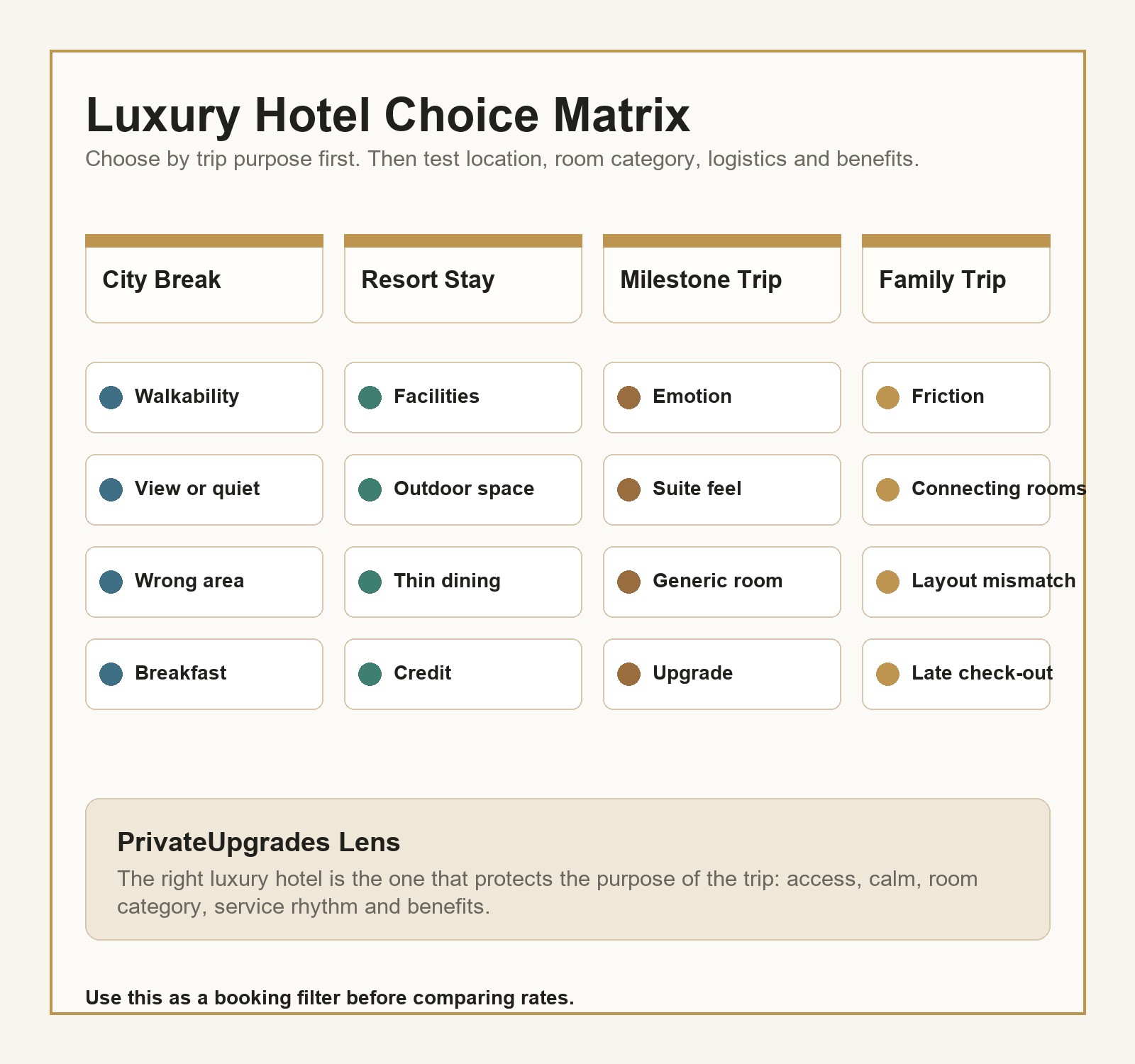
A luxury hotel should answer the trip before it answers the search result. Couples may want privacy, lighting, dining and a room that feels generous. Families may need connecting rooms, pool access and a team that understands practical travel. Business travelers may care more about arrival ease, breakfast hours, meeting locations and late check-out. The right hotel is the one that supports the reason for travel.
What To Look For When Choosing A Luxury Hotel Room Category
Luxury travelers should never treat a lead-in room as a neutral default. Some hotels have excellent entry rooms; others reserve the real experience for higher floors, corner layouts, terraces, river views or club-level categories. Look for exact square footage, bed setup, outdoor space, view language and whether the category has recently been renovated.Location Is More Than A Pin On A Map
Two hotels can be in the same city and serve completely different trips. In a city, a central address can save hours across a weekend. In a resort destination, being remote can be a benefit if the property has enough dining, wellness and activity depth. The best choice comes from matching location to itinerary, not from choosing the most famous district every time.Use Benefits Strategically
Breakfast, hotel credit and upgrade priority are most useful when they match the trip. A resort credit may support a spa treatment or dinner. Breakfast for two can be meaningful in cities where luxury hotel breakfast is expensive. Upgrade priority matters when a better view, larger layout or quieter location would materially improve the stay.How To Choose
For First-Time City Trips
Choose location and service reliability before chasing the newest address.For Honeymoons
Prioritize room category, privacy, dining and arrival experience.For Families
Confirm connecting rooms, pool hours, kids facilities and transfer time.For Wellness Trips
Check spa depth, treatment philosophy, room quietness and food quality.PrivateUpgrades Booking Lens
The most useful luxury hotel decision is not only where to stay. It is when to book, which room category to protect, and which benefits will actually improve the trip. PrivateUpgrades helps travelers compare eligible hotels, identify where VIP benefits matter, and avoid booking a beautiful property that does not fit the journey.When To Book
For how to choose a luxury hotel, timing should follow the constraint of the trip. If the stay involves festive dates, school holidays, major events, a small resort, a top suite, connecting rooms, private pools or a specific view, early booking protects choice. If dates are flexible and the hotel category is not critical, travelers can compare closer to arrival without losing the structure of the trip.The luxury mistake is waiting only because a rate might drop. Price matters, but so do room quality, arrival time, benefit availability and the emotional value of the trip. A cheaper room that misses the right view, layout or location can make a high-end stay feel compromised.What To Ask Before You Confirm
Before confirming, ask five practical questions. Is the hotel in the right location for the actual itinerary? Is the selected room category the one that delivers the experience shown in the photos? Are breakfast, credit and upgrade benefits meaningful for the length of stay? Does arrival timing work with transfers and check-in? And would another hotel style make the trip easier, calmer or more memorable?Sample Itinerary Logic
A short trip built around how to choose a luxury hotel should stay simple. Two or three nights rarely leave room for complicated transfers, experimental locations or a hotel that requires effort to enjoy. For a short stay, choose the base that gives the clearest access to the trip’s main purpose and spend more attention on room comfort, breakfast quality and arrival timing.For a longer trip, the strategy changes. You can pair two moods, such as city and resort, beach and culture, jungle and coastline, or heritage and contemporary design. The luxury is not only in adding more hotels. It is in giving each stay enough nights to feel intentional. A split stay only works when the second hotel adds a new chapter rather than repeating the same experience with another logo.Who Should Avoid This Choice
Not every traveler should choose the most obvious version of how to choose a luxury hotel. If the trip is short, if arrival is late, if children need predictable routines, or if the itinerary is built around fixed reservations, the more glamorous hotel can be the less practical choice. The better luxury decision is often the one that protects energy.This is especially true when a hotel looks spectacular in photos but creates daily friction. Long transfers, small rooms, limited dining, weak sound insulation, difficult beach access or a location far from the real itinerary can turn a beautiful stay into work. A polished luxury trip should feel edited, not overloaded.Benefit Value Checklist
| Benefit | When It Matters Most | Luxury Impact |
|---|---|---|
| Daily breakfast | Longer stays, resorts, family trips | Reduces friction and improves daily value. |
| Hotel credit | Spa, dining, resort or experience-led stays | Supports the parts of the stay travelers actually enjoy. |
| Upgrade priority | View, terrace, suite or room-size-sensitive trips | Can materially improve the room experience where available. |
| Early check-in / late check-out | Long-haul flights, short stays, resort transfers | Protects arrival and departure days from feeling wasted. |
Red Flags Luxury Travelers Should Notice
| Red Flag | Why It Matters | What To Do |
|---|---|---|
| Only generic room photos | The shown experience may not match the booked category. | Ask which room type the images represent. |
| Vague location language | A hotel can sound central while still adding daily transfer friction. | Map the real itinerary before booking. |
| Too many promises in one stay | Beach, culture, nightlife, privacy and wellness rarely peak in one hotel. | Choose the two or three priorities that matter most. |
| Weak dining or spa detail | Luxury travelers use hotel facilities more than they expect. | Check menus, opening days, spa depth and reservation needs. |
| No clear benefit value | A cheaper rate may lose breakfast, credit or upgrade priority. | Compare total stay value, not only nightly price. |
Best For / Less Ideal For
Best For
Travelers who want a clearer decision framework for how to choose a luxury hotel, care about room category, and prefer a stay planned around comfort, access and benefit value.Less Ideal For
Travelers who only want the lowest possible rate, do not care about room type, or are comfortable correcting hotel mismatches after arrival.Worth Upgrading When
The upgrade changes the view, privacy, outdoor space, sleeping setup, arrival comfort or the way the hotel is used each day.Keep Flexible When
Dates are soft, the trip is short, several hotels would work equally well, and room category is not the emotional center of the stay.FAQ: How to Choose a Luxury Hotel
What to prioritize when choosing a luxury resort?
When choosing a luxury resort, prioritize transfer times, dining variety, wellness facilities, and seasonal demand. A glamorous resort can easily become frustrating if its location requires long daily transfers or if the on-site dining options are too limited for the length of your stay.
What are the key factors to consider when choosing a luxury hotel?
The key factors include location (walkability and neighborhood mood), exact room category (size, view, layout), service style (formal vs. residential), and actionable VIP benefits like breakfast and hotel credits.
When is the best time to book a luxury hotel?
You should book early if your trip involves festive dates, school holidays, or if you require specific setups like connecting rooms and private pools. Waiting solely for a rate drop is a mistake if it costs you the ideal room layout or location.
What to look for when choosing a luxury hotel room?
Do not rely solely on generic photos. Verify the exact square footage, bed setup, outdoor space, and view terminology of the specific room category you are booking. Always ask which specific room type the promotional images represent before confirming your stay.
Luxury Traveler Takeaway
Plan The Stay With PrivateUpgrades
Ready to compare hotels, benefits and room categories? Start with PrivateUpgrades or use the destination link above to find eligible luxury hotels with VIP benefits where available.